American Road Trip Suggestions: 8 Routes Worth Driving
November 5, 2026·MyPerfectStay
Which American road trip suggestions work for a group with different budgets, energy levels, and ideas of a good day? The best route isn't automatically the longest or most famous. It's the one where the drive, stops, and pace leave room for everyone to enjoy the trip.
These eight options range from coastal weekends to mountain and desert drives. Each has a practical group use case, a trade-off to plan around, and a European or Middle Eastern route for travelers comparing the experience. Europe and MENA offer plenty of excellent scenic drives, but they can't replace the specific subject here: established American driving routes and the destinations they connect.
Road trips are a recurring part of U.S. leisure travel. The AAA Foundation for Traffic Safety's 2025 American Driving Survey found that 30.1% of Americans had taken at least one road trip during the previous four weeks, with family members present on 43.6% of reported trips. That's a useful reminder to plan for shared preferences, not just the driver's wish list. Agree on the overnight stops and the day's main activity before departure, and keep essentials organized with a system for keeping car storage systems tidy.
Table of Contents
- 1. Pacific Coast Highway from Los Angeles to San Francisco
- 2. Route 66 from Chicago to Santa Monica
- 3. Blue Ridge Parkway from Virginia to North Carolina
- 4. Going-to-the-Sun Road in Glacier National Park, Montana
- 5. Utah Scenic Byway 12 from Panguitch to Torrey
- 6. Overseas Highway from Key Largo to Key West
- 7. Natchez Trace Parkway from Nashville to Natchez
- 8. Million Dollar Highway from Ouray to Silverton, Colorado
- 8 American Road Trip Routes at a Glance
- Pick the Route, Then Let the Group Decide the Rest
1. Pacific Coast Highway from Los Angeles to San Francisco
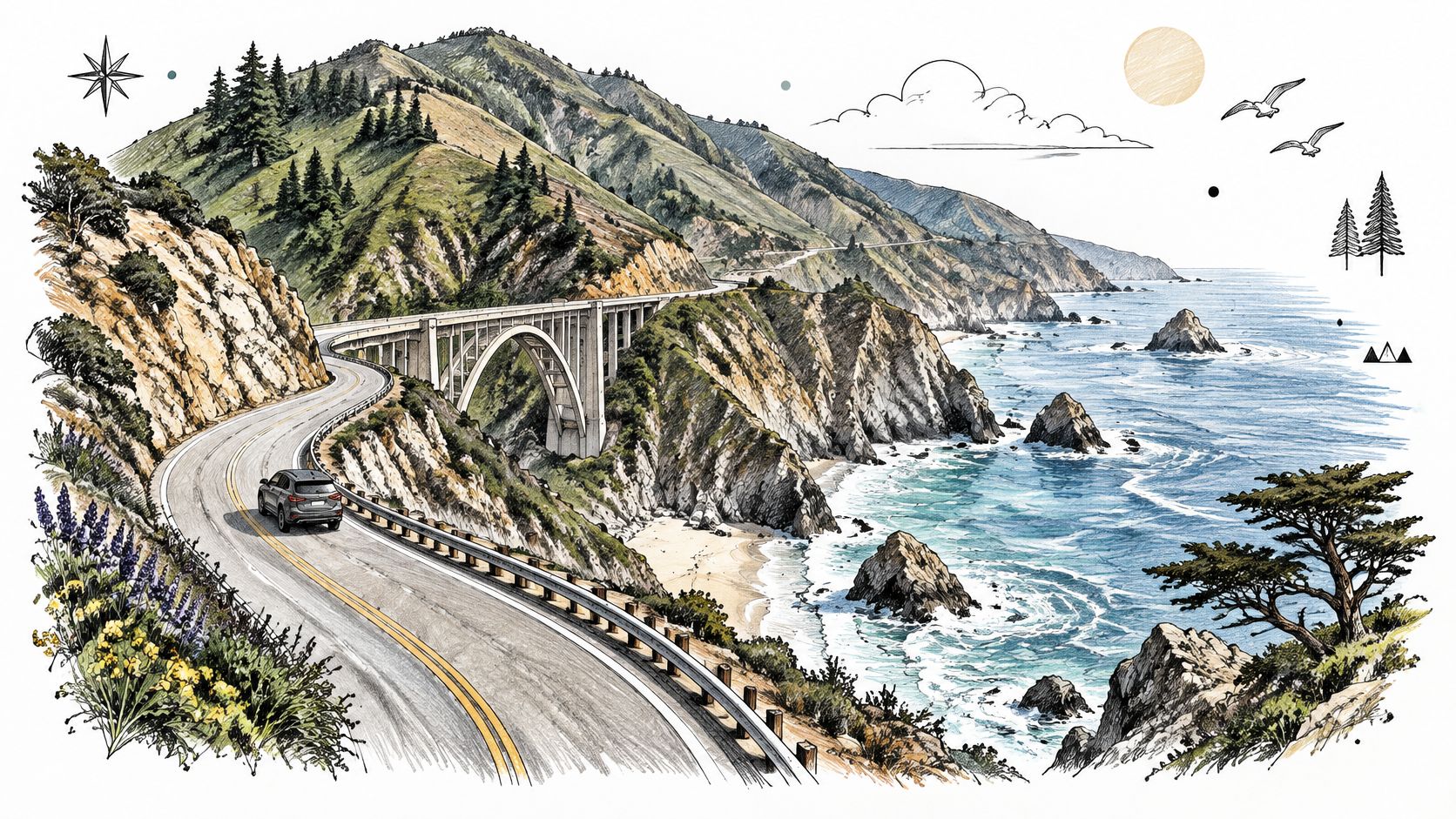
The Pacific Coast Highway is a strong choice for a group that wants ocean views, towns worth lingering in, and enough variety to prevent every day feeling alike. A practical itinerary runs north from Los Angeles through Santa Barbara and Morro Bay, then continues toward Big Sur and Monterey before ending in San Francisco. Don't treat the map's suggested drive time as the whole day. Coastal roads, viewpoints, meals, and photo stops turn a transit day into a full itinerary.
A five-day plan can give the group overnights in Santa Barbara, Big Sur, and Monterey. Add Paso Robles as an inland detour if wine tasting is a shared priority, but don't force the stop if the group would rather spend more time by the water. For activity decisions, let people vote on options such as whale watching or the Monterey Bay Aquarium, then agree on one main activity per day.
Make the coast work for different travelers
This route can suit a mixed-age group because travelers can take a short walk, explore a town, or stay close to the car while others seek a longer outing. The main drawback is that Big Sur lodging can be scarce during popular travel periods. Book the overnight plan early, and check Caltrans road conditions before leaving because closures can disrupt a carefully timed coastal itinerary.
Driving rule: Build in time to stop, not just time to cover the distance. A packed schedule takes the pleasure out of a scenic road.
For a comparable European mix of coastal towns and cliffside views, consider Italy's Amalfi Coast road, the SS163. If you're planning the California drive, this guide to driving time from Los Angeles to San Francisco can help you think through the route before setting your overnight stops.
2. Route 66 from Chicago to Santa Monica
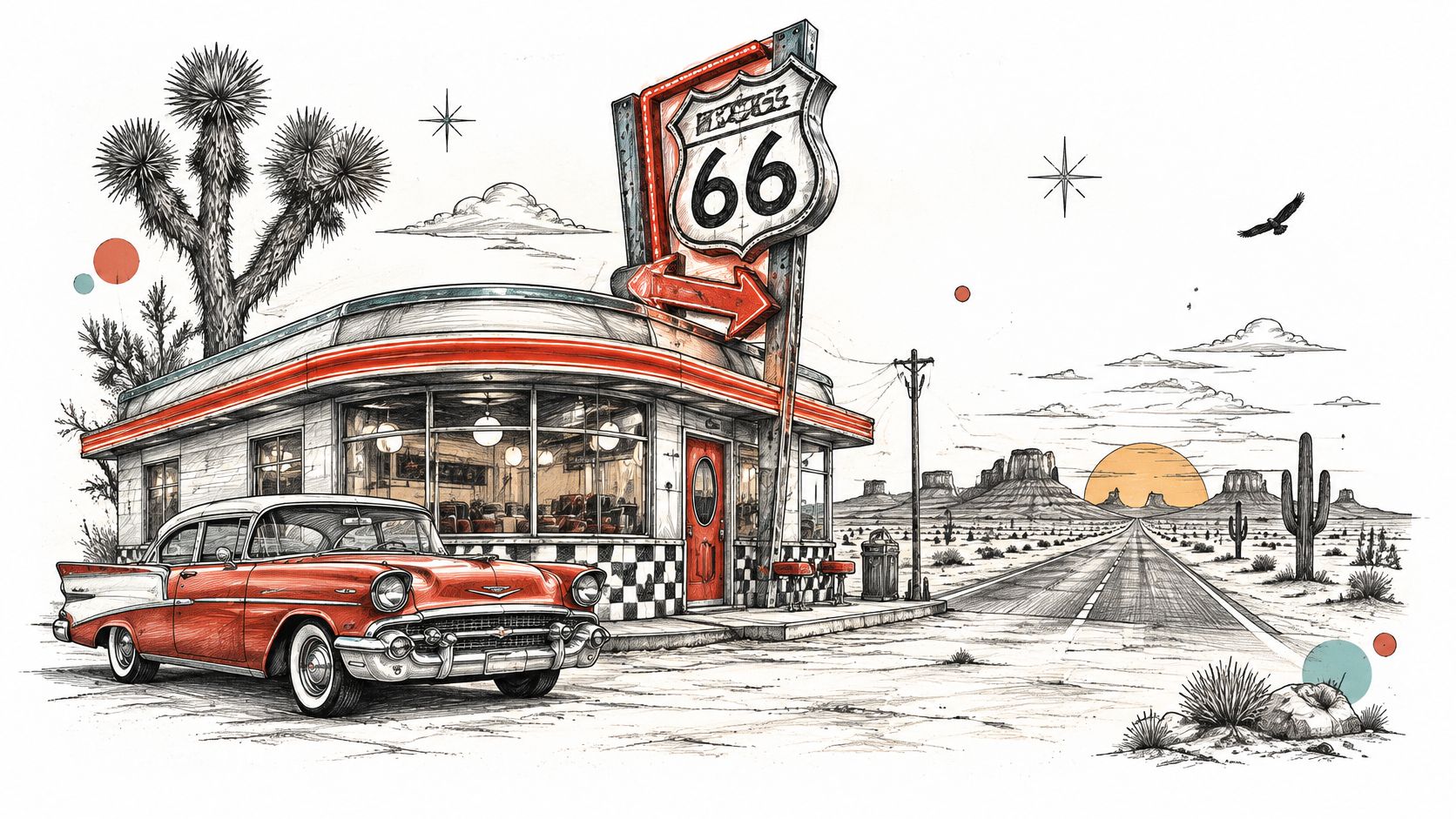
Route 66 is less about one uninterrupted highway than a journey through pieces of the old alignment, roadside businesses, and towns that preserve its character. The historic route ran from Chicago to Santa Monica and was decommissioned as a federal highway in 1985. Much of its alignment remains accessible on state and local roads, but modern drivers need to plan carefully instead of assuming one continuous, signed highway will carry them the whole way.
For most groups, a section makes more sense than attempting the full trip. A week-long drive through Texas and New Mexico can include Amarillo and Santa Fe, balancing open-road stretches with food, museums, and time to explore. Families might add the Route 66 Museum in Clinton, Oklahoma. Pick the stops together before departure; nostalgia can be a great theme, but it won't make a long stretch of driving enjoyable for someone who wanted more time outside the car.
Pick a segment, not a dare
Desert stretches call for deliberate fuel planning. Keep the tank from running low between towns, and don't assume every roadside business will be open when you arrive. If your group has a short holiday window, choose one or two states and make the overnight stops part of the experience, rather than turning the drive into a race to the endpoint.
The Mediterranean comparison is the Via Appia south of Rome, an ancient route that also links towns and historic remains. It offers a similar sense of traveling through history, though the scenery and driving experience are different. Before the trip, use the Albuquerque-to-Phoenix driving guide to consider a southwestern leg, then settle on daily stops that the group can agree on.
3. Blue Ridge Parkway from Virginia to North Carolina
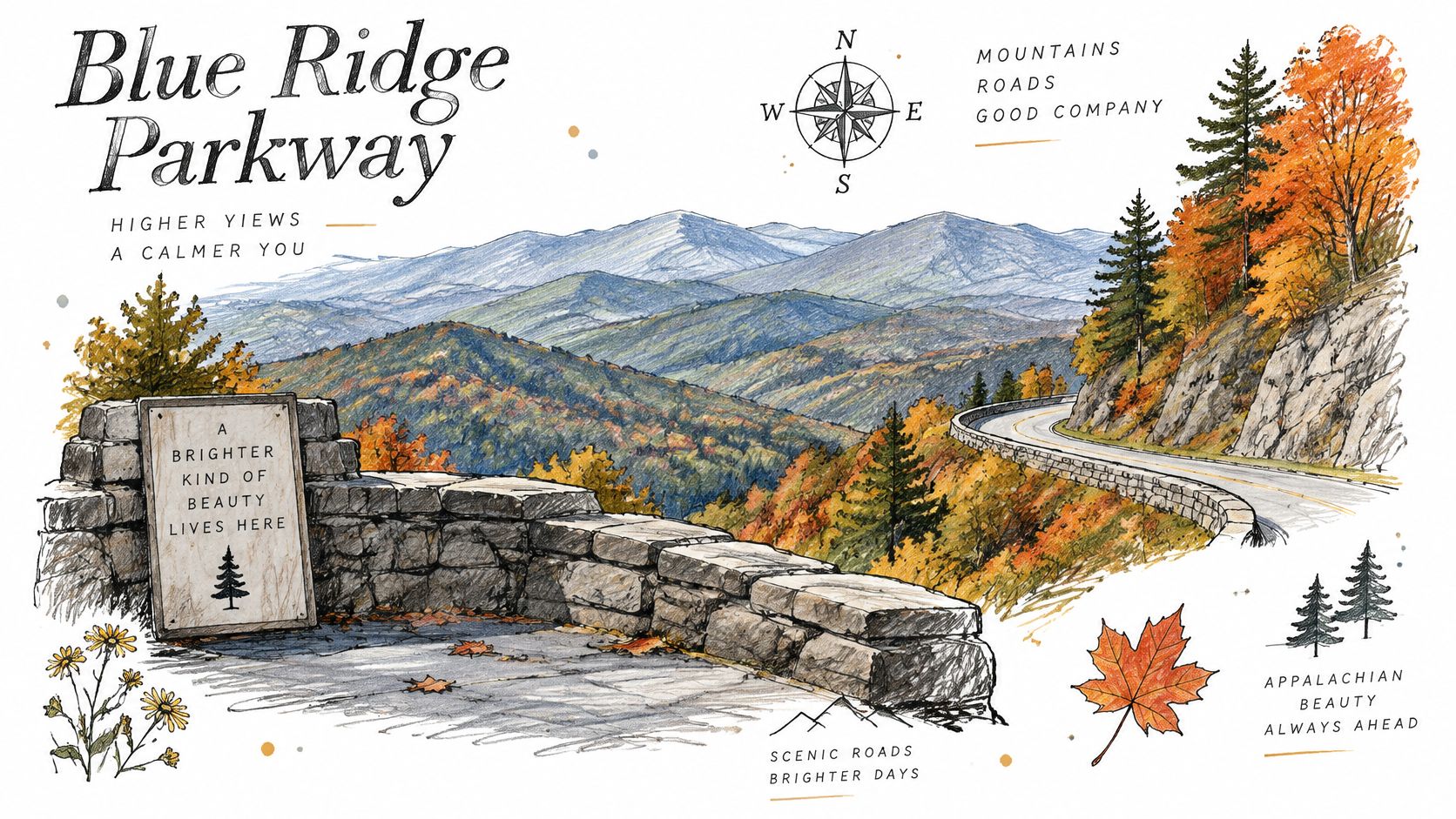
The Blue Ridge Parkway rewards a slow pace. This scenic road follows the Appalachian mountain crest and connects the Shenandoah and Great Smoky Mountains areas. The Federal Highway Administration lists it as a 469-mile All-American Road running through Virginia and North Carolina in its America's Byways directory. It has no commercial traffic, which makes the drive calmer than an interstate, but it also means this isn't the route for anyone trying to make quick time.
A fall weekend can pair Roanoke with the Asheville area, leaving room for overlooks and an unhurried meal. For a longer outdoor trip, choose hikes around Grandfather Mountain and Linn Cove Viaduct, but don't make every traveler join every hike. A scenic pull-off or town stop can keep less active members included while others take a longer walk.
Set the pace before setting the stops
Download offline maps before you leave. Mobile coverage can be limited, and having directions saved avoids a group debate at the exact moment the signal disappears. Check National Park Service information for closures before departure, especially if your itinerary depends on reaching a specific overlook or trail.
Ask each traveler to vote on hikes and viewpoints, then balance effort with recovery time. A day with a strenuous trail, a long drive, and several stops can leave everyone tired rather than satisfied. The Great Dolomite Road in Austria is a comparable European mountain drive for travelers drawn to highland scenery, though the parkway's Appalachian character is its own. This route works best when the group treats the drive itself as an activity, not merely a connector between hikes.
4. Going-to-the-Sun Road in Glacier National Park, Montana
Going-to-the-Sun Road crosses Glacier National Park between West Glacier and St. Mary, with Logan Pass as a natural focal point. The narrow mountain road delivers dramatic views, but steep drop-offs and limited parking make it a poor fit for travelers who dislike exposed roads or crowded trailheads. For a group comfortable with that trade-off, a one-day traverse with time at Logan Pass gives everyone a clear shared outing.
Start early to improve your chances of finding parking and to avoid letting the day's first stop become its longest delay. Check the National Park Service's current reservation and access requirements well before travel. Mountain-road access can vary with conditions and season, so don't build non-refundable plans around assumptions about the exact opening or route access.
Keep the day flexible
A guided red bus tour is worth considering if some travelers would rather enjoy the views without the stress of driving. It also gives the group interpretive commentary, while the driver can focus on the road. If the group does drive, agree in advance on the must-see stops and which hikes are optional. That makes it easier for travelers with different fitness levels to participate without pressuring anyone to take on a route they don't want.
The best plan here leaves slack in the day. A late start or a full parking area can change the sequence, and that's normal in a popular mountain park.
The Stelvio Pass in Italy offers another well-known Alpine driving experience for travelers comparing mountain roads. For wildlife awareness beyond the car, read guidance on using bear spray during an encounter, and keep any outdoor plans grounded in current park guidance. For groups, this route is a better fit when everyone values scenery and accepts that access, parking, and weather can shape the day.
5. Utah Scenic Byway 12 from Panguitch to Torrey
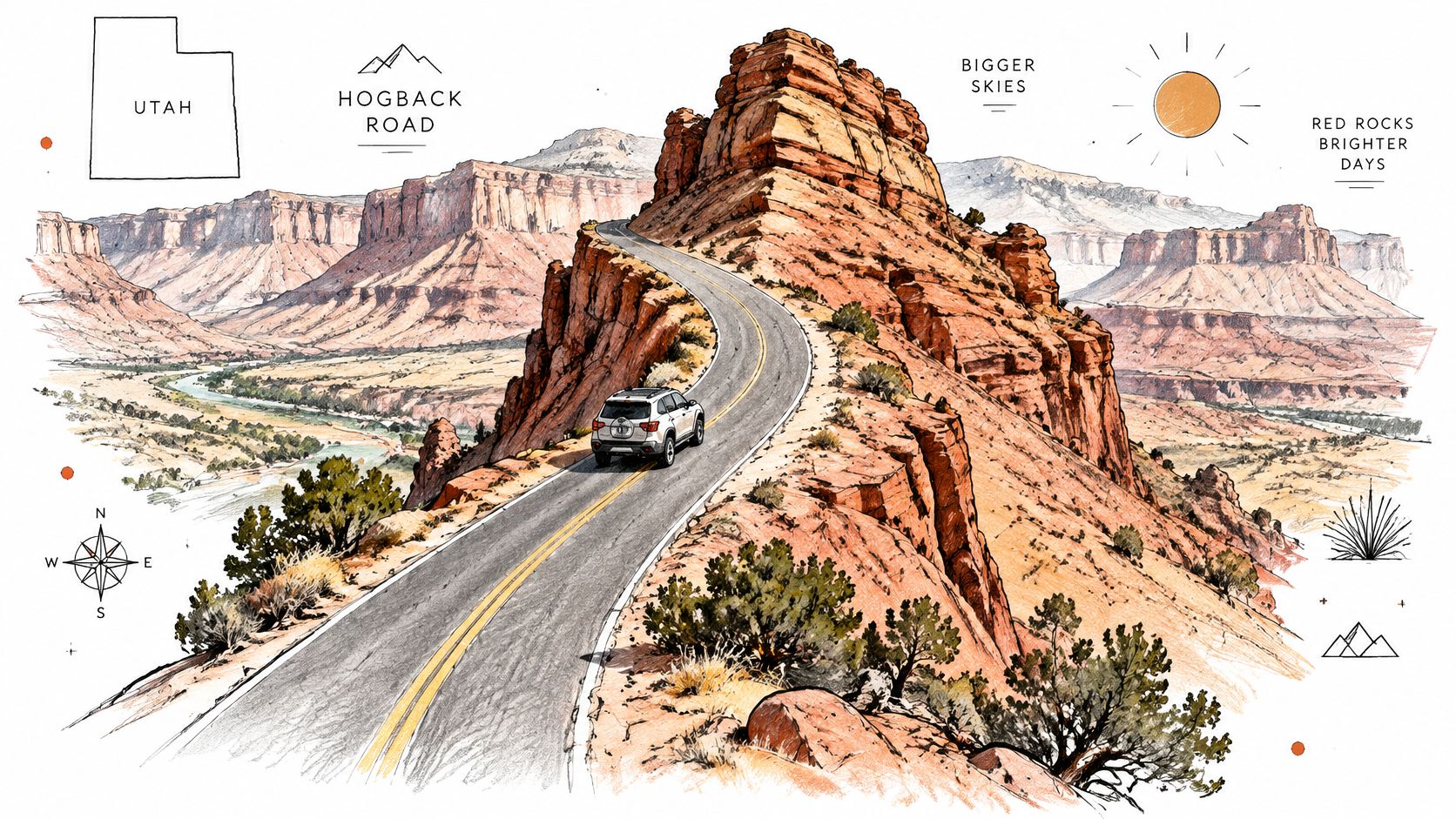
Utah Scenic Byway 12 is a good pick for a group that wants dramatic desert scenery without committing every day to the same kind of activity. It passes near Bryce Canyon and Capitol Reef National Parks and crosses the Grand Staircase-Escalante National Monument. A four-day plan can combine Bryce Canyon, the byway, and Capitol Reef, with scenic drives and short visits balanced against more demanding hikes.
The route's high-desert stretches can feel remote. Fill up in Panguitch or Torrey before setting off, and check permit requirements ahead of time if anyone wants to explore slot canyons. Those activities can require more planning than a roadside viewpoint, and a group should make sure the people who want a hike understand the effort and logistics involved.
Build in options for the whole group
Photography stops can suit travelers who want to move at a slower pace, while more energetic members can take on a chosen hike. Don't schedule both groups tightly against each other; allow time to meet up for a meal or at the next planned stop. Agreeing on lodging and activity preferences before the trip also prevents the day from turning into a series of negotiations.
The Dolomites in northern Italy are a useful European comparison for striking mountain scenery and road access, but the red-rock and high-desert experience here is distinctly different. For a group that wants several scenic settings and a mix of easy and more active stops, a loop is more satisfying than driving through and leaving. Keep the plan flexible enough to account for weather and changing energy levels.
6. Overseas Highway from Key Largo to Key West
The Overseas Highway makes a relatively compact trip feel like a genuine journey. It connects the Florida Keys across bridges and open water, with Key Largo suited to snorkeling and Key West offering a different mix of dining, nightlife, and sunset stops. A weekend plan can divide the group's priorities: spend one day around the water and leave another for exploring Key West.
That split works well for friends or a bachelor and bachelorette group, but it takes advance coordination. Boat and snorkeling excursions can fill up, so decide whether they're a priority before booking. A boat trip may not suit every traveler, and the group should identify a land-based alternative instead of treating the water activity as compulsory.
Leave room for weather changes
Check the forecast and local conditions before committing to excursions. Weather can affect what's practical on the water, so don't schedule every highlight as a fixed booking without considering what the group can do if conditions change. Reserve lodging early for the dates you choose, especially if everyone wants to stay near the same part of the Keys.
Norway's Atlantic Road, or Atlanterhavsveien, offers a European comparison for travelers interested in a drive that crosses bridges over open water. The experience isn't interchangeable: the Keys combine island communities and warm-water activities, while the Norwegian route is a different coastal setting. On either trip, the group will enjoy the drive more if the itinerary includes time to stop rather than treating every bridge as something to cross as quickly as possible.
7. Natchez Trace Parkway from Nashville to Natchez
The Natchez Trace Parkway suits travelers who value history, short walks, and a steady pace over roadside commercial stops. The National Park Service road follows a historic travel corridor associated with Native Americans, traders, and settlers, with trails and historic sites along the way. It also has no commercial traffic, so plan meals and fuel before leaving a town rather than expecting frequent services directly on the parkway.
A three-day family itinerary can connect Tupelo, Jackson, and Natchez, with time for a historic site or short trail along the way. Another option is to pair a Nashville music stay with a closer stretch of the parkway and a longer visit in Natchez. That approach lets the group choose between music, history, and outdoor stops without driving the full corridor in a hurry.
Make it comfortable for multiple generations
Keep walks optional and tell the group how long each stop is likely to take. Older travelers or young children may appreciate a shorter stroll, while others can explore further before meeting back at the car. Download maps and information in advance, and keep the day's intended stops in one shared plan so no one has to rely on a signal or a conversation they missed.
Jordan's Kings Highway is a Middle Eastern comparison: another historic route associated with trade and sites along the way. For travelers who want to build a wider Mississippi itinerary, this guide to driving from Jackson to Biloxi can help with thinking about a regional extension. The Natchez Trace itself works best when the group treats the journey as a quiet, historically focused drive rather than a fast route between cities.
8. Million Dollar Highway from Ouray to Silverton, Colorado
The Million Dollar Highway is a short but demanding mountain drive between Ouray and Silverton. Its tight switchbacks, dramatic San Juan Mountain views, and mining history make it a memorable choice, but the road can be uncomfortable for drivers or passengers who dislike exposure and steep drops. Don't choose it just because it looks impressive in photos. Make sure everyone in the car is comfortable with the type of road before committing.
A weekend based in Ouray can combine the drive with hot springs and a hike. Another group might pair the road with the Silverton-Durango train, but leave enough time for both rather than treating the train and a chain of overlooks as a single rushed day. Stop only where it's safe and permitted, and keep attention on the road instead of trying to photograph every view from the driver's seat.
Choose daylight and leave time
Drive in daylight and check Colorado Department of Transportation road conditions before setting out. Give the route extra time for safe pull-offs and breaks, and don't let the most confident driver make the decision for the whole car. Travelers who'd rather skip a hike can enjoy the scenic drive and town stops while the others choose a more active outing.
Italy's Stelvio Pass is a European comparison for high-altitude switchbacks and Alpine scenery. Both routes call for a driver who's comfortable with mountain roads and a group that accepts a slower, more deliberate pace. Decide together whether the train, hot springs, or hikes matter most, then build the day around those priorities instead of trying to fit everything in.
8 American Road Trip Routes at a Glance
| Route | Distance | Trip Length | Best For | Main Challenge |
|---|---|---|---|---|
| Pacific Coast Highway (California State Route 1), Los Angeles to San Francisco | Roughly 650 miles | 5 days | Coastal scenery, beaches, food, and hiking | Slow, winding roads and possible closures |
| Route 66, Chicago to Santa Monica | About 2,400 miles | 2–3 weeks for the full route | Historic roadside attractions and nostalgic travel | Long stretches with limited services |
| Blue Ridge Parkway, Virginia to North Carolina | 469 miles | A weekend or multi-day trip | Relaxed mountain drives, overlooks, and fall foliage | Slow progress and seasonal closures |
| Going-to-the-Sun Road, Glacier National Park, Montana | 50 miles | One day | Alpine scenery and accessible hiking | Seasonal access, reservations, and narrow roads |
| Utah Scenic Byway 12, Panguitch to Torrey | Roughly 124 miles | 4-day loop | Red-rock landscapes, hiking, and photography | Remote stretches with limited services |
| Overseas Highway (U.S. Route 1), Key Largo to Key West | 113 miles | A weekend | Island scenery, snorkeling, and watersports | Heavy traffic and hurricane-related closures |
| Natchez Trace Parkway, Nashville to Natchez | 444 miles | 3 days | History, scenic woodlands, and family travel | Few services and limited cell coverage |
| Million Dollar Highway (U.S. Route 550), Ouray to Silverton, Colorado | 25 miles | A day trip or weekend | Mountain scenery and adventure activities | Steep switchbacks, drop-offs, and winter closures |
Pick the Route, Then Let the Group Decide the Rest
Start with the available time, not the route's reputation. A weekend can suit the Overseas Highway or a section of Route 66, while a longer trip gives groups room to combine destinations without spending every day in the car. The AAA Foundation for Traffic Safety's 2025 American Driving Survey found that road-trippers averaged 234.8 miles one way, excluding rest stops. Use that as context, not a target: a worthwhile trip doesn't need to be long, and a group's driving tolerance matters more than an average.
Next, budget for the whole group. Account for fuel, tolls, lodging, meals, parking, and paid activities, then decide how shared costs will be split. A scenic route that requires expensive lodging or a stack of timed activities may be a worse fit than a shorter trip with free stops and flexible meal plans. Big Sur and Key West lodging can book out early, so settle the overnight plan before everyone starts voting on optional excursions.
Check seasonal access and current road conditions before booking around a particular drive or trail. Closures, weather, parking, and reservation requirements can change what's possible, especially on mountain and park routes. Keep one alternative for a key activity, and avoid placing a fixed-time booking immediately after a long drive. That small bit of flexibility makes it easier for the group to respond to a slow road or a change in energy.
The interstate network helps make longer journeys possible, but it doesn't mean every trip should be an interstate sprint. The Federal Highway Administration reports that the Interstate System grew from 39,990 miles in 1956 to approximately 48,830 miles in the continental United States, with another 286 miles in Puerto Rico, in its overview of the nation's highways. Use fast highways to reach a region when that makes sense, then slow down for the local route that gives the trip its character.
Group planning works best when people can register preferences before the organizer locks the itinerary. With MyPerfectStay, the organiser enters a destination and rough dates, then invites the group to complete a private survey on budget, interests, energy level, and must-see ideas. The voting algorithm surfaces activities with match scores, helping the group find common ground and settle on a shared daily itinerary. Set a decision deadline, send the invite, and leave room for a change of pace once you're on the road. If you're weighing a warm-weather trip, use this guide to the best U.S. destinations for July 2026 as a starting point, then confirm local access and conditions before booking.
MyPerfectStay helps groups compare activities by budget, interests, and energy level, then turn the options everyone likes into a shared itinerary. Invite your travelers to vote on the stops for your next American road trip with MyPerfectStay.