Bachelorette Trip Planner: Your Group Travel Guide
September 12, 2026·MyPerfectStay

You're staring at three group chats, a half-finished spreadsheet, and a destination poll that keeps reopening because nobody can agree. One person wants Barcelona nightlife, another wants a quiet villa, and someone else has already asked whether the trip can be made cheaper. As the maid of honor, you're expected to make it magical, but you shouldn't have to become the group's unpaid travel agent, accountant, therapist, and emergency dispatcher.
That's why a bachelorette trip planner needs a decision system, not another burst of enthusiasm. The right system protects the bride's experience, makes costs visible, gives quieter guests a voice, and turns scattered preferences into bookings everyone understands.
Table of Contents
- The Role of a Bachelorette Trip Planner in 2026
- Setting Goals, Budget, and Decision Rules Early
- Picking a Destination and Party Style That Fit the Group
- Building the Planning Timeline and Shared Calendar
- Locking Bookings, Itinerary, and Group Logistics
- Handling Group Conflicts and Last-Mile Changes
- Planner Checklist and Quick Answers for Busy Organizers
The Role of a Bachelorette Trip Planner in 2026
The job has changed. A bachelorette trip is no longer automatically a local dinner followed by one night out. 40% of these events took place in the bride's hometown in 2019, and that share now sits below 25%, while the average bachelorette partygoer spent about $1,300 per party in 2025 — nearly double the 2019 average, according to the wedding-planning site Joy. The same reporting describes a countertrend worth knowing about: as scrutiny of wedding spending has grown, some cost-conscious brides are deliberately scaling back to a single night. CNBC's bachelorette-party coverage provides that market context.
Both directions point a planner the same way. Whether the group flies somewhere for a long weekend or keeps it to one evening, the cost and the logistics have to be visible before anyone commits.
The planner's role is now closer to a decision facilitator than a booker-in-chief. You collect preferences privately, turn them into clear choices, assign ownership, and keep the bride away from logistical noise. That matters because group travel conversations expand quickly when every decision stays open to everyone.
Three responsibilities matter most
Set the tone. Decide whether the trip should feel wild, wellness-focused, cultural, food-led, outdoorsy, or mixed. The bride's preferred energy should lead, but the group needs enough variety to keep the weekend comfortable for different personalities.
Manage the shared budget envelope. Establish what the core trip includes, what counts as optional, and where the financial ceiling sits. A group can choose an expensive experience if everyone sees the price before committing. What causes resentment is discovering the cost after the deposit has been paid.
Shield the bride. Ask her for priorities once, then keep her out of repetitive debates. She should choose the mood and approve major tradeoffs, not answer every question about airport transfers or room assignments.
Practical rule: The bride chooses the feeling. The planner creates the process.
A Talker Research survey of 2,000 U.S. women, commissioned by Discover Puerto Rico, found that group trips discussed in chats never happen 76% of the time. For trips that did proceed, planning took an average of 83 messages and nearly 19 hours across 11 days, with researching things to do (2.6 hours) and picking a destination (2.5 hours) the most time-consuming tasks. The same survey found 80% of women believe they spend the most time planning trips, against 4% who credit the men in their group. The survey write-up makes the case for replacing open-ended chat with structured decisions.
This guide uses a straightforward sequence: define the trip before discussing destinations, compare party styles, work backward through a four-month calendar, lock lodging and activities together, handle conflicts with written rules, and finish with a practical checklist. You'll learn how to run the trip instead of carrying every task yourself.
Setting Goals, Budget, and Decision Rules Early
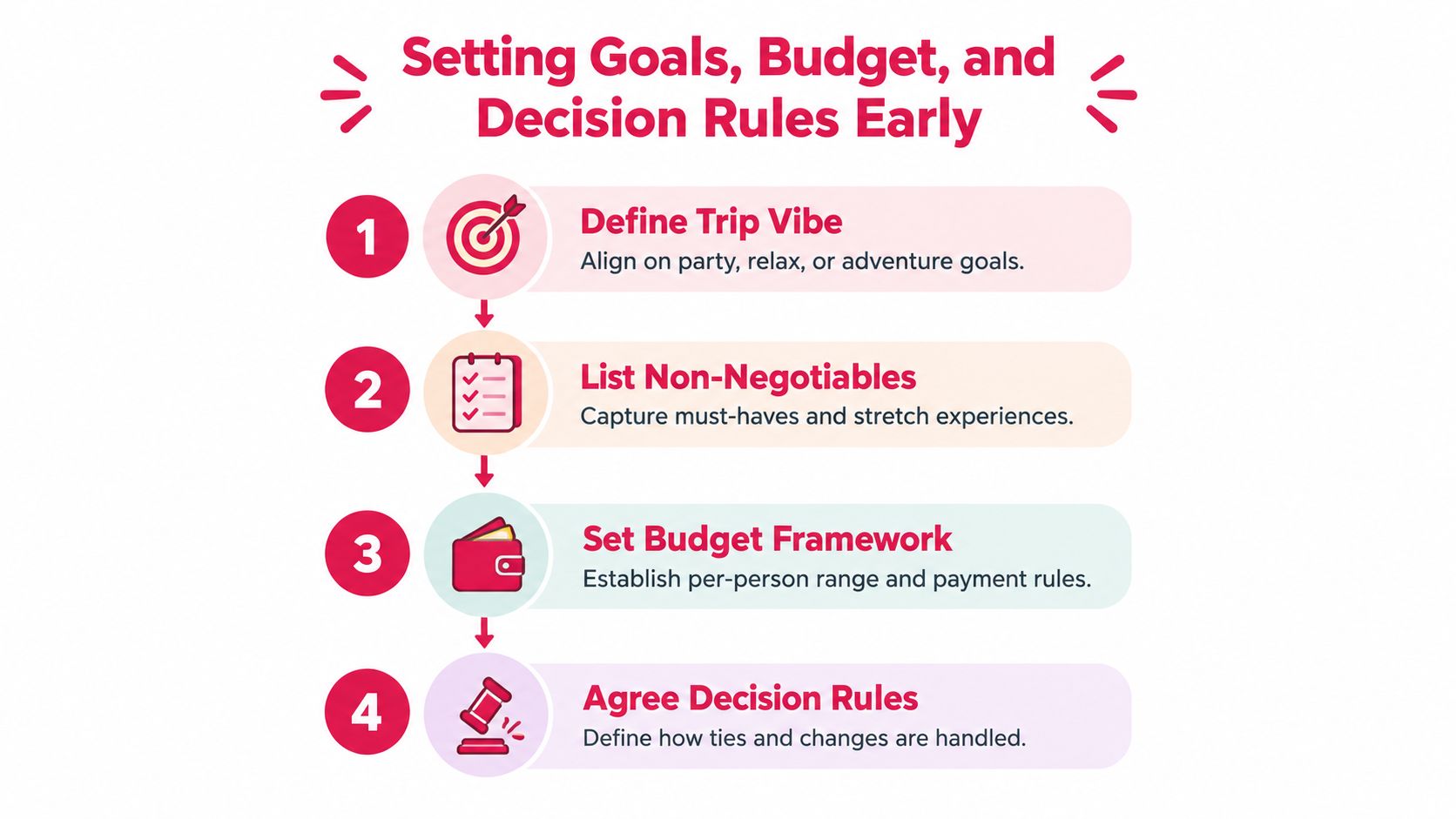
Don't begin with “Where should we go?” Begin with “What does this trip need to deliver?” Destination suggestions become distracting when the group hasn't agreed on the experience.
Start with three shared goals
Write these down before opening a destination poll:
- Trip vibe: Choose the dominant feeling, such as high-energy party, relaxed wellness, food and culture, outdoor adventure, or a balanced mix.
- Non-negotiables: Record the bride's must-haves, such as a sailing afternoon, a private dinner, a spa visit, or a specific type of accommodation.
- Stretch experiences: Separate the one memorable upgrade from ordinary spending. This might be a rooftop dinner, private boat, cooking class, or exceptional day trip.
Next, set a per-person ceiling for the core itinerary. Add a visible buffer line for surprises, then label every activity as core or optional. Don't hide expensive extras inside a vague “we'll decide later” category.
Replace debate with private input
Use one anonymous survey before the group starts arguing about cities. Ask each guest for:
- Destination rankings: Offer a short Europe-first list, not an endless menu.
- Party-style interest: Ask guests to rank nightlife, wellness, food, culture, beach, and adventure.
- Must-do activities: Include both group-wide preferences and optional interests.
- Dietary requirements: Capture allergies, restrictions, and food preferences early.
- Mobility considerations: Ask about walking tolerance, stairs, transfers, and activity access.
- Budget comfort: Request a private range so guests can answer without defending their finances in public.
A two-minute anonymous survey is more useful than another chat poll because it gives quieter guests room to state what they can afford and what they want. MyPerfectStay's decision-making tool fits this stage by collecting private preferences and helping a group turn them into a defined choice rather than leaving every answer buried across multiple apps.
Set the rules before voting. Use a majority vote for the destination, require two-thirds approval for a major paid add-on, and give the organizer a stated tiebreaker if the result is split. That isn't authoritarian. It's a promise that the group won't reopen a settled question every few days.
Assign ownership immediately. One person books flights or coordinates arrival details, one tracks deposits, and one maintains the shared spreadsheet or expense tool. The planner remains accountable for the whole picture, but each owner handles a clearly bounded task.
Picking a Destination and Party Style That Fit the Group
Europe gives you enough contrast to match the group instead of forcing every bachelorette weekend into the same nightlife template. Barcelona and Lisbon suit a social, food-led trip. Tuscany and the Douro Valley work better for long lunches and slower days. Copenhagen and the Greek Islands can combine wellness, walking, culture, and time on the water.
Use the survey result as the first filter, then test it against the budget ceiling and the bride's preference. Don't choose a destination because it looks exciting online if the group can't agree on the daily energy or the cost of getting around.
Compare the party styles
| Style | Sample Destination | Nightly Budget per Person | Energy Level | Decision Complexity |
|---|---|---|---|---|
| Classic party city | Lisbon or Barcelona | Moderate to high | High | Moderate |
| Wine country escape | Tuscany or Douro Valley | Moderate | Medium | High |
| Wellness and culture mix | Copenhagen or the Greek Islands | Higher | Low to medium | Moderate |
These are planning bands, not promises. Prices change with dates, room configuration, transport, and inclusions. Use them to compare the shape of the trip, then collect live quotes before voting.
Classic party city: Build around a beach club or daytime social activity, a nightclub or late dinner, and a rooftop brunch. Lisbon and Barcelona offer strong food, nightlife, and walkable neighborhoods, but the itinerary needs transport planning and firm limits on late nights. Choose this style when the bride wants momentum and the group enjoys staying together.
Wine country escape: A vineyard visit, long lunch, and cooking class create a more conversational weekend. Tuscany and the Douro Valley usually require more coordination because activities and accommodation may sit outside a central city. This style is better for a group that wants a memorable setting without making nightlife the main event.
Wellness and culture mix: Pair a spa morning with a walking tour and a sailing afternoon. Copenhagen offers design, food, and city culture, while the Greek Islands bring water, scenery, and slower pacing. This style has lower daily intensity, but island transfers and premium accommodation can complicate the booking decision.
For the non-travel details — themes, invitations, decorations, and party gear — this general hen party planning guide is a reasonable primer once the group has agreed on its style. It's written for the at-home celebration rather than the trip, so treat it as trimming, not itinerary.
Peak travel periods can create overlapping price pressure, particularly in July and August, so don't treat those months as a small detail. Once the style is chosen, map each requirement to the booking flow: lodging first, one defining activity next, transport connections after that, and flexible meals last. The bachelorette party ideas guide can help turn the selected mood into specific activities without reopening the entire destination debate.
Building the Planning Timeline and Shared Calendar
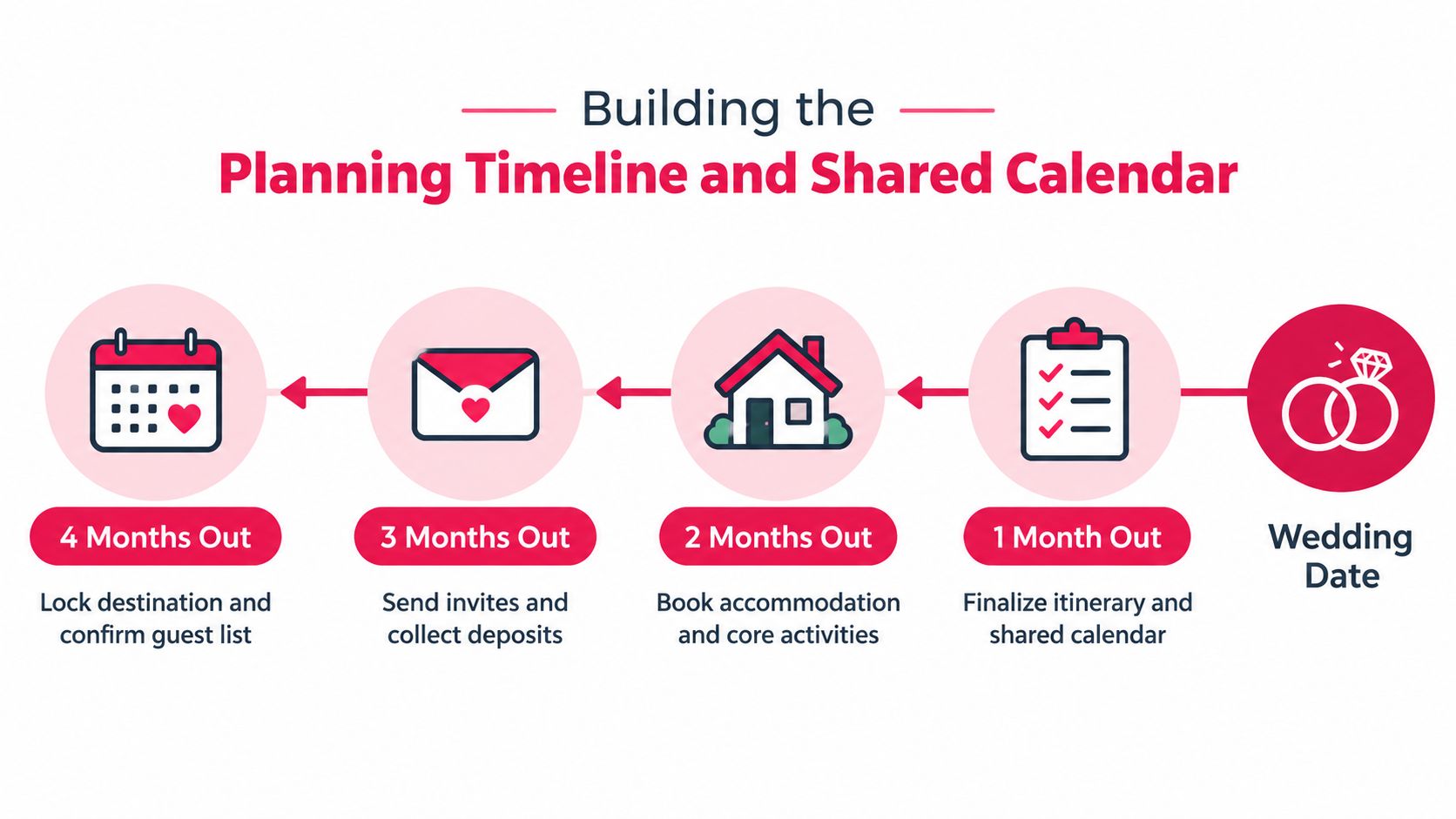
Work backward from the wedding date. A four-month sequence gives every decision a home and prevents the final weeks from becoming a rush of unpaid favors.
Four months out
Shortlist the destinations, send the anonymous survey, confirm the guest list, and set the budget ceiling. The group should leave this month with one preferred destination and one fallback, not a collection of “maybe” options.
Three months out
Send the invites with the dates, the per-person range, and the deposit deadline on them. Collect deposits, shortlist accommodation, and confirm the room plan. This is also the point to record arrival windows, accessibility needs, dietary details, and cancellation terms.
Two months out
Book the accommodation and the defining activity, then finalize dining reservations, transport, and outfit coordination. Publish what's included in the core itinerary and what guests can skip without affecting the rest of the group.
One month out
Confirm every reservation, circulate the packing list, verify emergency contacts, and freeze the itinerary except for essential changes. Keep a private logistics view with booking references and payment status.
Use three calendar layers:
- Bride view: A clean one-page itinerary showing only the moments she needs to know.
- Group view: Meeting points, dress guidance, arrival times, optional blocks, and payment reminders.
- Planner view: Booking references, supplier contacts, room assignments, deposits, and contingency notes.
Google Calendar works for time-sensitive reminders. Notion suits detailed planning. A pinned WhatsApp message keeps the essential information visible. MyPerfectStay's travel planning app is another option for combining a shared itinerary with group travel details.
Build in a two-week cushion before deposits become non-refundable, and set a 72-hour pre-trip freeze on major changes. Send one monthly check-in at the start of each planning month, then switch to short confirmation messages once the trip is locked.
Gareth Pronovost's walkthrough below, How to Plan (and Automate) a Bachelor Party, is a bachelor-party build rather than a bachelorette one, but it shows the same principle in practice: one shared base holding the itinerary, the costs, and the responses, instead of three group chats and a spreadsheet.
Locking Bookings, Itinerary, and Group Logistics
Treat lodging, activities, and transport as one connected system. The rule is simple: one visible booking decision per category. The moment something is confirmed, post the supplier, date, amount, payer, and cancellation terms where everyone can see them. That prevents two people from paying for the same winery tour or reserving incompatible arrival times.
Choose accommodation for the real group
Capacity alone isn't enough. Check the bedroom count, bed configuration, ensuite bathrooms, kitchen access, centrality, stairs, luggage storage, and noise rules. A kitchen can make arrival breakfasts easier, while a central location may reduce the number of paid transfers and late-night taxi decisions.
Then connect the accommodation to the activities. If the group plans a boat trip from the marina, don't select a remote villa without pricing the transfer. If the weekend includes nightlife, decide whether everyone wants to walk home, use taxis, or return together with a prearranged vehicle.
Activities often become available within a limited advance-booking window, so shortlist the defining experience before filling every meal slot. Leave room for different energy levels. One shared anchor per day is usually more effective than a schedule that expects everyone to participate continuously.
Use a clean payment handoff
The organizer can place the initial deposit, but that person shouldn't become the permanent bank. Send each guest an individual payment link through the shared expense tool, record each contribution as received, and keep optional purchases separate from core costs.
A booking platform can help when the group needs preferences, voting, confirmations, and itinerary details in one place. MyPerfectStay offers private preference capture, group activity voting, booking coordination, automatic confirmations, and a shareable itinerary link, so guests can access the agreed plan without hunting through old messages.
A sample Lisbon structure
Lisbon works well when the group wants one energetic activity, one social food experience, and one restorative morning. Keep the core schedule legible rather than stacking multiple paid events into every day.
| Day | Main Activity | Lodging | Transport | Est. Cost Per Person |
|---|---|---|---|---|
| Day 1 | Arrival and tapas crawl | Central shared accommodation | Airport transfer and walkable evening route | Confirm with live quotes |
| Day 2 | Sailing afternoon | Same accommodation | Prearranged transfer to marina | Confirm with live quotes |
| Day 3 | Spa morning and flexible brunch | Same accommodation | Walk, taxi, or local transport | Confirm with live quotes |
| Departure | Breakfast and check-out | Same accommodation | Airport transfer plan | Confirm with live quotes |
The table is deliberately quote-based. Don't invent a fixed trip price before you know the dates, room plan, supplier terms, and guest count. Record every confirmed amount in the shared itinerary as soon as the booking clears.
Handling Group Conflicts and Last-Mile Changes
Group friction isn't a sign that the trip is failing. It's a sign that an important decision has been left vague. Research on young tourist groups found that people often dominate specific travel decisions rather than reaching every choice through equal group consensus, based on surveys of 412 and 200 respondents plus 10 longitudinal interviews. The University of Exeter research record supports assigning clear ownership instead of pretending every person will manage every decision equally.
Budget tension
The most sensitive problem is often silent. One or two guests may not be able to afford the tier the loudest voices selected, but they may avoid saying so in a public chat.
Offer two options before the survey closes:
- Full itinerary: Includes the defining experience, shared transfers, and planned group meals.
- Core-only plan: Includes accommodation, essential transport, and the main bride-approved activity.
Price both options clearly. Guests can choose without explaining their personal finances to the entire group. The planner then books the option that meets the approval rule rather than pressuring people into a single package.
Schedule tension
A night owl and an early riser don't need identical days. Set one anchor activity that everyone treats as the shared event, then create optional blocks around it. A late brunch, independent coffee walk, spa appointment, or quiet afternoon lets guests manage their energy without splitting the group at every turn.
The one-big-event-per-day approach also protects the budget and leaves recovery time. It matches the broader move toward more personalized, activity-led celebrations rather than nightlife-only weekends, as discussed in this bachelorette planning guidance.
Late dropouts
Write the reallocation policy during month two, before anyone pays the final balance. State who absorbs a non-refundable cost, whether the departing guest remains responsible for their share, and how an unused activity slot will be repurposed.
For the final 72 hours, appoint one decision-maker for in-trip pivots and maintain one live document for updates. Any change costing more than EUR 50 per person requires a group vote open for 12 hours. That keeps urgent decisions moving without allowing one person to make a costly change on everyone's behalf.
Planner Checklist and Quick Answers for Busy Organizers
Keep this list beside the calendar. Each line should produce an action, not another discussion.
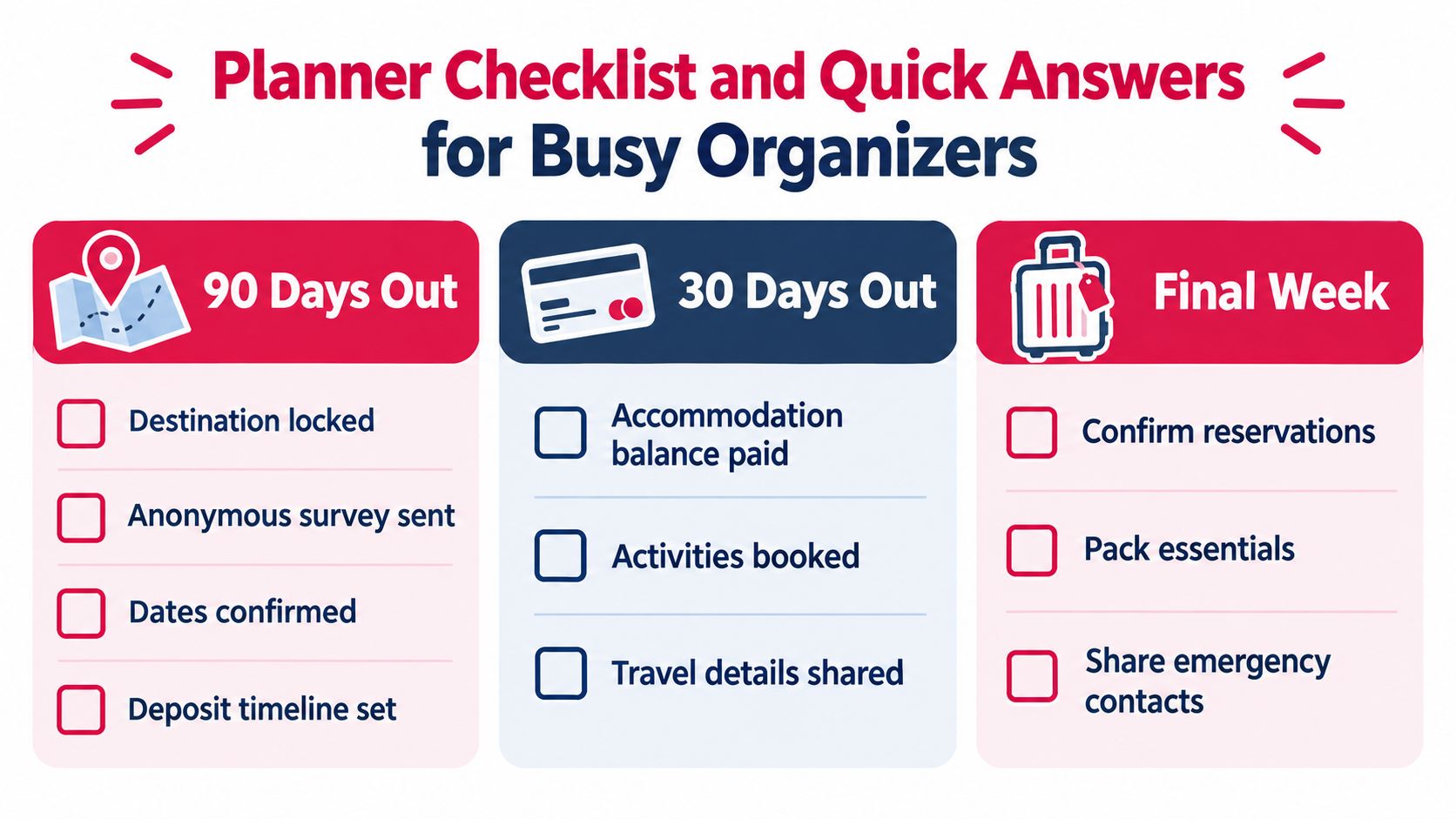
90 days out
- Lock the destination: Confirm the majority result and bride approval.
- Send the anonymous survey: Capture budget, energy, interests, dietary needs, and mobility requirements.
- Confirm the dates: Record arrival and departure windows for every guest.
- Set the deposit timeline: Publish due dates, cancellation terms, and payment owners.
- Choose the core itinerary: Separate essential plans from optional extras.
30 days out
- Pay the accommodation balance: Verify the room plan and save the confirmation.
- Confirm activities: Recheck start times, meeting points, accessibility, and cancellation rules.
- Pin the group message: Add arrival times, addresses, dress guidance, and the shared itinerary.
- Reconcile contributions: Mark each payment as received and follow up privately on missing amounts.
- Publish the transport plan: Include airport transfers, trains, taxis, and emergency alternatives.
Trip week
- Confirm every reservation: Call or message suppliers if any detail has changed.
- Print itinerary copies: Keep one for the bride and one in the planner's bag.
- Pack the essentials: Work from the packing list circulated a month out, including anything the group agreed to share.
- Share emergency contacts: Include accommodation, transport, activity providers, and local help.
- Activate the expense tracker: Make sure every participant can record or review costs.
- Freeze major changes: Apply the agreed voting and decision-maker rules.
If your group is considering a villa-style stay, price room privacy, transfers, and total shared cost together rather than one at a time. A lower nightly rate outside the centre often disappears into taxi fares by the second evening.
Quick answers
What should we do if a guest drops out late?
Apply the written reallocation policy. Confirm whether the guest still owes a non-refundable share, offer the place to an approved replacement if practical, and don't change the core itinerary without the agreed vote.
How can we split costs fairly when incomes differ?
Use the full-itinerary and core-only tiers. Charge optional activities to participants who choose them, and avoid equal splitting when guests didn't receive the same value.
Should plus-ones be invited?
Only if the bride wants them and the budget, room plan, and group dynamic still work. Add them before the survey closes so their costs and preferences enter the same decision process.
What if the bride wants something the group can't afford?
Protect the bride's priority by making it the stretch experience, then reduce optional extras or offer a core-only tier. Don't raise everyone's ceiling after votes are complete.
MyPerfectStay helps bachelorette groups collect private preferences, vote on activities, lock bookings, and share an auto-organized itinerary without forcing every decision through a group chat. Visit MyPerfectStay to turn your destination shortlist into a clear, bookable plan.