10 Best Family Vacation Ideas for Every Family
September 15, 2026·MyPerfectStay

You're trying to plan one trip, but your family is already imagining four different holidays. One traveler wants a beach, another wants museums and historic streets, the children need time to play, and the person organizing everything has to keep the budget fair. The best family vacation ideas don't appeal to only one person. They balance ages, mobility, energy, spending limits, food preferences, and the amount of travel everyone can tolerate.
Family travel has become a substantial planning priority. The Family Travel Association's tenth annual survey found that 92% of parents planned to travel with their children in the next year (Family Travel Association survey coverage). The same research, published by NYU SPS, put the average family's 2024 travel spending at about $8,052, roughly 20% more than the previous year, and found affordability still matters to 73% of parents, so clear pricing and bundled value deserve as much attention as the destination itself (2025 Family Travel Survey).
The ten formats below start with Europe and MENA, then compare the experience each trip creates. For every idea, you'll find a practical 2 to 5 day framework, age and energy guidance, packing and safety considerations, budget context, and a MyPerfectStay workflow for surveying preferences, collecting private votes, surfacing match scores, locking bookings, and building a shared itinerary.
Table of Contents
- 1. The Grand European Cultural Tour Paris Rome and Barcelona
- 2. Mediterranean Island Hopping Greek Islands and Coastal Escape
- 3. Alpine Adventure and Swiss Family Resort Circuit
- 4. Portuguese Coastal and Urban Mix Lisbon Porto and Douro Valley
- 5. Middle Eastern Magic Dubai and Emirati Cultural Experience
- 6. Moroccan Adventure Marrakech Atlas Mountains and Sahara
- 7. Central European Explorer Prague Vienna and Budapest
- 8. Spanish Southern Escape Barcelona Seville and Costa del Sol
- 9. Jordanian Wonder Petra Dead Sea and Desert Landscape
- 10. Turkish Riviera and Aegean Route Istanbul Cappadocia and Mediterranean Coast
- Top 10 Family Vacation Ideas Comparison
- Turn the Shortlist Into a Shared Plan
1. The Grand European Cultural Tour Paris Rome and Barcelona
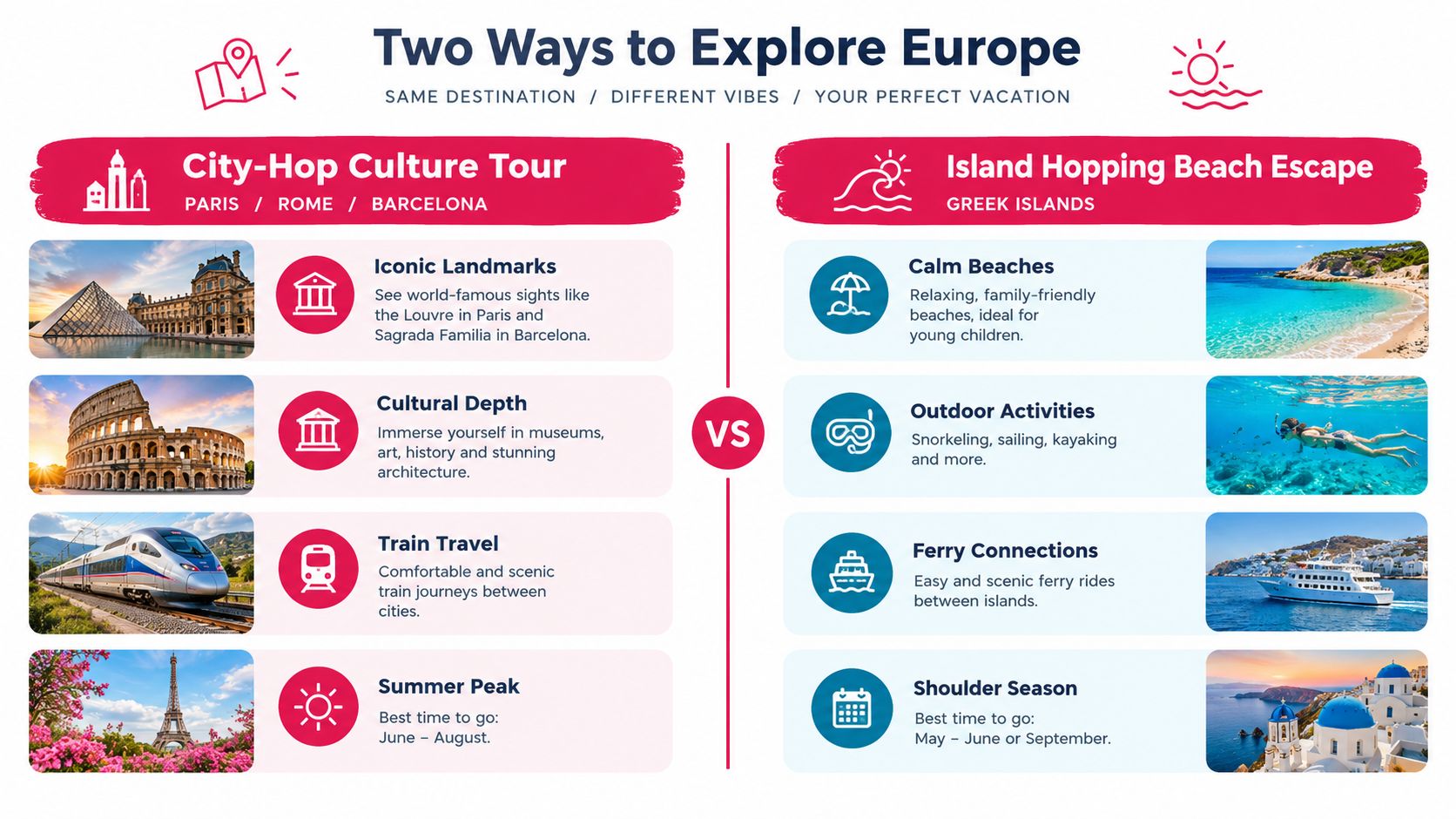
Paris, Rome, and Barcelona create a strong choice for families who want art, architecture, food, and famous landmarks in one substantial journey. Rome tops one family-travel guide's ranking of family-friendly European cities, while another leaves Paris off its list on purpose, on the grounds that Paris and London are already the two European destinations most families have seen (Rome family travel guide, kid-friendly European cities). A three-city route works especially well for families with school-age children, teenagers, and grandparents who enjoy different forms of sightseeing.
For a 2 to 5 day version, choose one city rather than forcing all three. Paris suits a five-day stay with one major landmark or museum visit each day, a park afternoon, and a flexible final day. Rome benefits from an early historic-site visit, a food-focused afternoon, and a quieter day around gardens or neighborhood streets. Barcelona can combine Gaudí architecture with beach or park time, so it's often the easiest option for children who need variety.
Pacing the culture
June to August is the classic window for this route and also its busiest: peak museum queues in Paris, peak heat in Rome and Barcelona. May to June and September keep the same landmarks with less crowd pressure, which usually tells on young children and grandparents first. Museum-heavy travel can exhaust younger children and older relatives when every day follows the same pattern. Schedule major museums in the early morning or late afternoon, and vote on whether each day should be “culture-heavy” or “family-active,” with parks, playgrounds, and open-air neighborhoods replacing another indoor attraction.
- Accommodation: Choose an apartment or connecting rooms so grandparents, parents, and children have practical separation without splitting the group.
- Food planning: Collect dietary preferences before choosing restaurants, especially when shared dinners need to suit several generations.
- Free-choice time: Leave one day in each city open for small sub-groups, such as a museum visit for some travelers and a park or shopping outing for others.
The main trade-off is transfer fatigue. A longer journey gives the group more cultural range, but a short break should focus on one city. MyPerfectStay can help the organizer invite travelers, collect private preferences, compare match scores for museums, parks, tours, and restaurants, then book selected experiences for the whole group with confirmations sent to everyone.
2. Mediterranean Island Hopping Greek Islands and Coastal Escape
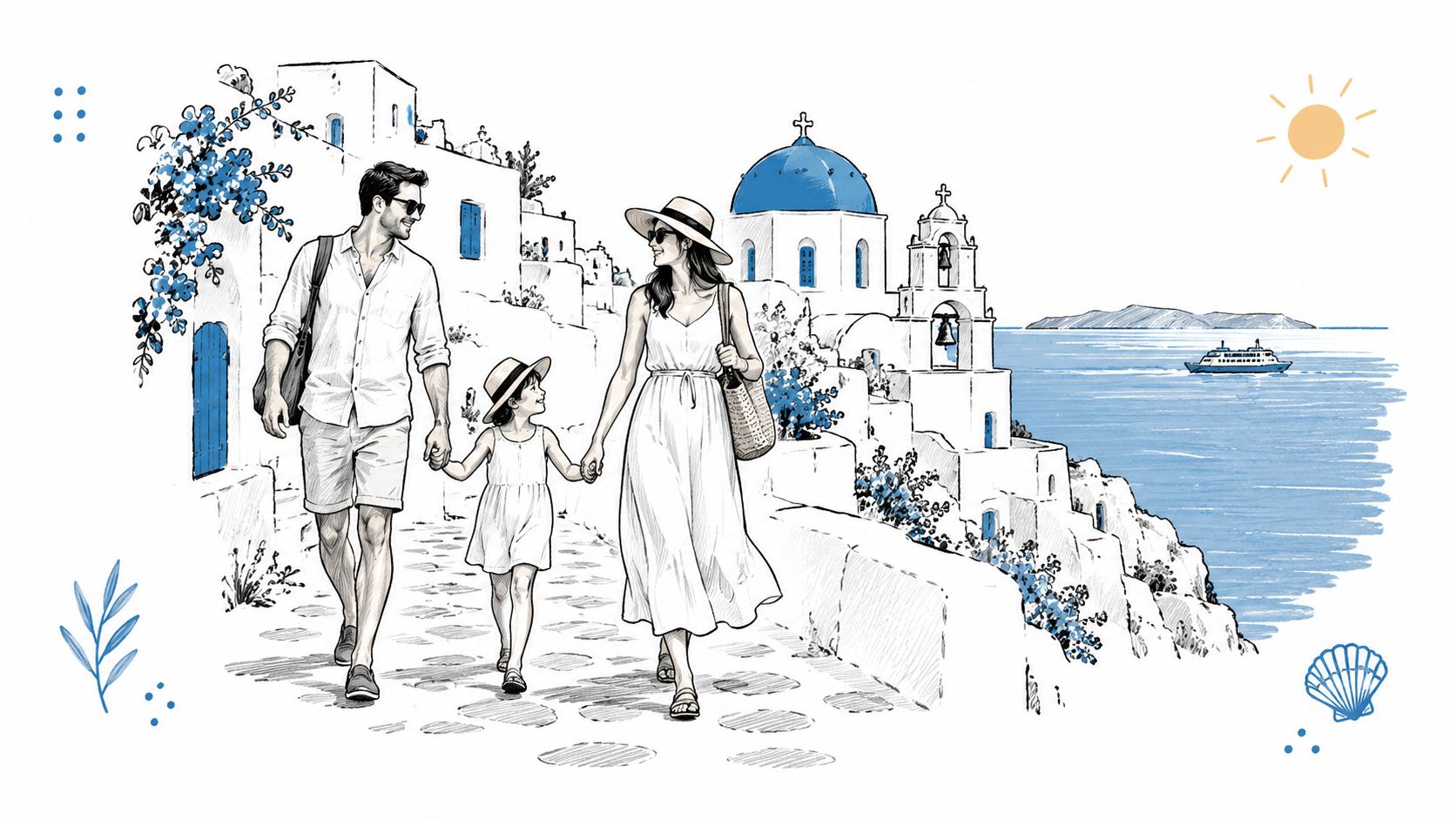
Greek island travel gives families a clear emotional payoff: warm water, unhurried meals, and a daily choice between exploration and rest. Santorini, Mykonos, and Crete offer different personalities, but moving between islands also introduces ferry schedules, luggage handling, and the risk of turning a beach holiday into a transport exercise.
For a 2 to 5 day trip, stay on one island unless the group is comfortable with a transfer day. Crete works for families wanting beaches, food, and cultural visits without changing hotels. Santorini suits older children and teenagers who can manage uneven paths and long sightseeing days, while Mykonos can work for a short coastal escape with carefully chosen family areas. A longer island route should include one organized adventure day and several flexible days.
Keep the water holiday flexible
Families often disagree about the ideal beach day. Children may want swimming and water sports, adults may prefer sailing, and grandparents may prioritize shaded seating and easy access. A private MyPerfectStay survey can separate those preferences before the group votes, then identify a compromise such as a shared boat trip, children's water-sports instruction, and a quieter afternoon for adults.
Travel in May to June or September to October for conditions that are generally more comfortable than the height of summer. Book ferries ahead, particularly when several travelers need cabins or coordinated seats. Family-run tavernas can make group meals feel more personal than restaurants designed around passing tourist traffic.
Practical rule: Plan one fixed activity per island, then protect the rest of the day from unnecessary commitments.
Pack sun protection, swimwear, secure footwear for uneven village streets, and light layers for ferry rides. Children should stay within direct adult supervision near water, boat edges, and rocky shorelines. The budget advantage comes from shared apartments, cabins, and pre-agreed meals, but ferry changes can raise costs and complicate the schedule. MyPerfectStay gives the group one place to vote on beaches, boat tours, and cultural activities, then lock the choices together.
3. Alpine Adventure and Swiss Family Resort Circuit
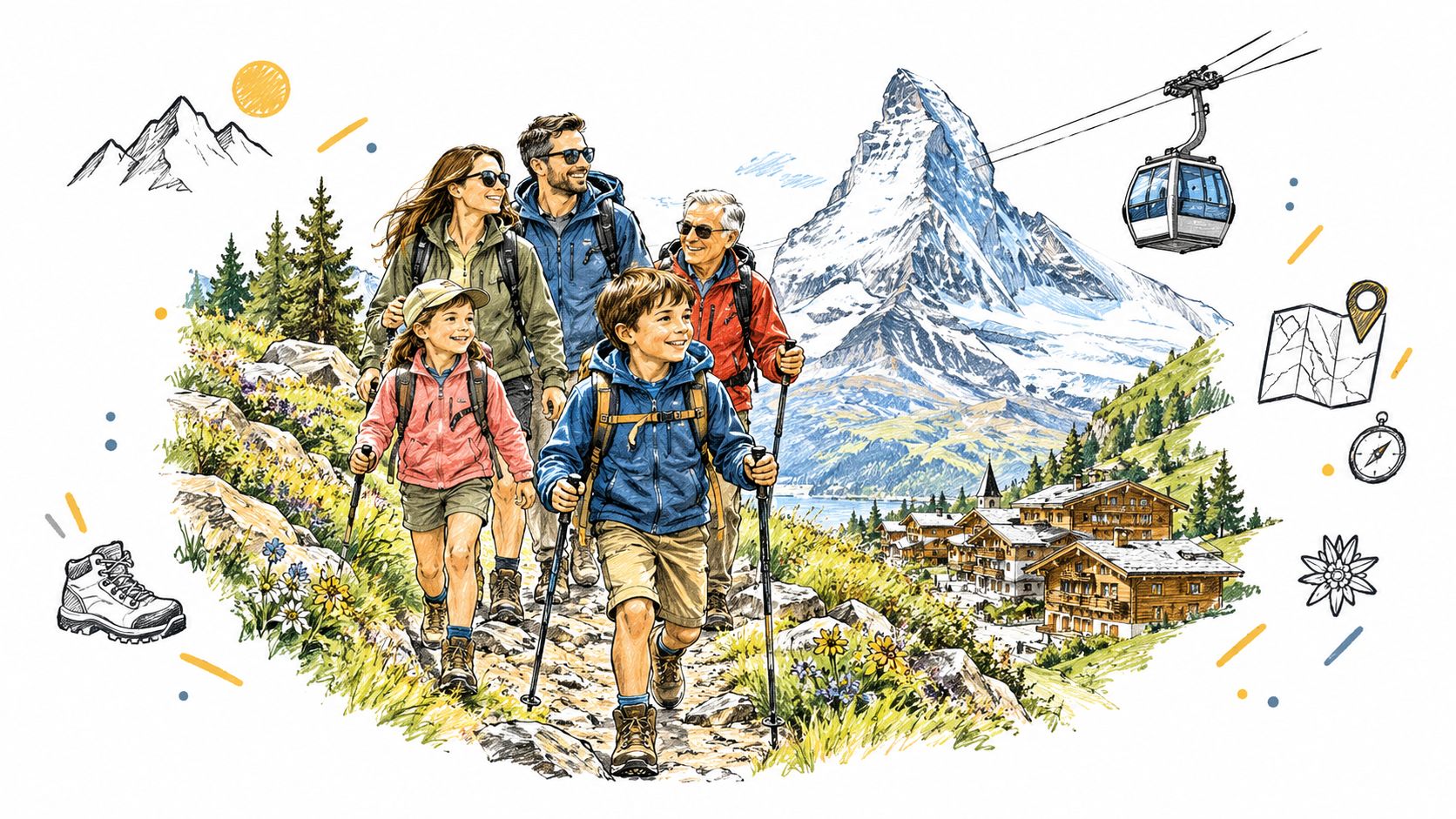
Swiss mountain travel works best when the family experience is built around shared scenery, not identical fitness levels. Interlaken, Grindelwald, and Zermatt offer hiking, mountain railways, cable cars, and resort facilities, giving active travelers room to explore while younger children, grandparents, or less-mobile guests stay involved.
Choose one base for a 2 to 5 day itinerary. Interlaken connects easily with several valleys and suits a first alpine visit. Grindelwald keeps dramatic scenery close to family activities. Zermatt fits families prioritizing a distinctive mountain village and Matterhorn views. Plan one demanding outing, one accessible scenic trip, and a recovery period rather than filling every day with elevation changes.
Start with the family's ability map. A short survey can separate keen hikers from guests who prefer a cable-car viewpoint or low-impact access. The organizer can then create overlapping plans, such as a guided trail for confident walkers and a railway or lakeside option for everyone else.
- Mixed ability: Schedule family ski lessons alongside non-ski activities, so beginners and non-skiers receive a proper plan rather than waiting on the sidelines.
- Transport: Compare the planned train and cable-car route with available Swiss travel passes before purchasing. A pass only saves money when the itinerary uses enough included travel.
- Accommodation: Central lodging reduces commuting and gives tired children or grandparents an easy route back to the room.
- Safety: Use a family-focused mountain guide for demanding trails, weather-sensitive activities, or terrain the group does not know.
Budget pressure usually comes from alpine transport and resort accommodation. Central rooms may cost more, but they can reduce transfers, taxi use, and lost time. Pack waterproof layers, warm clothing, sturdy shoes, sun protection, and any medication needed for changing altitude and weather. Check terrain and access before promising a summit-style day to toddlers or travelers with limited mobility.
MyPerfectStay can collect activity-intensity preferences, present suitable choices, and let the group vote before booking lessons, guides, cable-car outings, or scenic excursions. The practical booking workflow is simple: agree on the base, rank energy levels, confirm the shared outing, then reserve separate activities where preferences diverge.
4. Portuguese Coastal and Urban Mix Lisbon Porto and Douro Valley
Portugal works for families who want city energy, scenic countryside, coastal air, and food without building every day around a major attraction. Lisbon and Porto have enough urban variety for children and adults, while the Douro Valley changes the rhythm with river scenery and slower rural experiences. The route is also easier to explain to a mixed-age group than a holiday built around nonstop sightseeing.
For a 2 to 5 day stay, choose Lisbon and add one countryside or coastal excursion. A longer itinerary can use three to four days in Lisbon, two to three in Porto, and two to three in the Douro Valley. Lisbon suits market visits, historic neighborhoods, food tours, and family apartments. Porto offers a compact urban base, while the Douro Valley is best treated as a calm contrast rather than another packed sightseeing zone.
Make the budget visible
Shared apartments and market-based meals can help families control spending, but the organizer should price transport, guided activities, and rural transfers before asking everyone to commit. Voting works well here because one branch of the group may prefer museums and historic sites, while another wants cooking classes, food tours, or river views.
Renting a car for the Douro Valley can improve flexibility, but it also creates responsibility around driving, child seats, parking, and alcohol consumption. Families should nominate drivers before booking and avoid scheduling a tasting-focused day for anyone responsible for the return journey. Pack comfortable shoes for steep streets, sun protection, light layers, and a small day bag for food or countryside excursions.
Use MyPerfectStay to survey priorities, compare match scores, and choose whether the group spends its shared activity budget on a cooking class, a guided city walk, a scenic valley outing, or a combination. The platform can also keep the final reservations and daily plan visible to every traveler. Before setting the route, consult this guide to things to do in Lisbon.
5. Middle Eastern Magic Dubai and Emirati Cultural Experience
For families balancing different ages and energy levels, Dubai works best as a controlled mix rather than an attraction checklist. Reliable infrastructure, pools, beaches, major entertainment venues, and clear service systems make logistics easier. Desert scenery and heritage visits add cultural depth, while careful scheduling prevents the trip from becoming an expensive sequence of tickets, transfers, and reservations.
Use a 2 to 5 day itinerary with one major attraction or theme-park day, one desert experience, one pool or beach day, and one open block. That open time can cover shopping, museums, or an Emirati heritage visit. Young children gain recovery time, while teenagers and adults can choose a more active outing without forcing the whole family to follow the same pace.
Build the route around heat, age, and total cost
Plan outdoor activities early or later in the day, especially during warmer periods. November to March is the more comfortable travel window, with typical daytime temperatures of 20 to 30°C. Treat those figures as guidance rather than a guarantee. Downtown Dubai and Dubai Marina are convenient bases, but compare room layouts, pool access, breakfast, transfers, and attraction costs before choosing a hotel.
A practical decision sequence:
- Survey preferences for theme parks, desert safaris, shopping, spa time, yacht cruises, and dining.
- Match demanding activities to the family's energy level, keeping an indoor or pool option available.
- Compare hotel, attraction, and safari bundles with separate bookings.
- Set meeting points and adult supervision responsibilities for malls, parks, beaches, and crowded venues.
The main trade-off is convenience versus spending. One memorable shared experience plus free beach or pool time may suit the group better than several high-priced attractions. Pack sun protection, refillable water bottles, light clothing, and footwear suitable for sand and walking. For desert outings, confirm child seating, pickup timing, and the operator's safety arrangements before paying.
MyPerfectStay can gather private preferences, display areas of agreement, send confirmations to participants, and keep the shared itinerary in one place. Use that workflow to decide which experience receives the group budget, confirm the practical details, then book only after every traveler can see the final plan.
6. Moroccan Adventure Marrakech Atlas Mountains and Sahara
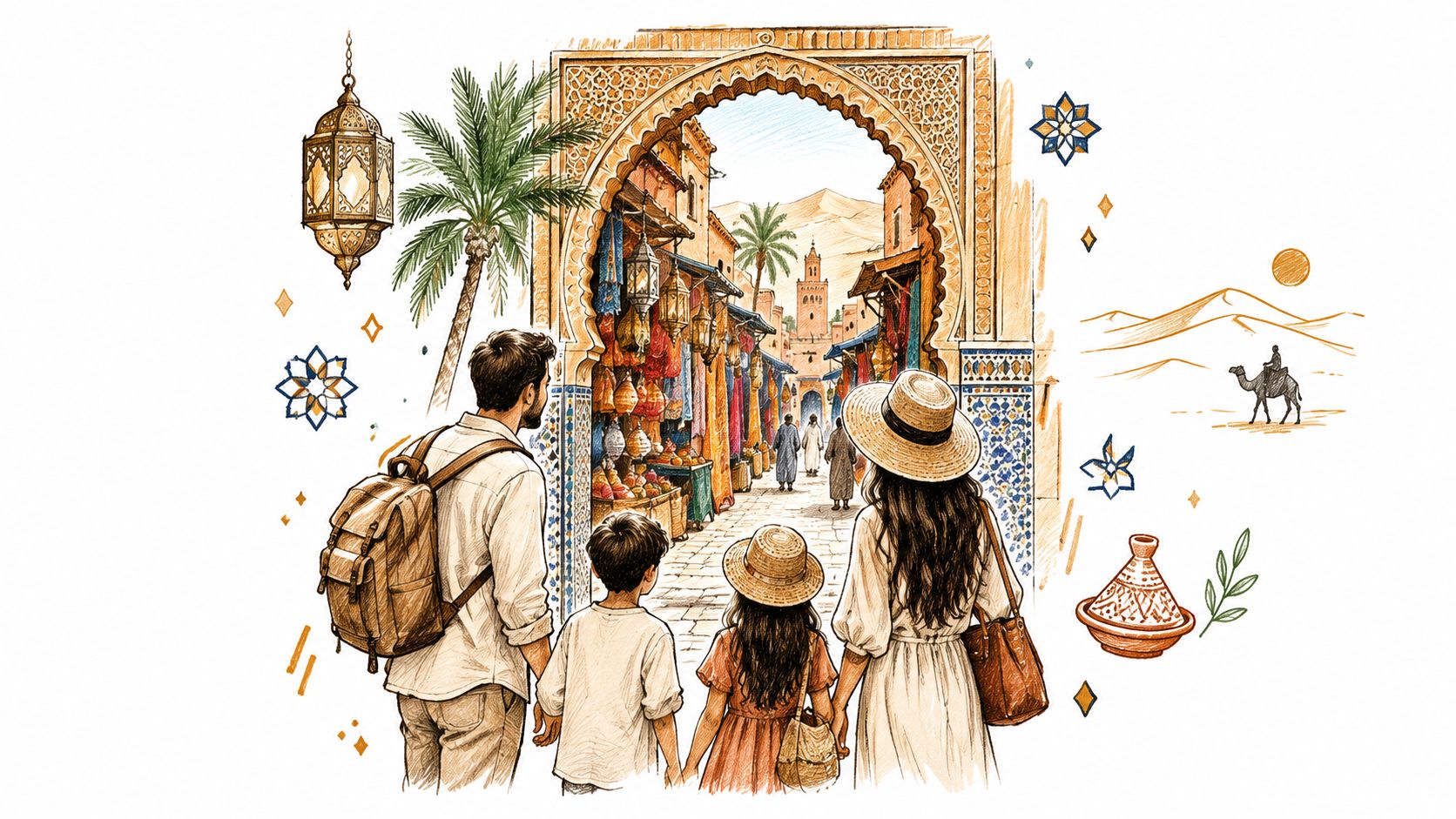
Morocco creates a high-contrast family journey. Marrakech and Fez provide markets, architecture, crafts, and food, while the Atlas Mountains and Sahara introduce hiking, open terrain, and overnight desert camps. The route rewards curiosity, but it asks families to manage heat, driving time, unfamiliar surroundings, and different comfort levels.
For 2 to 5 days, base the trip in Marrakech and add a carefully selected day excursion. A longer route can spend two to three days in Marrakech or Fez, two to three days in the Atlas Mountains or nearby towns, and one to two days in the Sahara. Younger children may handle a short camel experience better than a demanding trek, while teenagers often enjoy a guided market challenge, cooking class, or outdoor adventure.
Separate cultural intensity from physical effort
Families shouldn't combine the longest medina walk, a mountain transfer, and a desert activity in one exhausting stretch. Use a private survey to identify comfort with cultural differences, walking, heat, and adventure. MyPerfectStay match scores can help form compromise days, such as a guided medina morning followed by a riad lunch and pool time.
Book guides and excursions through structured tourism operators rather than relying on informal arrangements. A professional operator can plan a family-appropriate pace, transport, child seating, and emergency support. Pack modest, breathable clothing, closed shoes for uneven streets, sun protection, water bottles, medication, and warm layers for desert evenings.
Shared riads and group cooking experiences can make the trip more social and help distribute accommodation costs. The main budget risk is underestimating transfers, private drivers, and activity inclusions. Confirm whether meals, equipment, guide services, and camp transport are included before voting to book. MyPerfectStay can gather the group's preferences, organize votes for cultural or outdoor activities, and consolidate reservations. For planning the city portion, see things to do in Marrakech.
7. Central European Explorer Prague Vienna and Budapest
Prague, Vienna, and Budapest offer grand architecture, museums, classical music, markets, thermal spas, and a more relaxed cost conversation than some Western European capitals. A family can spend the morning exploring a castle, let children run in a park, and reserve an afternoon for a bathhouse or café without making the trip feel unfinished.
A 2 to 5 day itinerary should focus on one city. Prague works well for a compact historic break, Vienna for palaces, music, and polished transport, and Budapest for a combination of river views, markets, and thermal relaxation. A longer route can give each city several nights, but the organizer should build in a full rest day rather than treating every transfer as a sightseeing opportunity.
Give different generations separate wins
Grandparents may value a concert or historical walking tour, while children may prefer interactive attractions, open spaces, or a less formal meal. Private surveys let the group identify who wants classical music before tickets are purchased. A concert can then be booked for matching travelers while others choose a family activity, rather than forcing the entire group into one expensive evening.
Visit in May to June or September to October for pleasant conditions and fewer summer crowds. Pack comfortable walking shoes, layers, rain protection, and swimwear if a thermal spa is on the shortlist. Check each spa's age policy and supervision rules before booking, since not every facility suits young children.
Pre-book major attractions and castle visits when timing matters. An English-speaking guide for one or two historical walks can improve context and reduce the pressure on parents to explain every landmark. The budget advantage comes from apartments and shared experiences, but transport between three cities still consumes energy. MyPerfectStay can match interests, coordinate concert and attraction votes, and keep the group's bookings and rest days in one shared plan.
8. Spanish Southern Escape Barcelona Seville and Costa del Sol
Barcelona, Seville, and the Costa del Sol work best as a trip with changing energy levels. Families begin with architecture, beaches, and city activity in Barcelona, add Seville's flamenco and historic atmosphere, then finish with slower seaside days. The route suits older children and groups comfortable with one significant transfer.
For 2 to 5 days, choose Barcelona or the Costa del Sol instead of forcing all three stops into a short break. A longer itinerary can allow three days in Barcelona, two to three days in Seville, and three to four days on the Costa del Sol. Flying between Barcelona and Seville may protect family energy, while the coast should provide recovery time rather than another packed sightseeing schedule.
Decide attractions by age and interest. The Sagrada Família and Park Güell can appeal to children who enjoy shapes, color, and stories, while others may prefer a playground or beach. Put each attraction to a family vote, and offer flamenco as an optional evening rather than a compulsory group event.
A practical rhythm looks like this:
- Barcelona: Reserve Sagrada Família and Park Güell weeks ahead once dates are fixed. Schedule one major visit per day, with beach or playground time afterward.
- Seville: Use a shorter stay for historic streets, a relaxed meal, and flamenco for interested travelers.
- Costa del Sol: Keep plans light, combining beach and pool time with no more than one planned outing daily.
Visit in May to June or September to October for more comfortable conditions, and place longer outdoor walks early or late in the day. Pack walking shoes, swimwear, sun protection, and light layers. Tapas tours or paella classes can accommodate varied appetites and dietary restrictions, but confirm menus before reserving.
The geographic spread raises transport time and luggage demands. Shared apartments can help control costs, while younger children may be better served by Barcelona and one coastal base. MyPerfectStay can collect choices on museums, flamenco, beaches, and food experiences, then coordinate bookings and show which optional activities each traveler selected.
9. Jordanian Wonder Petra Dead Sea and Desert Landscape
Jordan packs history, geology, and desert scenery into a route that can feel significant without requiring a long list of cities. Petra provides the central historical experience, the Dead Sea offers rest and resort time, and Wadi Rum adds a guided desert setting. It's an excellent fit for families who want a memorable shared story, but physical preparation matters.
For 2 to 5 days, use Amman as a short arrival base, spend time near Petra, then choose either the Dead Sea or Wadi Rum if the group wants a gentler schedule. The longer framework assigns one night in Amman, two nights near Petra, two nights at the Dead Sea, and an overnight camp in Wadi Rum. That itinerary creates variety, although the transfers require careful planning.
Build Petra around the least mobile traveler
Not everyone should be expected to complete the hike to Petra's Monastery. A private survey can identify who wants the demanding route and who prefers the scenic walk to the Treasury. The group can then book professional guides and create overlapping plans without making the less-active travelers feel as if they're missing the entire experience.
Visit between October and April, with December to February cooler but potentially busier for hotels. Arriving at opening cuts both crowds and midday heat, and in that window the gate is later than most itineraries assume: the site and visitor centre open at 06:30 in winter (2 October to 1 March, closing 17:00) and 06:00 in summer (closing 18:00) (Petra opening hours). Because those times and conditions can change, confirm operating details before departure.
Hire professional guides and drivers instead of self-driving when the group includes children, older travelers, or mixed fitness levels. Pack walking shoes, sun protection, layers for cool evenings, swimwear, hydration supplies, and any medication needed during long outdoor days. The Dead Sea requires close adult supervision around water and careful attention to skin and eye irritation. MyPerfectStay can coordinate Petra guides, Wadi Rum jeep experiences, and Dead Sea stays after the group votes on intensity and relaxation.
10. Turkish Riviera and Aegean Route Istanbul Cappadocia and Mediterranean Coast
Turkey gives families a broad range of experiences within one destination. Istanbul offers major-city energy and layered history, Cappadocia brings unusual rock formations and optional hot-air-balloon flights, and the Mediterranean coast supplies the slower finish that keeps the trip from becoming an extended museum tour.
For 2 to 5 days, choose Istanbul alone or combine Istanbul with Cappadocia. A longer route can spend two to three days in Istanbul, two days in Cappadocia, and three to four days on the Mediterranean coast. Domestic flights reduce overland fatigue, but every flight adds airport time, luggage handling, and another transition for younger children.
Separate the must-see list from the dream list
In Istanbul, ask the group to vote between Topkapı Palace, contemporary museums, food walks, and neighborhood exploration. In Cappadocia, hot-air-balloon flights should be optional because weather, age, comfort, and budget preferences differ. Families should book popular balloon experiences well ahead, then prepare a ground-based alternative such as a guided valley visit or viewpoint tour.
Visit in April to May or September to October to avoid the strongest summer heat and the winter cold. Hire English-speaking guides for busy Istanbul walks, and pack comfortable shoes, sun protection, layers, and a small bag for days that include several neighborhoods or viewpoints.
Choose the coastal finish only if the group wants recovery time. Otherwise, Istanbul and Cappadocia make a more coherent short break.
The itinerary's strength is variety. Its weakness is that the variety can become too much when every traveler wants a different highlight. MyPerfectStay can privately survey interest in palace visits, balloon flights, food tours, and beach time, then show match scores before the group commits. Use the planning guidance in this Turkey travel itinerary to shape the route around available time and transfers.
Top 10 Family Vacation Ideas Comparison
| Itinerary | 🔄 Implementation Complexity | ⚡ Resource Requirements | ⭐ Expected Experience | 📊 Ideal Use Cases | 💡 Key Advantages |
|---|---|---|---|---|---|
| The Grand European Cultural Tour: Paris, Rome & Barcelona | 🔄 High, multi-city transfers, timed museum bookings, multigenerational coordination | ⚡ €3,500–7,000 pp; 10–14 days; intercity trains, advance reservations required | ⭐⭐⭐⭐, Deep cultural immersion, iconic landmarks; possible museum fatigue for young kids | Families across generations, cultural enthusiasts, teens | 💡 World-class museums & infrastructure; strong family activities; easy rail links |
| Mediterranean Island Hopping: Greek Islands & Coastal Escape | 🔄 Medium, ferry logistics, variable schedules, flexible pacing | ⚡ €2,500–5,000 pp; 7–10 days; ferries/boats, some advance bookings for boats | ⭐⭐⭐⭐, Relaxed beach focus with active water-sports options | Beach-loving families, active teens, families with young children | 💡 Flexible scheduling, affordable, calm beaches ideal for kids |
| Alpine Adventure & Swiss Family Resort Circuit | 🔄 High, mountain logistics, rail/cable pass planning, seasonal variability | ⚡ €4,000–9,000 pp; 7–10 days; Swiss travel passes, gear and guide costs | ⭐⭐⭐⭐, Spectacular scenery, reliable infrastructure; physically active | Active families, multi-gen groups with mixed fitness | 💡 Exceptional safety/infrastructure, clear trail ratings, cable-car access |
| Portuguese Coastal & Urban Mix: Lisbon, Porto & Douro Valley | 🔄 Medium, city logistics plus Douro travel (car or river cruise) | ⚡ €1,800–3,500 pp; 8–10 days; trains/car rental, affordable local options | ⭐⭐⭐⭐, Strong culinary and cultural value; accessible pacing | Budget-conscious families, food-focused travelers, authentic-experience seekers | 💡 Excellent value, walkable cities, rich food/wine experiences |
| Middle Eastern Magic: Dubai & Emirati Cultural Experience | 🔄 Low, single-hub logistics, easy package coordination, seasonal timing | ⚡ €2,500–6,000 pp; 5–7 days; hotel packages, minimal intra-city travel | ⭐⭐⭐⭐, High convenience and luxury; wide activity range | Luxury-oriented families, mixed-interest groups, short stays | 💡 Unmatched family infrastructure, English widely spoken, bundled deals |
| Moroccan Adventure: Marrakech, Atlas Mountains & Sahara | 🔄 Medium, medina navigation, regional transfers, guided treks advised | ⚡ €1,500–3,000 pp; 7–10 days; flights + local transfers, guide fees | ⭐⭐⭐⭐, Authentic cultural immersion; varied landscapes and activities | Adventurous and culturally curious families, budget groups | 💡 High value, authentic experiences, strong family hospitality |
| Central European Explorer: Prague, Vienna & Budapest | 🔄 Medium, intercity trains, some accessibility limits (cobblestones) | ⚡ €2,000–4,000 pp; 8–10 days; trains, good value for attractions | ⭐⭐⭐⭐, Sophisticated culture, lower crowds, relaxing options (spas) | Architecture/music lovers, budget-conscious culturally sophisticated families | 💡 Thermal baths, classical music, exceptional value vs Western Europe |
| Spanish Southern Escape: Barcelona, Seville & Costa del Sol | 🔄 Medium, mixed transport (train/flight), timed attractions need booking | ⚡ €2,500–5,000 pp; 8–10 days; trains/domestic flights, moderate pricing | ⭐⭐⭐⭐, Diverse mix: architecture, flamenco, beaches | Families seeking architecture + beach time, culture seekers | 💡 Diverse activities, family-oriented culture, strong transport links |
| Jordanian Wonder: Petra, Dead Sea & Desert Landscape | 🔄 Medium, regional drives, guided logistics recommended, compact routing | ⚡ €1,500–3,000 pp; 6–8 days; guided transfers, modest travel distances | ⭐⭐⭐⭐, High bucket-list value; unique natural/historical sites | Adventure families, bucket-list travelers, active groups | 💡 Compact itinerary, unique natural phenomena, strong guide support |
| Turkish Riviera & Aegean Route: Istanbul, Cappadocia & Mediterranean Coast | 🔄 High, domestic flights and multi-region coordination | ⚡ €1,800–3,500 pp; 8–10 days; domestic flights, tours, advance booking for hot-air balloons | ⭐⭐⭐⭐, Extremely varied experiences at strong value | Culturally curious, adventurous families, budget-minded groups seeking variety | 💡 Exceptional value, diverse attractions (hot-air balloons, bazaars, coast) |
Turn the Shortlist Into a Shared Plan
The right choice isn't the destination with the longest attraction list. It's the format your family can enjoy without spending the entire trip negotiating, recovering from transfers, or paying for activities that only one person wanted. Start with the four filters that expose the practical differences between these ten ideas.
Ages and mobility should come first. Toddlers may thrive with a beach base, a resort, or Lisbon with a protected midday rest. Teenagers often handle city combinations, desert activities, and more ambitious outdoor plans. Grandparents may enjoy cultural cities and scenic railways, but steep streets, long museum days, Petra's trails, and alpine routes require honest planning. Multigenerational travel is now the default shape of a family trip: 57% of parents in the Family Travel Association's survey were planning to travel with grandparents and children (Family Travel Association survey coverage), 48% of Hilton's surveyed team members worldwide are seeing more families travel with three or more generations, and 84% of travelers will look for opportunities for the whole family to play together (Hilton family travel trends). That supports designing around shared moments with optional intensity, not insisting that everyone follow one pace.
Energy level separates a city break from a route-based adventure. Choose Paris, Barcelona, Lisbon, Dubai, or one Greek island when the family needs predictable days. Choose Jordan, Morocco, Switzerland, or the Turkey route when everyone accepts earlier starts, transfers, and more physical variation. Put one high-effort activity beside a low-effort day. Children usually remember the trip more fondly when downtime is planned rather than treated as a failure to use the destination.
Realistic budget requires more than comparing hotel rates. Families should price accommodation configuration, meals, attraction tickets, local transport, transfers, guides, child seats, and cancellation conditions. The 2025 Family Travel Survey found that 39% of parents planned to increase spending on domestic travel and 42% planned to keep it flat, which points to continuing demand for dependable, value-oriented formats (2025 Family Travel Survey). Bundled activities may simplify planning, but they aren't automatically cheaper. Compare the complete package with separate bookings before asking the group to vote.
Tolerance for transfers and heat is the final reality check. Greek ferries, multi-city European routes, Moroccan desert drives, Jordanian transfers, and Turkey's domestic flights all add logistics. Dubai, Petra, Marrakech, and some Mediterranean destinations require thoughtful heat management, shaded breaks, hydration, and adjusted sightseeing hours. If the group includes young children or travelers with medical needs, a shorter route with a strong base can be better than a more impressive itinerary on paper.
A fair decision process
MyPerfectStay is useful when the organizer needs agreement rather than another group-chat debate. Invite every traveler, ask each person to complete the private two-minute survey covering budget, interests, energy level, and must-see ideas, then compare the resulting match scores. Put the strongest destinations and activities on a shortlist, set a voting deadline, and let participants choose privately before the organizer locks the plan.
The workflow should stay disciplined:
- Invite the full group: Send a link to every adult and include children's needs through their parent or guardian.
- Collect preferences privately: Ask for budgets, food restrictions, mobility considerations, energy limits, and must-have activities.
- Compare match scores: Use overlap to identify destinations and experiences that satisfy the widest range of travelers.
- Vote on the shortlist: Separate shared essentials from optional activities, such as a concert, balloon flight, intense hike, or spa visit.
- Set deadlines: Use nudges and organizer deadlines so indecision doesn't remove the best accommodation or activity times.
- Lock and confirm: Book for the group in one workflow, with instant confirmations sent to participants.
- Use the shared itinerary: Keep daily plans, meeting points, reservations, and free-choice periods visible in one auto-organized schedule.
MyPerfectStay's planning flow is designed for groups choosing a city, inviting participants, voting on activities, and assembling an itinerary from those preferences. Its publisher describes access to 300,000+ bookable experiences across 190+ countries, including museum tours, desert safaris, food tastings, and yacht cruises (MyPerfectStay). The practical value for families is coordination. Everyone can see what was selected, who matched with it, and what remains optional.
Before departure, confirm passports, visas or other travel documents, medical requirements, prescriptions, insurance, weather-appropriate clothing, child supervision arrangements, airport and hotel transfers, accessibility details, and cancellation terms. Recheck activity age limits and operator instructions, especially for boats, mountain routes, desert camps, balloon flights, and water activities.
MyPerfectStay helps families replace group-chat debates with private preference surveys, match scores, fair voting, shared bookings, and an auto-organized daily itinerary. Choose your preferred Europe or MENA trip format, invite every traveler, and visit MyPerfectStay to turn the shortlist into a coordinated family vacation.