10 Date Night Apps That Actually Help You Plan a Date
November 15, 2026·MyPerfectStay

You've got a free Thursday. Your partner has a free Thursday. At 7:04 pm someone asks what you want to do, and by 7:44 pm you've cycled through six restaurants, two films you've both already seen, and one loaded silence. Nobody lacked ideas. Nobody lacked willingness. What was missing was a decision mechanism, a shortlist that reflects both of you, and a booking that takes ninety seconds instead of a group chat.
That's the gap this list works on. Date night apps fall into four practical types: mutual-match planners that force a private vote (Tink, DateMore, Beso), local discovery tools that tie ideas to real venues (Dae, The Couples Checklist), bookable experience platforms (Fever), and at-home connection apps for nights when leaving the house isn't the point (Paired, LovBirdz, Tryst). Hinge sits at the front of the funnel for readers who are still dating.
Availability varies far more than app store listings suggest. One product works in two countries, another is iPhone-only, a third shows you venues in some cities and nothing in others. Choice isn't the constraint: the Pew Research Center's online dating research found 30% of American adults had used a dating website or app in a July 2022 survey, and 9% had used three or more. Abundance of options is exactly why choosing is the hard part.
And if the plan involves dancing, the Philadelphia studio advice for dancing couples is a better briefing than any suggestion feed.
Table of Contents
- 1. Tink
- 2. Dae
- 3. DateMore
- 4. The Couples Checklist
- 5. Tryst
- 6. Fever
- 7. Paired
- 8. LovBirdz
- 9. Hinge
- 10. Beso
- Date Night Apps Compared
- Choosing the Right App and Making the Plan Stick
1. Tink
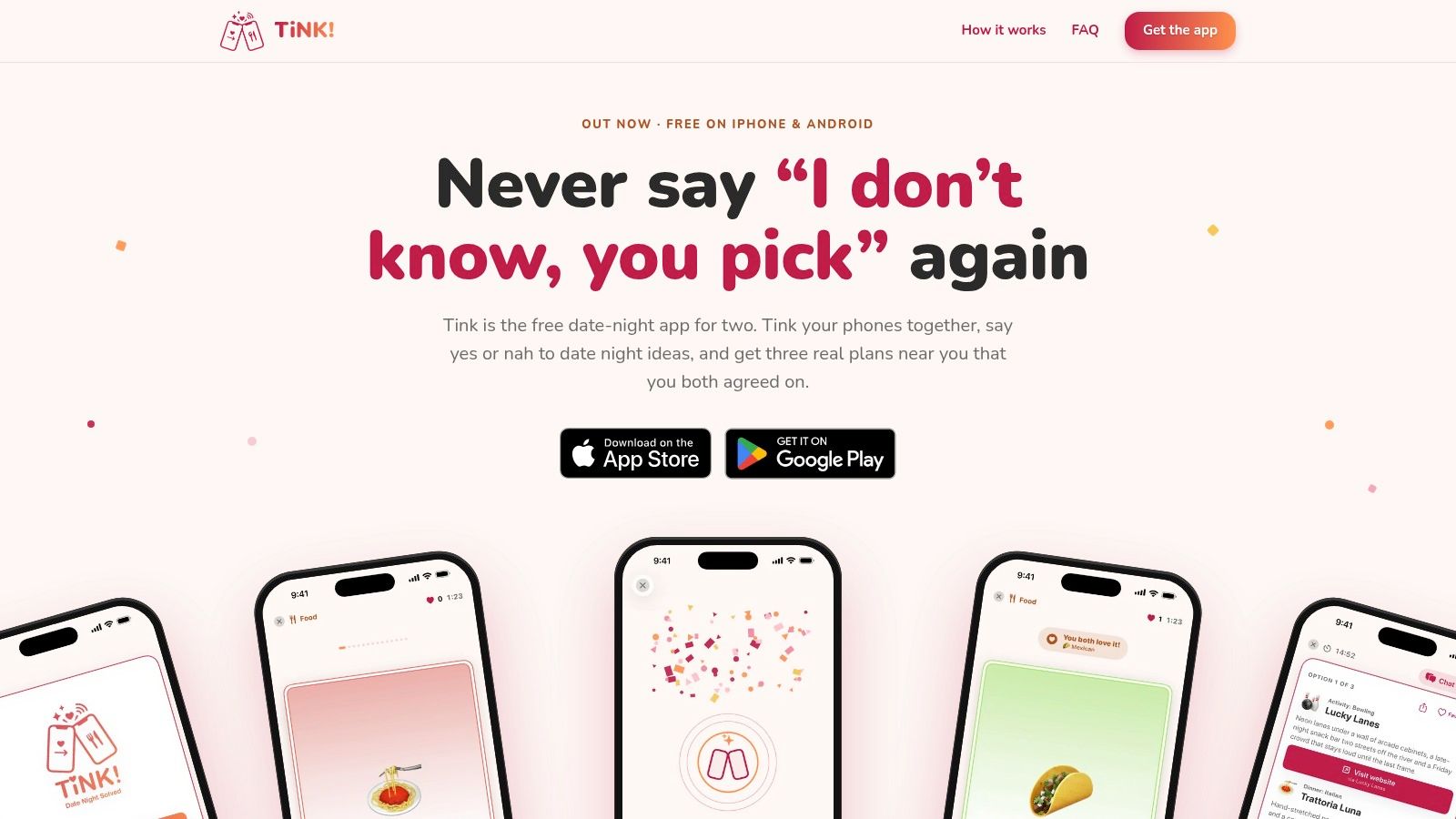
Most couples don't disagree about wanting a night out. They disagree about which one. Tink turns that into a private vote: each partner swipes yes or no on the same suggestions, and only the plans you both approve survive. Nobody has to be the person who says no out loud.
What Tink Actually Solves
- Private voting removes the politeness tax. You can veto the expensive tasting menu without a discussion about it.
- Meal and activity together. Suggestions can pair dinner with something after, which is where most plans die.
- Double dates and solo sessions. Both are supported, so the same tool works when friends join.
- No account required. You can test it before either of you commits to anything.
The design matches what improves two-sided matching. A Stanford Graduate School of Business field experiment in Texas found that an algorithm weighing both sides' preferences increased matches by 27% in Houston and more than 37% in Austin. Voting on a shared shortlist is the consumer version of that principle.
Where It Stops
Listed availability covers the United States and Australia only, which rules it out for couples in Paris, Dubai or Istanbul. Both partners have to take part or the vote never resolves, and public review history is thin, so you're judging a concept rather than a track record. It's free to use according to the app's site at tinkdate.com.
2. Dae
Start with the limitation, because it decides the purchase: Dae is listed as iOS-only, with Android planned. In an app whose whole value is shared planning, that isn't a small gap. If your partner carries an Android phone, the shared half of the product doesn't exist for you.
Built for the Whole Evening
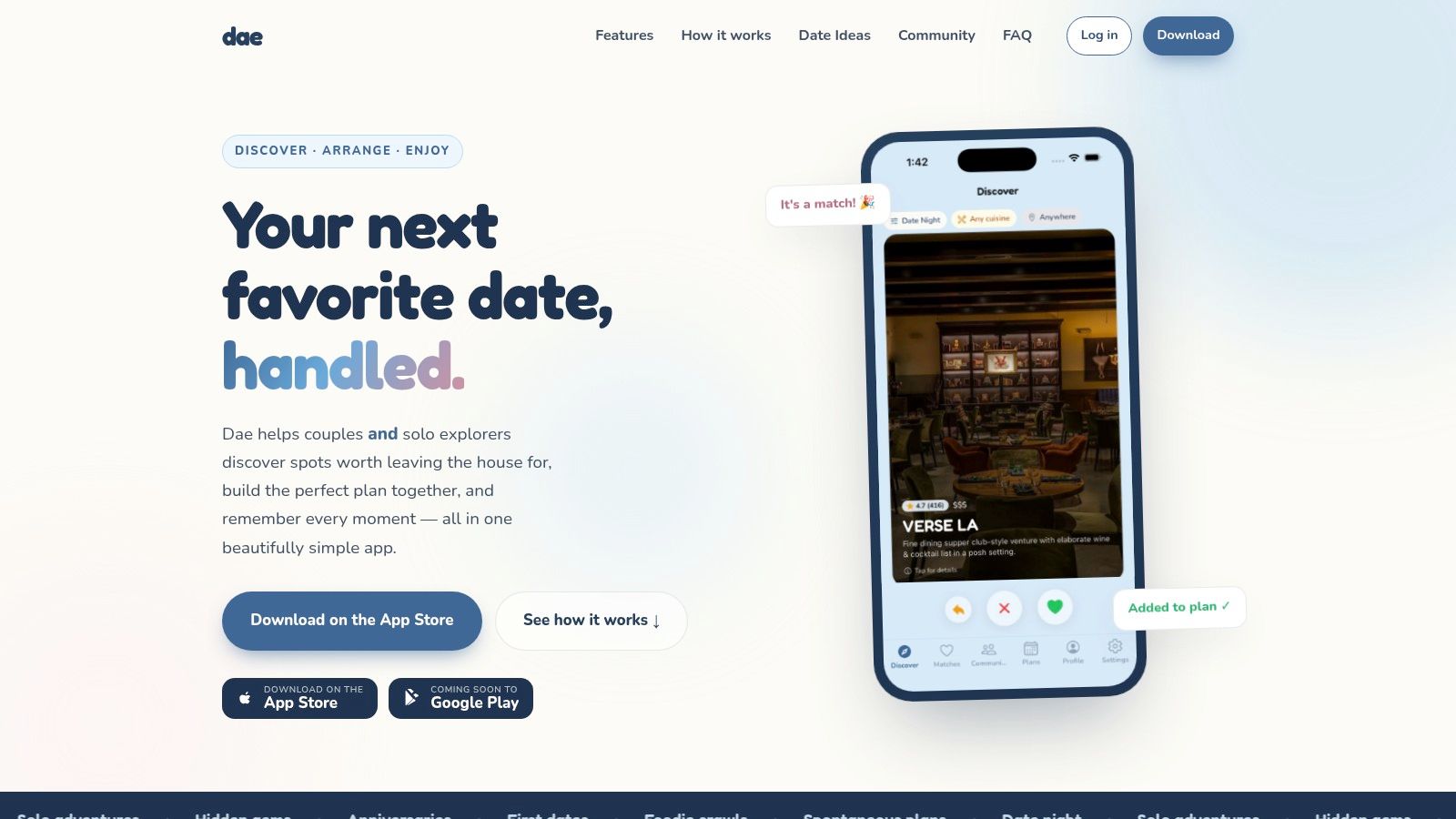
Dae browses nearby restaurants, bars and activities by vibe, budget and distance, then lets two people match on the places they both like. The part I rate higher than the discovery feed is the plan builder. You can stack stops, reorder them and share the result, which is what a real evening looks like. Solo users can save places without linking anyone.
The trade-offs are honest ones. Usefulness depends on listing depth in your city, and the better features, including AI suggestions and unlimited go-backs, sit behind a subscription. An iOS-first launch also follows the money: the Business of Apps dating app report estimates iOS generated about 80% of mobile dating-app revenue, with approximately 360 million people using dating apps worldwide in 2025. That explains the strategy. It doesn't help the Android partner waiting at home. Current details sit at getdae.app.
3. DateMore
Couples apps usually fail at follow-through rather than inspiration. Cupla's 2025 impact report, drawn from a 1,525-person relationship-app dataset, found that only 25% of users created at least one date per month, with coordinating schedules and sharing the planning work among the reported barriers. DateMore attacks exactly that gap by treating date night as a recurring appointment instead of a creative project.
The habit test: an app that nudges you both on Tuesday is worth more than one with better ideas, because ideas were never the constraint.
The Mechanics
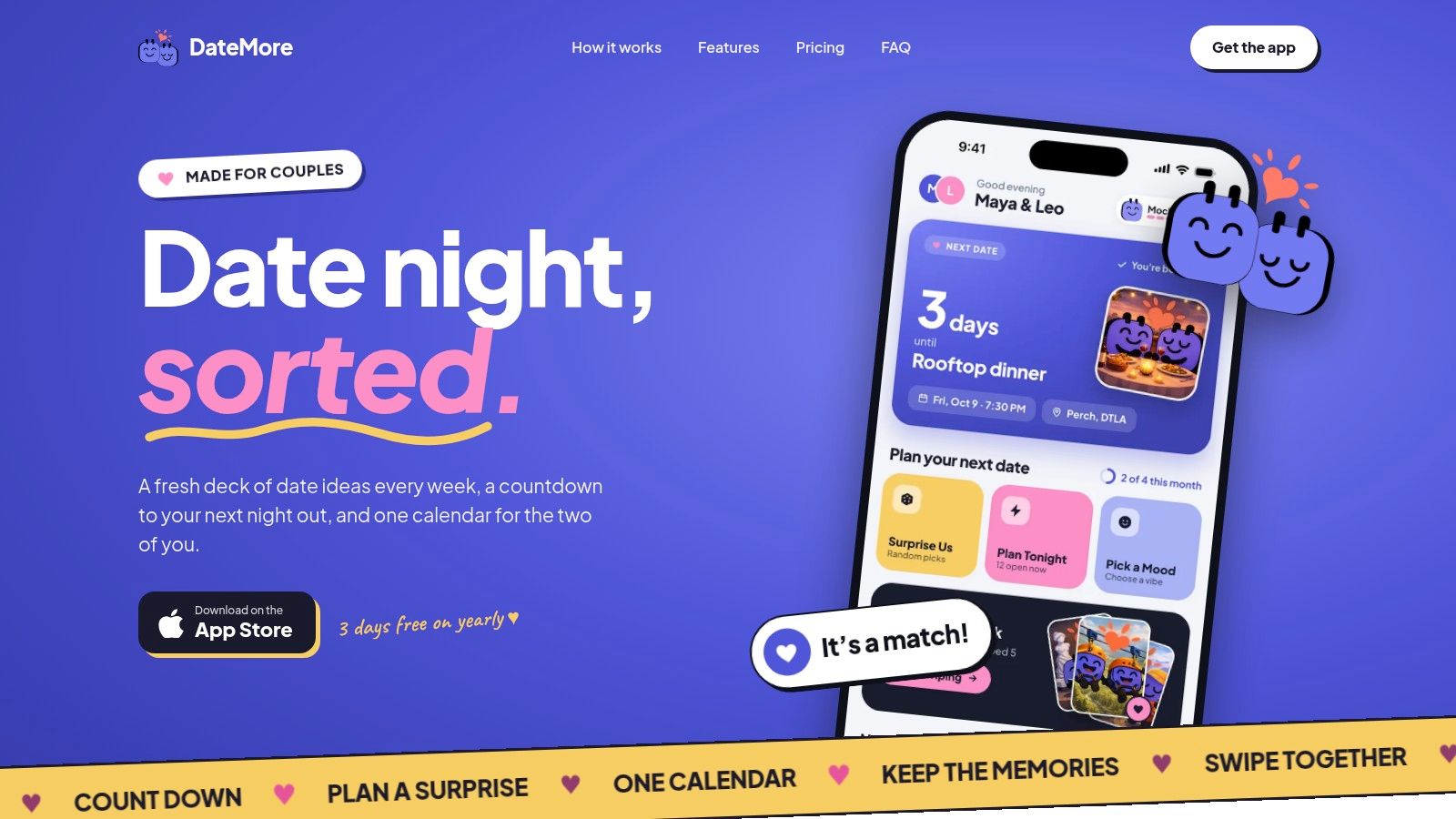
A weekly deck of 12 date ideas, according to the app's site, which each partner swipes privately until mutual likes appear. Dates go onto a shared calendar with reminders and a countdown, and a surprise-date mode hides the venue until the reveal. That last feature is smarter than it sounds, because it removes the negotiation over details once the decision is made.
The caveats are platform and cost. It's listed as iPhone-only, one subscription covers both partners, and a paid plan becomes dead weight the month you stop using it. It's also a newer app with a smaller track record, so judge it on whether you're still opening it in week six. Plan details are at getdatemore.app.
4. The Couples Checklist
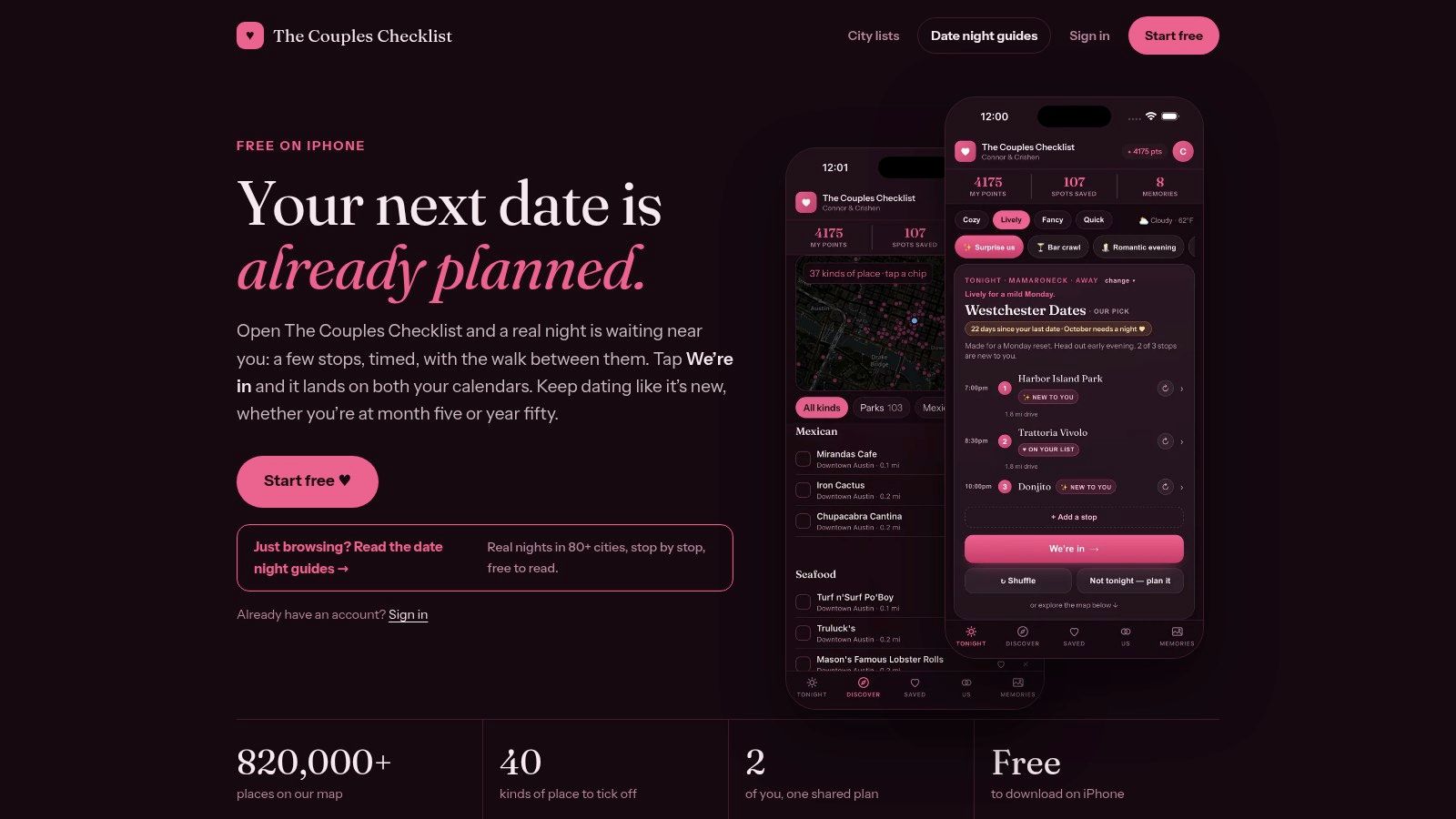
Some couples need a nudge to agree. Others already agree and just want the logistics out of three separate apps. The Couples Checklist sits in that second category: local suggestions across date-night categories, then shared plans, a calendar, reminders, saved ideas and map-based browsing in one place.
What Holds Up
- Discovery and scheduling in one. The plan doesn't die in the gap between the idea and the calendar entry.
- Free to download and start, according to the site, so you can test the listings in your own city before paying.
- A record of what you've done. Memory features sit alongside the planning tools, which helps when you keep circling the same three restaurants.
What to Watch
Some premium functionality requires a subscription, public ratings and review histories are thin, and local listings vary by location. Check your own neighborhood rather than a demo screenshot. thecoupleschecklist.com lists current tiers.
If you'd rather keep the calendar side simple and separate, this guide to a shared calendar for couples covers a setup that survives a busy month.
5. Tryst
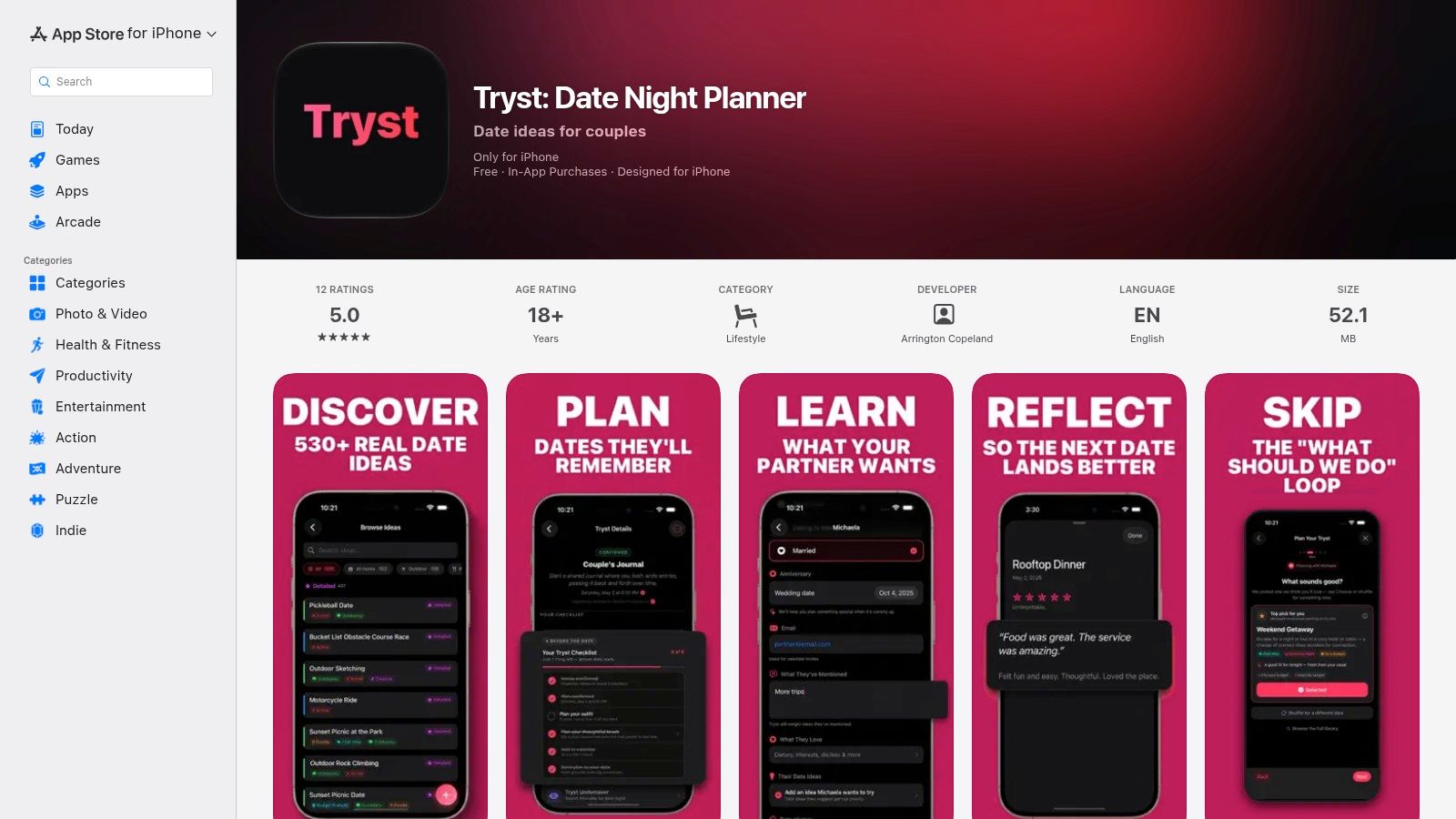
Tryst is the one on this list that tries to improve with use. It's an iPhone date-night planner that learns from your partner's preferences and from the reflections you save after each date, then tailors the next round of suggestions. Activities, outings and special occasions all sit in the same library.
Worth the Setup or Not
Personalization is only as good as the input. Skip the reflection step and Tryst becomes a random idea generator with a nicer interface.
The App Store listing also describes a voice-assistant workflow that drafts a plan for you, which is a practical answer to the blank-page problem on a Friday afternoon. Feedback on the listing is positive, though the review base is small, so treat the ratings as a signal rather than proof.
The constraint is familiar by now. The cited listing is for iPhone only, and the value depends on regular use. Couples who plan a date once every two months will get generic output and conclude the app is mediocre. Tryst on the App Store has the full description.
6. Fever
Fever is the booking layer on this list: search by category, date and time, browse on a map, save favorites, buy mobile tickets and transfer one to your partner. For a date where the plan needs to be real, a time, a venue, a confirmation in your inbox, that is the useful part.
Where It Beats the Planners
Planners hand you prompts. Fever sells a ticket to a food event, a concert, a museum exhibition, a show, nightlife or a tour, and demand for activity-first dates shows up in the numbers. Hinge's dating-forward research reported that 31% of surveyed daters believed planning activities they already enjoy would help them stay focused on the experience rather than the dating result, and the Eventbrite figures cited in that release show a 403% increase in trivia-night listings and a 388% increase in attendance.
The backdrop for this kind of booking is city-break travel at scale. UN Tourism's 2024 arrivals report recorded approximately 747 million international tourist arrivals in Europe in 2024, the world's largest destination region, 5% higher than 2023 and 1% above 2019 levels. Fever's coverage is city by city, so check that your destination has listings before building an evening around one.
What It Won't Do
There is no shared planning or mutual voting, so Fever settles nothing if the two of you disagree. Prices, availability and cancellation terms change event by event, which makes the individual listing page the thing to read before paying. My rule is to book one anchor event and keep the rest of the evening flexible; if you want ideas for the hours around that booking, these romantic things to do in Denver show the pattern. Start at feverup.com.
7. Paired
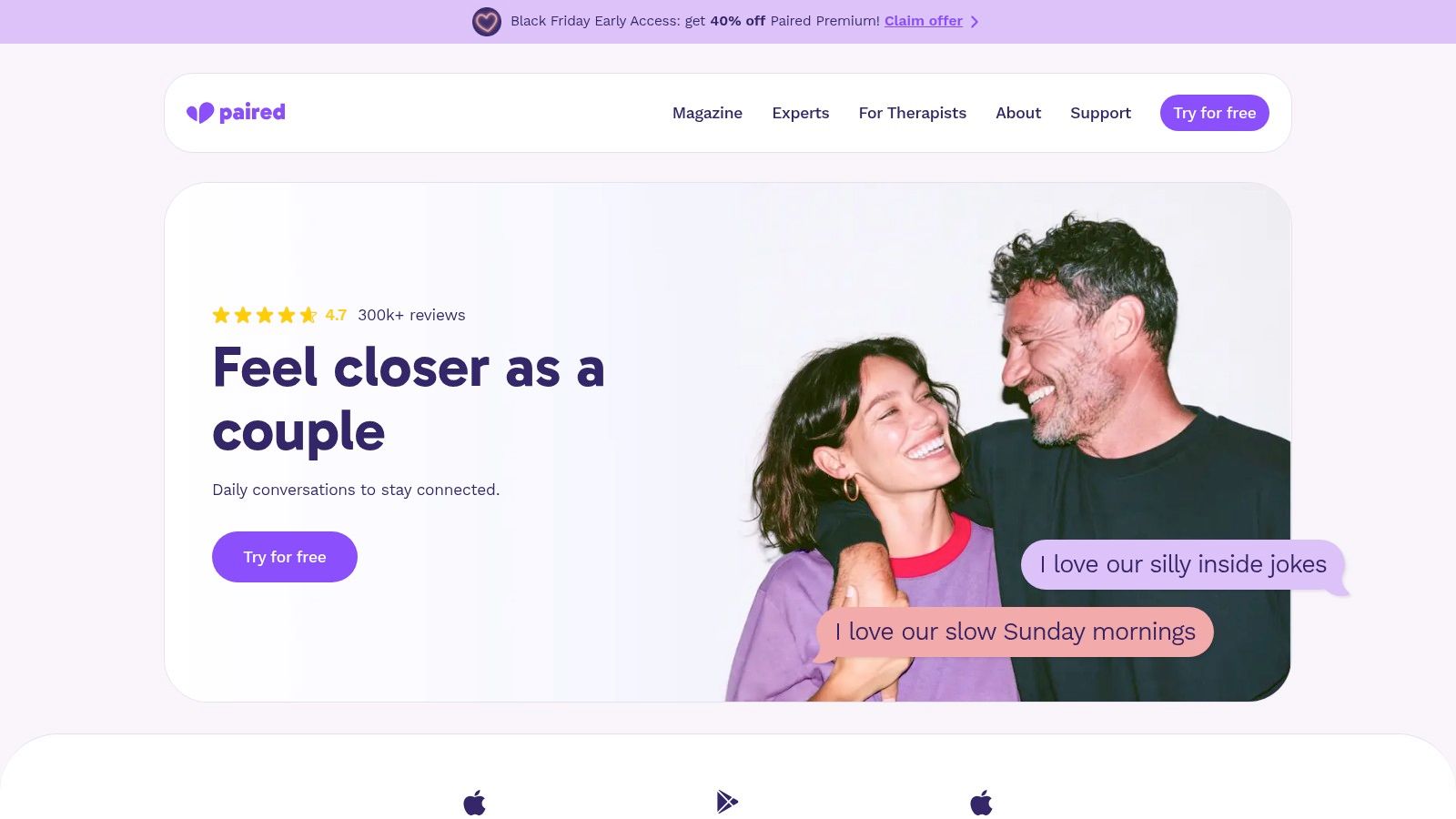
Paired answers a different question. It doesn't find venues or book anything. It gives two people short daily activities, questions, quizzes and games, with paired accounts so you both see the same prompts and each other's answers.
Best for Nights In and Long Distance
Twenty minutes before sleep, a call across two time zones, a Sunday morning with coffee on the balcony: those are Paired's natural settings. The activities are short enough to happen, which is more than most relationship content manages. It also carries a more established public profile than many niche date-planning apps, so you aren't beta testing someone's side project.
Where It Doesn't Fit
If the blockage is that you can't agree where to eat on Saturday, Paired won't help you. Both partners have to use it for shared activities to work, full access requires a subscription with pricing that varies by region, and there's nothing in the product about discovery or reservations. Connection is the whole product. paired.com sets out the plans.
8. LovBirdz
Some nights the date is already sorted. Dinner is booked, the babysitter is confirmed, and you have ninety minutes before the film. LovBirdz fills that gap with couple quizzes, question games and playful challenges, usable in person, on a trip or across a long-distance call.
A Game, Not a Planner
That's the honest framing. It's more interactive than a saved list of conversation starters, it costs nothing to organize, and it drops into an at-home evening without buying tickets or booking a table. For couples who find earnest prompts awkward, the game format gets past the eye-rolling.
What It Won't Do
It doesn't find or book venues, it won't help you schedule anything, and broad independent review evidence is thin, so don't download it expecting a curated city guide. Use it after the planning is done, not instead of it. lovbirdz.app is the low-stakes option here.
9. Hinge
Hinge is a dating app, and it belongs on this list for one feature. Date Ideas lets users select preferred first-date activities and share availability alongside them, which shortens the distance between matching and proposing something concrete. For singles, that's useful. For couples, it's not a planner.
The Scale Behind It
The Pew Research Center's 2023 report on online dating in the U.S. found Hinge had reached about one-fifth of people who had ever used online dating, with 21% of adults aged 18 to 29 using it compared with 2% of adults 30 and older. That age skew tells you where activity-first dating is being practised, and why the feature exists at all.
What It Doesn't Do
It doesn't reserve a table, hold a venue or finalize logistics. Once you've matched and agreed on a rough idea, you're back to coordinating by message, which is where first dates stall. The standard app is free, with optional paid tiers that offer more. If you're looking for something to do once the date is agreed, these fun date ideas in Raleigh show the kind of shortlist the planners above are trying to automate. hinge.co covers the tiers.
10. Beso
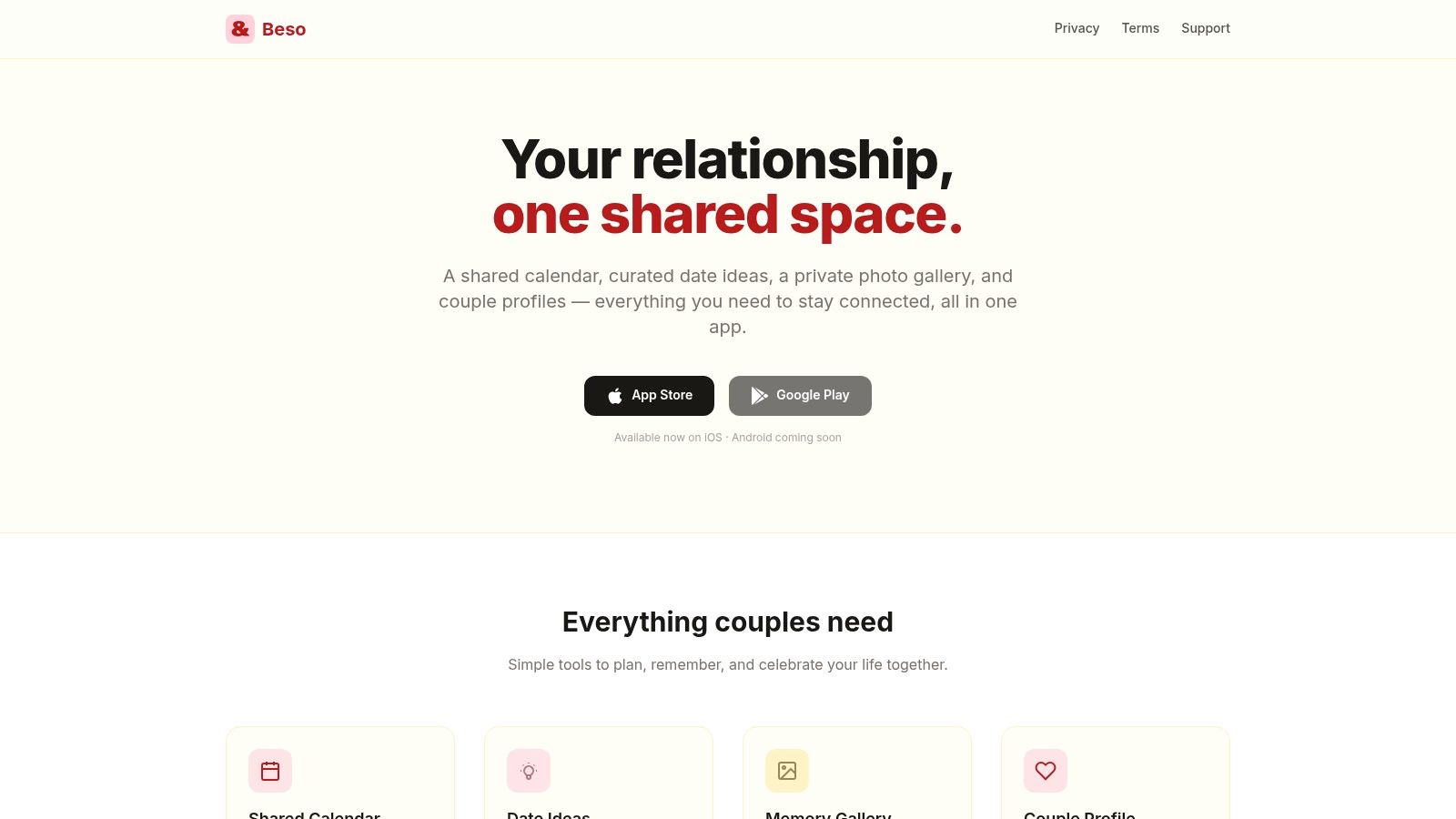
Beso is the most complete of the couples apps here on paper. Its App Store listing describes a library of date ideas organized into city and seasonal packs, a shared calendar with event reminders, a Surprise Date mode that hides the plan until the reveal, and shared photo albums.
The Appeal
You get inspiration, organization and memory keeping without juggling three tools. The listing describes end-to-end encryption for personal content, which matters when a shared calendar holds your address and a shared album holds your faces. It's free to download with optional purchases, so the cost of trying it is low.
The Caveats
It's listed for iPhone and iPad, so couples on Android should confirm availability on the official site before counting on it. The city-specific packs cover selected US cities, which means a couple planning in Rome, Marrakech or Vienna will be working from the general library rather than a local pack. Public review history is very small, so the product stands on its feature list rather than a proven track record. beso-couples.app has the current packs.
Date Night Apps Compared
The table below sorts all ten apps by the job they do and the catch that comes with them.
| App | Main Purpose | Watch Out For | Best For |
|---|---|---|---|
| Tink | Couples date-night voting | Listing limited to the US and Australia | Partners who want to agree on a date plan |
| Dae | Local discovery and date planning | iOS now, Android planned; some features are premium | Discovering nearby places and building a multi-stop date |
| DateMore | Couples date planning and scheduling | iPhone listing; paid plans | Couples building a regular date-night routine |
| The Couples Checklist | Local date discovery, planning, and memories | Some features may require a subscription | Couples organizing and remembering dates |
| Tryst | Personalized date suggestions and memories | iPhone listing | Couples wanting ideas tailored to them over time |
| Fever | Event discovery and ticket booking | Free to start; event tickets cost extra | Couples looking for a bookable local outing |
| Paired | Relationship activities, questions, and games | Free access is limited; full access needs a subscription | At-home or long-distance couple activities |
| LovBirdz | Couples quizzes and games | Shared game only, no planning tools | Couples who want a game to play together |
| Hinge | Dating and first-date coordination | Optional paid tiers | Singles arranging a first date |
| Beso | Date ideas, shared scheduling, and memories | iPhone and iPad listing; small public review history | Couples combining date planning with memory keeping |
On price, Tink, Dae, The Couples Checklist, Fever, Hinge and Beso all start free. DateMore runs paid plans, and Paired keeps the fuller experience behind a subscription. I'd read "free to start" as "free to look" whenever the feature list sits behind a paywall, because Dae and The Couples Checklist both gate parts of the app that way.
Platform and coverage are where this list gets thin. Four of the ten lean iOS: DateMore and Tryst are iPhone listings, Beso covers iPhone and iPad, and Dae is iOS today with Android still planned. Tink's listing appears only in the US and Australia, and Beso's city packs cover selected US cities, so check the store listing for your platform and location before you commit.
Choosing the Right App and Making the Plan Stick
The right app is the one that removes your specific blockage, not the one with the longest feature list.
If you can't agree, start with a mutual-voting planner. Tink's private yes-or-no flow and DateMore's weekly deck both get you to a decision without a negotiation, and Beso adds the calendar and memory layer once choosing is solved. If you can't find anything worth doing, change category: Dae and The Couples Checklist connect ideas to venues near you, and Fever sells a booked ticket with a time printed on it. If the date is booked and you want the evening to carry itself, add a connection app. Paired suits nights in and long distance, LovBirdz suits a laugh before dinner, Tryst suits couples who will write two lines of reflection afterwards.
The test that matters: after the date, can you name what you did without checking your phone? If yes, the app worked. If you spent the evening browsing alternatives, it didn't.
Three Rules That Matter More Than the App
- Set the slot before you set the plan. A recurring Thursday beats a vague intention to do something soon, because the calendar does the persuading.
- Agree on a budget ceiling first. Most dead plans die on price, not taste, and finding that out after booking is worse.
- Treat platform limits as deal-breakers. An iOS-only listing, a two-country footprint or thin city coverage isn't a quirk to work around when your partner is on Android or you live outside the covered map.
- Cancel what you don't open. A subscription keeps charging whether or not the deck gets swiped.
Destinations follow the same logic as apps: go where the supply is. Dubai's visitor report shows Western Europe as its largest regional source market in 2025 with 4.10 million visitors, 21% of arrivals, while GCC markets contributed 2.99 million and the rest of MENA 2.17 million, so European and MENA markets together accounted for 47% of arrivals, according to the Dubai Department of Economy and Tourism annual visitor report. A Paris, Rome, Barcelona, Istanbul or Dubai shortlist covers more real date nights than a list built around one country.
Group nights expose the weakness in all of the above. A double date fits Tink, but a birthday table for eight, a family trip where one evening is meant to be the adults' night out, or a weekend where the date is one item inside a longer itinerary are not two-person voting problems. That's the case for MyPerfectStay: everyone fills in a private survey, the platform surfaces activities with match scores drawn from 450,000+ bookable experiences in 150+ countries, and the whole group books and pays in one checkout with a shared itinerary built automatically. Nobody needs an account or a download to start, which matters when half the group is on a work phone in another time zone.
MyPerfectStay takes the same decision problem these apps solve for two people and scales it to however many people are coming. Each person answers a private survey, the voting surfaces the experiences with the strongest match, and the group books and pays together in one checkout with an itinerary that organizes itself. If your next date night involves friends, family or a trip, visit MyPerfectStay and see what the group agrees on.