10 Family Vacation Ideas with Teens for 2026
September 3, 2026·MyPerfectStay

You're trying to plan one family holiday, but you're really negotiating several different trips. Your teen wants independence, social energy, and something worth talking about when they get home. You want meaningful experiences, reliable logistics, and enough supervision to keep the trip comfortable. Someone else may want a beach, another person may want museums, and the budget may rule out the most obvious choice.
The best family vacation ideas with teens don't force everyone into the same mood all day. They combine a teen-magnet activity with flexible alternatives, manageable transport, genuine downtime, and clear safety rules. That might mean pairing a major European city with a beach afternoon, a historic site with a food workshop, or a desert excursion with a quieter hotel day.
The ten destinations below use six practical lenses: urban culture, history, active exploration, beach time, desert adventure, and deeper cultural immersion. Each one is assessed for independence, activity variety, cultural depth, downtime, logistics, safety, and how easily a group can make decisions together.
Before choosing, it helps to understand what teenagers value in the planning itself. A 2025 NYU School of Professional Studies family travel survey found that children ages 7–18 increasingly influence family decisions, while 74% of parents said their children love to travel and 84% said involving children in planning makes them more adaptable. Read the NYU SPS family travel survey for the full context. MyPerfectStay lets each traveler privately share preferences, compare match scores, vote on activities, and organize bookings and the shared itinerary.
Table of Contents
- 1. Barcelona Urban Culture and Beach Blend
- 2. Rome History Food and Dolce Vita Living
- 3. Amsterdam Canal Cycling and Progressive Culture
- 4. Dubrovnik Medieval History and Adriatic Beauty
- 5. Prague Fairytale Architecture and Youth Culture
- 6. Dubai Modern Urban Exploration and Desert Adventure
- 7. Vienna Classical Music Coffee Culture and Imperial History
- 8. Marrakech Exotic Sensory Experience and Desert Proximity
- 9. Lisbon Hilltop Exploration and Laid-Back Atlantic Vibes
- 10. Cairo and Giza Ancient Wonders and Modern Egyptian Life
- Top 10 Teen-Friendly Family Vacation Destinations Comparison
- Turn Different Preferences Into One Great Trip
1. Barcelona Urban Culture and Beach Blend
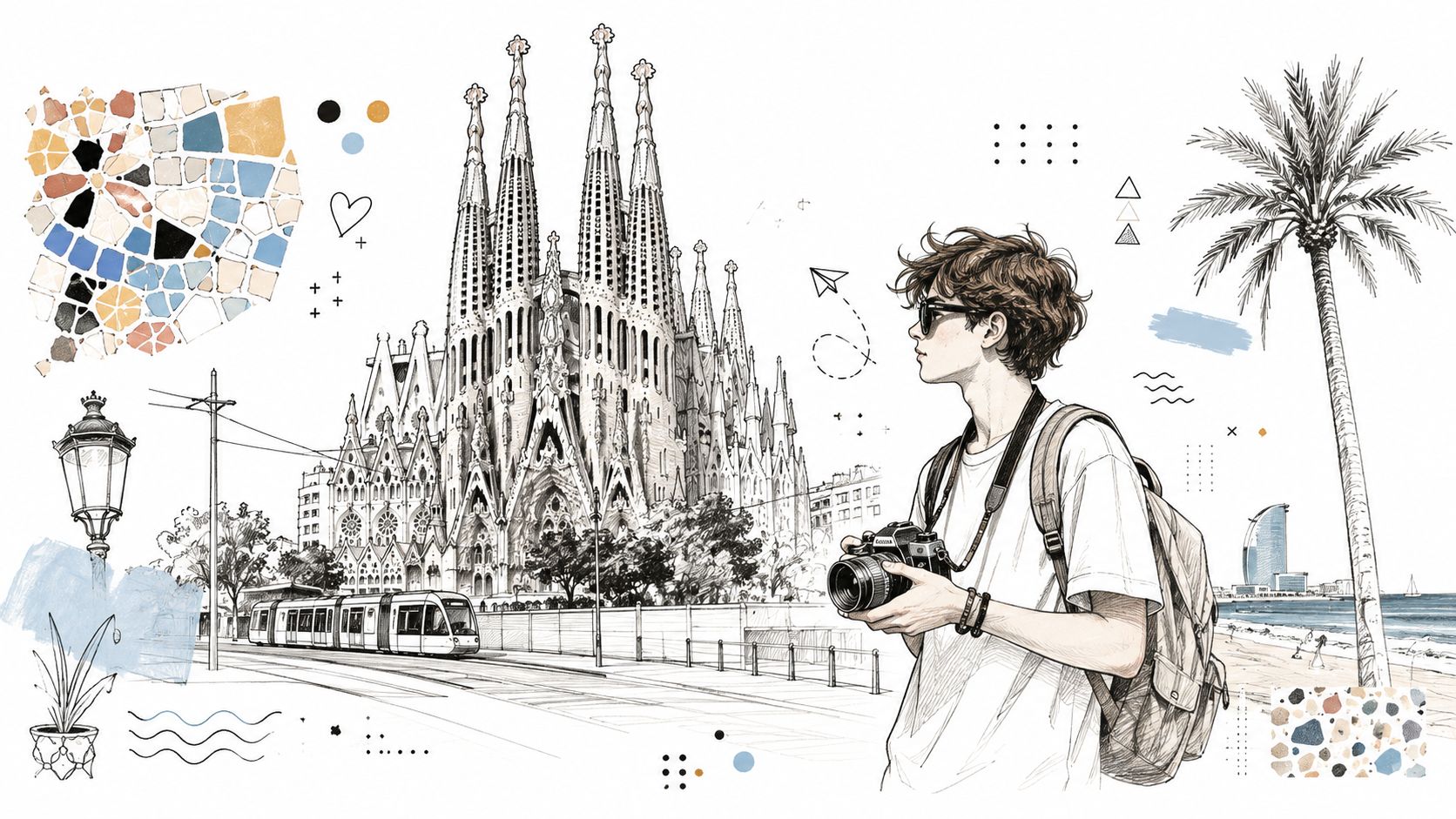
Barcelona works when your family can't agree between a city break and a coastal holiday. Mornings can deliver architecture and history, while afternoons slow down beside the Mediterranean. That contrast gives teens something visually engaging to explore without turning every day into a museum marathon.
Start with the Sagrada Família, then move to Park Güell while everyone still has energy for design, photography, and unusual spaces. Later, let the family split by interest. One group can browse the Gothic Quarter, another can take a street-art walk, and beach-seekers can head toward the seafront promenade. A casual tapas dinner brings everyone back together without demanding a formal evening.
A flexible Barcelona day
A strong first day could look like this:
- Architecture first: Visit the Sagrada Família in the morning and Park Güell later, booking both online so the family isn't spending its best hours in queues.
- Teen-led wandering: Use Barcelona's clear Eixample grid as a manageable area for supervised exploration, with a meeting point and return time agreed in advance.
- Low-pressure evening: Choose tapas in or near the Gothic Quarter instead of scheduling another major attraction.
The city's cultural range helps different personalities find their own entry point. Design-focused teens may prefer Gaudí, photography, and street art. More social travelers may care about food markets, shopping, skateboarding spots, and beach clubs. Adults can choose the MNAC or MOCO while teens take a shorter break, provided the group has agreed on boundaries and communication.
Barcelona is best for families who want high variety with moderate logistics. Metro travel is useful, but crowded areas require phone awareness and a clear family plan. Schedule beach time earlier in the day, then reserve an unstructured block before dinner. MyPerfectStay can turn competing votes, such as museums versus beach time, into a shared shortlist instead of another family group-chat debate.
2. Rome History Food and Dolce Vita Living
Rome is a strong choice for teens who need history to feel physical rather than abstract. The Colosseum, Roman Forum, catacombs, Renaissance fountains, and lively neighborhoods create a city where the past appears at street level. Food provides the essential counterweight, especially when a long archaeological visit has tested everyone's attention.
A classic day can begin at the Colosseum and Forum, followed by a slower meal and an evening walk toward Trevi Fountain. Don't stack the Vatican onto that same schedule unless your teen enjoys intensive sightseeing. The better approach is to choose one major historic experience, then add a cooking class, market visit, gelato stop, or neighborhood wander.
Give history a practical hook
A licensed guide can make the Colosseum and Forum easier for teenagers to understand because the guide can connect ruins to real people, engineering, politics, and daily life. Food-focused teens can take ownership of a market route or choose a family-run trattoria. In Trastevere or Testaccio, the family can stay close to restaurants and evening activity while avoiding the feeling of being surrounded by attractions every minute.
Independent exploration works best in compact areas. Let an older teen choose a gelato route, photograph street art in Trastevere, or browse vintage shops while an adult remains nearby. Set the route, check-in time, and meeting point before anyone separates. That creates autonomy without treating the teen like a small adult in an unfamiliar city.
Planning rule: Pair every major historical site with food, movement, or open space. Rome becomes tiring when every block is treated as another lesson.
Use public transport and walking strategically, and pre-book popular attractions so the family can protect its energy. For a more detailed activity shortlist, use this guide to what to do in Rome. Rome suits families seeking deep cultural value, strong food culture, and moderate-to-high walking intensity. It's less suitable for groups that need a slow, resort-style holiday.
3. Amsterdam Canal Cycling and Progressive Culture
Amsterdam works especially well for teens who want some control over the day. Bikes, canals, markets, museums, and neighborhood cafés create variety without requiring an extreme adventure. The city also gives families natural openings to discuss public space, diverse families, cultural difference, and changing social norms.
Make the first ride a skills check, not a sightseeing challenge. Before setting out, agree on stopping points, hand signals, crossing behavior, and a regroup location. A short practice loop helps everyone judge traffic and bike paths. Teens can help lead through the Canal Ring, while adults stay attentive near busy roads, tram tracks, and waterways.
A useful two-day rhythm keeps the major museums from taking over:
- Day one: Cycle through the Canal Ring, visit the Anne Frank House, explore the Jordaan, and finish with a relaxed canal cruise.
- Day two: Visit the Van Gogh Museum, sample Albert Cuyp Market, then leave the afternoon open for vintage shopping or street-art spotting.
- Teen-led block: Let the teen choose a café, market stall, shop, or neighborhood route. Meet afterward for one activity everyone agreed on.
The Anne Frank House and Van Gogh Museum add cultural depth, but they demand attention and may not suit every traveler's energy level. Markets and canals provide movement, photos, snacks, and small decisions. A sunset cruise supplies downtime without making the teen feel removed from the trip.
Independence depends on practical preparation. Set up reliable data, download offline maps, and give every traveler the hotel address and a meeting point. Keep a backup plan for rain, fatigue, or a family member who decides cycling is not enjoyable. Amsterdam's bike network supports mobility, but riding still requires judgment and confidence.
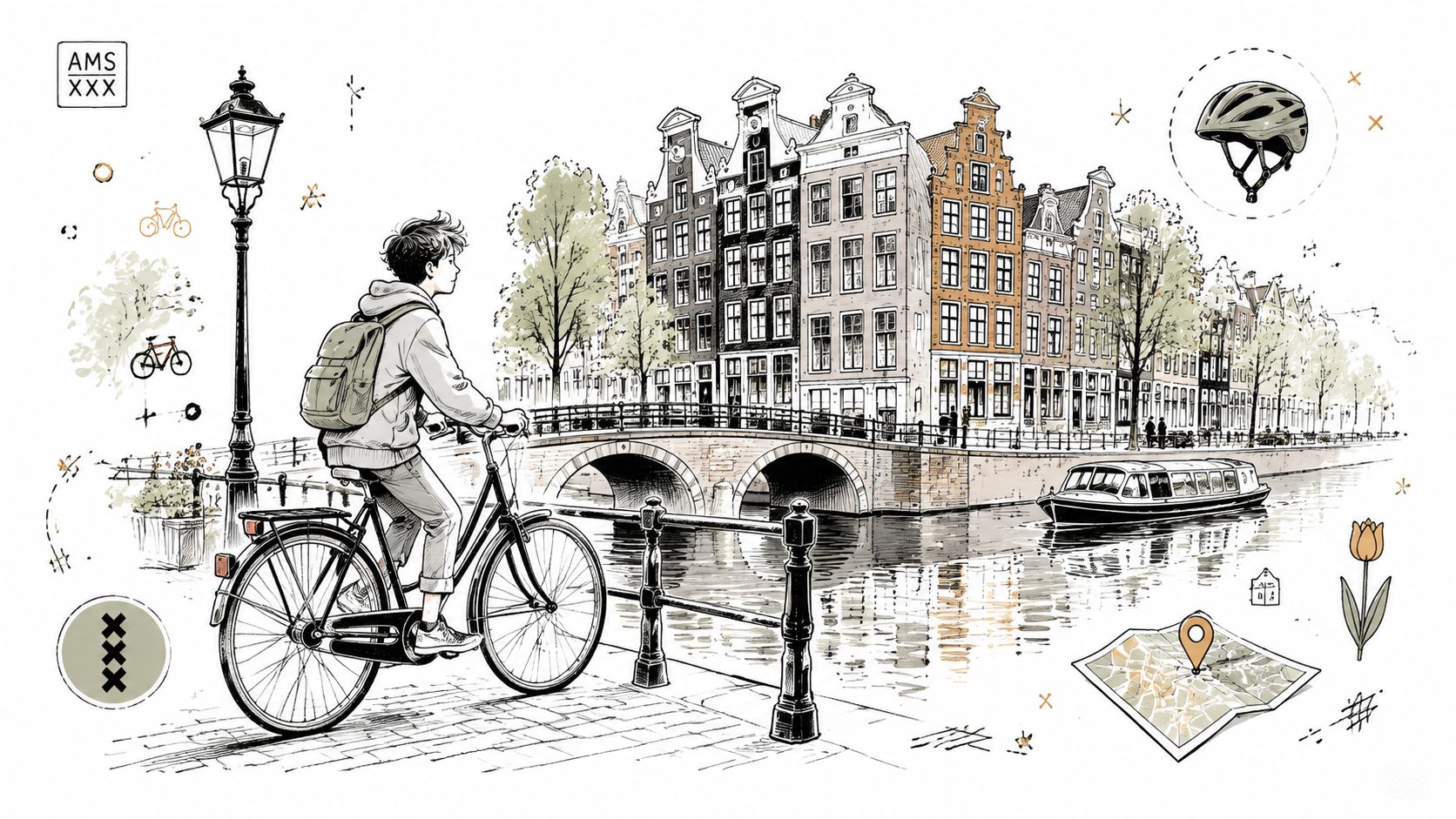
Choose Amsterdam for active independence, progressive culture, and compact urban logistics. It suits families comfortable with planned separation and shared safety rules. Families wanting constant togetherness or minimal cycling should choose another base. MyPerfectStay can let active travelers and museum enthusiasts rank their priorities separately, then build a plan around the activities both groups accept.
4. Dubrovnik Medieval History and Adriatic Beauty
Dubrovnik works best for families that want history with movement built in. Within a compact area, teens can walk stone walls, swim in clear water, board island boats, and recognize Game of Thrones filming locations. The screen connection may start their interest, while the city's fortifications, trade history, and coastal setting give the visit substance.
Start with a wall walk before heat and crowds increase. Let teens choose whether to focus on towers, gates, overlooks, or filming sites, then connect those sights to Dubrovnik's role as a fortified maritime city. A short, focused history visit is easier to sustain than a full day of guided commentary.
Build the trip around a simple three-day rhythm:
- Day one: Explore the Old Town and walk the fortifications early.
- Day two: Swim, rest, and take a promenade walk or cable-car ride near sunset.
- Day three: Reserve a full day for Lopud, Šipan, and Koločep, with time for swimming and a relaxed fish lunch.
Water time gives teens a genuine break from cultural visits. Island-hopping also creates a shared experience without requiring everyone to enjoy the same museum, tour, or attention-heavy activity. Families should protect downtime rather than fill every hour with excursions.
Dubrovnik's compact map can make independence look easier than it is. Set boundaries for browsing inside the Old Town, agree on a meeting place, and confirm how everyone will communicate if a teen separates from the group. Visit in a comfortable season, such as spring or early autumn, if heat and heavy crowds quickly drain your family's energy.
The main trade-off is variety. The Old Town remains atmospheric, but repeated walks through the same core can feel limited without swimming, boats, or nearby islands. Choose Dubrovnik for active outdoor time without abandoning cultural depth. MyPerfectStay can let history-focused parents and beach-oriented teens rank their priorities separately, then build a shared plan around the activities both groups accept.
5. Prague Fairytale Architecture and Youth Culture
Give Prague's first day to its storybook center, then let each traveler choose a different way into the city. Prague Castle, St. Vitus Cathedral, Charles Bridge, and Old Town Square provide the essential landmarks. After that, move beyond postcard views with street art, Kafka connections, Jewish history, modernist buildings, markets, and neighborhood cafés.
Cross Charles Bridge early or late, when the walk feels less crowded. Use the middle of the day for separate interests: a literature-focused teen can visit Kafka-related sites, while another can explore street art in Žižkov or Holešovice. Museums, architecture, and neighborhood walks also give families a practical way to discuss Prague's transformation after the Cold War.
Choose accommodation according to energy and budget. Staying beyond the busiest historic core usually offers more space and a more local setting. Vinohrady, Žižkov, and Holešovice make casual meals and short independent outings easier than a hotel surrounded only by tourist restaurants.
A flexible plan works better than a fixed checklist:
- Morning landmark: Visit Prague Castle and St. Vitus Cathedral.
- Afternoon choice: Select Jewish Quarter museums, Kafka sites, or street-art exploration.
- Evening reset: Walk through Petřín park and visit Petřín Tower, then choose street food or a casual family meal.
Public transport reduces long walks and lets the group split briefly without turning every outing into a logistical project. Set a meeting point, agree on return times, and keep independent browsing within areas everyone understands. Prague's beer reputation should not dictate the trip. Teens can connect with the city through food, design, music, architecture, and youth-oriented neighborhoods without entering adult nightlife.
Prague suits families seeking cultural richness with manageable urban movement and flexible spending. It fits less well when the group needs swimming, reliable sunshine, or resort-style downtime. Before booking, have each traveler choose one landmark, one neighborhood, and one food experience. MyPerfectStay can organize those preferences into a shared itinerary, protecting both individual choice and family time.
6. Dubai Modern Urban Exploration and Desert Adventure
Dubai gives teenagers a high-contrast trip. The city moves from skyscrapers and shopping centers to traditional neighborhoods and open desert, so families can alternate between polished attractions and experiences that feel less familiar. It's especially effective for teens interested in engineering, fashion, cars, water sports, photography, or visually dramatic settings.
A first city day can combine Burj Khalifa, Dubai Mall, and an evening walk through the Gold Souk. That's a high-stimulation schedule, so don't repeat it immediately. Follow it with a slower beach morning or a desert excursion where the family can focus on one shared experience rather than moving between indoor attractions.
Balance spectacle with context
The city becomes more meaningful when families include Deira, Bur Dubai, and Al Fahidi alongside modern developments. Teens can compare traditional trading districts with Dubai Marina, Palm Jumeirah, and Downtown Dubai. That contrast opens useful conversations about globalization, migration, architecture, and how cities change.
A desert safari should be treated as a central day, not an add-on after a full itinerary. Dune bashing, a camel experience, sunset, and dinner at a camp can satisfy adventure-seekers, while a hotel or beach day protects travelers who need more recovery time. Check the operator's safety practices and choose an experience appropriate to every traveler's comfort level.
Dubai's logistics depend heavily on where you stay. Marina and Downtown are easier for combining walking with attractions, but many other areas require a car or organized transfer. Set a daily spending boundary with teens before arrival because shopping and entertainment can quickly widen the gap between one traveler's idea of fun and another's budget.
Dubai is best for families wanting high-energy entertainment, desert adventure, and strong comfort infrastructure. It's less suitable for groups seeking a slow, low-cost, walk-everywhere city break. MyPerfectStay can make the budget divide visible before booking, allowing luxury-oriented and value-focused travelers to vote on shared priorities.
7. Vienna Classical Music Coffee Culture and Imperial History
Vienna rewards families that want culture without constant logistical friction. Its imperial palaces, museums, cafés, parks, and public transport create a calm structure for a multi-generational trip. Teens don't need to arrive as classical-music fans. They need an accessible entry point, a chance to choose, and enough movement between formal experiences.
Start at Schönbrunn Palace, then leave time for gardens and open space instead of adding another indoor site. The Hofburg complex and St. Stephen's Cathedral provide historical anchors, while the Leopold Museum and Belvedere can appeal to travelers more interested in modern art and visual culture than royal history.
Make classical culture less formal
Look for youth-friendly concerts, open-air performances, or a standing-room option at the State Opera. A short, high-quality performance can be more successful than asking a reluctant teen to sit through an entire evening chosen without their input. Historic cafés such as Café Sperl can also become cultural experiences when paired with people-watching, pastries, and a conversation about how public life works in Vienna.
Try assigning each traveler a different role. One person chooses the museum, another selects the café, and a teen takes responsibility for navigating the next transit connection. That structure gives young travelers agency while keeping the family coordinated.
A balanced day might include a palace in the morning, a modern-art museum after lunch, a park or Danube ride in the afternoon, and an optional concert at night. The city's public transit supports this kind of modular planning, but you should still protect downtime. Vienna feels easy until every day fills with palaces and performances.
This destination suits families seeking high cultural depth, gentle activity levels, and reliable urban logistics. It's less ideal for teens who need constant adventure or beach access. Use MyPerfectStay voting to find the overlap between classical-music enthusiasts, casual cultural travelers, and teens who'd rather spend part of the day outdoors.
8. Marrakech Exotic Sensory Experience and Desert Proximity
Choose Marrakech when your teens want a trip that feels different from a standard European city break. The medina delivers color, sound, food, craft traditions, and intricate architecture in a compact area, while nearby mountains and desert routes add outdoor contrast. That mix gives the family both cultural depth and room for adventure.
Start with a guided walk through the souks and around Jemaa el-Fnaa. A knowledgeable guide clarifies the medina's layout, supports respectful conversations with vendors, and gives teens enough context to make the experience more than a photo stop. Then stop. Book a cooking class, return to the riad, or schedule a hammam instead of filling every hour with landmarks.
A practical four-part plan looks like this:
- Medina morning: Explore the souks, discuss spices, and look for architectural details.
- Hands-on afternoon: Take a Moroccan cooking class centered on tagine or local ingredients.
- Adventure day: Visit an Atlas Mountains village, hike, or choose a reputable desert journey.
- Quiet reset: Use the riad courtyard, pool, or a relaxed meal for unstructured time.
Set expectations before the family enters the medina. Cover shoulders and knees when appropriate, ask before photographing people, and explain bargaining so teens can participate without treating vendors as entertainment. For desert trips, use established operators and confirm transport, accommodation, planned activities, and animal-welfare practices.
Give teens limited independence, not complete freedom. They can choose a spice stall, photograph agreed subjects, or lead part of the route, while adults keep the group together in crowded areas. A licensed guide helps, especially during a first visit.
A riad provides atmosphere and a strong sense of place, but its rooms, stairs, bathrooms, and quiet areas may be less predictable than those in a modern hotel. Check the layout and room arrangements before booking, particularly for families with different sleep schedules.
Marrakech suits families seeking strong cultural immersion, sensory novelty, and access to outdoor adventure. It demands tolerance for heat, bargaining, uneven streets, and unfamiliar routines. For activity ideas, see this guide to things to do in Marrakech.
9. Lisbon Hilltop Exploration and Laid-Back Atlantic Vibes
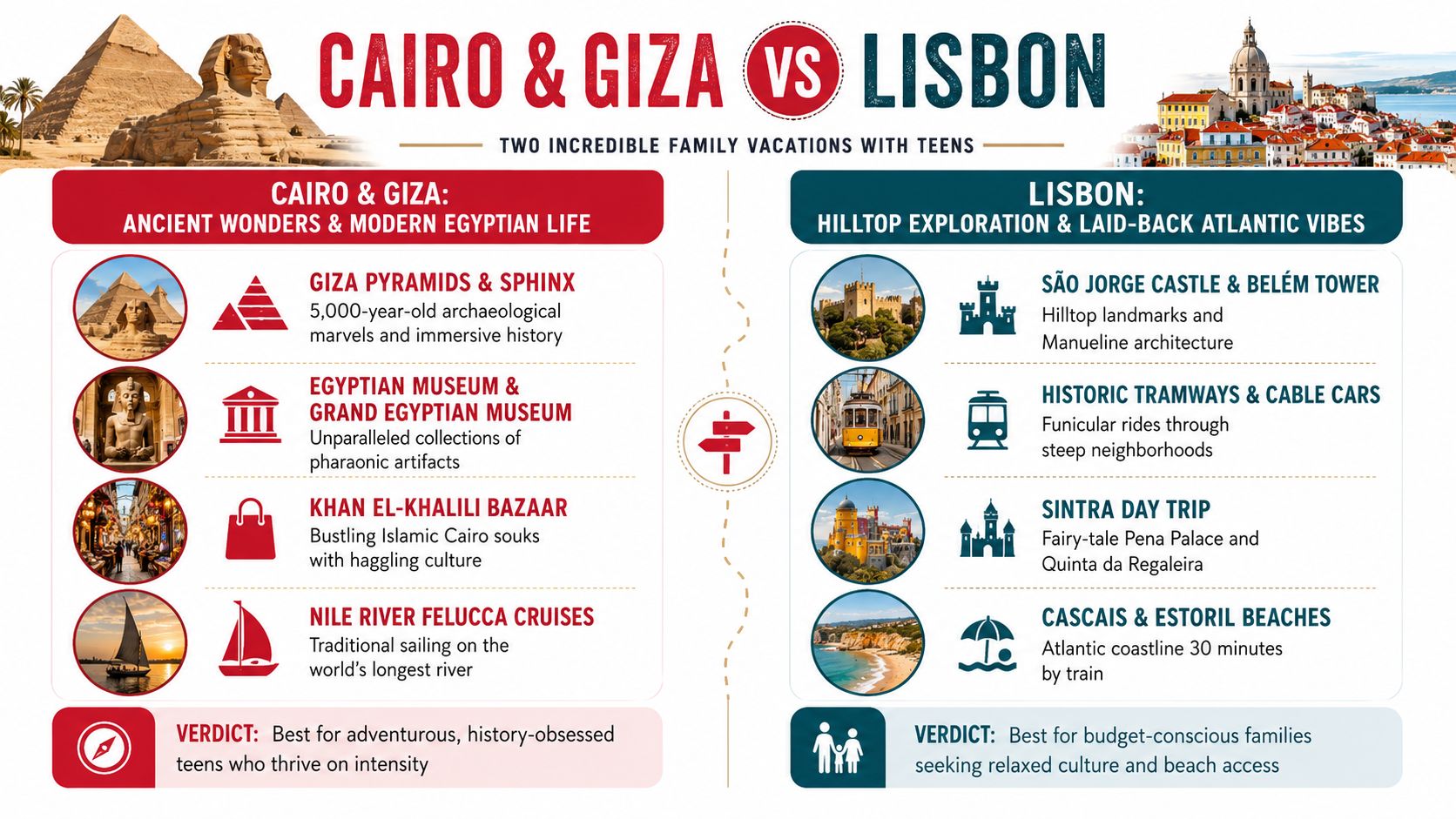
Lisbon works well when a family wants variety without Rome's or Cairo's intensity. Hills, tiled façades, street art, trams, seafood, viewpoints, and nearby beaches create a trip with built-in pauses. Teens get visually engaging neighborhoods and room to make small choices, while adults get history, food, and a manageable cultural pace.
Make the first day active but unhurried. Ride or observe Tram 28, wander through Bairro Alto and Príncipe Real, look for street art, then visit São Jorge Castle before watching the light change over the city. Lisbon's hills are part of the experience, yet they can drain a group quickly. Use public transport when tired legs start controlling the schedule.
Plan the surrounding days around different energy levels:
- Sintra: Visit Pena Palace and Quinta da Regaleira, leaving time for the grounds instead of rushing between sites.
- Cascais: Take the train for a beach day, seafood lunch, and a walk near Boca do Inferno.
- Belém: See Belém Tower and Jerónimos Monastery, then follow the river with a pastéis de nata break.
This mix gives teens meaningful choices without requiring a full expedition. One teen might choose a market, another a viewpoint or street-art route, while adults can select a small family-friendly Fado venue or a historic stop. Agree on one shared anchor each day, then let different interests shape the remaining time.
Lisbon also rewards a deliberate rest block. After Sintra, schedule a quiet afternoon rather than adding another landmark. Crowded transit areas require attention, and a famous tram route is not worth forcing if buses or the metro offer an easier ride. Families should check accommodation access, since steep streets and stairs can affect comfort, luggage, and independence.
For a practical activity shortlist, use this guide to things to do in Lisbon. Lisbon suits families seeking moderate activity, strong food culture, Atlantic access, and flexible planning, especially when the group values choice without constant logistical pressure.
10. Cairo and Giza Ancient Wonders and Modern Egyptian Life
Cairo suits families who want history with real friction and texture. Teens can see the Giza Pyramids, debate their purpose at the Sphinx, walk the Tutankhamun galleries at the Grand Egyptian Museum two kilometers away, and compare ancient sites with daily life in Islamic Cairo and Khan el-Khalili. The city demands more planning than a resort, so choose it for curiosity, cultural depth, and shared discovery.
Build the trip around one major experience at a time. Reach Giza early with a private Egyptologist guide who can explain construction, burial practices, symbolism, and the site's changing role. Afterward, return for a quieter afternoon. A Nile felucca ride later offers seated downtime, snacks, and a slower view of the city.
Use Zamalek as a calmer base, then set expectations before departure. Teens should know where they may walk independently, when the family stays together, how to respond to vendors, and what clothing fits religious and historic sites. Select busy, high-turnover food vendors carefully, and book Nile outings through established operators.
Choose one of these day shapes:
- Ancient Egypt: Giza, the Sphinx, and the Grand Egyptian Museum, which sits beside the plateau, with breaks between major stops. The older Egyptian Museum on Tahrir Square is a separate downtown outing, not an add-on to this day.
- Islamic Cairo: Khan el-Khalili, architectural details, and a planned food stop.
- Nile downtime: A sunset felucca ride with snacks and no second major attraction.
- Less-visited archaeology: Saqqara and Dahshur with a guide, followed by a slower lunch.
Cairo's traffic, crowds, heat, and constant activity can exhaust travelers who need predictable movement. Keep the schedule flexible, agree on a shared anchor each day, and leave room for teens to choose smaller moments within it. Adults should describe the trade-offs. The reward is a living city where ancient monuments and modern Egyptian life occupy the same trip.
For a visual comparison of two contrasting family destinations, see the Cairo and Lisbon travel comparison infographic.
Top 10 Teen-Friendly Family Vacation Destinations Comparison
| Destination | 🔄 Complexity (implementation) | ⚡ Resources / Cost | 📊 Expected outcomes (results/impact) | 💡 Ideal use cases | ⭐ Key advantages |
|---|---|---|---|---|---|
| Barcelona: Urban Culture & Beach Blend | Moderate, easy transit but crowd management required | Medium–High (seasonal accommodation spikes) | High cultural + leisure engagement, strong photo appeal | Design-minded teens, beach families, multi‑gen trips | Iconic Gaudí architecture, city beaches, excellent transit |
| Rome: History, Food & Dolce Vita | Moderate–High, advance bookings and mobility planning needed | Medium (affordable food; tour booking recommended) | Very high historical education and culinary bonding | History buffs, food-loving families, cultural learners | Unmatched ancient sites (Colosseum, Roman Forum) and authentic food culture |
| Amsterdam: Canal Cycling & Progressive Culture | Low–Moderate, bike skills and weather planning required | Medium (bike rental, museum fees) | High active engagement and independent exploration | Cycling families, art lovers, teens seeking independence | Safe bike infrastructure, canals, top museums |
| Dubrovnik: Medieval History & Adriatic Beauty | Low–Moderate, compact walkable core but limited wider transit | Low–Medium (affordable but rising summer costs) | High scenic and pop‑culture engagement (GoT) | Pop‑culture fans, active beach lovers, history seekers | Walled Old Town, clear Adriatic waters, island hopping |
| Prague: Fairytale Architecture & Youth Culture | Low, very walkable; manage peak crowds | Low (excellent value for money) | High aesthetic appeal and historical insight on a budget | Budget-conscious families, architecture & literature fans | Gothic/Baroque architecture, strong museums, affordability |
| Dubai: Modern Urban Exploration & Desert Adventure | Moderate–High, sprawling city, heat and transport logistics | Very High (luxury pricing for activities and stays) | High luxury/novelty experiences and adventure options | Affluent families, extreme‑adventure seekers, architecture lovers | Ultramodern landmarks, desert safaris, mega‑resorts |
| Vienna: Classical Music, Coffee Culture & Imperial History | Low, organized, easy public transit and navigation | Medium (good value for high‑quality culture) | High cultural and musical enrichment | Music‑loving families, history and art enthusiasts | Imperial palaces, world‑class music scene, café culture |
| Marrakech: Exotic Sensory Experience & Desert Proximity | Moderate–High, medina navigation and cultural sensitivity needed | Low (excellent value; variable comfort standards) | High immersive cultural and adventure experiences | Cultural immersion seekers, adventure/trekking families | Bustling medina souks, riads, Atlas/Sahara access |
| Lisbon: Hilltop Exploration & Laid‑Back Atlantic Vibes | Low–Moderate, hills and crowded trams require planning | Low (very affordable dining and entry fees) | High relaxed cultural experience with accessible beaches | Budget families, food & street‑art explorers, relaxed pace seekers | Historic trams, nearby Sintra palaces, Atlantic beach day trips |
| Cairo & Giza: Ancient Wonders & Modern Egyptian Life | High, complex logistics, safety, health precautions required | Low–Medium (affordable daily costs; guided tours/security extra) | Very high educational and archaeological impact, unique ancient access | Ancient history enthusiasts, adventurous families, archaeology students | Unparalleled ancient sites (Pyramids, Sphinx), Nile experiences |
Turn Different Preferences Into One Great Trip
The best destination depends less on a universal ranking than on the argument your family is trying to solve. Barcelona and Lisbon work well when beach access and city culture need to coexist. Rome, Prague, Vienna, and Cairo suit families that want history, but they differ in intensity. Rome and Cairo demand more walking, heat management, and logistical attention. Vienna offers a calmer cultural rhythm, while Prague gives families more room to mix landmarks with youth culture.
For active teens, Amsterdam, Dubrovnik, Marrakech, Dubai, and Lisbon provide clear movement-based choices. Amsterdam centers on cycling and urban exploration. Dubrovnik combines walls, swimming, and boats. Marrakech links medina life with mountains and desert routes. Dubai adds high-impact adventure and modern entertainment. Lisbon offers hills, trains, beaches, and day trips without requiring an extreme pace.
Cultural depth also takes different forms. Rome and Cairo make history unavoidable. Vienna and Prague connect architecture, music, literature, and political change. Marrakech offers immersion through food, craft, language, dress, and daily public life. Amsterdam encourages conversations about social norms and public space. Choose the kind of learning your teen can engage with, not just the monuments adults want to see.
Budget pressure should shape the destination before the family starts saving individual attractions. The youth-travel market is economically significant, with WYSE Travel Confederation and UNWTO estimating its value at almost USD 190 billion in 2009, more than USD 333 billion in 2018, and USD 424 billion in 2025, according to WYSE Travel Confederation's research summary. The same research puts young travelers' average spend on their main trip at EUR 2,867 in 2017, their average time on the road at about 52 days globally, and the share of their budgets spent in the destination at roughly 60%. Those figures don't define your family budget, but they show why on-trip choices, food, transport, and experiences deserve as much attention as flights and hotels.
Timing matters too. Sixty-four percent of children wanted a say in the next family destination, rising to 71% among ages 13–15, while 44% of teens preferred to wait until the school year ended, according to RVshare's survey of kids and family travel. Let your teen help choose the destination or at least select a meaningful part of the itinerary. That isn't surrendering parental judgment. It's building buy-in before the trip begins.
The harder issue is independence. A 2025 Mott Children's Hospital national poll found that 19% of parents had never allowed their teen to be away from them while on vacation, and the caution is concentrated in the younger years: 24% of parents of 13- to 15-year-olds against 12% of parents of 16- to 18-year-olds. The same poll found that parents who do allow independent time lean on check-ins to make it work, which makes this a planning problem as much as a parenting one. Families need more than “fun destinations.” They need walkable areas, reliable transport, proximity between activities, agreed check-ins, and clear meeting points.
Use this pre-booking process:
- Collect private preferences: Have every traveler state budget, interests, energy level, must-see ideas, and hard noes.
- Separate must-haves from bonuses: Agree on the experiences that justify the trip, then leave the rest open.
- Reserve the fragile parts: Timed attractions, popular tours, reputable guides, major transfers, and any experience with limited availability should be secured early.
- Protect recovery time: Schedule beach hours, hotel downtime, slow mornings, or flexible afternoons after demanding travel days.
- Write down safety details: Share emergency contacts, hotel information, meeting points, transport plans, and check-in expectations.
- Confirm connectivity and documents: Make sure everyone can communicate, and verify passports, visas, insurance, and any country-specific requirements.
For Europe, don't assume one rule covers every border. The European Union's guidance on travel documents for minors explains that there are no single EU-wide authorization rules. Each country decides whether a minor traveling alone, with a non-guardian adult, or with only one parent needs official authorization, and a transit country may request the document even when another country doesn't.
Screen time deserves a plan rather than a ban. Hilton's 2026 Trends Report found that 84% of travelers will seek out opportunities for the whole family to play together, while 58% of parents plan to enforce no-screen-time moments. Agree on phone-free meals, viewpoints, tours, or shared activities, then allow normal connection time at the hotel. Teens are more likely to accept boundaries when adults explain when connectivity matters and when it's being paused.
MyPerfectStay gives families a practical way to turn those preferences into a shared plan. Each traveler completes a private survey covering budget, interests, energy level, and must-see ideas. The platform analyzes the responses, surfaces activities with match scores, supports group voting, and helps the organizer lock plans, book experiences, and share an automatically organized itinerary. It can be useful whether the group is choosing between a Barcelona food tour and beach time, a Marrakech desert outing and a slower riad day, or Cairo archaeology and Nile downtime.
Finish planning only when every traveler knows what they're getting, what they can skip, and how the group will reconnect. A successful teen trip doesn't eliminate disagreement. It gives that disagreement a fair process and turns the overlap into experiences everyone can remember.
Invite your family to MyPerfectStay, collect budget, interests, energy levels, and must-see choices in two minutes, then use match scores and voting to find the activities that fit the group. Lock the winning plans, book together, and share the auto-organized itinerary without requiring accounts or an app download.