8 Group Tour Itinerary Templates: Day-by-Day Plans
October 16, 2026·MyPerfectStay
Group trips rarely fail on the first morning. They stall on day two, when one person wants a landmark, another wants a long lunch, someone else is tired, and nobody agrees on whether the afternoon should be a museum, a beach, or a nap. That's where a workable group tour itinerary earns its keep. It doesn't try to script every minute for every traveler. It locks the essentials, protects transit and ticket timings, and leaves a few clearly marked decision points where the group can choose without wrecking the day.
That structure matters because organized travel isn't usually built for unlimited flexibility. A survey of group-travel professionals found the median organizer planned 10 group trips per year, and those tours averaged 30 passengers, with 67% saying their groups took international trips, according to The Group Travel Leader's travel planner statistics. Even for smaller private groups, the same operational pressures show up fast. Restaurant capacity, timed entry, room assignments, transfer timing, and different energy levels all collide.
The templates below solve that problem with a shared core schedule, one or two booked anchor activities per day, and optional add-on slots the group can vote on before arrival. That's the difference between a trip that drifts into chat-chaos and one people follow. If you need a quick mindset reset before you plan, Easy Travel Bookings advice is a useful companion read.
Table of Contents
- 1. Barcelona 4-Day Friends' City Break, Gaudí, Beaches, and Tapas Crawls
- 2. Lisbon and Sintra 5-Day Family Reunion Itinerary
- 3. Prague 3-Day Weekend Getaway, Castle, Bridges, and Beer Halls
- 4. Rome 4-Day Multi-Generational Heritage Itinerary
- 5. Dubrovnik and Split 5-Day Adriatic Coast Itinerary for Groups
- 6. Marrakech and Essaouira 5-Day Group Immersion Itinerary
- 7. Jordan 5-Day Corporate Retreat, Amman, Petra, Wadi Rum, and the Dead Sea
- 8. Istanbul 4-Day Creator and Friends Itinerary, Bosphorus, Bazaars, and Rooftop Dining
- Comparison of 8 Group Tour Itineraries
- Turning a Template Into a Plan Your Group Will Follow
1. Barcelona 4-Day Friends' City Break, Gaudí, Beaches, and Tapas Crawls
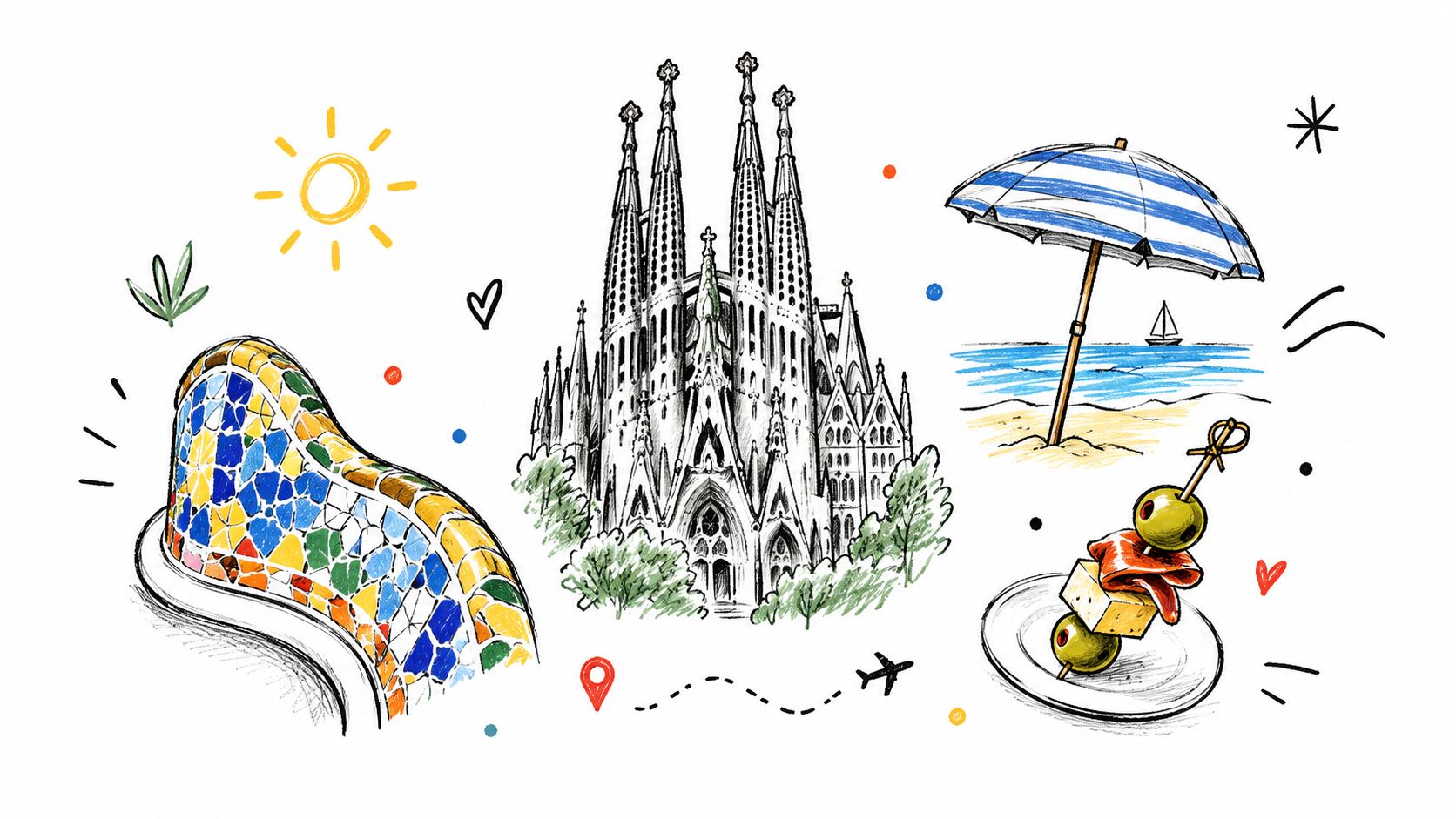
Barcelona works best when the group admits two truths early. First, everyone wants the headline sights. Second, not everyone wants the same pace after lunch. For a friends' trip of 4 to 10, I'd keep the mornings fixed and the evenings a little looser.
Day 1 should be easy on logistics. Check in, walk the Gothic Quarter, pass through Las Ramblas, and use that first evening for a short welcome dinner near El Born or Plaça Reial. Don't overbook arrival day. Flights, delayed bags, and staggered arrivals make rigid dinner schedules fail more often than people expect.
The four-day flow
Day 2 is your hard-booking day. Start with Sagrada Família in the morning, move to Park Güell after lunch, and keep Casa Batlló or rooftop drinks for the evening. In practice, this sequence works because it puts the longest queues and strongest timed-entry pressure first. Barcelona's popularity means advance booking matters, and UN Tourism recorded about 747 million international tourist arrivals in Europe in 2024, which is one reason major city attractions can't be treated as walk-up plans.
Day 3 should ease off. Make Barceloneta the shared morning, set one paella lunch as the central meal, then split the afternoon between beach time, shopping, or a rest block. Rejoin for a tapas crawl in El Born at night. Day 4 is for a flexible finish, Montjuïc if the group wants one last city view, or a vote between Montserrat and Sitges if people prefer a day trip.
Practical rule: In Barcelona, fix the architecture and transport first. Let the group vote on nightlife, beach duration, and the final morning.
- Book early: Reserve Sagrada Família and Park Güell timed tickets well ahead, especially if your travel dates fall in a busy period.
- Collect preferences first: Use one shared form or link invite to gather dietary needs, nightlife interest, and budget before you touch restaurant reservations.
- Set a deadline: Final voting should close 5 to 7 days before arrival so the organizer can confirm the whole plan without chasing replies.
- Keep transit simple: A T-10 style shared transit approach works better than ad hoc taxis when friends keep splitting up and reconnecting.
2. Lisbon and Sintra 5-Day Family Reunion Itinerary
Lisbon rewards a family reunion that respects its hills, ages, and energy levels. Base the group in Baixa or Chiado, schedule one shared meal each day, and build the remaining hours around shorter outings and reliable rest points. For a multi-generational reunion, pacing matters more than coverage.
Day 1 should be a soft landing. Stay around Baixa and Chiado, keep walking distances short, and use cafés and squares for natural breaks. Grandparents and young children will reveal the practical pace before the itinerary has properly started, so leave the evening open rather than committing the group to another attraction.
A slower rhythm that still covers the highlights
Day 2 belongs to Belém. Visit Jerónimos Monastery in the morning, stop for Pastéis de Belém, then follow the riverside route toward Belém Tower. Extra museums can fill the optional afternoon slot, but only if the family enjoys dense sightseeing. For more ideas before the route is fixed, compare things to do in Lisbon and let the group choose one addition.
Day 3 is the trip's shared centerpiece. Take an early train to Sintra, visit Pena Palace before late crowds build, and pause for lunch in town. Reserve Quinta da Regaleira as the afternoon add-on, subject to an energy check after lunch. If the group is tired, cut it. Paid entry does not require everyone to continue, and preserving goodwill matters more than completing every booked stop.
A study of 261 usable questionnaires from travelers in the UK and China found that common interest was the strongest positive driver of collaboration, connectedness, preparation quality, and flexibility, according to the peer-reviewed study on collaborative group travel planning. Apply that finding practically: agree on a shared center, such as history, pastries, tram rides, or scenic views, then let people vote on the optional stops.
What to lock, what to leave open
- Lock: Accommodation area, Sintra train timing, Pena Palace entry, and one central lunch or dinner each day.
- Leave open: Whether Day 4 favors more Alfama walking or a river cruise with café time.
- Use simple transport: A Viva Viagem card reduces repeated cash decisions for metro, tram, and bus journeys.
- Protect mobility: Choose routes with fewer hills, and leave stair-heavy sections to relatives who want them.
The strongest family reunion itinerary gives everyone one dependable meeting point while allowing different energy levels around it.
Day 4 can combine a tram ride with an Alfama walk and a river cruise. Treat one of those as the shared core, then use the other as a vote-based add-on. Day 5 should stay light: Oceanário suits relatives who want a final outing, while shopping and a farewell lunch give everyone else an easy finish.
3. Prague 3-Day Weekend Getaway, Castle, Bridges, and Beer Halls
A Prague weekend works best for friends who want shared landmarks, flexible evenings, and limited transit. The compact center lets the group combine history, atmosphere, and dinner without spending much of the trip moving between districts.
Day 1 should establish the city without exhausting anyone. Start at Old Town Square, time the Astronomical Clock within a natural walking loop, then continue through the Jewish Quarter. Keep the route compact so everyone can join the first afternoon. Leave the evening open for a beer hall, cocktail bar, or quiet dinner chosen by group vote.
The weekend hinge day
Day 2 needs the earliest start. Cross Charles Bridge around sunrise, then continue directly to Prague Castle and St. Vitus Cathedral before midday. This sequence avoids the familiar problem of arriving late, waiting through the busiest period, getting hungry, and negotiating lunch while the main sights are still unfinished.
The format suits a small group particularly well. Industry estimates projected small groups of 10 to 24 participants would account for 39.4% of global group-travel revenue, or about $162.6 billion, in 2025, while the broader market was estimated at $412.6 billion and forecast to grow, according to Dataintelo's group travel market report. On the ground, that scale makes one restaurant table, a shared transfer if needed, and a clear evening vote easier to organize.
- Stay central: Old Town or Lesser Town shortens transfers and makes regrouping simpler.
- Book the heavy hitters: Reserve Prague Castle access online when your dates are fixed.
- Separate spending: Track shared costs because tastings, dinners, and late-night stops rarely divide evenly.
- Offer evening choices: Present 2 or 3 realistic options and close the vote before the afternoon ends.
Day three without wasted time
Make Day 3 social rather than another major sightseeing push. Schedule a brewery tour in the morning, protect the afternoon for downtime, then take a Vltava river cruise near sunset before a farewell dinner along the river. This pacing gives the group a final shared experience without making the last day feel like a checklist.
Optional slots can follow the group's interests. Friends who want more culture can choose a classical concert, while others can take an escape room. Let them split after dinner and set one clear meeting point for later.
A strong group tour itinerary protects the shared core while leaving room for different energy levels and interests. The result is a fuller weekend with fewer forced compromises.
4. Rome 4-Day Multi-Generational Heritage Itinerary
Rome rewards groups that front-load tickets and slow down physically. For a multi-generational trip, I'd use guided tours for the biggest historical sites, not because the family can't manage alone, but because guided entry removes decision fatigue at the exact moments when heat, queues, and hunger usually hit.
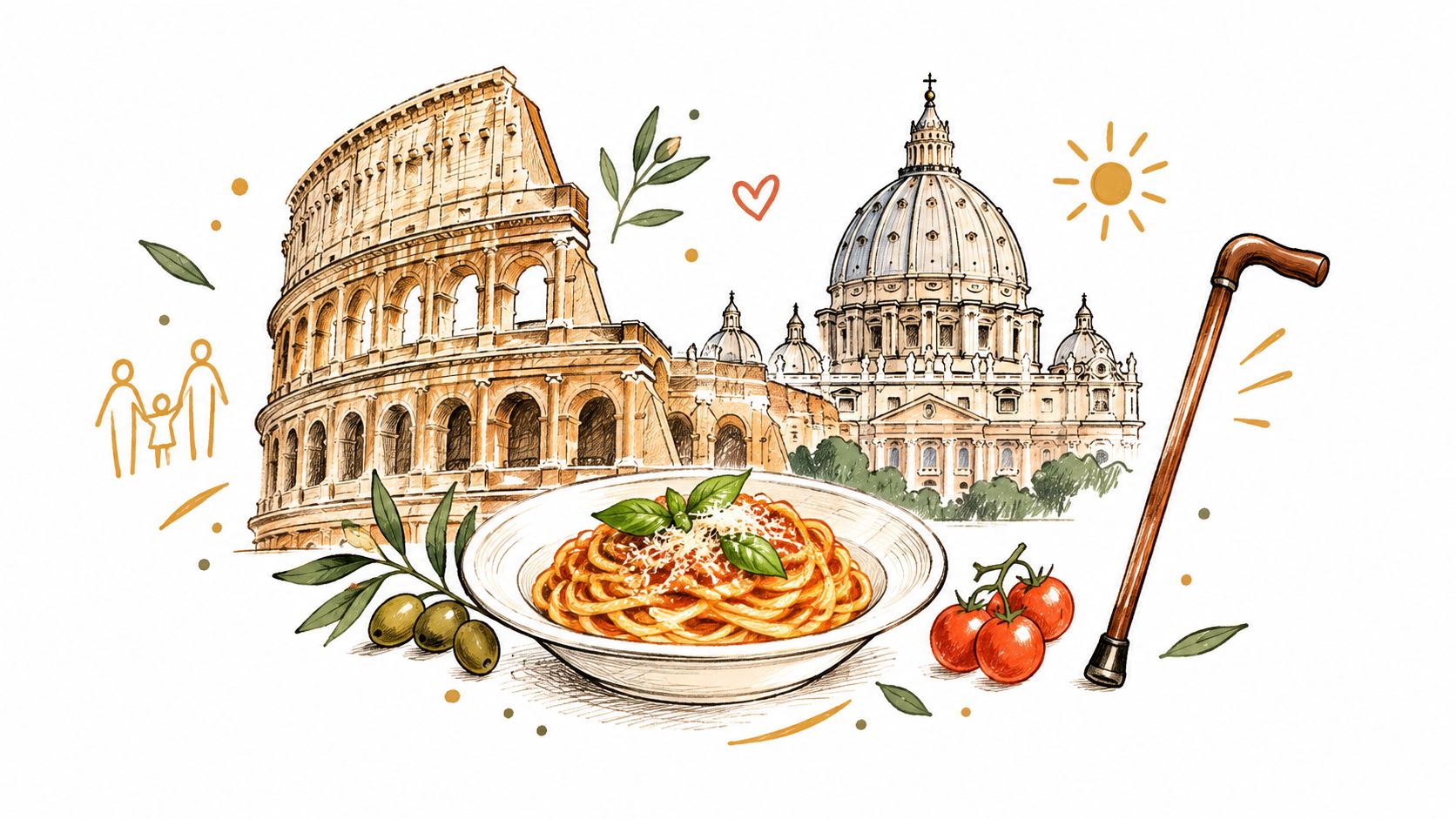
Day 1 is the ancient Rome block. Book the Colosseum and Roman Forum together, ideally with a guide who can keep grandparents, teens, and history-lovers engaged at the same time. One shared lunch afterward is enough. The afternoon should include a rest block, especially in warmer months.
Structuring the high-pressure days
Day 2 belongs to the Vatican Museums and St. Peter's Basilica. Early entry is worth it because this is the day most likely to trigger friction if poorly timed. Long indoor walking, security lines, dress rules, and museum fatigue can flatten a family by lunch.
Book the Vatican at opening time if you can. In Rome, a good morning saves the whole day.
Day 3 should be lighter and more open-air. Walk the Pantheon, Trevi Fountain, and Piazza Navona in a loop with frequent stops, coffee for older members, gelato for younger ones, benches whenever you find them. Rome doesn't need to be “completed.” It needs to be sequenced so nobody feels dragged.
A useful planning principle comes from a field study of 50 tourist groups on Kulangsu Island, which tested itineraries that separated some segments while preserving shared activities and found that this coordinated approach outperformed five baseline methods, according to the study on balancing individual and collective group travel experiences. Rome is exactly the kind of city where that works. Keep the core morning together, then let one branch of the family rest while another keeps exploring.
Where Rome families usually get it right
- Timed entry first: Reserve Vatican and Colosseum slots before anything else.
- Respect site rules: Religious sites require covered shoulders and knees.
- Make optionality visible: Let each household see which afternoon stops are optional.
- Use heat strategically: A rest block after lunch often prevents the evening from collapsing.
Day 4 can go two ways. A Trastevere walk and family cooking class work well when people want one last shared experience. If the group needs air and space instead, the Appian Way is the calmer finish.
5. Dubrovnik and Split 5-Day Adriatic Coast Itinerary for Groups
This is the itinerary I'd use when the group wants scenery and water, but still needs enough structure to avoid wasting half the trip deciding who's joining the boat. It suits friend groups and corporate offsites because the coast naturally creates a shared mood, then gives you plenty of room for parallel activities.
Day 1 starts in Dubrovnik with a simple arrival walk through Old Town. Keep dinner near the center and make bedtime decisions easy. Long travel days plus stone steps are a bad combination if you try to squeeze in too much.
Two cities, one clean sequence
Day 2 is where timing matters most. Walk the City Walls early, before the streets heat up and the city feels crowded, then use the afternoon for a boat to Lokrum. That split works because it gives the group one iconic shared activity, then a lower-pressure second half where people can swim, wander, or just sit in the shade.
Coastal group travel also rewards operational discipline. Even for a group of twelve, boat capacity, meal reservations, transfer timing, and room coordination need actual process, not a group chat thread. Shared boat bookings in particular should be confirmed before departure, because negotiating capacity and payment on a dock in July is the fastest way to lose an afternoon. Assign one person to hold the booking and collect payments in advance.
Day 3 should be a transfer day with purpose. Move from Dubrovnik to Split and stop in Trogir instead of treating the journey like dead time. The old town is compact enough for a two-hour lunch stop, and it breaks up the drive without adding a full activity block. Day 4 belongs to Diocletian's Palace and a sunset walk along the Riva. The palace is a living district rather than a ticketed ruin, so let people drift through it in pairs and regroup for the evening.
Best use of the final day
- Vote on the water: Put kayaking, sailing, wine tasting, or a half-day island trip into one pre-trip poll.
- Book as a group: Shared boat bookings usually remove the worst part of coastal trips, separate negotiations and payment confusion.
- Keep one recovery window: Coastal itineraries look easy on paper, but swimming and sun wear people out faster than they expect.
The Adriatic rewards groups that choose fewer transfers and better afternoons.
Day 5 can be a half-day island-hopping tour from Split, whether that's Hvar or another nearby option. Don't fill the evening afterward. Let the coast do the work.
6. Marrakech and Essaouira 5-Day Group Immersion Itinerary
Marrakech becomes much easier once the group agrees that not every hour needs to be calm. The medina is intense by design. That's why this itinerary works best when you pair city energy with a coastal reset in Essaouira.
Day 1 should lean into arrival excitement. Walk Jemaa el-Fnaa, move through the souks, and keep the evening simple, one group dinner, one agreed meeting point, no heroic shopping agenda. In Marrakech, drifting apart without a plan wastes more time than almost anything else.
The culture-heavy middle
Day 2 is your detail day. Start with Bahia Palace, continue to Ben Youssef Madrasa, and use Majorelle Garden as the slower segment that prevents museum fatigue. That combination works because it alternates dense urban texture with a more controlled environment.
A practical trade-off matters here. Many groups say they want the most sustainable choices, but actual travel decisions still run into price, convenience, and time. European travel research found 74% of surveyed travelers said climate concerns would change the volume or type of travel they book, and 73% considered climate change and sustainable options important, while separate behavioral findings in the same report noted sustainability was the top priority for only 20% of respondents, according to Accor's travel trend report. In Morocco, that usually shows up as a choice between a private driver, shared transport, extra comfort, and a longer lower-friction route. The right answer depends on the actual group, not a generic ideal.
Where to split, where to stay together
Day 3 should be the voted excursion day, Atlas Mountains or Ourika Valley if the group wants scenery and air. Day 4 is the transfer to Essaouira, ideally with one coastal stop rather than a rushed string of them. Day 5 is the reward, an Essaouira medina walk and seafood lunch at the port.
- Use a local guide in the medina: It saves time and cuts stress for first-timers.
- Agree on cash expectations: Souk shopping turns awkward fast when one person bargains hard and another doesn't want to.
- Choose transport by group size and comfort: For larger friend groups, a private driver often keeps the trip moving.
- Respect local norms: Dress and photography choices affect the experience, especially in religious or private spaces.
Marrakech gives you the intensity. Essaouira gives you the reset. Together, they create a better group tour itinerary than trying to force the same energy for five straight days.
7. Jordan 5-Day Corporate Retreat, Amman, Petra, Wadi Rum, and the Dead Sea
Corporate retreats fail when every day is transit-heavy and somebody still insists on adding workshop time wherever there's a spare hour. Jordan works better with one clear principle. Put the thinking time in Amman. Put the immersion and spectacle elsewhere.
Day 1 should stay light. Arrive in Amman, visit the Citadel if the group lands early enough, and use the evening welcome dinner to establish the rhythm of the retreat. Nobody wants strategic planning after a flight.
For teams building a fuller work-plus-travel schedule, company retreat itinerary ideas can help frame the right balance between sessions and experiences.
The sequence that protects energy
Day 2 is Petra, and it needs an early start. Walk the Siq, reach the Treasury before the site feels too hot or too busy, and make the harder afternoon hike optional. Some team members will want the Monastery. Others will be done after the core route. That's not indecision. That's sensible retreat design.
The accessibility side is often overlooked in group planning, especially for mixed-ability teams. Research covering 3,473 adults across France, Germany, Italy, Spain, and the UK highlighted transport as a central consideration for travelers with mobility requirements, according to ENAT's European accessibility research preview. In Jordan, that translates into real itinerary choices, shorter walking options, vehicle access planning, rest opportunities, and clear communication about terrain before people commit.
Retreat logistics that actually work
Day 3 should be all Wadi Rum, jeep tour, desert lunch, sunset, camp dinner. Don't stack formal sessions onto this day. Day 4 is for the Dead Sea, where floating and a wellness block give the team recovery time. Day 5 returns to Amman for a short debrief before departure.
- Survey first: Collect dietary, stamina, and mobility needs before booking hikes or camps.
- Use the Jordan Pass carefully: It can simplify entry planning depending on the final route.
- Keep workshops stationary: Team sessions belong in Amman, not squeezed between major transfers.
- Offer activity tiers: Moderate and low-intensity options keep more people engaged.
Corporate groups don't need identical participation. They need a shared outcome and honest options.
8. Istanbul 4-Day Creator and Friends Itinerary, Bosphorus, Bazaars, and Rooftop Dining
Istanbul is one of the easiest cities to overschedule because every district feels like it could fill a day by itself. For creator groups and friends, the smarter play is to organize by shooting windows, ferry crossings, and meal anchors, not by trying to clear an endless landmark list. Four days is enough if the geography is locked and the mood inside each district stays flexible.
Day 1 stays focused on Sultanahmet. Put Hagia Sophia and the Blue Mosque into the shared morning, then leave the late afternoon free for café time, rooftop photos, or a simple walk. Groups wanting pre-trip inspiration can browse things to do in Istanbul before voting on the optional slots.
Why Istanbul suits modular planning
Day 2 is your market-and-water day. Start at the Spice Bazaar, continue to the Grand Bazaar, and save the Bosphorus cruise for sunset. This sequence works because markets sprawl if you let them. A fixed cruise time forces the day to hold its shape.
Modular structure matters here because group composition changes how people want to spend the hours. As noted earlier, research on collaborative travel planning found that group size, group type, nationality, age, gender, and travel style all affect intragroup interaction. Istanbul makes those differences visible fast. Some people want shopping content, some want architecture, some want long meals, some want ferry views. A rigid single-track day usually loses somebody, so build the core schedule around two anchors per day and let the rest be voted on.
The best split points
Day 3 moves to the Asian side. Take the ferry to Kadıköy, eat in the market area, then spend time in Moda before regrouping for a rooftop dinner in Beyoğlu. Day 4 can begin with Galata Tower, then finish with a voted final experience, either a hammam or a slow tea session.
- Use ferries: Crossings are often cleaner and more predictable than taxi plans.
- Pre-book major entries when needed: Visiting hours and dress rules can change, so check them before you build the schedule.
- Share a content calendar: Creator groups save hours when shot lists are agreed before arrival.
- Align spending early: Bazaar shopping gets easier when the group has already talked about budget ranges.
Lock the geography first. Then let each district breathe.
Comparison of 8 Group Tour Itineraries
| Itinerary | Complexity 🔄 | Resource Needs ⚡ | Expected Outcomes 📊⭐ | Ideal Use Cases | Key Advantages 💡 |
|---|---|---|---|---|---|
| Barcelona 4-Day Friends' City Break | Moderate, mixed core + optional add-ons; voting-friendly 🔄 | Moderate, timed-entry tickets, group metro passes, restaurant reservations ⚡ | High social & sightseeing value; broad appeal across interests 📊⭐ | Friend groups, bachelor/bachelorette parties | Strong mix of architecture, beach, nightlife; easy to split choices for groups 💡 |
| Lisbon & Sintra 5-Day Family Reunion | Low, slow pace with flexible transport; family-oriented 🔄 | Low–Moderate, Viva Viagem card, timed Sintra entry, accessible lodging ⚡ | Relaxed multi‑generational enjoyment; manageable days 📊⭐ | Multi-generational families, reunions | Family-friendly sights, lower costs, gentle pacing and shared meals 💡 |
| Prague 3-Day Weekend Getaway | Low, compact, tightly scheduled weekend plan 🔄 | Low, walkable center, book Castle tickets to avoid queues ⚡ | High atmospheric value and cost-efficiency for short breaks 📊⭐ | Friend groups, couples on weekends | Walkable historic core, strong beer/nightlife culture, good value 💡 |
| Rome 4-Day Multi‑Generational Heritage Itinerary | Moderate–High, timed entries and guided tours reduce complexity but require planning 🔄 | High, Vatican/Colosseum timed tickets, guided tours, accessibility considerations ⚡ | Deep historical immersion with comfort for mixed ages 📊⭐ | Families and multi‑generational reunions | Dense icons in short area, guided options ease logistics, excellent food scene 💡 |
| Dubrovnik & Split 5-Day Adriatic Coast | Moderate, intercity transfers and island logistics; seasonal factors 🔄 | Moderate–High, ferries/charters, seasonal schedules, visitor fee checks ⚡ | High coastal variety: culture, sea activities, scenic walks 📊⭐ | Corporate offsites, friend groups seeking coastal adventures | Blend of UNESCO sites + island hopping; private boat options to scale groups 💡 |
| Marrakech & Essaouira 5-Day Group Immersion | Moderate, medina navigation and transfers require local coordination 🔄 | Moderate, licensed guides, private drivers for transfers, cash for souks ⚡ | Rich cultural and culinary immersion with pacing contrast 📊⭐ | Friend groups, creators, corporate teams seeking immersion | Wide range of group activities (hammam, cooking), low–moderate costs, coastal respite 💡 |
| Jordan 5-Day Corporate Retreat | High, long drives, campsite logistics, and mixed-ability planning 🔄 | High, transport between sites, desert camp requirements, workshop venues ⚡ | Strong team-building outcomes combining adventure, culture, wellness 📊⭐ | Corporate teams and startup offsites | Unique mix of Petra/Wadi Rum/Dead Sea; structured retreat + adventure opportunities 💡 |
| Istanbul 4-Day Creator & Friends Itinerary | Moderate, dense photogenic sites but crowd management needed 🔄 | Moderate, ferry use, pre-booked landmark access, rooftop reservations ⚡ | Very high visual/content yield; culturally diverse experiences 📊⭐ | Travel creators, friend groups seeking vibrant city content | Exceptional photo ops, Europe–Asia crossover, good value for content production 💡 |
Turning a Template Into a Plan Your Group Will Follow
The best template is the one that already matches your group's behavior. Not the fantasy version of the group, the actual one. If your travelers need downtime, pick the slower family structure. If they care most about nightlife and food, use the city-break model. If they're a team with mixed mobility and different social batteries, protect the core schedule and stop pretending everyone should do every add-on.
Start by locking the shared core blocks first. That usually means the main sight of the day, one central meal, and every transfer that would be painful to reorganize last minute. Most planners should spend their attention here. The rest of the trip gets much easier once the group knows where it absolutely needs to be and when.
After that, open the optional slots for a vote. Keep the choices narrow and realistic. Two or three options are usually enough. Close the vote 5 to 7 days before arrival, then confirm tickets, restaurant bookings, and transport while inventory still exists. A plan with unresolved “maybe” decisions feels flexible in a chat. On the ground, it becomes delay.
This matters more as group formats diversify. Industry projections estimated the broader group-travel market at $412.6 billion in 2025, with a forecast to reach $798.3 billion by 2034, implying projected annual growth, according to Dataintelo's market outlook for group travel. Growth alone doesn't make trips smoother. Better structure does. Smaller groups in particular benefit from modular planning because they can shift dinner, transport, and activity sequencing more easily than large fixed tours.
I also wouldn't ignore the emotional side. A group follows an itinerary when it feels fair. Private preference collection helps because not everybody wants to announce budget limits, mobility concerns, or low energy in front of friends or colleagues. One practical option is MyPerfectStay, which is built around private inputs, group voting, and a shared daily itinerary. That setup fits this exact problem, especially when you need to turn scattered preferences into one bookable plan.
If you're building content or packages around guest experiences, the same logic applies. Hotels, creators, and retreat organizers in Europe and MENA don't need longer itineraries. They need clearer ones. Start with the fixed core. Add optional modules. Show the trade-offs. And if you need outside creative inspiration while shaping destination content, ideas de video para destinos turisticos can help spark more marketable angles.
The itinerary your group follows won't be the most crowded one. It'll be the one that makes decisions early, preserves flexibility where it matters, and leaves no doubt about what happens next.
MyPerfectStay helps groups turn scattered preferences into one clear plan, with private surveys, fair voting, bookable experiences, and an auto-organized day-by-day itinerary that everyone can follow. If you want to stop chasing replies and start locking a workable group tour itinerary faster, visit MyPerfectStay.