10 Group Trip Ideas Across Europe and MENA
September 27, 2026·MyPerfectStay
You've got a group chat full of destination suggestions, but no agreement on pace, budget, or what the trip should feel like. One person wants museums and late dinners, another wants a pool and a slow morning, while someone else is already checking hiking routes. The best group trip ideas start with those differences, not with a destination list.
This roundup organizes 10 group trip ideas across Europe and MENA by occasion and energy. Each format explains who it suits, how to frame the budget, how demanding the schedule should be, which experiences help people agree, and where coordination usually breaks down. The group-travel market is substantial: Market Research Future values it at USD 369.8 billion in 2024 and projects USD 689.85 billion by 2035, a 5.83% CAGR, according to its group-travel market release.
Use MyPerfectStay to collect private preferences, compare overlap, vote on activities, and keep confirmations in one shared plan. That matters whether you're arranging a family reunion, a friends' weekend, or a corporate retreat. Decide what your group can agree on first, then choose the place that makes execution easier.
Table of Contents
- 1. European City Break Tours
- 2. Mediterranean Beach and Island Retreats
- 3. Cultural and Museum-Focused Expeditions
- 4. Food and Wine Tourism Experiences
- 5. Adventure and Active Outdoor Trips
- 6. Festival and Event-Based Group Trips
- 7. Luxury and Wellness Retreat Experiences
- 8. Multi-Generational Family Reunions
- 9. Bachelor, Bachelorette, and Milestone Celebration Parties
- 10. Corporate Offsites and Team-Building Retreats
- Top 10 Group Trip Ideas Comparison
- Turn Shared Preferences Into a Bookable Plan
1. European City Break Tours
A European city break works best when your group wants variety without changing hotels every night. Paris, Barcelona, Rome, Amsterdam, Lisbon, and Prague combine recognizable landmarks, local food, walkable neighborhoods, and enough independent activities to keep different personalities satisfied. Plan for several days, with structured mornings, shared meals, and free afternoons rather than an itinerary that treats every hour as a group obligation.
The budget can sit in the mid-range to premium band, depending on hotel location, restaurant choices, and landmark tickets. The pace is moderate to high, especially in Rome or Barcelona, where walking, queues, and late meals can consume more energy than expected. Families, friend groups, and corporate teams should choose one central base and avoid adding a second city unless the group has explicitly accepted more travel time.
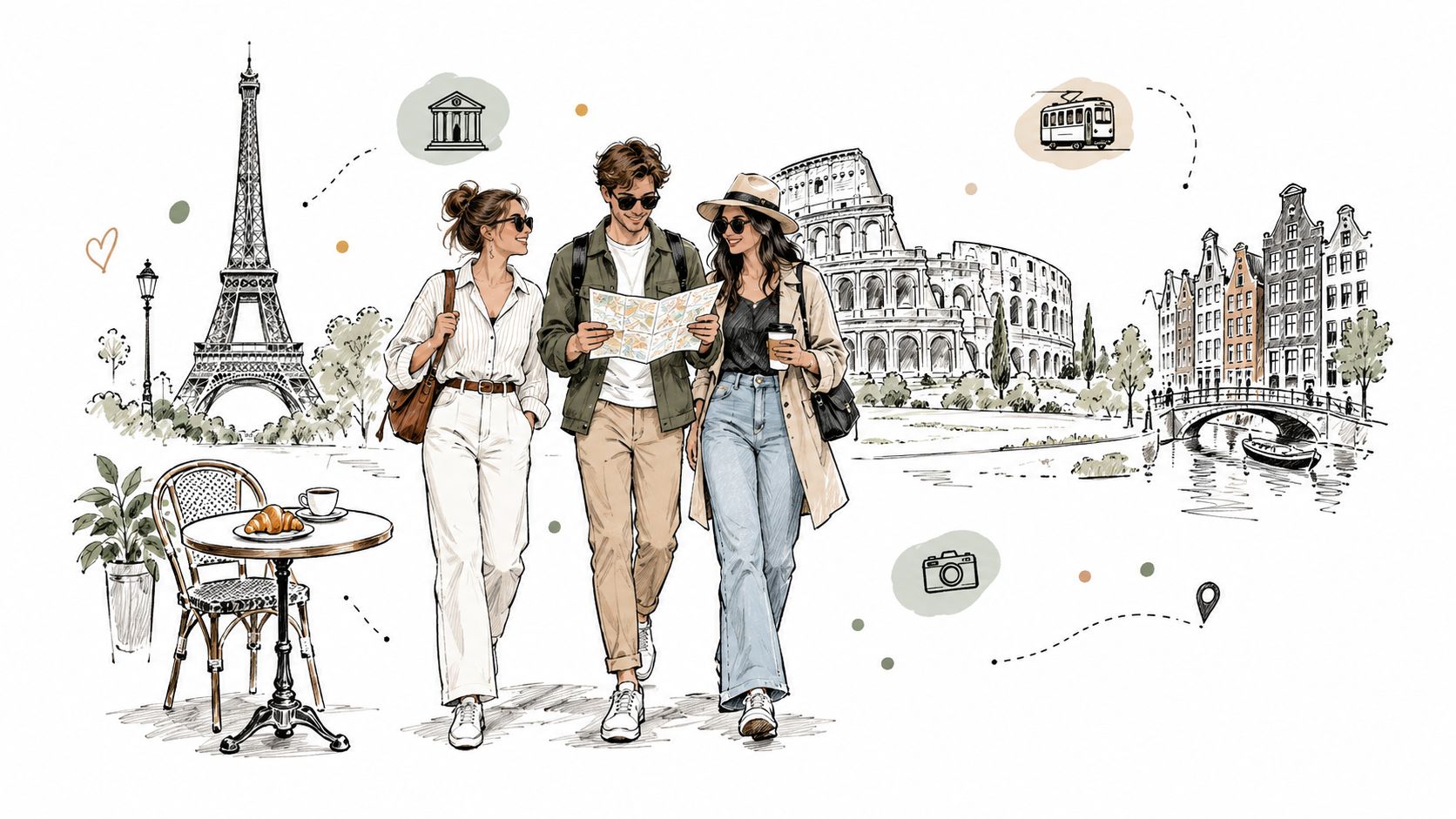
Build agreement into the itinerary
Use MyPerfectStay to ask whether people prefer a fast sightseeing schedule or a slower neighborhood-led trip. Its city-break planning guide can support the practical setup, but the key decision is your group's daily rhythm.
- Reserve fixed-entry sights early: Book the Vatican, major museums, and other timed attractions before arrival.
- Protect free afternoons: Let one group explore Montjuïc in Barcelona while others rest or browse nearby neighborhoods.
- Mix paid and independent activities: Pair a guided walk through Prague's Old Town Square and castle district with self-guided café time.
- Choose meals deliberately: Reserve restaurants recommended by locals rather than relying on the busiest tourist streets.
Amsterdam combines canal tours with museum passes, Lisbon adds historic districts and a Sintra day trip, and Rome rewards advance planning around archaeological sites. The main coordination risk is overbooking the day. Leave room for different walking speeds, private errands, and the occasional decision to skip an attraction.
2. Mediterranean Beach and Island Retreats
Choose a Mediterranean retreat when the group wants scenery, shared accommodation, and a reliable split between activity and rest. Santorini, Dubrovnik, the Greek Islands, the Croatian coast, and the Amalfi Coast offer a clear format: settle into a villa or resort, plan a small number of anchor experiences, and let the sea provide the recovery time.
This is usually a mid-range to premium choice, with private villas, boat trips, transfers, and peak-season dining driving the budget. The energy level is low to moderate, but it rises quickly when you add kayaking, coastal hikes, island transfers, or water sports. The format suits families and mixed-interest friend groups because active travelers can go out on the water while others stay near the pool or beach.
Match the coast to the group
Santorini suits groups that value caldera views, volcanic beaches, and a memorable sunset in Oia. Dubrovnik works for medieval history, nearby islands, and coastal swimming. Mykonos, Paros, and Antiparos create a livelier island-hopping option, while Hvar, Vis, and Split provide flexible bases along the Croatian coast. The Amalfi Coast adds dramatic roads, Positano, Ravello, and coastal drives, but its terrain and transfers require careful scheduling.
Practical rule: Ask about swimming confidence, boat comfort, heat tolerance, and preferred downtime before paying deposits.
Coordination problems usually come from assuming everyone wants the same type of relaxation. Survey the group before booking boat tours, reserve popular restaurants early, and put the first beach day near the beginning of the trip while enthusiasm is high. For larger groups, a private villa with a shared pool can create togetherness without forcing every traveler into the same room or daily routine.
Keep one full day free from pre-booked excursions. That buffer absorbs delayed ferries, changing weather, and the simple need to do nothing.
3. Cultural and Museum-Focused Expeditions
A cultural expedition suits people who want a trip built around art, archaeology, history, and expert interpretation. Rome, Florence, Vienna, Istanbul, and Paris offer enough collections and heritage sites to create a rich itinerary without relying on nightlife or resort facilities. This format is particularly strong for culturally curious adults, educational groups, and families with older children who enjoy context rather than constant entertainment.
Expect a moderate to premium budget when you include professional guides, timed museum entries, and central accommodation. The pace should be moderate, with no more than a couple of major museum visits in one day. A group can enjoy the Uffizi Gallery and Accademia in Florence, then spend the late afternoon walking through a neighborhood instead of adding another indoor attraction.
Plan around attention, not attraction count
Use a private survey to identify shared interests before selecting the route. A history-focused group may prefer Istanbul's Topkapi Palace and Hagia Sophia, while an art-led group may prioritize the Louvre's sculpture wings and major masterpieces. Vienna can combine the Kunsthistorisches Museum with Schönbrunn Palace, and Rome can pair archaeological sites with the Vatican.
- Use professional guides: A strong guide connects objects, eras, and places in a way that keeps a mixed group engaged.
- Book timed entries early: Major museums and the Vatican require advance coordination for groups.
- Alternate intensity: Follow a demanding museum morning with a market, garden, café, or neighborhood walk.
- Create optional branches: Travelers who want more detail can continue with a specialist guide while others take a slower route.
The largest risk is intellectual fatigue. Two or three museums in a day can become a blur, particularly for children, older travelers, or people who joined for the group rather than the subject. Agree on the essential cultural highlights, then let the rest of the schedule breathe. That approach produces better conversations and fewer silent withdrawals from the itinerary.
4. Food and Wine Tourism Experiences
Food and wine trips work best when the group wants conversation, local flavor, and flexible sightseeing. Barcelona offers tapas and market visits, Lisbon combines seafood with pastéis de nata, Bologna centers on Emilia-Romagna traditions, Tuscany brings vineyard time, and Lyon suits groups that prefer restaurant-led days.
Choose this format for friends, milestone groups, creator communities, and corporate teams that want social connection without strenuous activities. Set a moderate to high budget. Markets and casual restaurants keep costs controlled, while tasting menus, private transfers, and winery visits raise them. The pace stays moderate, with meals and tastings distributed across the day.
Start with the group's restrictions, not the destination. Collect allergies, dietary requirements, alcohol preferences, and accessibility needs before confirming restaurants or activities. MyPerfectStay can help organize those private responses, while this wine-tasting tour planning resource can help shape the itinerary.
Match the destination to the group's appetite for structure:
- Barcelona: Combine La Boqueria with a tapas crawl for an informal, social day.
- Lisbon: Pair a seafood dinner with a pastéis de nata workshop.
- Tuscany: Choose between a cooking class, a Chianti tasting, or a farmstay. Winery days require planned transport.
- Bologna: Build around Parmigiano-Reggiano, balsamic vinegar, and regional cooking.
- Lyon: Use Old Town bouchon dining for a more restaurant-focused schedule.
Book signature restaurants and tasting menus early. Then balance the itinerary with a market lunch, street-food stop, or relaxed neighborhood dinner. A cooking class often works better mid-trip, after travelers have settled into the group rhythm. Arrange a driver or organized transfer for winery days so nobody must manage the return journey after tastings.
The main coordination risk is overprogramming every meal. Keep breakfast simple, leave some lunches flexible, and reserve one evening for individual choices. The right plan gives the group enough shared food experiences to build connection without making every sitting expensive or compulsory.
5. Adventure and Active Outdoor Trips
A hiking group that wants shared achievement should choose an active itinerary, not a passive retreat. Alpine hikes, cycling through Provence, climbing in the Canary Islands, kayaking along Croatia's Dalmatian Coast, and desert trekking in Wadi Rum create a clear challenge and a story the group can share afterward.
The budget is usually moderate to high when the plan requires guides, specialist equipment, transfers, or support across several days. Expect a high energy level. Fitness-focused friends, outdoor clubs, and teams seeking purposeful bonding are the strongest fit. Build in route options so slower participants remain part of the group.
Match the route to the group
Start with a private check of fitness, previous experience, injuries, and comfort with heights or water. Mont-Blanc and Ecrins trails demand more preparation than a relaxed Provence cycling route. Petra provides a culturally rich active day, while Wadi Rum adds desert scenery and longer transfer requirements. Compare each option by pace, technical demands, recovery time, and transport before asking the group to vote.
Use this planning checklist:
- Hire qualified guides: Technical climbing, mountaineering, and remote routes require professional oversight.
- Set expectations early: Share elevation, terrain, start times, equipment needs, and likely weather.
- Build recovery time: Add a rest day or easy cultural activity after demanding physical days.
- Plan bail-out options: Confirm shorter routes, transport access, and meeting points before departure.
A route should include a practical alternative for anyone who needs to stop. Changing plans must remain a normal option, not a sign that someone has failed.
The main coordination risk appears when the strongest traveler sets the pace for everyone. Let the group agree on the experience level, then select the destination. A challenging hike followed by a shared meal can create stronger memories than an ambitious route that splits the party and leaves several travelers exhausted.
6. Festival and Event-Based Group Trips
Choose this format when the group needs a firm reason to travel. Oktoberfest in Munich, Venice Carnival, Barcelona's Sónar Festival, Dubai's international shopping events, and cultural festivals in Marrakech create a shared decision point instead of an endless destination debate. The event also gives the itinerary a clear identity.
Best for: friend groups, birthday celebrations, music fans, and teams seeking a social trip.
Budget: moderate to high, since accommodation, transport, and restaurants face greater demand.
Pace: high during event days, then low to moderate afterward.
Secure the anchor first. Confirm dates at least 12 months ahead when possible, block calendars immediately, and reserve accommodation once organizers publish the schedule. Use MyPerfectStay to test group commitment before anyone pays a deposit.
Build around the occasion
Munich combines Bavarian culture with a large festival atmosphere. Venice adds masquerade traditions, parades, and historic settings. Barcelona's Sónar connects electronic music with art installations, while Dubai and Marrakech offer distinct cultural rhythms. Check local customs, event rules, and dress expectations, particularly for religious occasions.
Festival logistics reward early decisions:
- Reserve transport early: Arrange venue routes before arrival instead of depending on last-minute rides.
- Create a weather fallback: Select museums, food tours, or indoor activities if outdoor plans change.
- Allow different attendance choices: Members can skip a performance or venue without losing contact with the group.
- Set one meeting system: Use a central location, shared itinerary, and clear check-in times.
The primary coordination risk is overloading every day with scheduled events. Add one unstructured day and one smaller local experience, such as a neighborhood meal or guided walk. Those quieter plans give tired travelers room to recover and help the group experience the destination beyond the headline event.
7. Luxury and Wellness Retreat Experiences
Choose a wellness retreat when the group values recovery, privacy, and premium service over a packed sightseeing schedule. The Algarve, Marrakech, the Turkish Riviera, Dubai, Abu Dhabi, and Italian thermal towns each support a different style, including yoga, healthy cuisine, hammams, thermal bathing, spa treatments, and meditation.
This format suits adult friend groups, leadership teams, milestone celebrations, and travelers who need a genuine break. Set a premium budget, then compare package pricing with separate bookings. Packages can simplify decisions and shared billing, while the low pace leaves room for optional excursions and personal downtime.
Plan for different definitions of rest
Agree on the retreat's shared purpose before booking. Some travelers may want treatments and quiet meals, while others prefer light exercise or a short cultural outing. Marrakech pairs hammams and argan oil treatments with a half-day in the medina. The Algarve suits resort-based wellness with an optional coastal excursion. Dubai and Abu Dhabi offer polished spa facilities, while Italian thermal towns center the trip on slow bathing and local food.
Use three planning rules:
- Separate included and optional experiences: Everyone should understand what the package covers and what costs extra.
- Offer parallel activities: One person can book a treatment while another explores a nearby town.
- Ask about health needs privately: Collect relevant preferences before confirming rooms, meals, treatments, or mobility arrangements.
The main coordination risk is social pressure. Build the schedule around shared meals and a small number of agreed activities, not compulsory classes or treatments. Protect quiet periods, and let travelers skip sessions without explaining their choice. This approach keeps the retreat restorative while giving the group enough structure to coordinate transport, reservations, and spending.
8. Multi-Generational Family Reunions
A reunion works when grandparents, parents, children, and cousins can share key moments without following one demanding schedule. Plan around differences in mobility, sleep, food, attention spans, and tolerance for heat or walking. Interest in this format is strong: a 2025 family-travel survey found that 71% of grandparents had already taken a multi-generational trip, while 57% planned one in the future, according to the NYU family-travel survey.
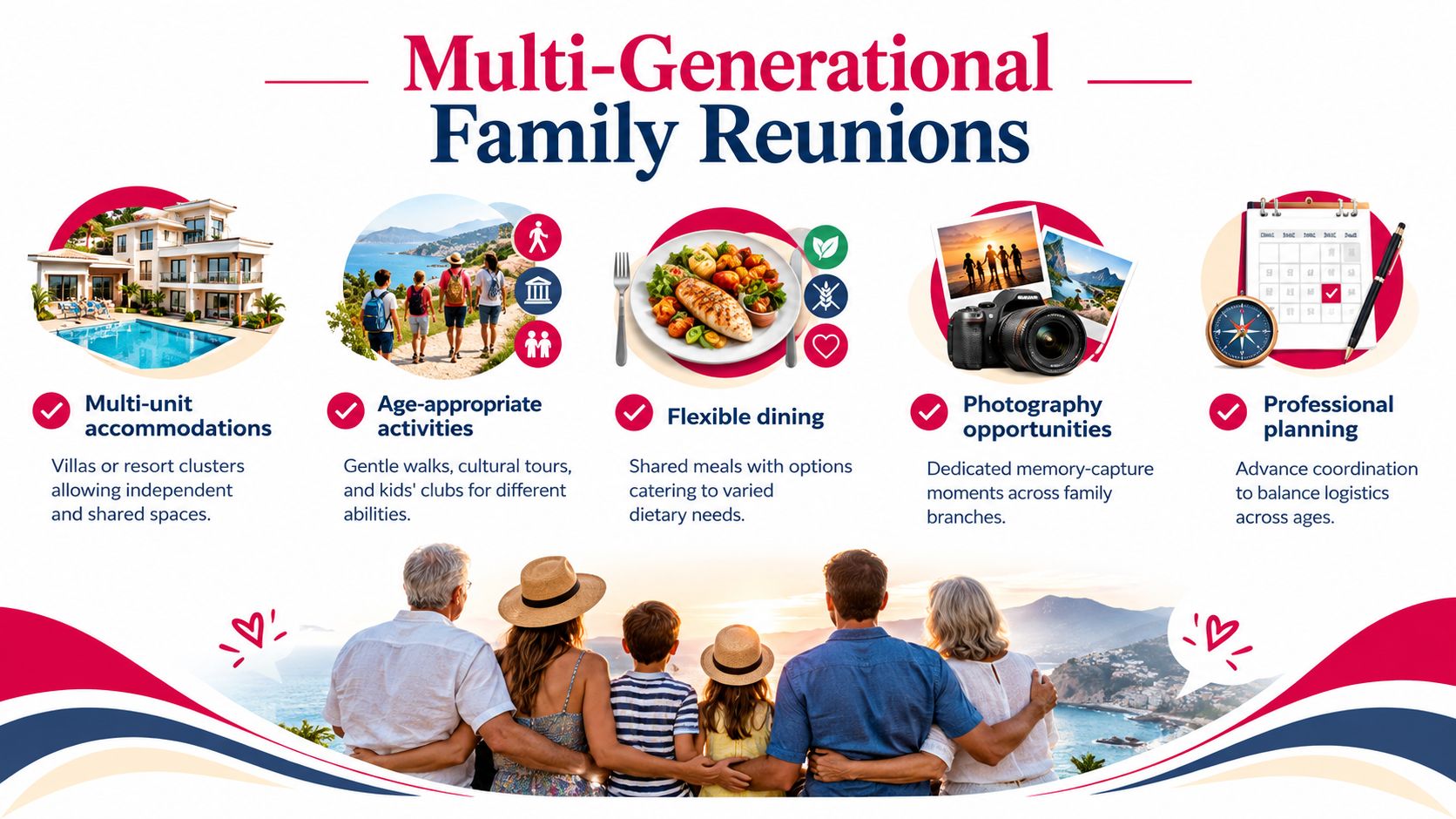
Ideal travelers: extended families who value shared meals and milestones but need separate downtime. Budget: moderate to premium, covering multi-unit accommodation, private transfers, flexible excursions, and occasional childcare. Pace: low to moderate. Tuscan villas, Greek island stays, Croatian coastal compounds, and clusters of apartments in Lisbon or Barcelona suit groups that need space. Accessible heritage trips to Petra or Cairo require closer checks on walking routes, transport, and property access.
Use MyPerfectStay to collect preferences privately from each age group. Choose a villa with communal dining space and quiet rooms, or book nearby apartments when one property would feel crowded. Confirm these details before paying:
- Excursion length: Offer half-day and full-day versions, with a clear meeting point and return time.
- Mobility access: Check slopes, stairs, bathroom layouts, vehicle access, and walking distances.
- Adult time: Schedule childcare or teen activities during dinners, spa visits, or cultural outings.
- Shared memories: Set up a family photo and video system so absent travelers can follow the reunion.
The main coordination risk is treating proximity as participation. A grandparent may join lunch but skip a ruins walk. A teenager may choose an active outing while younger children need a slow afternoon. Make shared meals and a few anchor activities predictable, then leave the remaining hours open. This gives the group a common rhythm while keeping the trip manageable for different ages and energy levels.
9. Bachelor, Bachelorette, and Milestone Celebration Parties
Start with the guest of honor's preferred atmosphere, then match the destination to the group's energy and spending limits. Barcelona suits groups that want beach clubs, Gaudí architecture, and Gothic Quarter nightlife. Amsterdam offers canal boats and brewery tours, Prague combines castle visits with themed activities, Dubai adds yacht trips and desert experiences, and Lisbon works well for riverside venues and creative neighborhoods.
This format fits milestone birthdays, engagements, bachelor and bachelorette groups, and friend groups traveling around a shared occasion. Plan for moderate to premium spending on accommodation, nightlife, private transport, and paid activities. Keep the pace high, with enough quiet time to prevent the group from spending the entire trip recovering.
Build the plan around agreement, not pressure
Before anyone pays, use private surveys to collect spending limits, room preferences, nightlife expectations, accessibility needs, alcohol preferences, and activities people will skip. Let the guest of honor choose the overall direction, then remove options that would exclude too many attendees.
A practical decision check:
- Ideal travelers: Friends who want a defined celebration and can agree on a shared energy level.
- Pace: Alternate a yacht party or nightlife evening with a cultural tour, relaxed meal, or open morning.
- Coordination risks: Hidden costs, late arrivals, different alcohol preferences, and one person carrying every booking.
- Bookable experiences: Reserve restaurants, yacht trips, cultural tours, or themed activities that give the group clear choices.
Appoint one sober planner to manage transport, timing, and safety. Reserve popular restaurants and premium experiences early, then publish the expected total before booking. Separate shared expenses from optional upgrades, and keep the morning after a high-energy night flexible. The strongest celebration plan gives the guest of honor a memorable experience without forcing every traveler into the most expensive or demanding version of the trip.
10. Corporate Offsites and Team-Building Retreats
A team arrives with a clear business question, a half-day workshop, and enough unstructured time to build relationships. That balance makes a corporate offsite useful. Barcelona suits strategy sessions paired with Gaudí tours or beach challenges. Vienna fits teams interested in classical music, workshops, and wine. Marrakech combines wellness with creative planning, while the Algarve supports beach activities, cultural tours, and focused meetings.
Expect a moderate to premium budget once meeting facilities, accommodation, transport, facilitators, and included activities are counted. Keep mornings structured and evenings more open. The format works for startups, distributed teams, leadership groups, and departments that need collaboration outside the usual office.
Choose the purpose before choosing the destination. Strategic planning needs quiet rooms and reliable technology. Onboarding benefits from low-pressure shared activities. Recognition trips can carry more leisure, while cross-team collaboration needs settings that encourage conversation without forcing constant participation.
Use this planning sequence:
- Set the decision criteria: Confirm the business objective, spending limits, accessibility requirements, dietary needs, work responsibilities, and preferred social intensity.
- Secure the foundation: Book accommodation, meeting space, and transport before adding optional experiences.
- Match pace to the team: Protect recovery periods, especially for introverts and employees carrying urgent workloads.
- Select purposeful activities: A cultural tour or cooking class can create conversation without another presentation. Use a professional facilitator for competitive challenges, leadership exercises, or unfamiliar physical tasks.
Use these corporate retreat ideas to compare formats and experiences. The main coordination risk is creating work in a different building. Keep business sessions focused, make evening attendance voluntary where possible, and reserve one or two shared experiences that give the group something memorable to discuss afterward.
Top 10 Group Trip Ideas Comparison
| Trip Type | Planning Effort | Budget & Bookings | Experience | What the Group Gets | Best For |
|---|---|---|---|---|---|
| European City Break Tours | Low–Moderate: walkable logistics, timed tickets | Moderate: varied accommodation, public transit, advance entry fees | ⭐⭐⭐⭐, High cultural variety | 📊 Strong cultural enrichment; easy group cohesion | 💡 Friends/families/corporate teams; flexible itineraries; easy coordination |
| Mediterranean Beach & Island Retreats | Moderate: villa/ferry coordination, season-dependent | High in peak season: villas, boats, transfers | ⭐⭐⭐⭐, Excellent relaxation & scenery | 📊 High rest/recreation value; mixed-activity satisfaction | 💡 Mixed-interest groups; villa rentals for large groups; scenic backdrop reduces planning |
| Cultural & Museum-Focused Expeditions | High: timed entries, expert guides, structured days | Moderate–High: guide fees, museum passes, advance bookings | ⭐⭐⭐⭐⭐, Very high educational value | 📊 Deep learning and engagement; risk of museum fatigue | 💡 History/art aficionados, educational groups; indoor-friendly, curricular focus |
| Food & Wine Tourism Experiences | Moderate: many reservations; dietary coordination | Moderate–High: tastings, classes, premium restaurants | ⭐⭐⭐⭐, High sensory/social payoff | 📊 Strong bonding via shared meals; memorable local experiences | 💡 Foodie groups, celebrations; adaptable budgets from street food to fine dining |
| Adventure & Active Outdoor Trips | High: safety planning, guides, varying skill levels | Moderate: guides, gear, insurance, permits | ⭐⭐⭐⭐, High intensity and bonding | 📊 Enhanced team cohesion and achievement; higher risk profile | 💡 Fit/adventure groups and team-builds; best with professional guides and contingency plans |
| Festival & Event-Based Group Trips | High: date-locked logistics, venue access, crowds | High: event tickets, premium lodging, transport | ⭐⭐⭐⭐, High-energy, memorable experiences | 📊 Immediate excitement and shared memories; crowd/cost tradeoffs | 💡 Groups seeking immersive, time-sensitive experiences; early booking essential |
| Luxury & Wellness Retreat Experiences | Low–Moderate: resort-managed schedules, structured programs | Very High: luxury rates, specialist staff, wellness services | ⭐⭐⭐⭐⭐, Exceptional service and relaxation | 📊 Deep rest and reduced conflict; high per-person cost | 💡 Wellness-seeking groups, executives; all-inclusive simplifies logistics |
| Multi-Generational Family Reunions | Very High: accessibility, childcare, multi-needs coordination | High: multi-unit rentals, extra services, flexible dining | ⭐⭐⭐⭐, High family value when well-planned | 📊 Strengthened family bonds; highest planning complexity | 💡 Large family gatherings; prioritize flexible spaces and early preference surveys |
| Bachelor/Bachelorette & Milestone Parties | Moderate: venue/reservation focus; safety planning | High: nightlife costs, VIP services, transport | ⭐⭐⭐⭐, High memorability and energy | 📊 Strong bonding and storytelling; potential exclusion of non-drinkers | 💡 Celebration-focused groups; mix party and quieter options; designate sober coordinator |
| Corporate Offsites & Team-Building Retreats | High: blend of work objectives and leisure, facilitator needs | High: meeting spaces, facilitators, logistical support | ⭐⭐⭐⭐, High organizational impact when aligned | 📊 Improved collaboration and strategy focus; risk of blurred boundaries | 💡 Companies seeking cohesion/strategy; balance structured sessions with optional activities |
Turn Shared Preferences Into a Bookable Plan
The right format depends on what the group is trying to share. Choose a European city break for variety, landmarks, food, and independent time. Select a coastal retreat when travelers have mixed energy levels and want activity beside downtime. A cultural expedition suits curious groups that enjoy guided context, while an active adventure fits fitness-led bonding and shared physical challenges.
Use a celebration trip when the occasion gives the group a clear reason to travel. Choose a multi-generational reunion when flexibility, accessibility, and shared family time matter more than a packed schedule. A wellness retreat works for recovery and quiet. A corporate offsite needs defined objectives, reliable logistics, and a deliberate balance between structured work and informal connection.
Group travel is a major category rather than a niche behavior. Estimates vary by research firm: alongside the Market Research Future figure above, SkyQuest puts the global market at USD 445.5 billion in 2024 and projects USD 798.6 billion by 2033, across leisure, corporate, educational, religious, and adventure group travel, according to SkyQuest's group travel market report. That scale reflects a practical truth for organizers: travelers need a faster way to reach agreement before inventory, tickets, and suitable accommodation disappear.
Start with a private collection of budgets, interests, energy levels, dietary requirements, mobility needs, and must-see ideas. Don't ask the loudest people in the chat to decide for everyone. Gather individual input first, then compare the overlap. MyPerfectStay can organize those preferences, surface activities with match scores, support group voting, send confirmations, and maintain a shared daily itinerary.
Reserve high-demand experiences early, especially major museums, festival accommodation, boat trips, signature restaurants, and technical outdoor activities. At the same time, keep unstructured time in the plan. A group needs enough certainty to avoid arguments, but enough freedom for people to rest, wander, or choose a different pace without feeling that they've abandoned the trip.
The best group trip ideas aren't the ones with the longest itinerary. They're the ones that turn different preferences into a fair, bookable plan, then leave enough space for the group to enjoy being together.
MyPerfectStay lets your group privately share budgets, interests, energy levels, and must-see ideas, then vote on bookable activities and organize the approved choices into one shared itinerary. Visit MyPerfectStay to compare options, confirm plans, and start turning your group trip idea into a coordinated booking.