10 Large Group Vacation Ideas in Europe and MENA
September 23, 2026·MyPerfectStay
Your group wants the same trip for different reasons, and that's exactly why planning gets messy. One person wants culture, another wants beach time, someone else wants nightlife, and another just wants the budget to stay sane. The fastest way to get unstuck is simple: shortlist two or three places, collect private preferences, then use a shared vote, match scores, deadlines, and one-click booking to push the group from debate to a decision. That's the logic behind large group vacation ideas that get booked, not just discussed.
One place can't solve every disagreement, so the right list should show trade-offs clearly. Europe gives you dense city breaks, walkable landmarks, and strong public transit. MENA adds richer contrasts, from medinas and deserts to ultra-modern resort districts. The best choice is the one that fits your group's overlap, not the one with the most famous name.
Table of Contents
- 1. Barcelona's Art, Architecture & Coastal Escape
- 2. Prague's Historic Charm & Bohemian Culture
- 3. Dubrovnik's Adriatic Luxury & Game of Thrones Heritage
- 4. Amsterdam's Canal Culture & Dutch Lifestyle Experience
- 5. Marrakech's Medina Markets & Desert Adventure Combination
- 6. Vienna's Imperial Grandeur & Culinary Refinement
- 7. Dubai's Modern Luxury, Desert Culture & Shopping Haven
- 8. Lisbon's Coastal Charm, Food Culture & Neighborhood Exploration
- 9. Rome's Ancient History & Mediterranean Lifestyle
- 10. Cairo & Giza's Ancient Wonders with Nile Cultural Experience
- Top 10 Large-Group Vacation Destinations Compared
- Turn Shared Preferences Into a Bookable Plan
1. Barcelona's Art, Architecture & Coastal Escape
Barcelona works because it gives mixed groups three different trips in one. You get Gaudí architecture, the Gothic Quarter, a real city beach at Barceloneta, and a nightlife scene that doesn't require everyone to stay out late. That balance makes it strong for friend groups, corporate teams, and families who can't agree on whether the trip should feel cultural or relaxed.
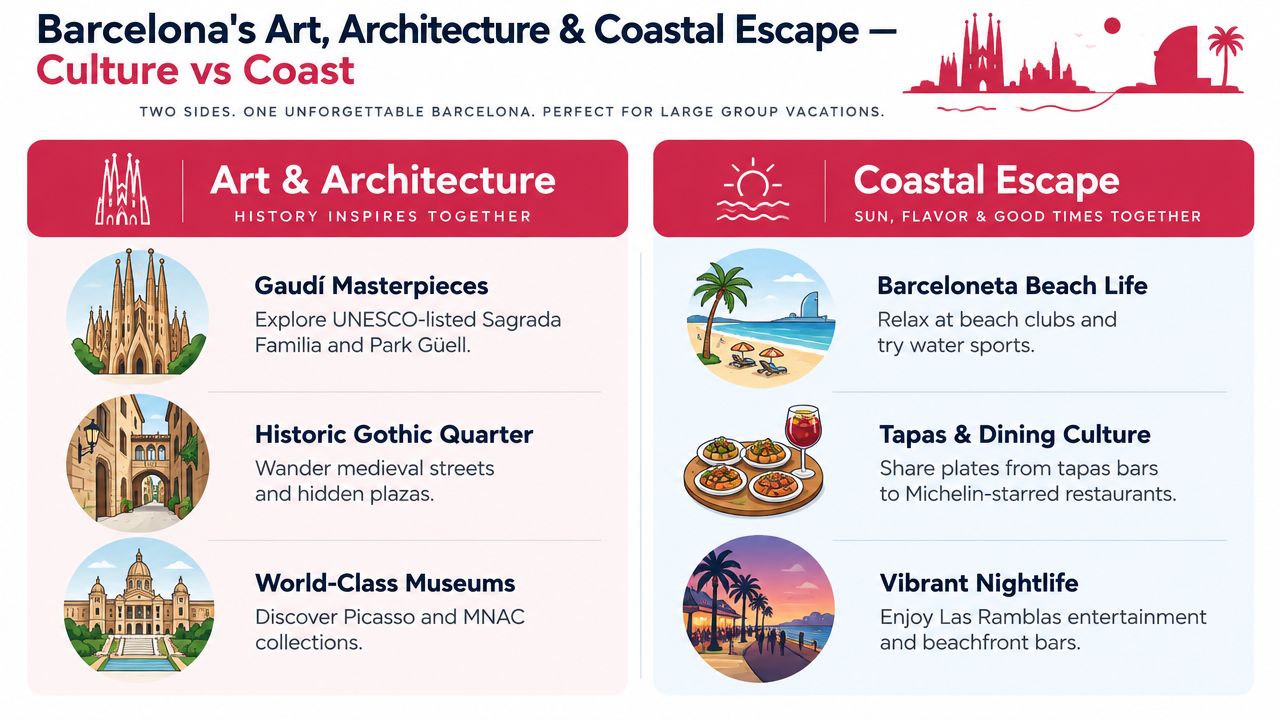
The city also rewards split pacing. Early risers can handle museum time and architecture walks in Eixample, while slower travelers can stay near the coast and join everyone later for dinner. If your group has both museum people and social people, Barcelona is an easy compromise because the best activities sit close together and don't require a complicated transfer plan.
Practical rule: Barcelona works best when you lock the headline sights first, then leave the evenings more open.
A few choices make the trip smoother:
- Book major attractions early. If your group wants Sagrada Família or Park Güell, reserve ahead so nobody spends the morning in a queue.
- Use central neighborhoods. Eixample and Born keep the group close to restaurants, transit, and walkable sights without pushing everyone into tourist-trap pricing.
- Use public transport for shared movement. A metro pass keeps the logistics simple when some people want the beach and others want another museum.
- Plan group dinners around shared tapas. A tapas bar gives you a lower-friction meal option where everyone can order differently without splitting into separate plans.
Barcelona is strongest in warm shoulder weather, when the coast still matters but crowds are easier to manage. The trade-off is obvious: it's popular, so late planners lose the best slots first.
2. Prague's Historic Charm & Bohemian Culture
A group split between history and nightlife can base itself on Prague's Old Town perimeter, where brewery tours and pubs sit a short walk from the Astronomical Clock and late-night transport keeps the return journey manageable. The compact center also suits mixed mobility levels. Travelers who prefer shorter walks can stay near the main sights, while more energetic members extend the day into nearby streets and neighborhoods.
Prague works best for groups seeking a traditional city break with controlled costs and simple routing. History enthusiasts get museums, architecture, and castle views. Beer fans have brewery tours and neighborhood pubs, while nightlife groups can continue after dinner without arranging long transfers. That range creates consensus, provided the itinerary leaves room for different energy levels.
Why it usually fits mixed groups
The strongest shared plan uses the historic core as the daily anchor. Start with a major sight, schedule a proper meal, then split briefly for museum time, shopping, or a brewery stop before regrouping in the evening. This keeps the group together for the memorable parts without forcing every traveler through the same pace.
Crowd tolerance will shape the schedule more than the destination choice. Use April to May or September to October for more comfortable walking conditions and fewer crowd pressures. Stay near Wenceslas Square or the Old Town when convenience and shorter transfers matter more than finding the lowest room rates. Groups on tighter budgets should avoid heavily tourist-focused restaurants near the square, book brewery tours directly, and use side-street dining instead.
Prague favors charm, walkability, and reasonable costs over spectacle. That makes it a practical consensus destination for groups that want cultural depth, flexible evenings, and logistics that remain manageable as the headcount grows.
3. Dubrovnik's Adriatic Luxury & Game of Thrones Heritage
Dubrovnik is the right move when your group wants one destination to feel premium without abandoning culture. The Old Town gives you a tight, dramatic core, and the Adriatic setting opens the door to boats, island time, and slower luxury. It's a better fit for groups that can agree on scenery but disagree on how active the days should be. For the fans in the group, the Old Town and its walls stood in for King's Landing in Game of Thrones, so a filming-locations walk is an easy shared activity that doesn't need a booking far ahead.
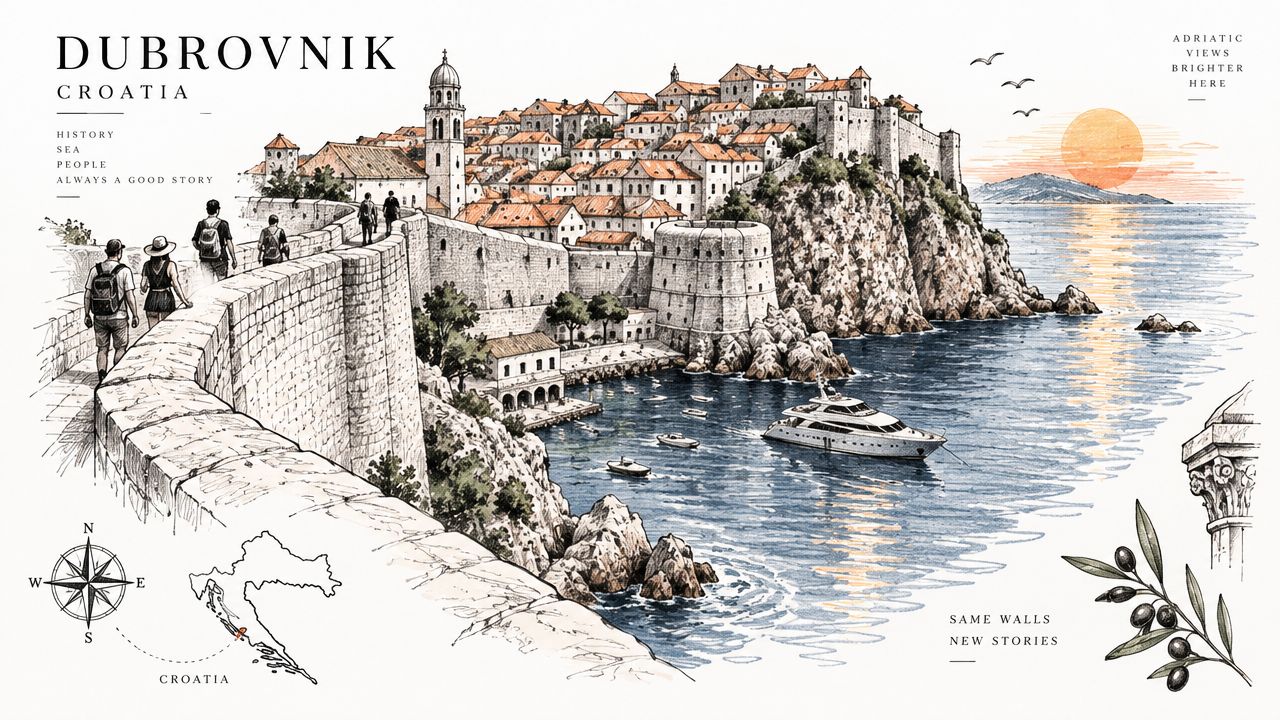
The strongest planning move in Dubrovnik is to separate the historic core from the rest of the stay. The Old Town is the shared anchor, but the group doesn't all need to use it the same way. Some people can walk the ticketed city walls and stop for photos, while others focus on the water and premium experiences.
Book the waterfront splurge first, then build the rest of the itinerary around it.
Use these decisions to avoid friction:
- Stay outside the most expensive core. Lapad or Gruž usually make more sense than Old Town if the group wants better value.
- Go early. Before 9 AM, the Old Town is easier to enjoy without feeling compressed by crowds.
- Reserve boats well ahead. Yacht and island tours need lead time, especially when everyone in the group expects the same date and departure window.
- Use Dubrovnik as a base or a link. If your group wants more water time, pairing it with nearby island destinations creates a more satisfying shared trip.
Dubrovnik works best for groups that can accept a higher-cost core experience and then balance it with calmer, lower-cost time elsewhere. The destination is compact, scenic, and memorable, but it rewards groups that plan around timing and access.
4. Amsterdam's Canal Culture & Dutch Lifestyle Experience
A group split between museum time and canal-side lounging can settle into De Pijp, a short walk from the Rijksmuseum and a quick tram ride from the old jenever tasting rooms in the centre. Amsterdam suits groups that want culture, cycling, food, and unstructured social time, with enough variety for different energy levels.
The city also works well for mixed mobility. Stay near central transit, let active travelers rent bikes, and keep walking distances modest for anyone who needs a slower pace. Agree on the shared priorities before booking, because a museum-focused itinerary and a neighborhood-focused stay require different schedules.
Where groups usually split
Some groups want several museums; others prefer canals, cafés, and local dinners with one cultural anchor. Trying to satisfy both sides every day can create queues, rushed transfers, and arguments over timing. Choose the shared highlights, then leave room for optional activities.
Use April to May or September to October for a better balance of weather and crowd levels. De Pijp and Jordaan offer neighborhood atmosphere, while central lodging can reduce transit for travelers with limited mobility. The trade-off is cost and convenience, and Amsterdam adds a hard rule for big groups: private holiday rentals are capped at four guests, and I amsterdam states that renting a private home to more than four people is always illegal. Hotels and aparthotels aren't covered by that cap, so a group of eight or more should compare those, or several separate rentals, so compare those against tram access and walking routes before choosing a base.
Book major museums with timed entry and set one meeting point for the group. A workable day combines one museum, one canal walk, and one social dinner. Jenever bars provide a recognizable local finish, while bike rides or extra galleries can remain optional.
Amsterdam rewards groups willing to anchor one museum and let canals and neighborhood dinners fill the rest of the day. That balance protects the budget, accommodates different interests, and prevents the itinerary from becoming a chain of reservations.
5. Marrakech's Medina Markets & Desert Adventure Combination
Marrakech is one of the best large group vacation ideas when your group wants contrast. You get a dense medina, shopping, food, hammam time, and easy access to desert-style excursions. That mix helps when half the group wants culture and the other half wants something more adventurous.
The city rewards clear roles. Someone should own the logistics, because medina navigation, guide selection, and activity timing get messy fast when everyone is trying to lead at once. It's also a place where budget expectations need to be explicit early, since some travelers want a value trip and others want a comfort-heavy stay.
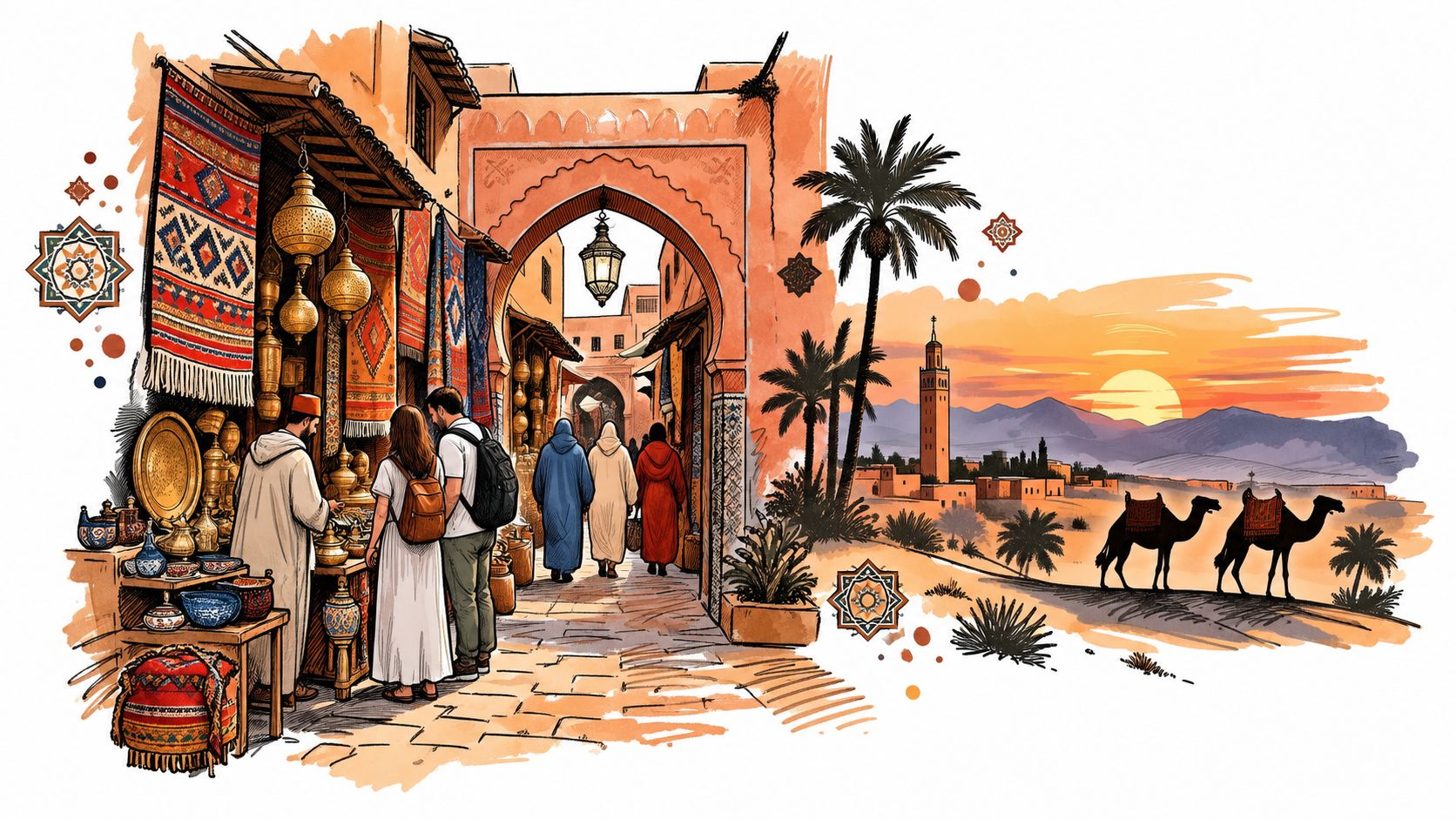
Use the city for shared immersion, then let the group split by interest. Some travelers will want the souks and riad atmosphere, while others will care more about desert trips or downtime in Palmeraie. Be clear about which desert you mean: the Agafay stone desert is roughly an hour's drive and works as a day or overnight trip, while the Sahara dunes around Merzouga are a long drive away and need a multi-day tour. That split is a feature, not a flaw, because it keeps the vacation from feeling one-note.
The safest way to plan it is direct:
- Use official guides. Book through a riad or established operator so the group isn't negotiating every step alone.
- Dress with local norms in mind. Modest clothing reduces friction in public and religious spaces.
- Negotiate firmly in the souks. Initial pricing is typically inflated, so the group should expect bargaining.
- Choose animal care carefully. If camel trips are part of the plan, book with operators who show proper care.
- Use hammams as a shared reset. That gives the group a bonding activity that doesn't require athletic energy.
For a more detailed planning path, the group can also review things to do in Marrakech before finalizing the shortlist. Marrakech is strongest for groups that want a trip with texture, not just attractions.
6. Vienna's Imperial Grandeur & Culinary Refinement
Vienna is the right answer when your group wants elegance, not chaos. It gives you palaces, museums, classical music, and café culture in a layout that's easy to manage. That makes it especially useful for mixed-ability groups, older travelers, or anyone who wants a calmer trip with strong cultural depth.
The city's real advantage is predictability. Groups can plan a palace visit, a concert, and a long café stop without feeling rushed. That's valuable when your travelers disagree on intensity, because Vienna gives the same day enough structure for some and enough breathing room for others.
Why it's strong for consensus planning
Vienna works because the experience is built around shared, repeatable rituals. A palace visit creates the main anchor. A café break creates the reset. A concert or museum visit gives the trip a formal cultural finish. Each of those pieces can be adjusted without breaking the whole day.
Book Vienna Card options if the group wants simpler transport and museum savings. Reserve major concert tickets ahead of time, because that's one of the easiest items to lose to late planning. Go early to the palaces, especially if your group wants fewer queues and more time for the rest of the day.
The café culture helps group harmony more than flashy attractions do. People can sit, order, and stay as long as they want without pressure, which matters when some travelers need a pause and others want to keep talking. Vienna suits groups that want to feel cultured without turning the itinerary into a sprint.
7. Dubai's Modern Luxury, Desert Culture & Shopping Haven
A group of twelve split between shopping, desert safaris, and pool time lands well in a Palm Jumeirah villa or a block of Dubai Marina apartments, where the group can separate by interest and regroup for a reservable dining experience. Dubai suits travelers who prioritize comfort, polished service, and activities that are easy to arrange across different preferences.
The strongest consensus comes from combining one shared anchor with flexible afternoons. Book a group dinner, a desert safari, or a resort day together, then let smaller clusters choose between malls, beaches, spas, and cultural sites. This structure works for celebrations, high-budget reunions, and corporate offsites, though premium hotels, dining, and transfers can quickly divide the budget.
Practical rule: Assign one organizer to manage reservations early, especially for restaurants, villas, resort stays, and safari operators.
Set expectations before booking:
- Dress for the setting. Modest clothing suits souks and religious areas, while beachwear belongs at resorts.
- Plan the desert properly. Use a hotel driver or organized operator for a safer, smoother safari.
- Avoid peak heat. October to April offers the stronger travel window. Summer can make outdoor plans punishing.
- Book dining in advance. Popular venues fill quickly, particularly for larger groups.
- Use licensed alcohol settings only. This keeps the group aligned with local rules.
Dubai rewards groups that accept planned transfers and a higher spend in exchange for convenience. It is a poor choice for travelers who want every activity within walking distance. Build the itinerary around one shared experience per day, leave room for separate interests, and confirm transport times so the group does not lose hours coordinating between districts.
8. Lisbon's Coastal Charm, Food Culture & Neighborhood Exploration
Lisbon is one of the smartest choices when your group wants atmosphere without Western Europe pricing pressure. It has neighborhood character, strong food culture, coastal access, and enough variation to keep different travelers happy. That makes it a solid compromise for groups that can't agree on whether they want history, nightlife, or a more relaxed city break.
The city also encourages a flexible itinerary. One part of the group can spend time in Alfama, another can linger in Belém, and another can head toward Príncipe Real for a different pace. That kind of neighborhood layering reduces the pressure to make everyone do the same thing at the same time.
A good Lisbon plan should include one food-led evening and one off-center day trip. Sintra is easy to reach by direct train from downtown, which gives the group a simple shared escape without complicated logistics. For dinner, booking a Fado restaurant ahead of time keeps the cultural experience intact instead of leaving it to last-minute luck.
Use public transport to keep movement simple, especially if the group wants to avoid too many taxi splits. Every traveler needs their own card: Metro Lisboa sells the rechargeable navegante occasional card, a contactless bank card can be tapped on the Metro but only for one person per journey, and the 24-hour Carris/Metro/CP ticket (€11.40) also covers the train to Sintra. Stay in Príncipe Real or Alcântara if you want a base with character and decent access. For dessert stops, go directly to pastéis de nata makers rather than treating them like a souvenir-shop add-on.
For a deeper activity mix, the group can also review things to do in Lisbon before locking the plan. Lisbon suits groups that want a softer landing, good food, and enough variety to stop one-sided arguments.
9. Rome's Ancient History & Mediterranean Lifestyle
A group split between ancient ruins and neighborhood dining can stay in a Trastevere apartment, with the Colosseum a tram or bus ride away (Trastevere has no metro station) and dinner reservations avoiding the busiest tourist streets. Rome brings archaeological sites, Renaissance art, local restaurants, and slower afternoons into one compact trip. It suits mixed-interest groups, provided everyone accepts that the city's best experiences require some structure.
Distance rarely causes the biggest problems. Different energy levels do. Build each day around one or two major sights, start early, and leave room for walking, lunch, and rest. For a fuller activity breakdown, review this guide to what to do in Rome before booking timed entries.
What keeps Rome from breaking the group
Rome can overwhelm travelers who have not agreed on priorities. Set the must-see list first, then protect open time for food and wandering. That approach limits repeated group negotiations at every intersection.
Book Vatican and Colosseum tickets with timed entry well before arrival. The Roma Pass can simplify transport and museum access for groups that plan to use both. Visit archaeological sites in the morning, before crowds build, then slow the pace in Trastevere during the afternoon.
Choose the base with mobility and atmosphere in mind. Centro Storico offers central access, while Trastevere adds stronger neighborhood character and restaurant options. Neither area removes walking, so travelers with limited mobility should confirm routes and accommodation access before committing.
Rome also rewards seasonal planning. Spring and autumn generally make long sightseeing days more comfortable than the hottest summer period. Reserve a Trastevere dinner for the shared evening, and let smaller groups split off for museums, shopping, or rest when interests diverge.
10. Cairo & Giza's Ancient Wonders with Nile Cultural Experience
Cairo is the strongest choice for groups that want an intense, memorable cultural trip rather than a conventional European city break. The Pyramids, Sphinx, and the Grand Egyptian Museum give the itinerary an unmistakable anchor, while Nile-side dining and bazaar time add a modern urban layer. It suits history-focused groups, but it also works for mixed-interest travelers who want something deeper than a standard sightseeing weekend.
The Grand Egyptian Museum opened in full on 1 November 2025 next to the Giza plateau and now holds the complete Tutankhamun collection, so a pyramids morning and a museum afternoon can share one day with a short transfer. The older Egyptian Museum on Tahrir Square is still worth a separate visit if the group wants more.
The planning standard here should be firmer than in most destinations. Use a private guide through an established operator, because the city rewards structure. Group accommodations with organized tours reduce stress and keep the trip from collapsing into constant logistics discussion.
Practical rule: Cairo is easier when one person owns the timing and the guide relationship from the start.
Keep the group aligned with a few essentials.
- Drink bottled water only. That avoids preventable problems during a packed itinerary.
- Dress modestly. It matters more in religious settings and keeps the group respectful.
- Avoid political debates. That keeps the trip focused on experience, not tension.
- Visit early. Morning tours at Giza and the museum are easier to handle before crowds build.
- Travel in the right season. October to April is the safer window because summer heat can be severe.
Cairo is not the easiest trip on this list, but it may be the most powerful if your group wants a shared memory that feels bigger than the usual vacation pattern. For the right group, that trade-off is exactly the point.
Top 10 Large-Group Vacation Destinations Compared
| Destination | Planning Effort | Budget Level | What the Group Gets | Best For | Highlights |
|---|---|---|---|---|---|
| Barcelona, Art, Architecture & Coastal Escape | Medium, advance attraction bookings; walkable logistics | Medium, flexible budgets; good public transit | Cultural depth + beach relaxation; high group enjoyment | Friends, multigenerational families, art+beach seekers | Iconic Gaudí sites, beaches, strong dining and transit |
| Prague, Historic Charm & Bohemian Culture | Low, compact, walkable center; easy group routing | Low, very affordable for groups | Photogenic historic experience; strong nightlife value | Budget groups, history lovers, weekend breaks | Affordable, walkable medieval core, strong beer culture |
| Dubrovnik, Adriatic Luxury & GOT Heritage | Medium‑High, island/yacht bookings, seasonal crowd control | High, luxury options and peak-season costs | Scenic, premium coastal experiences; photo impact | Luxury groups, GOT fans, romantic getaways | UNESCO Old Town, islands, yacht charters, dramatic scenery |
| Amsterdam, Canal Culture & Dutch Lifestyle | Low‑Medium, bike logistics and timed museum entries | Medium, accommodation can be pricey; rentals capped at four guests | Cultural + active city; great for cycling groups | Cycling enthusiasts, families, art lovers | Canals, museums, excellent cycling and compact layout |
| Marrakech, Medina Markets & Desert Adventure | Medium, combine medina navigation with desert transfers | Low‑Medium, very affordable but guided trips recommended | Sensory cultural immersion + memorable desert experiences | Adventure seekers, cultural explorers, budget groups | Labyrinthine souks, riads, Agafay day trips or multi-day Sahara tours, strong value |
| Vienna, Imperial Grandeur & Culinary Refinement | Low, well‑organized transport and venues | Medium, cultural activities and concert costs | High cultural and musical quality; refined group experience | Music lovers, cultural sophisticates, multigenerational groups | Palaces, classical concerts, elegant cafés, efficient transit |
| Dubai, Modern Luxury, Desert Culture & Shopping | Medium, coordinating luxury bookings and desert safaris | High, premium prices for hotels, activities | Ultra‑modern luxury and shopping impact; reliable safety | Luxury groups, shoppers, destination weddings | World‑class infrastructure, malls, desert experiences, English widely used |
| Lisbon, Coastal Charm, Food Culture & Neighborhoods | Low‑Medium, hilly terrain; tram schedules to consider | Low‑Medium, generally good value for Western Europe | Strong food and neighborhood authenticity; coastal access | Food‑focused groups, budget travelers, LGBTQ+ groups | Emerging food scene, nearby beaches, diverse neighborhoods |
| Rome, Ancient History & Mediterranean Lifestyle | Medium, timed entries, crowd management for sites | Medium‑High, popular sites and peak‑season costs | Deep historical immersion; high educational and photographic value | History/archaeology groups, families, culture travelers | Unmatched ancient sites, museums, Mediterranean dining culture |
| Cairo & Giza, Ancient Wonders & Nile Culture | High, safety, guide coordination, multi‑site transfers | Low‑Medium, affordable but guided logistics needed | Once‑in‑a‑lifetime historical impact; profound cultural learning | Educational groups, archaeology enthusiasts, adventure groups | Pyramids/Sphinx, Grand Egyptian Museum, Nile experiences, strong tour infrastructure |
Turn Shared Preferences Into a Bookable Plan
The best large group vacation ideas don't win because they're universal. They win because they match the group's real priorities, and those priorities are rarely identical. One traveler wants culture, another wants nightlife, another cares most about accessibility, and another just wants the budget to stay under control. Start by ranking those priorities in order, then compare the shortlist against transfer complexity, accommodation layout, timed-entry needs, and peak-season pressure.
Collect private preferences before public debate. If everyone talks in the same room too early, louder opinions will crowd out quieter ones, and you'll get a fake consensus instead of a workable plan. Use a deadline for responses, surface overlap with match scores, and choose a core itinerary that serves the majority while leaving room for split activities. That approach keeps the trip fair without turning planning into a referendum every time the group needs to choose dinner.
For bigger groups, the accommodation decision matters as much as the destination. A central apartment where local rules allow it, a connected hotel setup, or a large villa can reduce friction more than a flashy location ever will. Once the base is set, share one auto-organized daily schedule so nobody has to hunt through chat threads for times, addresses, or confirmation details.
MyPerfectStay fits this kind of planning because it lets a group compare private preferences, vote on experiences, and lock plans in one place. It's useful when the trip needs a faster decision process and a clearer split between shared anchors and optional add-ons. If you're organizing one of these trips now, use the shortlist, gather the group, and move the decision forward before the best dates disappear.
Plan your next group trip with a process that's built for agreement, not debate. MyPerfectStay helps travelers share private preferences, see what overlaps, and turn those matches into a bookable itinerary for the whole group. Visit MyPerfectStay to start comparing options and lock in a trip everyone can accept.