10 Screen Free Activities for Group Travel in 2026
October 13, 2026·MyPerfectStay

A group chat has stalled for an hour over where to eat, and nobody has committed to anything. The fix is rarely another poll. It's a shared plan built around experiences that keep phones in pockets.
This list of screen free activities sorts ten practical choices into clear categories, from food and culture to wellness, outdoor adventures, games, and city exploration. Each entry explains who it suits, what the experience involves, and how to book it or fit it into a stay. The aim isn't to ban devices for an entire trip. It's to give the group something better to do together. For more family-friendly ideas, see this guide to screen-free family travel.
Table of Contents
- 1. Group Cooking Classes and Market Tours
- 2. Traditional Hammam Rituals
- 3. Desert Camping and Stargazing
- 4. Escape Room Challenges
- 5. Guided Walking Tours and City Scavenger Hunts
- 6. Sailing and Boat Excursions
- 7. Vineyard Tours and Wine Tastings
- 8. Guided Bike Tours
- 9. Pub Quiz and Board Game Nights
- 10. Guided Hiking and Trekking Routes
- Top 10 Screen-Free Activities Comparison
- Pick Your Plan and Lock It In Today
1. Group Cooking Classes and Market Tours
A cooking class gives everyone a job. One person chooses produce, another handles spices, someone else rolls pasta or prepares the dessert. The group then sits down to eat what it made, which creates a natural pause for conversation.
This format works especially well for families, friend groups, and corporate teams with different interests. Active participants can cook, while quieter travelers can focus on tasting, observing, or helping with preparation. A guided market visit also gives the activity a local anchor. In Marrakech, a class might begin in the Mellah or nearby souks before the group prepares tagine or pastilla. In Rome, fresh pasta classes often connect the kitchen with a local market such as Campo de' Fiori. Lisbon and Barcelona offer strong options focused on seafood, tapas, and regional specialties.
How to make the booking work
For groups of six or more, book one to two weeks ahead. Use a group cooking class guide for Italy when Rome is on the itinerary, then ask every traveler about allergies, religious requirements, and dietary preferences before confirming the menu.
Practical rule: Collect dietary information before the vote, not after the booking. A cuisine may win the poll and still fail the group if the provider can't adapt the menu.
A MyPerfectStay vote can help the group choose between pasta, tapas, or a Moroccan cooking experience. Once the session is selected, send one confirmation to everyone so nobody misses the meeting point or start time.
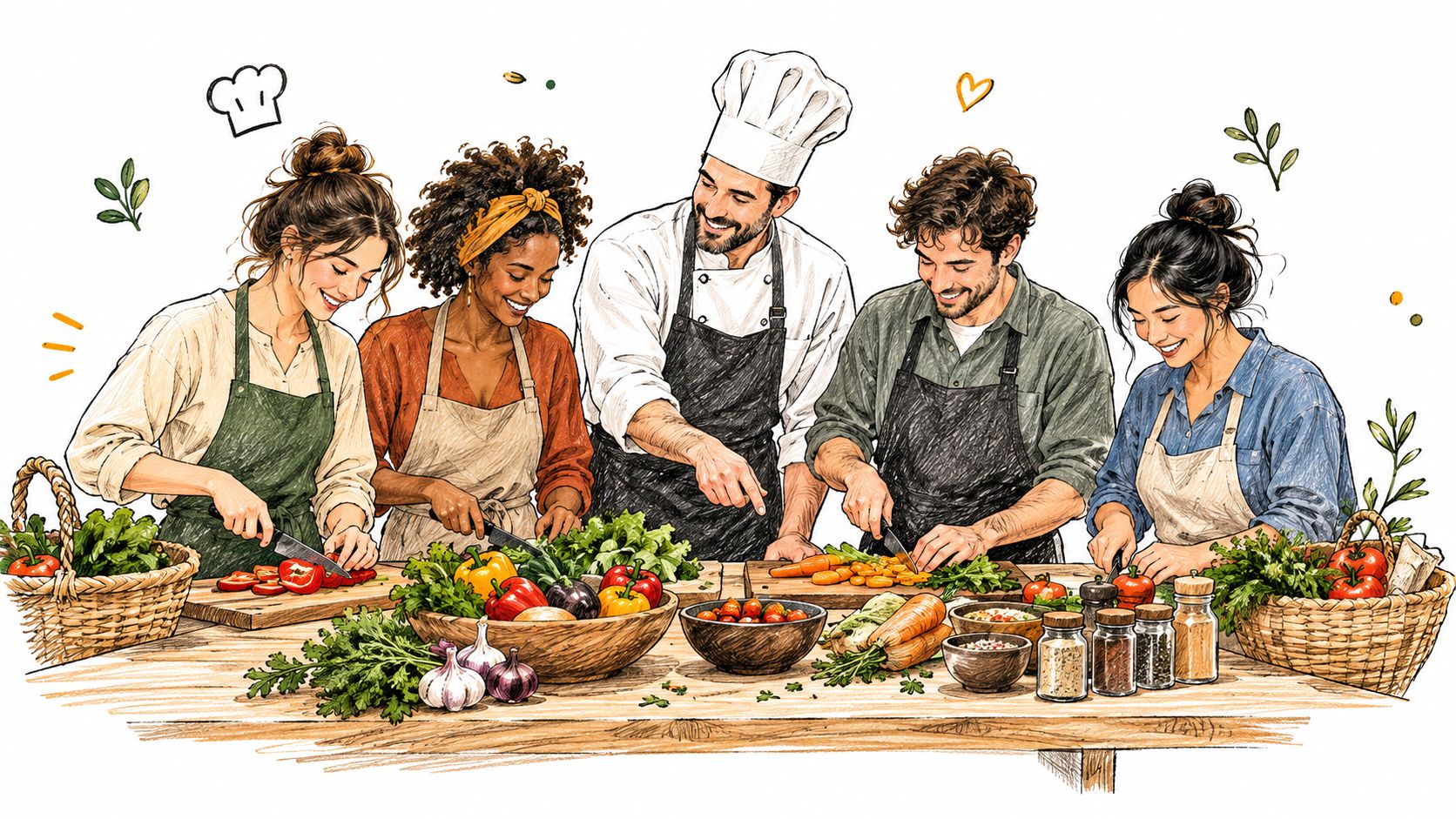
Cooking classes are less suitable for travelers who dislike fixed schedules or shared workspaces. Check the kitchen setup, group size, transfer time, and whether children can participate before treating the class as the main group event.
2. Traditional Hammam Rituals
A hammam offers a slower kind of shared experience. The group moves through heated rooms, receives a traditional scrub, rinses, and rests with tea or a light snack. There's no need to keep a conversation going every minute, which makes it useful after a busy sightseeing day.
The format suits reunions, bachelor and bachelorette groups, and team wellness breaks. Istanbul's historic Çemberlitaş Hamamı, built in the 16th century, remains a working bathhouse. Marrakech has both public hammams and riads with private rooms. Cairo and Amman also offer experiences that combine traditional scrubs with tea service.
Book for comfort, not just convenience
Private rooms are usually the safer choice for mixed-gender or larger groups. They reduce awkwardness and make the schedule easier to manage, especially when some travelers have never visited a hammam before.
- Reserve the right format: Confirm whether the experience is communal, semi-private, or fully private.
- Plan around food: Avoid scheduling a heavy meal immediately beforehand.
- Protect the recovery time: Hydrate before and after, and leave space to rest once the ritual ends.
A hammam works best early in an itinerary rather than immediately before a late dinner or a long transfer. The trade-off is that it's not ideal for travelers who dislike heat, physical treatments, or limited personal space. Ask the provider about treatment intensity and clothing expectations before paying a deposit.
The main benefit is the enforced pause. Phones stay in lockers, the group shares a calm setting, and nobody has to perform enthusiasm. That makes the hammam a strong option when the group needs rest more than entertainment.
3. Desert Camping and Stargazing
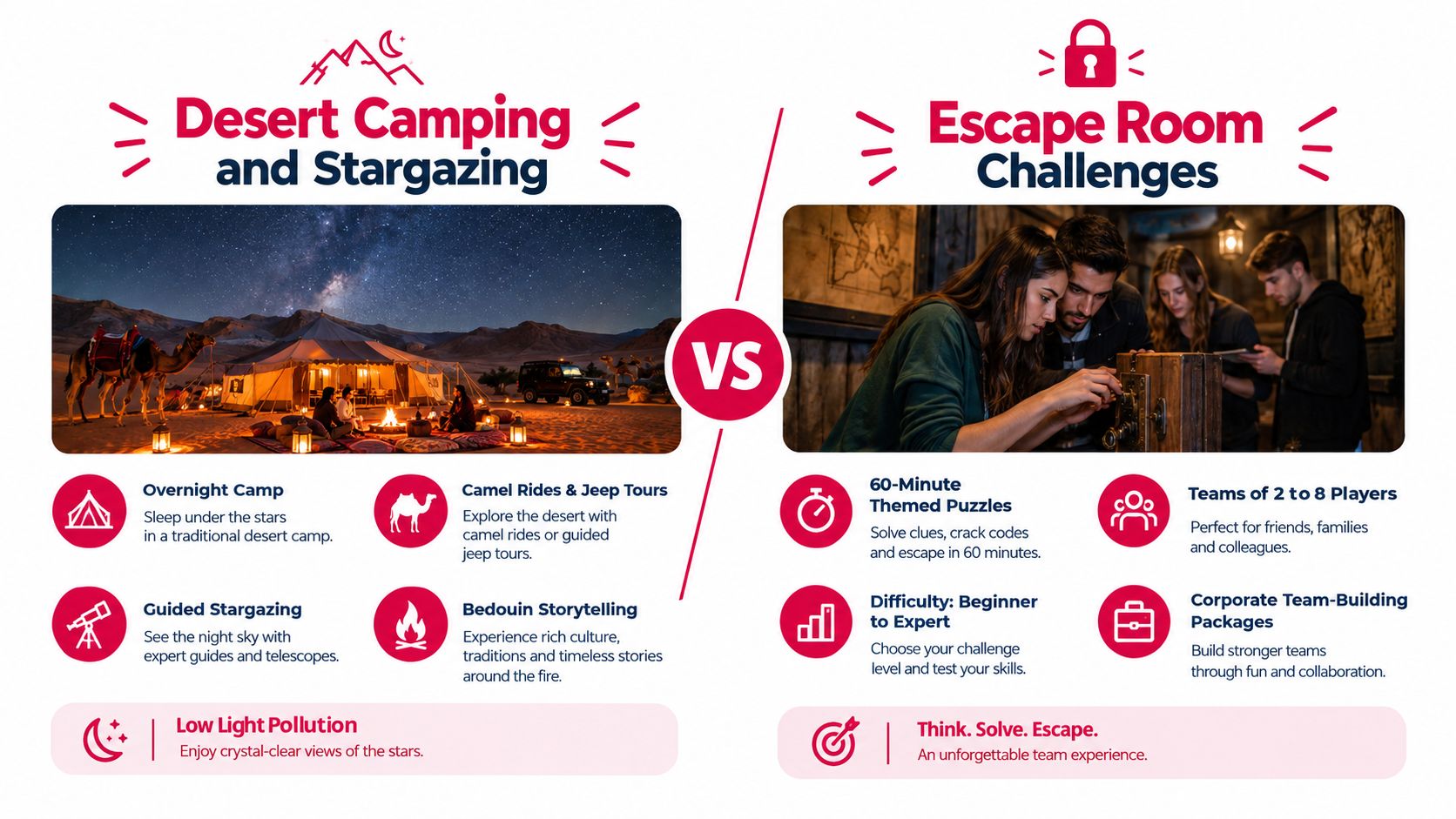
Desert camping combines movement and quiet. A typical evening may include a sunset ride, dinner at camp, a fire, and a guided look at the night sky. The setting does much of the work. Once the group is away from constant notifications, conversation often becomes easier.
Wadi Rum in Jordan suits groups that want Bedouin-run camps, jeep tours, dinner, and stargazing. Merzouga and the Erg Chebbi dunes in Morocco add camel treks and overnight camps. Dubai's desert camps often combine dune activities with dinner shows and stargazing, giving larger groups a more structured evening.
Check the overnight details
The appeal is strong for corporate retreats and multigenerational reunions, but the logistics need careful handling. Desert temperatures can change sharply after sunset, including during spring and autumn, so warm layers belong in every traveler's bag.
Confirm the following before booking:
- Sleeping arrangements: Ask whether tents and bathrooms are private or shared.
- Transfer conditions: Check the vehicle type, pickup point, and driving time.
- Evening format: Find out whether stargazing is guided or just part of the camp setting.
- Group decision: Use MyPerfectStay to compare camp packages and lock a date that suits every traveler.
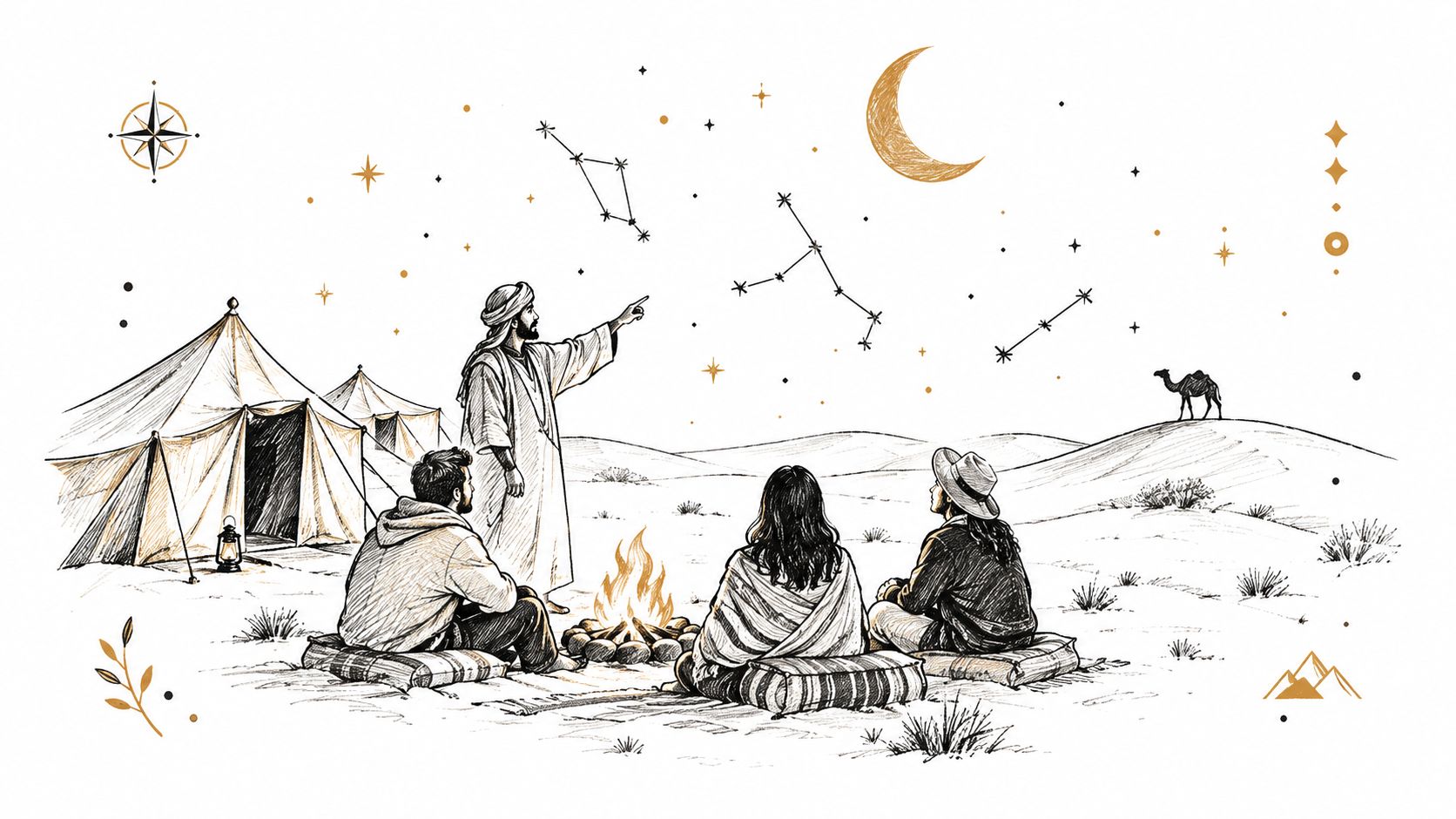
This activity isn't a good fit for anyone who needs hotel-standard facilities or struggles with long transfers. It also requires more preparation than a city tour. For the right group, though, the shared dinner and open sky create a phone-free evening without forcing people into artificial team bonding.
4. Escape Room Challenges
An escape room gives a group a problem that can't be solved by one person scrolling faster. Teams search for clues, test combinations, and decide which information matters. The experience rewards clear communication, especially when several people notice different details at the same time.
The format suits corporate teams, startups, and friend groups. London venues offer historical and horror themes in central neighborhoods. Prague and Budapest have rooms in historic buildings, while corporate escape game packages can add a structured activity to an offsite day.
Give the team a simple operating system
A short briefing helps. Assign a clue-spotter to scan the room, a note-taker to record codes and failed attempts, and a timekeeper to announce progress. These roles stop the loudest participant from taking over every decision.
Use a group vote to choose the theme. Horror rooms can divide a group quickly, while historical, detective, or science-fiction rooms tend to offer a wider range of comfort levels. A guide to the best team-building activities can help organizers compare the escape room with other offsite formats.
Book the room slightly early so the group has time for registration, briefing, and a photo afterward. The main trade-off is intensity. A competitive team may love the pressure, but a mixed-age family or tired travel group might find it stressful. Ask about difficulty, room size, accessibility, and language before confirming.
Escape rooms are also less flexible than open-ended activities. Once the session starts, late arrivals create disruption. Add a buffer around the booking and choose a venue near the rest of the day's plans.
5. Guided Walking Tours and City Scavenger Hunts
A walking tour turns a destination into a shared conversation rather than a sequence of individual photo stops. A professional guide supplies context, while a scavenger hunt adds small tasks, riddles, and landmarks for the group to find together.
Lisbon's Alfama and Bairro Alto work well for routes that connect fado, tram lines, viewpoints, and local history. Prague's Old Town can link the Astronomical Clock, Charles Bridge, and Old Town Square. In Paris, Montmartre and Le Marais offer different moods, from creative history to architecture, food, and neighborhood life.
Keep the route usable
Under three hours is usually easier for mixed groups, especially when the itinerary includes coffee or lunch. Choose a meeting point near public transport and check the route for stairs, steep streets, shade, and rest opportunities.
Print clues or give the group one shared route card. That keeps the activity screen free without removing all navigation support. A guide can also carry the practical information, which lets travelers focus on the streets and one another.
A good city hunt creates reasons to notice the destination. It shouldn't turn every landmark into a race.
The trade-off is exposure to weather and walking pace. A group with older travelers, young children, or mobility limitations may prefer a shorter guided route with seated stops rather than a competitive hunt. Build in flexibility instead of assuming everyone wants to cover the same distance.
This format works particularly well on the first full day in a city. The guide provides orientation, and the group can decide where to return later without spending the whole day on another device.
6. Sailing and Boat Excursions
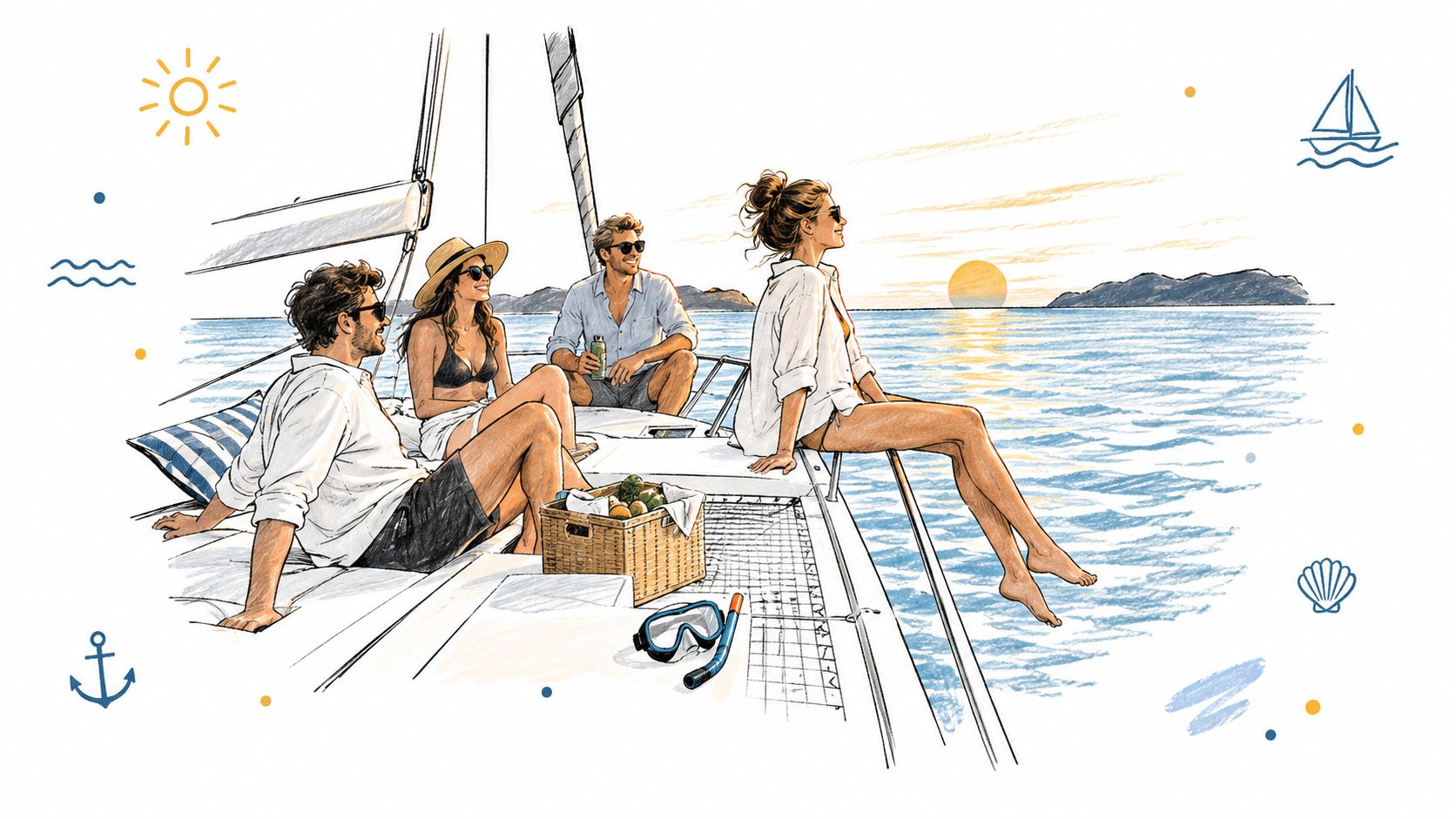
A shared boat creates room for different kinds of participation. Some travelers swim, others eat, talk, read, or watch the coastline. Unlike a tightly scheduled tour, a boat day usually has built-in downtime, which helps groups with different energy levels.
Dubrovnik offers trips to the Elaphiti Islands and Lokrum. Santorini is known for sunset sailing and caldera cruises. Hvar and Split provide island-hopping options across the Adriatic. These settings suit bachelor and bachelorette parties, family reunions, and team celebrations, provided the operator can handle the group's size and needs.
Compare the charter details
Ask exactly what the price includes. Food, drinks, snorkel gear, towels, transfers, and fuel may be treated differently by each provider. For groups of ten or more, a private charter can avoid the friction of sharing a boat with unfamiliar passengers.
A quick MyPerfectStay vote can separate three distinct formats:
- Sunset sailing: Best for a relaxed celebration and scenic dinner.
- Day cruise: Better for swimming, snorkeling, and longer stops.
- Multi-stop route: Suits groups that want more movement and destination variety.
Choose the format before comparing boats. Otherwise, travelers may vote for different experiences while thinking they're choosing between similar options.
You can also compare Kealakekua Bay tour options, although the Europe and MENA examples above are more natural fits for a European group itinerary. The main trade-off is weather. A sea day can become uncomfortable when wind, waves, or heat affect the group, so check cancellation terms and provide a land-based backup.
7. Vineyard Tours and Wine Tastings
Vineyard visits give groups a calm setting with enough structure to prevent the afternoon from drifting. A guide can explain the land, grape varieties, and production methods before the tasting begins. The group gets conversation prompts without needing a formal game or packed schedule.
The Douro Valley combines quinta visits with river scenery and regional food. Tuscany offers vineyard tours near Florence and Siena. Bordeaux and Champagne make practical day trips from Paris for groups that want a countryside experience without changing hotels.
Protect participation and transport
Arrange private transport or a designated driver before booking the tasting. Nobody should have to solve the return journey after the final glass. Book ahead during harvest season, when popular estates may have limited availability.
Ask about non-alcoholic options. A traveler who doesn't drink can still join the vineyard walk, tasting explanation, food pairing, and group meal, but only if the provider treats that participation as part of the experience.
For route ideas and booking considerations, use this guide to wine tasting tours. The trade-off is pace. A vineyard tour tends to be slower and more adult-oriented, so it may not suit young children or travelers who want continuous activity.
Avoid stacking several tastings without a proper meal or rest stop. A single well-chosen estate can be more enjoyable than a rushed circuit of multiple venues. If the group includes non-drinkers, older travelers, or people who prefer culture to alcohol, add a village walk, river cruise, or food-focused stop to make the day broader.
8. Guided Bike Tours
A guided bike tour lets a group cover more ground while keeping the day active. The guide manages the route and adds local context, so travelers can pay attention to the city or countryside instead of navigating every turn.
Amsterdam offers canal-side and countryside routes connected to the Dutch cycling network. Vienna works well for Ringstrasse and Danube rides. Copenhagen and Bordeaux also suit itineraries that extend beyond the core city center.
Match the route to the least confident rider
Choose e-bikes when fitness levels differ. That doesn't remove the need for a suitable route, but it can reduce the gap between experienced cyclists and occasional riders. Early morning departures usually make crowded streets easier to manage.
Share the route in advance and include the expected terrain, distance, meeting point, and return time. Travelers can choose comfortable clothing and decide whether the activity fits their ability before the day begins.
A bike tour is a poor choice for anyone recovering from an injury, uncomfortable in traffic, or unwilling to cycle in changing weather. It can also create frustration when the fastest riders pull ahead. Ask the guide about regrouping points and keep the group together rather than treating the tour as a race.
For families, look for child seats, smaller bikes, and quiet paths. For corporate groups, choose a route with a café or lunch stop so the ride has a social finish. The best tours combine modest physical effort with enough pauses for conversation and photographs.
9. Pub Quiz and Board Game Nights
Pub quizzes and board game evenings are practical when the group needs something social after sightseeing but doesn't want another major excursion. They require little equipment, work in poor weather, and can accommodate travelers who prefer a seated activity.
London has regular quiz nights in central pubs. Amsterdam, Prague, and Lisbon have board game cafés with games available on site. Dublin's themed quiz nights can add a local evening tradition without requiring a complicated booking.
Make the table feel welcoming
Reserve ahead for groups of six or more. A team name gives the group an easy starting point, while simple roles prevent one person from answering everything. You might assign a music specialist, a history specialist, and someone to manage the answer sheet.
Ask the venue about a group deal or shared tab before arrival. One payment method makes the end of the evening less awkward, especially when people order at different times.
The main trade-off is noise and competitiveness. A crowded quiz night may suit friends but overwhelm a family or a team that wants quiet conversation. A board game café gives more control, though the group still needs to choose games that fit the number of players and the patience level at the table.
For a portable alternative during a villa stay or train journey, consider these best travel board games. Keep one or two short games available rather than choosing a long strategy game that excludes late arrivals or tired participants.
10. Guided Hiking and Trekking Routes
A guided hike gives the group a clear objective and a shared physical challenge. The reward might be a viewpoint, a ruin, a village, or a landscape that would be difficult to reach by vehicle. A guide adds route knowledge, pacing support, and safety awareness.
Jordan's Petra offers the Monastery trail and routes toward Little Petra. Northern Italy's Dolomites provide day hikes around Lago di Braies and Tre Cime. Guided coastal routes along the Amalfi Coast combine scenery with villages and local history.
Choose difficulty honestly
Share the difficulty rating during the survey stage. Ask about walking experience, mobility, heat tolerance, footwear, and willingness to handle uneven ground. Don't let the most enthusiastic hiker choose for everyone else.
Pack water, sun protection, and layers for changing conditions. Schedule a relaxed lunch or dinner afterward. The meal gives the group a reward and creates time to recover before the next planned activity.
A guided hike won't suit every traveler. It can expose differences in fitness quickly, and a beautiful route may still feel like a bad choice if the transfer is long or the weather changes. Offer a shorter route or a scenic alternative for people who want to join the day without completing the full trail.
The strongest hiking plans leave room around the walk. Avoid booking a demanding dinner reservation immediately afterward, and don't expect the group to continue sightseeing at the same pace. A clear route, realistic timing, and an easy post-hike meal make the activity feel like a shared achievement rather than an endurance test.
Top 10 Screen-Free Activities Comparison
| Activity | 🔄 Implementation complexity | ⚡ Resource requirements | 📊 Expected outcomes | 💡 Ideal use cases | ⭐ Key advantages |
|---|---|---|---|---|---|
| Group Cooking Classes and Market Tours | Moderate, coordinate market + kitchen, 3–4 hr | Chef/host, kitchen space, ingredients; small-group gear | High social engagement; hands-on learning | Friends, families, corporate teams | Interactive cultural immersion; shared meal |
| Traditional Hammam Rituals | Low–Moderate, book private room or gendered session | Bathhouse, therapists, towels; private room option | Deep relaxation; cultural authenticity | Wellness breaks, hen/stag parties, reunions | Phone-free calm; restorative bonding |
| Desert Camping and Stargazing | Moderate, overnight logistics, transport, campsite setup | Tents, bedding, guides, food; limited facilities | Strong disconnection; memorable scenery | Corporate retreats, multi‑gen reunions, adventure groups | Exceptional stargazing; shared adventure |
| Escape Room Challenges | Low, fixed 60‑min sessions, venue-managed | Themed room, props, game master; small team limits | Measurable teamwork, problem‑solving outcomes | Corporate team‑building, friend groups | High team-building ROI; quick to run |
| Guided Walking Tours & Scavenger Hunts | Low, route planning or guide booking | Guide/printed clues; minimal equipment | City familiarity, steady activity, photo moments | Mixed-energy groups, short itineraries | Low cost; highly customizable |
| Sailing and Boat Excursions | Moderate, charter logistics; weather dependent | Boat/catamaran, crew, safety gear, food | Relaxation, scenic views, unstructured downtime | Parties, reunions, celebratory groups | Scenery-focused; accommodates many guests |
| Vineyard Tours and Wine Tastings | Low, book tastings and transport | Winery access, tasting fees, transport/driver | Educational tasting; relaxed socializing | Corporate retreats, couples, friend groups | Scenic, educational, pairs with food |
| Guided Bike Tours | Moderate, route safety & pacing planning | Bikes/helmets, guide; e-bike option for mixed fitness | Active exploration; covers more ground than walking | Active groups, corporate offsites | Efficient sightseeing; scalable with e-bikes |
| Pub Quiz and Board Game Nights | Low, reserve table or join weekly event | Venue space, game library or quiz host; low cost | Friendly competition; easy conversation | Low-budget evenings, relaxed travelers | Very low cost; easy to arrange on short notice |
| Guided Hiking and Trekking Routes | Moderate, route selection, safety logistics | Guides, transport, proper gear; difficulty varies | Bonding, accomplishment, scenic reward | Adventure groups, retreats, reunions | Strong group cohesion; rewarding endpoints |
Pick Your Plan and Lock It In Today
The best screen free activities solve two problems at once. They give the group something worth doing, and they remove the need to negotiate every small decision during the trip. That matters because leisure screen use already takes a substantial share of adolescents' time. The OECD's 2025 findings report that, across OECD countries, an average of 60% of 15-year-olds spent at least two hours per weekday using digital devices for leisure, excluding learning. In most OECD countries, at least half of 15-year-olds spent 30 or more hours per week using digital devices. A group trip can't solve every screen habit, but it can make shared offline time easy and appealing.
Choose two or three activities from different categories. Pair movement with rest, such as a guided walk in the morning and a hammam later. Pair a structured challenge with open conversation, such as an escape room followed by a shared meal. Families may prefer a short city hunt and a boat excursion, while a corporate team may choose cycling and cooking.
Use preferences before the trip
Ask each traveler about budget, interests, energy level, accessibility, dietary requirements, weather tolerance, and must-see ideas. Private responses are more useful than a loud group chat because people can state constraints without defending them in front of everyone.
MyPerfectStay can surface match scores based on the overlap. That helps the organizer compare a boat trip, food activity, or walking route without pretending every traveler wants the same thing. Digital coordination before the activity is not a contradiction. The practical goal is to use phones to reduce friction, then put them away during the shared experience.
A 2025 randomized study found that blocking mobile internet for two weeks shifted participants toward in-person socializing, exercise, nature, hobbies, and reading. Time in that offline category rose from a mean score of 2.75 to 3.36, with a large within-subject effect size of dz = 0.70 and p < 0.001, while media consumption also declined, with dz = 0.41 and p < 0.001, according to research published in PNAS Nexus. A trip doesn't need the same intervention. Phone-free meals, workshops, walks, and evening blocks are often easier to accept than a total ban.
Make the offline plan inclusive
Avoid making “screen free” mean “physically demanding.” The World Health Organization's analysis of 150,651 children aged 6 to 9 across 25 countries found that 79.4% played for at least one hour per day, with a 95% confidence interval of 78.2% to 80.4%. The organization recommends that children average 60 minutes of moderate-to-vigorous physical activity daily. Active play, walking or cycling for transport, and organized sport all contribute, but not every traveler can or wants to complete a strenuous route.
For young children, follow age-appropriate guidance rather than using a strict adult rule. The WHO recommends no sedentary screen time for infants under 1 year, no more than 1 hour per day for 2-year-olds, and less than 1 hour daily for children aged 3 to 4, with less considered better, as summarized in this review of international guidance. Replace device time with interaction, sleep, movement, and play.
A good plan also gives people an exit. One parent may need access for an urgent message. One traveler may dislike forced bonding. Another may need navigation or medical information. Set a check-in window, identify emergency access, and allow people to step away without making the activity feel like a test.
Book the experiences that fill first
Cooking classes, private boats, desert camps, popular tastings, and accessible guided routes often need early coordination. Confirm the date, meeting point, transport, cancellation terms, group size, dietary needs, and accessibility before sending the final plan.
Then keep the itinerary visible. A shared, auto-organized schedule reduces repeated questions, while deadlines and nudges help quieter travelers respond. Send one final confirmation to the whole group instead of scattering details across multiple chat threads.
The best trip doesn't force everyone into the same mood. It gives the group a fair way to choose, protects time for shared participation, and leaves enough flexibility for rest. Pick two or three activities, balance active and quiet periods, run the vote, and lock the plan before availability disappears.
MyPerfectStay helps groups collect private preferences, compare screen free activities with clear match scores, and book shared experiences across Europe and MENA. Visit MyPerfectStay to replace chat debates with a coordinated itinerary your whole group can follow.