10 Weekend Getaways in Europe for 48-Hour Trips
September 9, 2026·MyPerfectStay
You've got a free weekend, three friends with different energy levels, and a group chat full of conflicting ideas. One person wants museums, another wants beaches, someone else wants nightlife, and the practical planner is already checking flight times, hotel prices, and restaurant availability. Choosing well matters because a 48-hour trip leaves little room for wasted transfers, long queues, or an itinerary nobody enjoys.
The strongest weekend getaways in Europe are compact, easy to coordinate, and rich enough to satisfy different interests without turning every hour into a deadline. That demand is substantial. EU residents made 1.2 billion tourism trips in 2024, and more than half (56%) were short trips of one to three nights, according to Eurostat's tourism statistics. Short-haul escapes are becoming even more prominent, with European short-haul flight bookings rising 73% year over year, as reported by Euronews.
This ranking compares ten destinations by itinerary practicality, budget pressure, seasonal fit, crowd exposure, and group compatibility. Consider MyPerfectStay if your group needs private preference surveys, activity voting, and one shared itinerary instead of another endless debate.
Table of Contents
- 1. Barcelona, Spain, Gaudí, Beaches and Vibrant Nightlife
- 2. Prague, Czech Republic, Medieval Charm and Affordable Luxury
- 3. Lisbon, Portugal, Hilltop Views, Tile Culture and Coastal Escapes
- 4. Vienna, Austria, Imperial Palaces and Classical Music Elegance
- 5. Santorini, Greece, Cliff Sunsets, Wine and Aegean Island Serenity
- 6. Amsterdam, Netherlands, Canals, Museums and Cycling Culture
- 7. Dubrovnik, Croatia, Medieval Walled City and Dalmatian Coast
- 8. Rome, Italy, Ancient Ruins, Baroque Beauty and La Dolce Vita
- 9. Paris, France, Art, Cafés and Timeless Elegance
- 10. Berlin, Germany, History, Street Art and Lively Nightlife
- 10 European Weekend Getaways, Quick Comparison
- Turn a Shortlist Into a Trip Everyone Enjoys
1. Barcelona, Spain, Gaudí, Beaches and Vibrant Nightlife
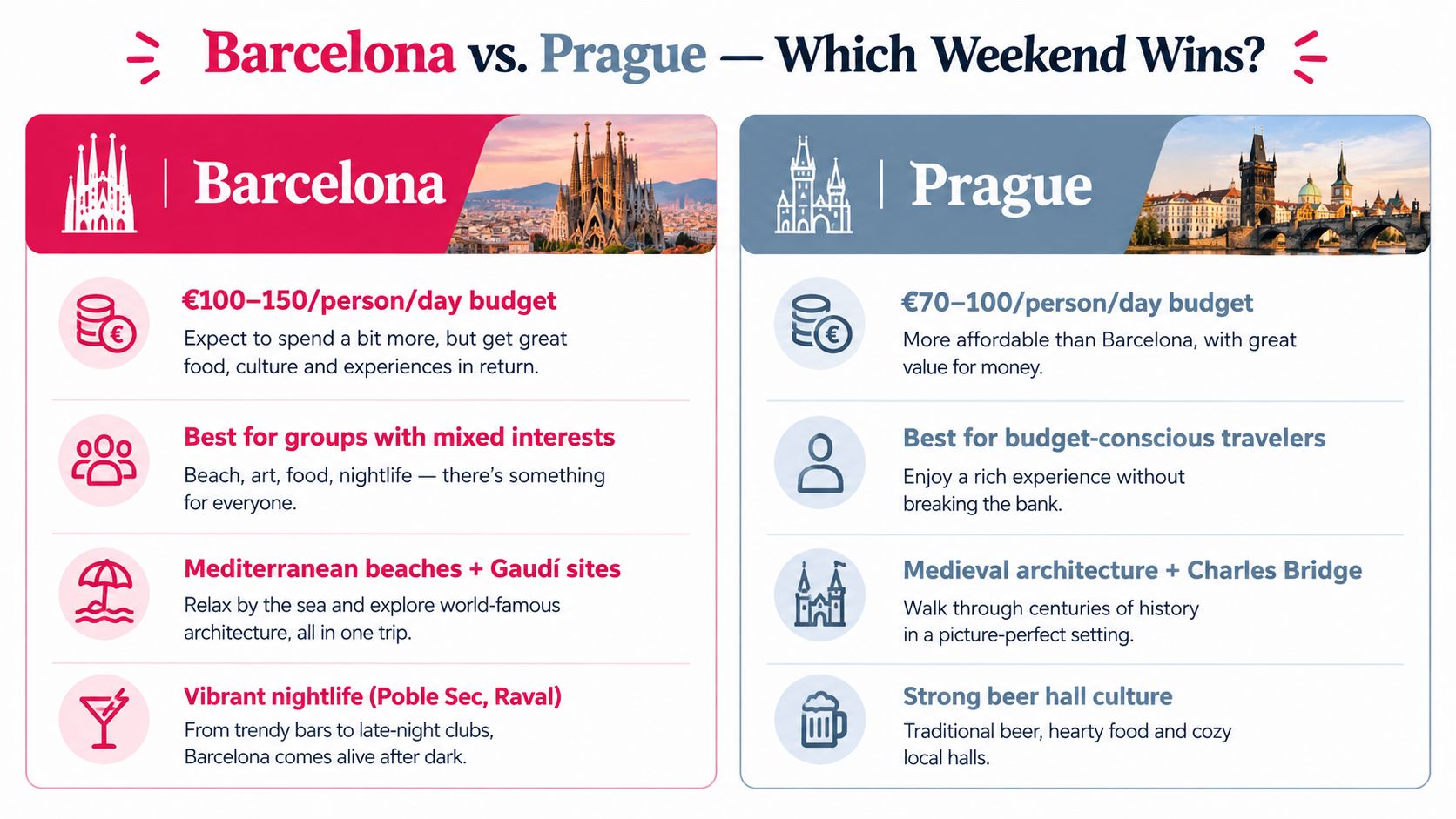
Barcelona is the best all-rounder for a mixed-interest group. Architecture fans can focus on Antoni Gaudí's Sagrada Família and Park Güell, beach lovers can spend the afternoon by the Mediterranean, food-focused travelers can build a route through the Gothic Quarter and Born, and night owls have plenty of energy left after dinner. The city also ranks among Europe's major city-break anchors, with 28,307,960 overnight visitors in 2023, placing it fifth in Europe behind Paris, Rome, London and Berlin, as shown by Radical Storage's European city data.
Start Day 1 with a pre-booked Sagrada Família visit, continue to Park Güell, and keep the late afternoon lighter with a Gothic Quarter walk. On Day 2, choose between Barceloneta and Montjuïc, then reserve a group dinner followed by drinks in El Born or Poble-sec. Book the major Gaudí attractions online several weeks ahead, stay in the Gothic Quarter or Born for walkability, and choose Poble-sec if your group wants a calmer base with views.
Group decision: Barcelona wins when your travelers want different things but still want to share most meals and transfers.
Use a transport-and-museum pass only after comparing your planned visits, because its value depends on how much the group sees. Eat lunch during local midday hours and dinner later in the evening, which helps your group avoid the busiest restaurant patterns.
2. Prague, Czech Republic, Medieval Charm and Affordable Luxury
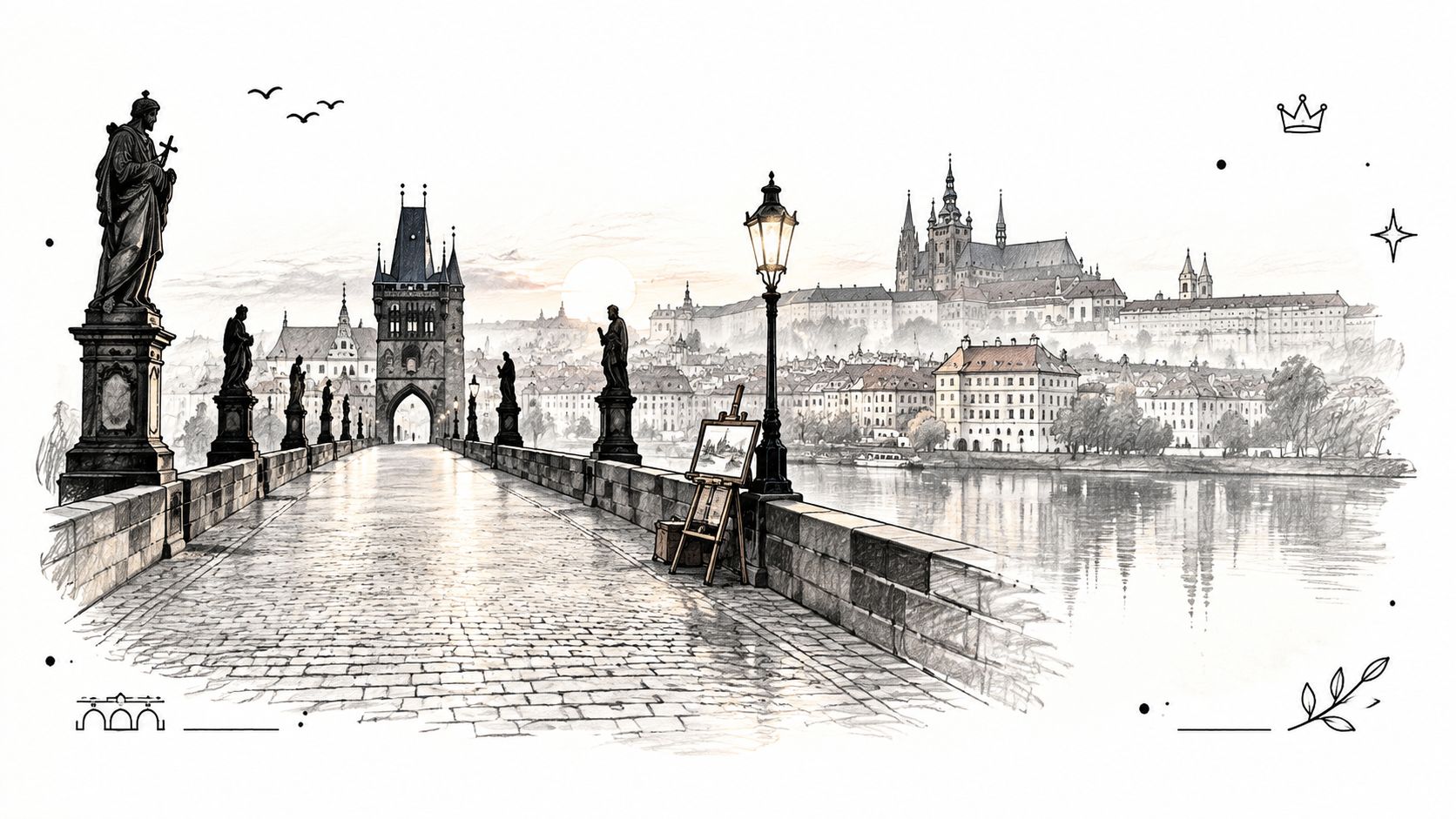
Prague is the clear choice for groups that want visual drama without the intensity of Paris or Rome. Charles Bridge, Prague Castle, Baroque streets, riverside views, beer halls, and compact historic neighborhoods create a satisfying itinerary without forcing travelers to cross a sprawling metropolis. It suits families, couples traveling together, and friends who want elegant surroundings while keeping spending under control.
On the first morning, cross Charles Bridge early, then walk toward Prague Castle and Lesser Town. Spend the afternoon around the Astronomical Clock and Old Town, using the clock as an easy meeting point, before settling into a Czech restaurant away from the most tourist-heavy squares. Day 2 works well with a riverside walk, a private boat, and a relaxed meal in Vinohrady or another residential neighborhood.
Reserve Prague Castle admission before arrival and consider a city pass if your group will use public transport and visit several museums. Don't build the weekend around Old Town Square restaurants. Walk into nearby residential streets for a more comfortable meal and a less concentrated tourist atmosphere.
Make the city work for different budgets
Stay in Old Town or Lesser Town for maximum sightseeing efficiency. Vinohrady is better for groups that prefer neighborhood restaurants and evening calm. A private river boat can serve as the shared anchor activity, particularly when some travelers want sightseeing and others want an unhurried social afternoon.
Prague is the strongest pick for a group that wants atmosphere, history, and manageable coordination without a luxury-city price feel.
3. Lisbon, Portugal, Hilltop Views, Tile Culture and Coastal Escapes
Lisbon gives a group more variety than its relaxed pace initially suggests. Alfama offers steep lanes, tiled façades, and intimate fado venues, while Belém supplies museums and riverside landmarks. Príncipe Real works for restaurants and evening drinks, and nearby Sintra or Cascais can turn a city weekend into a palace or coast-focused escape.
Use Day 1 for Lisbon itself. Walk through Alfama, visit São Jorge Castle early if your group handles hills well, and finish with fado in a small tavern rather than a large tourist venue. On Day 2, make a firm group choice between Sintra and Cascais. Sintra suits culture-heavy travelers who want palaces and gardens, while Cascais is the better decision for sea air, lower effort, and a slower day.
For practical planning, review things to do in Lisbon before deciding how many neighborhoods to include. A private vehicle with a driver can simplify Sintra for a group, especially when travelers have different walking speeds, but the decision should reflect your own quoted transport costs and group size rather than an assumed rate.
Choose your base around energy
Alfama is atmospheric but hilly. Príncipe Real offers easier access to restaurants and nightlife. Belém favors culture and riverfront space, while Baixa is convenient but can feel dominated by tourist-oriented accommodation and dining. Don't schedule Sintra, a long dinner, and late nightlife on the same day.
- For culture seekers: Choose Sintra and reserve its principal sights.
- For lower-effort travelers: Choose Cascais and leave time for a long lunch.
- For mixed groups: Vote before booking, then keep the losing option for a future trip.
4. Vienna, Austria, Imperial Palaces and Classical Music Elegance
Vienna is the most polished option for families, corporate groups, and travelers who value reliable transport, museums, cafés, and formal cultural experiences. Schönbrunn Palace, Hofburg, St. Stephen's Cathedral, the Vienna State Opera, and historic coffeehouses create a strong weekend structure without requiring constant improvisation. The city feels especially effective when one traveler handles reservations and everyone agrees on a single major cultural activity per day.
Begin with Schönbrunn on Day 1, then return toward the center for St. Stephen's Cathedral and a café stop. Use the evening for the State Opera if the group wants a dressed-up cultural night, or choose a wine-bar evening in Grinzing for a more social atmosphere. Day 2 should include Hofburg or one museum, followed by a slow lunch and a final walk through the central streets.
Book timed palace visits before arrival and assess whether a Vienna transport card makes sense for your route. Don't force the Kunsthistorisches Museum into the schedule if the group would rather see another palace. A short trip improves when everyone remembers the same highlights instead of splitting into competing sightseeing teams.
Keep the cultural load realistic
Coffeehouses are useful recovery spaces, not just photo stops. Mid-morning or mid-afternoon visits usually make more sense than trying to squeeze one between every attraction. Travelers who want a view can climb St. Stephen's Cathedral, while those avoiding stairs can stay at street level and meet the group afterward.
Coordination rule: Pick opera or wine bars, palace interiors or a museum. Vienna rewards focus more than accumulation.
Stay in Innere Stadt for maximum convenience or Mariahilf for a quieter, more local-feeling base. For an offsite or reunion, a guided wine visit or bike tour can give the group a shared activity without requiring everyone to have the same museum preferences.
5. Santorini, Greece, Cliff Sunsets, Wine and Aegean Island Serenity
Santorini is the right choice when the group wants scenery, meals, and downtime rather than a checklist of museums. Whitewashed villages, caldera views, archaeological sites, wineries, and boat trips provide a cohesive experience, but the island demands firm choices. It's less suitable for travelers who want constant nightlife, extensive shopping, or a different attraction every hour.
Day 1 should begin with a caldera boat experience or a village walk, followed by a sunset in Oia or Fira. Eat away from the main sunset viewpoints, where your group can enjoy a better-paced dinner without treating the most famous view as the entire evening. On Day 2, visit Akrotiri early, then choose a wine tasting in Megalochori or a slower beach afternoon.
The main planning decision is whether to remain on Santorini or attempt another island. For a 48-hour trip, stay on Santorini. A Mykonos day trip adds transport pressure and gives the group less time to enjoy the destination it already selected.
Match the island to the season
Late spring and early autumn offer a better balance of warmth and crowd management than the busiest summer period. If you're traveling during the high season, reserve accommodation well in advance and choose your location based on whether the group values caldera views, village atmosphere, or beach access.
- For romantic groups: Prioritize a sunset, wine tasting, and one memorable dinner.
- For active travelers: Walk the Fira to Oia path early, carrying water and breakfast.
- For tired travelers: Skip the hike and reserve a boat or beach afternoon.
- For history-focused groups: Put Akrotiri first, before heat and fatigue build.
The winning Santorini itinerary leaves open space. Don't mistake an empty afternoon for poor planning. On an island built around views and conversation, it's often the most valuable part of the weekend.
6. Amsterdam, Netherlands, Canals, Museums and Cycling Culture
Amsterdam is easiest for first-time groups because its major experiences are distinct and simple to combine. One traveler can choose the Van Gogh Museum, another can enjoy a canal cruise, and everyone can meet for food in Jordaan or De Pijp. The compact center and strong public transport reduce coordination friction, although cycling adds responsibility. Bikes are practical only when every member feels comfortable following local traffic habits.
Book Anne Frank House and the Van Gogh Museum before arrival, then avoid stacking both on the same morning. Day 1 can combine one museum with a canal cruise and a brown-café stop. Day 2 works best as a choice between a nearby excursion and another museum, followed by an evening meal that the group reserves in advance.
For alternatives outside the core route, use day trips from Amsterdam to compare whether your group should leave the city or preserve energy for museums and neighborhoods. Stay in the Canal Ring, Jordaan, or De Pijp rather than beside Centraal Station, where noise and tourist traffic can make a short stay feel less restful.
Avoid the wrong kind of efficiency
Rent bikes only after agreeing on the group's comfort level. Visitors who aren't confident cyclists should use trams for outer attractions and walk the central areas. A canal dinner cruise can provide a shared evening without making the group negotiate another restaurant or route.
Best group test: Choose Amsterdam when the group can agree on one or two anchor activities and won't treat every museum as mandatory.
Avoid major festival-style dates unless the group specifically wants street-party conditions. The city's popularity means timing matters, so weekday mornings are preferable for museums when your schedule allows. A slower neighborhood afternoon often delivers more group satisfaction than another rushed attraction.
7. Dubrovnik, Croatia, Medieval Walled City and Dalmatian Coast
Dubrovnik suits groups that want a concentrated Mediterranean setting with strong visual rewards. The Old Town's stone lanes, city walls, seaside viewpoints, and nearby islands create a clear 48-hour shape. History lovers can explore the walls and filming locations, photographers can work the coast and rooftops, and lower-energy travelers can stay in Lapad for beaches and quieter evenings.
Arrive early on Day 1 and walk the city walls before the heat and cruise-ship crowds intensify. Spend the afternoon in the Old Town, then eat in a side-street konoba rather than directly on the Stradun. Day 2 should be a boat trip to the Elaphiti islands, with a late return and a relaxed final dinner.
Time the city, not just the attractions
Visit the Old Town early or later in the afternoon. The difference in comfort can shape the entire weekend, particularly for families and corporate groups with participants who don't want to compete with dense pedestrian traffic. Stay in Lapad if beach access and sleep matter more than stepping directly outside the Old Town walls.
A group should decide whether Cavtat or a beach day fits its energy level. Don't add a Game of Thrones tour because some travelers are fans. For everyone else, a self-guided wall walk and coastal meal may be the better use of limited time.
- For history groups: Book the walls early and add selected filming locations.
- For relaxed groups: Choose Lapad, a boat outing, and an unhurried dinner.
- For photographers: Reserve the first morning for stone streets and high views.
- For shoulder-season travelers: Use spring or autumn to avoid the most intense summer conditions.
Dubrovnik's appeal is concentrated, so the city works when the group accepts repetition. You're not trying to see all of Croatia. You're choosing one atmospheric base and making the coast part of the shared experience.
8. Rome, Italy, Ancient Ruins, Baroque Beauty and La Dolce Vita
Rome offers the highest cultural density on this list, but it also creates the greatest risk of overplanning. The Colosseum, Roman Forum, Vatican, Pantheon, piazzas, fountains, and neighborhood restaurants can easily overwhelm a 48-hour schedule. Choose Rome for a culture-obsessed group that's willing to select a few priorities, not for a group that wants every traveler to pursue a separate agenda.
Use Day 1 for the Colosseum and Roman Forum, with an early start and a later afternoon in Monti or Trastevere. Reserve Day 2 for the Vatican if the group's interests clearly favor art and religious history, or swap in the Borghese Gallery and a slower Testaccio afternoon if they don't. Evenings belong to piazzas, gelato, and dinner in Trastevere or Testaccio rather than another major ticketed site.
Read a focused guide to what to do in Rome before the group votes. Pre-book the key timed-entry attractions, carry a reusable bottle for Rome's public drinking fountains, and leave space between sites. The best Rome weekend feels curated, not exhaustive.
Set one non-negotiable
Ask every traveler to name one must-see experience, then identify the overlap. If the group can't fit both the Vatican and Colosseum comfortably, vote. A clear decision is better than forcing both into an itinerary that leaves everyone tired and late for dinner.
Planning principle: Rome rewards one anchor site per day, followed by walking, food, and unscheduled discovery.
Choose accommodation near a central neighborhood with straightforward transport links. Families should protect afternoon rest, while corporate groups should book a dinner venue that can handle conversation rather than selecting the most famous address. Rome's value comes from layering history and daily life, not from measuring the weekend by attraction count.
9. Paris, France, Art, Cafés and Timeless Elegance
Paris is the safest recommendation for travelers who want a classic city break with excellent choices for food, art, architecture, and walking. It's also a city where a group can lose half a day to one queue or an overambitious cross-town plan. Keep the itinerary geographically tight and reserve only the experiences that matter to your group.
On Day 1, pair one major museum with a Seine walk and an evening in the surrounding arrondissement. Choose the Louvre or Musée d'Orsay, not both, unless your group is unusually museum-focused. Day 2 can combine the Eiffel Tower area with Montmartre, or substitute Canal Saint-Martin and Belleville for a more neighborhood-oriented experience.
Plan by neighborhood
Reserve timed entries for the Louvre, Orsay, and Eiffel Tower before travel. Use the metro for longer connections and keep taxis for situations where convenience outweighs rush-hour delays. One special dinner should be booked early, with the restaurant selected around the group's budget and dietary needs rather than prestige alone.
- For art groups: Choose one museum and protect the visit from rushed arrivals.
- For food groups: Reserve a bistrot and use the rest of the day for cafés and markets.
- For first-time visitors: Select the Eiffel Tower or Louvre as the anchor, then keep the second day lighter.
- For repeat visitors: Explore Canal Saint-Martin or Belleville instead of repeating only central monuments.
Paris is a strong fit for mixed groups because people can split briefly without losing the shared rhythm. One traveler can visit a gallery while another rests at a café, then everyone reconnects for dinner. That flexibility makes the city especially useful for family reunions and corporate teams with varied stamina.
10. Berlin, Germany, History, Street Art and Lively Nightlife
Berlin suits groups that choose creative culture, difficult history, alternative neighborhoods, and late nights over postcard views. Its attractions spread across a larger area than Prague or Amsterdam, so transport time and recovery must shape the itinerary. Friends, bachelor or bachelorette groups, and corporate offsites get the most from Berlin when daytime plans are structured but evenings remain flexible.
A focused 48-hour plan
On Day 1, follow a historical route through the Reichstag, Brandenburg Gate, and nearby memorials, then head toward street art and a shared meal. Day 2 works best with either a museum cluster or a neighborhood such as Kreuzberg. Markthalle Neun or another local market gives groups an easy lunch option without committing to a long restaurant service. If nightlife comes first, avoid scheduling an early museum tour the next morning.
Reserve the Reichstag dome and major museum entries before arrival. A transport-and-museum pass can reduce coordination work when the included attractions match your plan. Choose accommodation near a well-connected station. A stylish property in an isolated area can cost the group valuable time.
For mixed-energy groups: Schedule the main activity before dinner, then let travelers choose nightlife, a bar, or an early night.
Berlin fits cooler months best for museum-heavy weekends, cafés, and indoor cultural venues. Warmer periods favor outdoor markets and long neighborhood walks, though late nights in popular districts can drain the group. Skip Potsdam, several museums, and a major night out in one 48-hour itinerary. Choose Berlin when your group values depth, variety, and nightlife more than compact sightseeing. Choose another city when everyone wants short walks between headline attractions and a slower pace.
10 European Weekend Getaways, Quick Comparison
| City | 🔄 Logistics / Complexity | ⚡ Transport & Efficiency | ⭐ Experience Quality (Expected Outcomes) | 📊 Key Advantages / Impact | 💡 Ideal Use Cases & Tips |
|---|---|---|---|---|---|
| Barcelona, Spain | Moderate, pre-book Sagrada Família & Park Güell; peak-season crowds; petty theft risk; Budget: €100–150/day | Excellent, extensive metro, walkable Gothic Quarter, T‑Casual ticket | ⭐⭐⭐⭐, strong mix of architecture, beach, nightlife | UNESCO architecture + 4km urban beaches; vibrant food & nightlife | Groups with mixed interests; book tickets 2–3 weeks ahead; get Barcelona Card |
| Prague, Czech Republic | Low, affordable, simple logistics; Castle & Charles Bridge crowd management; Budget: €70–100/day | Very efficient, compact center, tram/metro easy to use | ⭐⭐⭐⭐, high historic/photographic value at low cost | Medieval architecture, strong beer culture, walkable core | Budget-conscious/history buffs; cross Charles Bridge at dawn; buy Prague Card |
| Lisbon, Portugal | Moderate, hilly terrain (mobility issues), Sintra day-trip planning; Budget: €80–110/day | Good, trams + regional trains for Sintra/Cascais (learning curve) | ⭐⭐⭐, unique tile culture, fado, coastal escapes | Azulejo art, Sintra day trips, approachable food scene | Romantic/food-focused groups; pre-book Sintra (consider overnight); get Lisbon Card |
| Vienna, Austria | Low–Moderate, timed-entry for palaces/museums recommended; Budget: €110–150/day | Excellent, U‑Bahn/tram, very walkable center | ⭐⭐⭐⭐, refined cultural & musical experience | Imperial palaces, classical concerts, top museums | Music/art lovers; buy Vienna Card; book Schönbrunn/Hofburg in advance |
| Santorini, Greece | High, expensive lodging, ferry sensitivity, cliff terrain; Budget: €150–220/day | Moderate, compact island but limited public transport; car rental costly | ⭐⭐⭐⭐, exceptional for romantic sunsets & scenery | Iconic caldera views, wineries, intimate island vibes | Couples/small groups; book accommodation 8+ weeks ahead; take caldera boat tour |
| Amsterdam, Netherlands | Moderate, museum pre-booking required, bike-theft risk; Budget: €110–160/day | Excellent, extremely bikeable, compact, efficient trams | ⭐⭐⭐⭐, top museums + canal charm, great cycling culture | UNESCO Canal Ring, Van Gogh/Rijksmuseum, vibrant cafés | First-time visitors/art lovers; book Anne Frank/Van Gogh; rent bikes and learn rules |
| Dubrovnik, Croatia | Moderate, summer cruise crowds, limited Old Town rooms; Budget: €90–130/day | Good, compact Old Town walkable; island boats frequent but weather-dependent | ⭐⭐⭐, strong medieval & coastal photography appeal | UNESCO walled Old Town, city walls walk, island hopping | Photographers/history groups; visit early/late to avoid cruise crowds; book walls early |
| Rome, Italy | High, multiple timed/ticketed sites, pickpocketing; Budget: €100–170/day | Moderate, metro + buses; cobbles and crowds slow movement | ⭐⭐⭐⭐, unparalleled historical density and iconic sights | Colosseum, Vatican, Forum, dense cultural immersion | Culture-obsessed groups; pre-book Colosseum & Vatican; use early-morning slots |
| Paris, France | High, museum queues, possible strikes; Budget: €130–220/day | Excellent, extensive metro, very walkable arrondissements | ⭐⭐⭐⭐, world-class art, cuisine, romantic ambiance | Louvre, Eiffel, Seine cruises, café culture | Art/couple-focused groups; buy timed-entry tickets; reserve special dinner |
| Berlin, Germany | Moderate, some museum bookings, variable weather; Budget: €90–140/day | Excellent, U‑Bahn/S‑Bahn/trams and bike infrastructure | ⭐⭐⭐, rich modern history, street art, nightlife | Museum Island, Reichstag, East Side Gallery, diverse neighborhoods | History/creative groups; book Reichstag/Neues Museum; use WelcomeCard for savings |
Turn a Shortlist Into a Trip Everyone Enjoys
Start by choosing the group's travel personality, not the city with the strongest reputation. Barcelona is the best generalist option for beaches, architecture, food, and nightlife. Prague suits groups that want historic atmosphere with tighter budget control. Lisbon works when the group wants culture plus a choice between a palace day and the coast. Vienna is the most dependable pick for families and corporate teams that value comfort, structure, and cultural polish.
Choose Santorini for scenery and recovery, not aggressive sightseeing. Amsterdam suits travelers who can agree on a small number of museums and shared activities. Dubrovnik is ideal for a concentrated coastal escape, while Rome and Paris reward groups that can choose one major cultural anchor per day. Berlin belongs on the shortlist when late nights, street culture, and modern history matter more than a compact old town.
Budget decisions should happen before anyone books. European short trips are often regional or domestic rather than intercontinental. around 71% of EU trips in 2024 were domestic, according to Eurostat's tourism data, but a group still needs to compare arrival times, airport transfers, accommodation location, meals, tickets, and optional activities. A cheap flight can become an expensive weekend when it arrives too late or departs before the group has recovered.
Season changes the recommendation. Use spring and autumn for destinations where heat and crowds reduce comfort, especially Dubrovnik and Santorini. Choose cooler or shoulder periods for Rome, Barcelona, and Lisbon if your group wants to walk extensively. Peak dates can work, but only when the group actively wants the associated event atmosphere and accepts greater pressure on accommodation and reservations.
Give the itinerary one shared anchor. That might be Sagrada Família, a Prague river cruise, a Sintra excursion, an opera evening, a Santorini sunset, a canal dinner, a Dubrovnik boat trip, the Colosseum, the Eiffel Tower, or a Berlin historical route. Reserve that experience first, then add meals and flexible blocks around it. Don't fill every hour. Rest, coffee, independent wandering, and unplanned conversations are part of a successful group trip.
Set a decision deadline and assign ownership. One person can collect transport options, another can compare accommodation, and a third can shortlist restaurants. Everyone should privately state their budget, must-see idea, energy level, and deal-breaker before the group votes. MyPerfectStay can support that process with private preference surveys, activity voting, shared itineraries, reminders, and group booking across its experience marketplace.
The right destination is the one where your group's preferences overlap without excessive coordination. Pick one city, protect the anchor experience, leave breathing room, and stop planning before the weekend becomes another project.
Use MyPerfectStay to collect private group preferences, vote on activities, and build a shared itinerary for your next European weekend getaway. Invite your travelers, lock the winning experiences, and keep everyone aligned from the first decision through the final booking.