10 Best Group Activities for Adults
October 5, 2026·MyPerfectStay
Adult groups rarely want the same pace, price, or level of structure. One person wants a relaxed meal, another wants an adrenaline rush, and someone else would rather observe than join a forced icebreaker. That tension matters more than the number of attractions available. A 2026 U.S. survey found that entertaining at home fell from 88% of adults in 1995 to 67% in 2026, while club-meeting attendance declined from 45% to 26%, showing how difficult it can be to turn good intentions into a shared plan. The survey findings point to a practical need for activities with clear structure and low coordination friction.
This list compares the 10 best group activities for adults by budget, energy level, ideal group dynamics, planning effort, weather resilience, and regional fit. Start by identifying the group's budget and energy, then choose the activity and destination. If opinions are scattered, MyPerfectStay can privately collect preferences and surface shared matches, so the organizer isn't forced to settle every disagreement in a crowded chat. For more ideas aimed at workplace organizers, see this guide to adult party activities for corporate planners.
Table of Contents
- 1. Culinary Tours and Food Tastings
- 2. Walking and Historical City Tours
- 3. Adventure Sports and Outdoor Activities
- 4. Wine and Beverage Tastings
- 5. Museum and Art Gallery Group Tours
- 6. Team-Building Escape Rooms and Puzzle Challenges
- 7. Wellness and Spa Retreats
- 8. Sports Events and Match Experiences
- 9. Creative Workshops and Classes
- 10. Boat Tours and Water-Based Group Excursions
- Top 10 Adult Group Activities Comparison
- Turn Group Preferences Into a Plan
1. Culinary Tours and Food Tastings
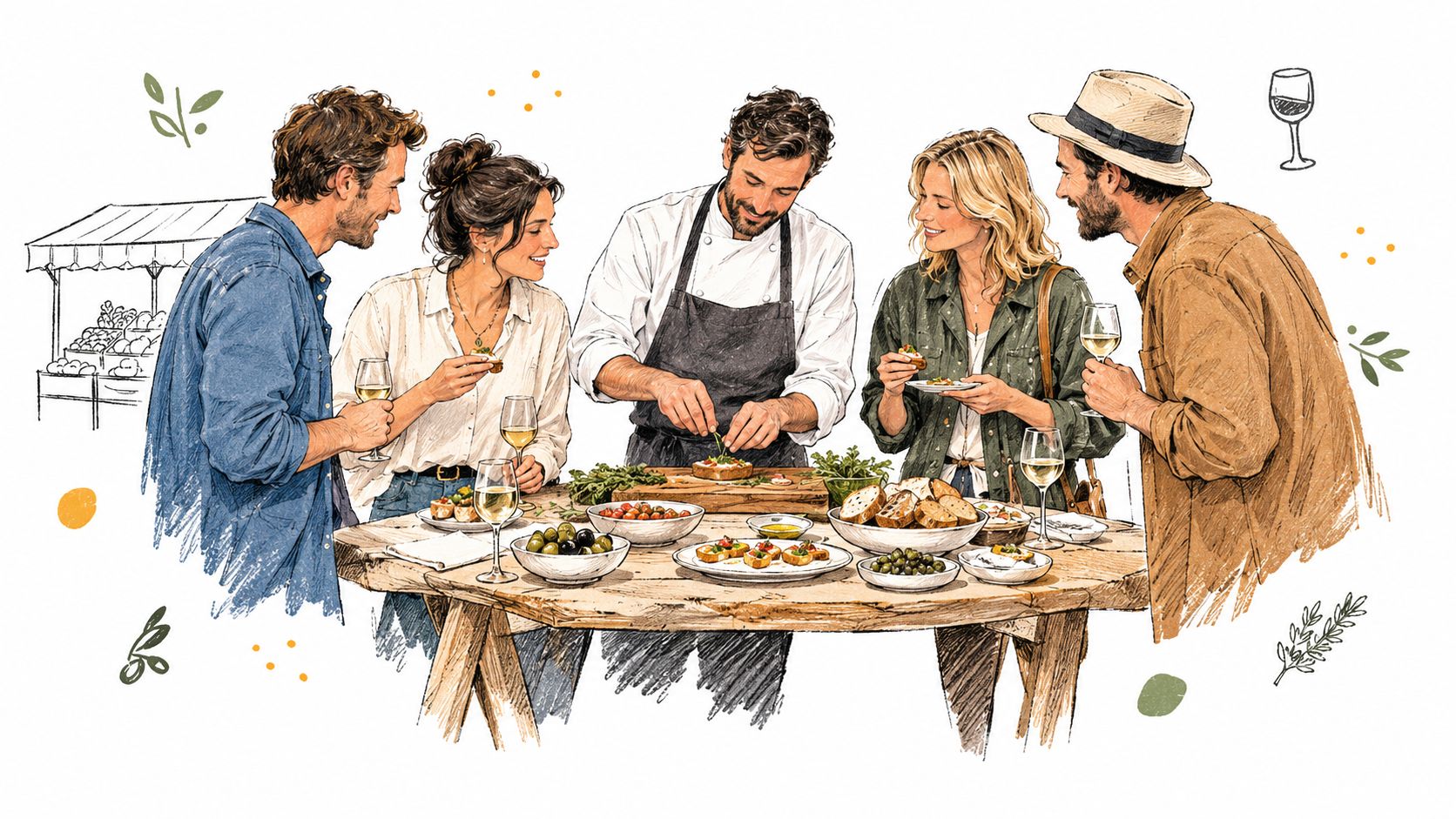
A culinary tour is the strongest all-rounder for groups with mixed interests. Participants can talk while moving between restaurants, markets, cooking stations, or tasting tables, so nobody has to perform socially for the entire experience. The activity also works for a city break, a hen or stag party, and a corporate outing because food creates an obvious shared focus without demanding athletic ability.
Choose the format according to the group's appetite for participation. A market tour with a chef suits curious travelers who want local context. A cooking class creates more interaction and gives the group a practical task. A restaurant-based tasting is better for a group that wants conversation with minimal effort.
Paris cooking classes in the Marais, Barcelona tapas tours in El Born, and chef-led visits to Rome's Campo de' Fiori market offer strong city-break choices. Istanbul's spice market, Lisbon's food and wine pairings in Belém, Dubai's culinary heritage tours in Old Town, and traditional tagine-making workshops in Marrakech bring a stronger regional identity.
Make the booking inclusive
Ask about allergies, religious dietary requirements, vegetarian choices, and alcohol-free alternatives before paying. Check whether the guide can communicate comfortably in the group's languages, and choose a morning or mid-week slot when popular markets and restaurants are less crowded.
A culinary experience normally works best when it has a comfortable pace, enough seating, and time for conversation between tastings. Use this guide to food tasting tours when comparing formats. The main trade-off is simple. Food tours offer broad appeal and moderate planning effort, but they aren't ideal for people who dislike unfamiliar dishes or need strict control over ingredients.
For a corporate group, ask the host to explain the local food culture between courses rather than turning the event into a competitive cooking challenge. For a hen or stag party, choose a private class or tasting with a clear finish time, then leave the evening open.
2. Walking and Historical City Tours
Walking tours suit groups that want to experience a destination without committing to a full-day excursion. The organizer can choose a theme, route length, and intensity, while participants get regular opportunities to ask questions, take photos, and pause at cafés. That flexibility makes walking tours particularly useful when a group includes both enthusiastic sightseers and people who need a slower rhythm.
The destination should determine the theme. Amsterdam's canal-side architecture, Prague's Jewish Quarter, Vienna's imperial district, and London's literary landmarks give history-focused groups a clear narrative. Barcelona's Gothic Quarter and Rome's aqueducts or Forum provide stronger archaeological interest. Istanbul's Byzantine and Ottoman routes, Dubrovnik's Old Town history, and Lisbon's earthquake-rebuilding architecture add distinctive local context.
Match the route to the group
Book early morning or late afternoon departures to avoid the busiest periods. Check the terrain, stairs, rest points, and accessibility before confirming, especially for multi-generational groups or anyone with mobility concerns. A licensed local guide adds value when the route involves complex history, while a curated self-guided map can reduce cost and give the group more control.
Comfortable shoes and water matter more than elaborate equipment. Build in a café stop so the group can rest and continue the conversation away from the route. For a city break, combine a historical walk with dinner in the same neighborhood. For a corporate outing, use a themed route as a low-pressure way for colleagues to talk without sitting across a conference table.
The trade-off is weather exposure and walking demand. A tour is inexpensive compared with a private vehicle or attraction package, but it becomes a poor choice in heavy rain, extreme heat, or a group with sharply different mobility levels. A self-guided option can solve some problems, but it loses the local interpretation that makes a guided route memorable. Organizers comparing London options can start with these guided tours of London.
3. Adventure Sports and Outdoor Activities
Choose adventure activities when the group wants a strong shared story, not just an attractive setting. Kayaking, hiking, climbing, zip-lining, canyoning, rafting, and paragliding create a clear challenge that participants can discuss afterward. They're especially effective for active friend groups and corporate teams that want a change from meetings.
Start with the least athletic member, not the most adventurous one. Kayaking in a Norwegian fjord, a moderate Dolomites hike, or a guided canyoning route in Croatia can work for a mixed group when the operator offers graduated difficulty. More demanding choices include rock climbing in the Swiss Alps, zip-lining in Austria or Bavaria, paragliding near Chamonix, and whitewater rafting in Spain or Portugal. Dubai and Morocco offer desert safaris and dune bashing, while Cyprus and Greece provide snorkeling and scuba-diving options.
Build in a safer alternative
Ask every participant about fitness, injuries, health restrictions, swimming ability, and comfort with height or speed. Use certified instructors, check insurance, and require a proper safety briefing and equipment inspection. A strong operator can often split the group between a main challenge and a lower-intensity version without separating everyone for the entire day.
ACSM included Adult Recreation and Sport Clubs among its 2026 fitness trends, connecting social participation with less strenuous group exercise. ACSM's 2026 trends support a practical planning rule, the activity should provide more than one way to participate.
Practical rule: If a participant has to hide discomfort to avoid disappointing the group, the activity is too demanding.
For a stag or hen party, select a controlled adventure with reliable transport and a clear recovery period. For a corporate outing, add a meal or scenic stop rather than stacking multiple demanding activities. The trade-off is memorable intensity versus weather and safety dependency. Always keep an indoor or lower-energy backup.
4. Wine and Beverage Tastings
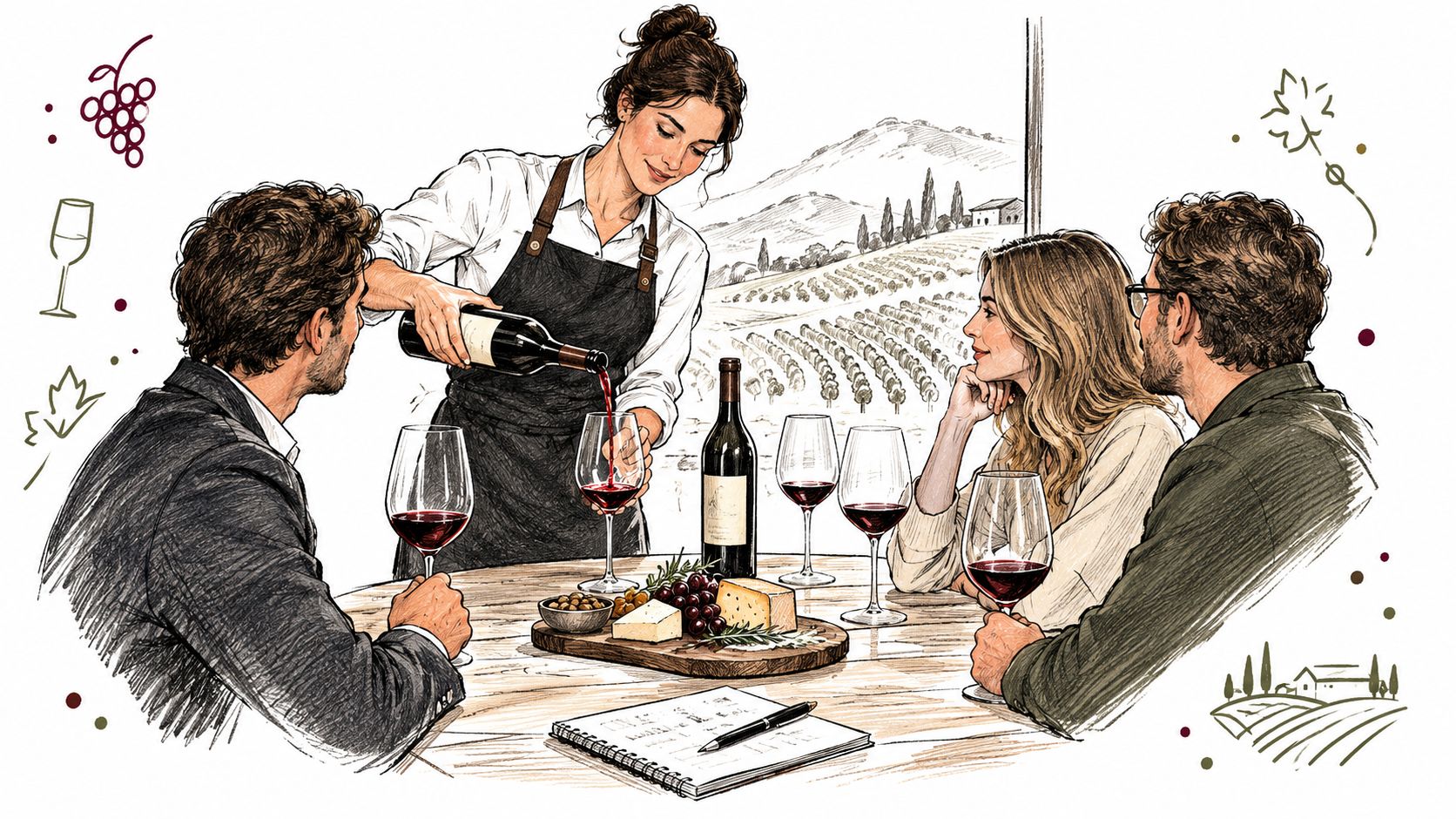
Wine and beverage tastings work best for groups that want cultural discovery without a packed schedule. A vineyard, brewery, distillery, coffee roastery, or alcohol-free beverage tour gives the group something to learn and discuss, while the seated format keeps the energy manageable. It also scales well from a relaxed weekend with friends to a hosted corporate dinner.
Regional fit makes this option especially strong. Bordeaux château tours, Chianti vineyards in Tuscany, the Douro Valley, Rioja, and Champagne houses in Reims all give a destination a clear beverage identity. The Moselle offers Riesling experiences, Vienna and the Wachau combine wine with accessible city travel, and Prague or Munich suit groups that prefer craft beer. Santorini, Lebanon's Bekaa Valley, Dubai's premium whisky and wine venues, and local coffee or tea experiences can broaden the choice for groups with different drinking preferences.
Choose the social intensity
A guided tasting creates more structure and education. A family-run producer often feels more personal, while a larger venue may handle transport and dietary requirements more efficiently. Ask whether the experience includes food, water, non-alcoholic options, and a place to sit. Arrange a driver, private transfer, or public transport plan before the tasting begins.
Schedule the event before the group becomes tired, and set expectations about alcohol consumption in advance. For a hen or stag party, a vineyard visit can provide a calmer daytime anchor before evening plans. For a corporate group, prioritize a producer-led explanation and food pairing over a rapid sequence of samples.
The main trade-off is that tastings are socially easy but may exclude people who don't drink or dislike alcohol-centered settings. Make the non-alcoholic alternative equally intentional, not an afterthought. Organizers exploring delivery and beverage planning can also consult these McLaren Vale Cellars delivery insights, while keeping the group experience focused on the destination.
5. Museum and Art Gallery Group Tours
Museum visits are the safest choice for culturally curious groups, mixed weather, and destinations with major collections. They provide a predictable indoor plan, varied subject matter, and several participation levels. A participant can listen closely to a guide, use an audio tour, browse independently, or join the group for selected highlights.
Paris's Louvre, Florence's Uffizi, Madrid's Prado, Rome's Vatican Museums, Amsterdam's Rijksmuseum, London's British Museum, and Vienna's Kunsthistorisches Museum offer reliable choices for European city breaks. Barcelona's Museu Picasso and Athens' archaeological museums suit art and history groups. Istanbul, Cairo, and Dubai add strong archaeological and Islamic art options.
Prevent cultural fatigue
Don't attempt to cover an entire museum in one visit. Choose a small set of key works or galleries and arrange a café break before attention drops. Weekday mornings usually make navigation easier, but confirm group-entry rules, timed tickets, photography restrictions, and multilingual guide availability directly with the venue.
The format also works for different adult groups. A corporate team can use a guided collection tour as a conversation starter without forcing personal disclosure. A family or reunion group can choose separate routes and meet for lunch. A hen or stag party can select a museum with a lively temporary exhibition, then continue to a nearby restaurant.
WHO Europe reports that almost 18% of people aged 65 and over in the EU participate in recreational groups or organizations, making organized cultural recreation relevant to multi-generational planning. The WHO Europe handbook supports including older adults in structured group activities rather than treating them as spectators.
The trade-off is lower physical intensity but higher dependence on advance tickets and crowd management. A self-guided visit costs less planning, while a specialist guide adds interpretation and keeps the group together. Choose the guided format when the collection is central to the trip, and the flexible format when the museum is one stop among many.
6. Team-Building Escape Rooms and Puzzle Challenges
Escape rooms are a decisive choice when a group needs structure, collaboration, and an obvious finish line. Participants decode clues, divide tasks, communicate under pressure, and celebrate a result together. The activity is indoors, weather-resistant, and easier to fit into a city itinerary than a full-day excursion.
Select the theme before selecting the venue. London's mystery rooms, Paris experiences built around the Bastille or Catacombs, Barcelona's Gaudí-inspired puzzles, Amsterdam canal-house mysteries, Vienna imperial scenarios, Prague medieval rooms, Dubai's futuristic challenges, Berlin Cold War themes, and Rome's gladiator or ancient-history rooms give the experience a strong destination connection.
Avoid the forced-team-building problem
Not every group wants an intense corporate exercise. A UK survey of 1,700 adults who had attended team-building events found that only 40% believed the exercises improved team effectiveness, while 60% described them as embarrassing or cringe-worthy. The Management Issues survey makes the planning lesson clear, choose a compelling activity rather than a performance disguised as bonding.
Match the difficulty to the group's experience and ask for an experienced game master. Brief participants on listening, sharing clues, and making space for quieter contributors. Avoid booking consecutive rooms, and allow a break between sessions when the group is large.
For a corporate outing, choose a room that rewards information-sharing rather than prior puzzle expertise. For a hen or stag party, make the theme playful and the location easy to reach. For a city break, book a room near dinner or nightlife so the activity supports the wider itinerary. Use this guide to best team-building activities when comparing alternatives.
The trade-off is high social intensity. Escape rooms suit groups willing to collaborate actively, but they aren't right for participants who dislike confined spaces, competition, or time pressure. Check accessibility and offer a parallel café or museum option when necessary.
7. Wellness and Spa Retreats
Wellness retreats are the right answer when the group wants connection without constant conversation. A Turkish hammam, thermal bath, yoga session, meditation class, massage treatment, or healthy shared meal lets participants choose how much they engage. That makes wellness more inclusive than a single high-energy activity, provided the organizer avoids treating relaxation as a compulsory schedule.
Budapest and Vienna offer thermal bathing, while Switzerland and Austria suit Alpine spa escapes. Cascais near Lisbon, Tuscany's spa towns, Marrakech riads, Jordan's Dead Sea resorts, Marbella, and Turkish thermal springs provide different levels of scenery and cultural character. The best option depends on whether the group wants a short city-break treatment, a full retreat, or a day with optional activities.
Give people control over participation
Ask about treatment preferences, skin sensitivities, privacy expectations, and accessibility. Some participants may want a massage, while others prefer a pool, sauna, yoga class, or quiet room. Include shared meals and optional time alone, so the group doesn't turn self-care into another obligation.
A 2024 study in Frontiers in Public Health found that greater diversity in social activities among Chinese older adults was significantly associated with higher life satisfaction, with reduced loneliness and better self-reported health acting as mediators. The study supports designing sessions with multiple participation modes, such as discussion, light movement, shared decisions, and quiet recovery.
For a corporate group, schedule wellness after demanding meetings rather than before a high-pressure agenda. For a hen party, combine treatments with a relaxed meal. For a multi-generational trip, choose a venue with varied facilities rather than a program built around one physical practice.
The trade-off is low social pressure but potentially higher individual preference management. Confirm what the package includes, whether alcohol is present, and whether the group can gather together without disturbing other guests.
8. Sports Events and Match Experiences
A live match is ideal when the group wants atmosphere without having to entertain one another continuously. The crowd, competition, music, and shared anticipation carry the experience. Participants can be passionate fans, casual observers, or interested in local culture.
Europe offers an unmatched range of destination-led choices. Book a UEFA Champions League match, a Premier League game in London, El Clásico in Spain, Bundesliga football in Berlin or Munich, Ligue 1 in Paris, or an Eredivisie match in Amsterdam. Tennis groups can choose the French Open or Wimbledon. Motorsport fans can plan around the Monaco Grand Prix or the Italian Grand Prix at Monza, while cycling groups can watch the Tour de France.
Plan the logistics before the excitement
Major fixtures require early ticket planning, and seating location changes the experience. Decide whether the group wants lively supporter energy, quieter hospitality, or a premium package with food and dedicated service. Check team allegiances before booking, especially for corporate outings or mixed-nationality groups.
Arrange public transport, parking, meeting points, and post-match plans in advance. Arrive early enough for stadium entry and pre-match socializing. For a hen or stag party, choose a match that anchors the day without forcing the entire itinerary around one result. For a corporate group, hospitality seating can make conversation easier, but it also increases the budget.
The trade-off is memorable atmosphere versus limited control. You can't control the score, weather around an open stadium, or the behavior of nearby supporters. A museum, food tour, or indoor venue makes a useful backup if tickets fall through. When the event is the centerpiece of a city break, confirm ticket authenticity and transfer rules before making non-refundable travel arrangements.
9. Creative Workshops and Classes
Creative workshops give adults a task, a conversation prompt, and something tangible to take home. Painting, pottery, dance, music, calligraphy, tile-making, and glass-blowing work well for groups that want participation without athletic competition. The activity also gives quieter people a natural way to engage without speaking constantly.
Parisian painting studios in Montmartre, Tuscan ceramics workshops, Barcelona mosaic classes, flamenco in Madrid or Seville, Vienna music sessions, Prague street-art workshops, and Amsterdam painting experiences connect the activity to the destination. Istanbul's Turkish calligraphy, Marrakech's zellige tile work, and glass-blowing in Venice or Murano offer stronger cultural immersion.
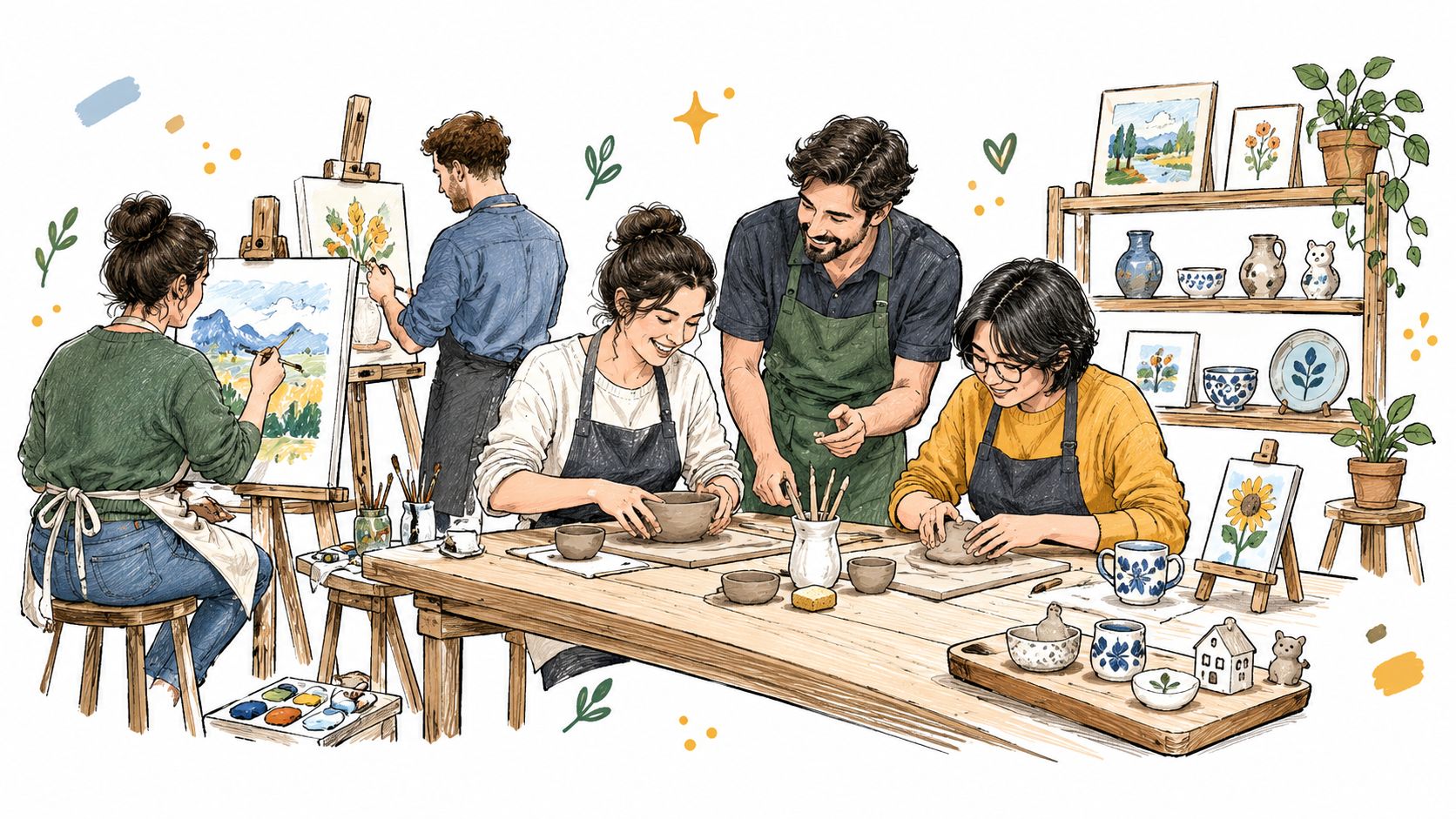
Choose a project with a clear finish
For a city break, select a workshop that produces a finished item within one session. Ask about instructor experience, class language, workspace ventilation, protective clothing, cleanup, and accessibility. Beginners need reassurance that the result doesn't have to be perfect, while experienced participants may want a more technical option.
The European Commission's Education and Training Monitor reported adult participation in formal and non-formal learning at 39.5% in 2022. The monitor reinforces the appeal of structured learning for adult groups, particularly when the lesson is social and hands-on.
For a corporate team, choose a collaborative project with individual roles rather than a class that compares artistic ability. For a hen party, a dance or jewelry workshop can create a lively shared memory. For a family group, pottery, mosaics, and food-related crafts accommodate different ages and energy levels.
The trade-off is moderate planning effort and variable output quality. Creative classes are inclusive when participation remains flexible, but they can frustrate people who expect a polished souvenir. Explain the format clearly before booking. Organizers wanting movement-based options can review this practical guide to group dance lessons.
10. Boat Tours and Water-Based Group Excursions
Boat tours provide scenery, social space, and a natural sense of occasion. They range from low-effort sightseeing cruises to sailing lessons, private yacht charters, river dinners, and excursions with swimming or snorkeling. Choose them when the destination's waterfront is a major attraction and the group wants to relax while moving through the scenery.
Amsterdam canal cruises, Venice gondola routes, Amalfi Coast trips, Greek island sailing, Croatian Dalmatian coast tours from Dubrovnik, Barcelona sailing, Seine dinner cruises, and Danube journeys through Vienna, Budapest, or Prague offer strong European choices. Norwegian fjords, the Douro River, Dubai yacht charters, and dhow cruises add distinctive regional options.
Decide between sightseeing and participation
A sightseeing cruise suits mixed-ability groups because everyone can remain seated and enjoy the views. A sailing excursion creates more involvement but requires better weather tolerance and a willingness to follow the captain's instructions. A private charter offers privacy and itinerary control, while a shared cruise usually reduces the planning burden.
In Prague, a Europe-focused meetings guide describes a Chamber Escape Game with a 60-minute escape format and a Barcelona Sailing Regatta that normally lasts around three hours, examples of how time-bounded activities can fit into adult itineraries. The guide's Europe activity examples illustrate why clear start and finish times help organizers protect dinner, transport, and hotel schedules.
Check the captain's qualifications, vessel accessibility, cancellation policy, motion conditions, and onboard facilities. Provide shade, sunscreen, and suitable clothing, and ask about dietary restrictions if meals are included. People prone to motion sickness may prefer a sheltered river cruise, and alcohol-free drinks should be available.
For a stag or hen party, a private boat creates a memorable centerpiece, but it needs strict capacity and behavior planning. For a corporate group, use a dinner cruise or short harbor route that allows conversation. The trade-off is destination impact versus weather dependence. Keep a museum, culinary tour, or workshop ready if conditions change.
Top 10 Adult Group Activities Comparison
| Activity | 🔄 Implementation complexity | ⚡ Resource requirements & cost | ⭐📊 Expected outcomes / impact | 💡 Ideal use cases |
|---|---|---|---|---|
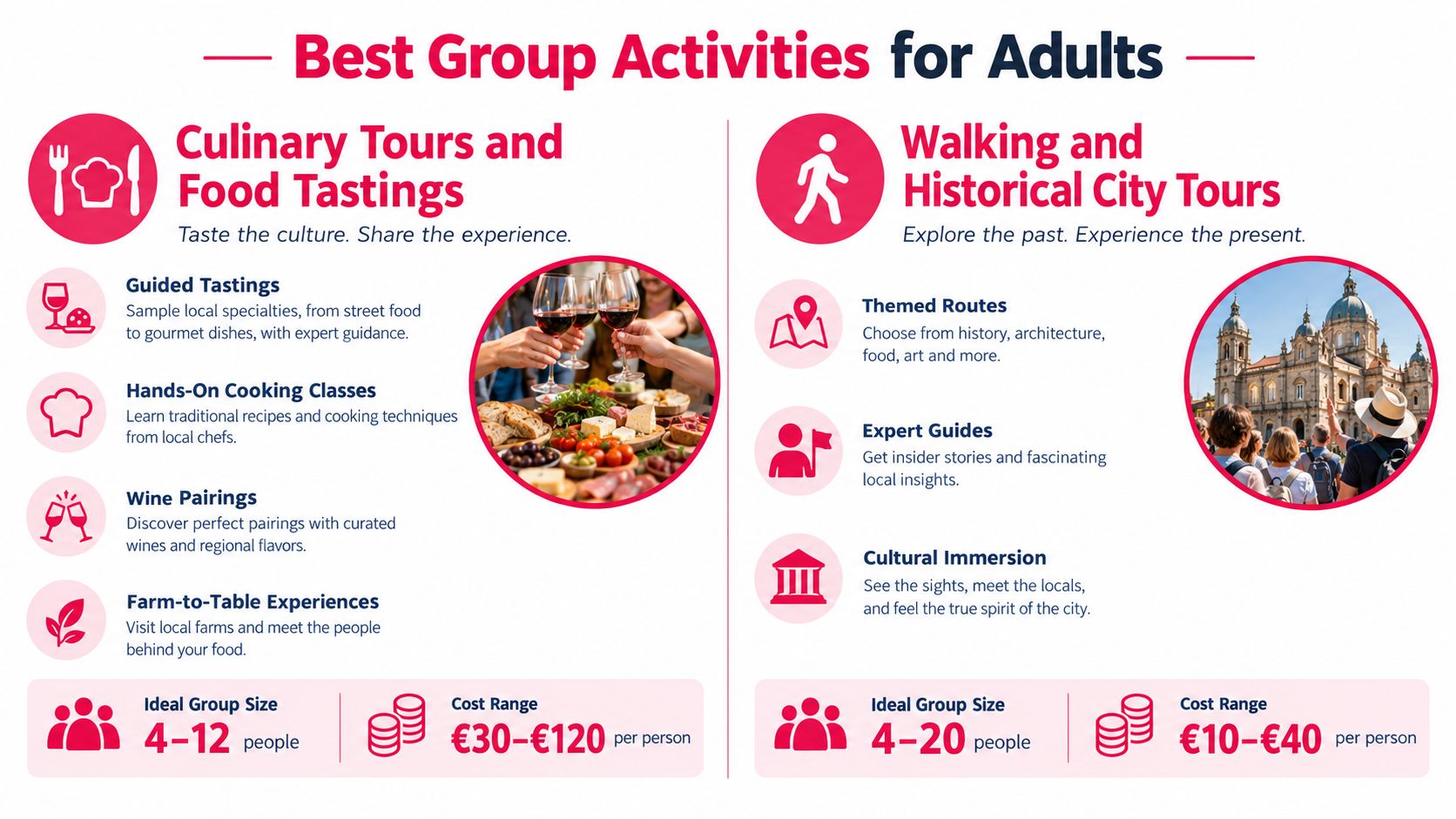
| Culinary Tours and Food Tastings | Moderate, coordinate menus, venues, guides, dietary needs | Moderate, local restaurants/chefs, transport; €30–€120 pp | ⭐ High social bonding, cultural immersion, strong photo/social media impact 📊 | Groups that enjoy food, cultural immersion, small celebrations; survey dietary needs |
| Walking and Historical City Tours | Low, route planning, guide quality varies; weather-dependent | Low, minimal gear, optional guide fees; €10–€40 pp | ⭐ Good educational value, accessible for mixed fitness levels 📊 | Casual groups, heritage-focused trips, low-budget outings; morning/late-afternoon slots |
| Adventure Sports and Outdoor Activities | High, safety planning, certified instructors, permits | High, specialist gear, instructors; €40–€250+ pp | ⭐ Very high bonding and memorable experiences, physical challenge 📊 | Active groups seeking adrenaline, team-building with fitness prerequisites |
| Wine and Beverage Tastings | Moderate, bookings, transport, responsible consumption management | Moderate–High, venue fees, sommeliers; €40–€150 pp | ⭐ Sophisticated relaxation, educational tasting insights 📊 | Adult groups, celebratory or educational outings; arrange transport/designated drivers |
| Museum and Art Gallery Group Tours | Low–Moderate, bookings, possible headsets or special access | Low–Moderate, entrance fees + guide costs; €15–€50 pp (+group guide fees) | ⭐ High cultural/educational value, weather-proof indoor activity 📊 | Culturally curious groups, mixed abilities, weekday morning visits |
| Team-Building Escape Rooms and Puzzle Challenges | Low, operator provides setup, but group matching matters | Low, venue/operator fees; €20–€35 pp per session | ⭐ Strong teamwork and communication gains, high engagement 📊 | Corporate teams, friends seeking cooperative challenge; match difficulty to group |
| Wellness and Spa Retreats | High, multi-day coordination, specialized staff and facilities | High, accommodation, treatments, meals; €150–€500+/pp per day | ⭐ High relaxation and stress relief, wellness gains 📊 | Groups prioritizing rest and wellbeing, corporate stress-relief retreats |
| Sports Events and Match Experiences | Moderate, ticketing logistics, travel, seating coordination | Moderate–High, tickets vary widely; €30–€300+ pp | ⭐ High excitement and shared emotional experience, memorable moments 📊 | Large friend groups, fan clubs, corporate hospitality; book early for major events |
| Creative Workshops and Classes | Low–Moderate, instructor sourcing, materials management | Low–Moderate, instructor + materials; €30–€80 pp/session | ⭐ Skill-building and take-home outputs, creative bonding 📊 | Small groups wanting hands-on learning and souvenirs; choose beginner-friendly projects |
| Boat Tours and Water-Based Group Excursions | Moderate–High, safety, captain/crew, weather contingency | Moderate–High, vessel hire, permits; €25–€200 pp (private charters €2,000+) | ⭐ Scenic, relaxing experiences with strong photo appeal 📊 | Coastal or river groups, celebrations, mixed fitness levels; choose calm-weather seasons |
Turn Group Preferences Into a Plan
The best group activity isn't automatically the most expensive, adventurous, or photogenic option. It's the one people can realistically enjoy together. A group that agrees on the destination but not the energy level can still have a poor day, while a modest walking tour or workshop may succeed because everyone understands what participation involves.
Start with a short list of two or three activities. Don't compare ten options indefinitely. Select one low-energy choice, one moderate option, and one higher-energy alternative, then ask the group to react to those specific formats. A culinary tour, museum visit, and escape room create a useful range for a city break. A boat tour, wellness session, and creative workshop work well when weather or mobility varies.
Next, compare the total per-person cost, not just the ticket price. Include transport, meals, equipment, service fees, drinks, guide gratuities, and any required deposits. A low-cost activity can become expensive when it requires taxis across a city, while a higher-priced experience may include transfers and food.
Check energy demand with the same care. Ask whether people will walk, stand, climb, swim, sit in the sun, work under time pressure, or share a confined space. Verify accessibility, seating, restroom access, route surfaces, and the availability of alternative roles. For older adults, structured social activities are particularly relevant. A 2018 longitudinal study of 2,548 adults aged 55 and over linked membership in education, arts, or music groups with lower negative affect and higher life satisfaction over 10 years. The study in the Journal of Epidemiology and Community Health supports choosing activities with a clear social purpose rather than passive waiting.
Confirm the practical conditions
Before booking, verify:
- Weather cover: Confirm whether the provider offers an indoor alternative, rescheduling, or a clear cancellation policy.
- Dietary and alcohol-free choices: Ask for written confirmation rather than assuming the venue can adapt.
- Capacity and group division: Check whether the whole group stays together or rotates through smaller sessions.
- Transport: Map pickup points, public transit, parking, walking distances, and return times.
- Booking deadline: Set a date for ticket, room, guide, or vessel confirmation and communicate it to everyone.
- Participation choices: Make sure people can observe, rest, or join at a lower intensity without embarrassment.
If the group can't agree, use a private preference survey instead of another open-ended chat debate. MyPerfectStay lets travelers privately share budgets, interests, energy levels, and must-see ideas, then uses match scores to surface activities that overlap. The group can select a destination, vote on experiences, lock the itinerary, and book the winning plans together. Its catalog includes bookable tours, adventures, local experiences, and other activities across Europe and MENA, so the organizer can compare options without collecting links from every participant.
Once the activity wins, lock the itinerary and send everyone the confirmation, meeting point, cancellation terms, dress requirements, and backup plan. A shared schedule prevents the common problem of one person assuming that somebody else handled transport or tickets. For corporate groups, assign one owner for logistics and one contact for accessibility or dietary questions. For friend groups, set a response deadline and stop reopening settled decisions after the booking is confirmed.
The most impressive option on paper isn't always the best choice. Pick the activity that matches the group's actual budget, energy, comfort, and destination, then give people enough information to enjoy it without second-guessing the plan.
Use MyPerfectStay to collect private preferences, compare group match scores, and find bookable activities for city breaks, celebrations, corporate outings, and multi-generational trips. Invite the group, vote on the strongest options, and turn the winning activity into a shared itinerary everyone can follow.