Family Vacation in Greece: Islands, Routes and Budgets
October 25, 2026·MyPerfectStay
Greece recorded 40.69 million inbound travellers in 2024, up 12.8% from 2023, according to the Bank of Greece. That scale is why a family vacation in Greece can feel easy on paper. Airports, ferries, and family rooms already exist for millions of visitors. It is also why the wrong base fails the people who have to walk it.
Judge every island and town by transfer load, heat exposure, and peak-season congestion for each traveler. Start with the youngest child and the oldest adult. A famous sunset is a poor trade if the steps, the queue, or the second ferry wipes out the day.
Table of Contents
- Where Families Should Go in Greece
- When to Travel Greece With Children
- Sample Itineraries by Trip Length and Child Age
- Getting Around and Choosing Where to Stay
- Budgeting an All-In Family Trip
- Protecting Kids and Grandparents From Heat and Access Gaps
- Kid-Friendly Activities and Experiences by Base
- Coordinate the Group and Confirm the Plan
Where Families Should Go in Greece
The eight bases below are ranked by how well they fit ages, transfers, and August crowds, not by postcard fame.
| Destination | Best For | Suitable Child Ages | Transfer Effort | Crowd Level in Peak Summer |
|---|---|---|---|---|
| Crete | Beaches, Minoan sites, varied scenery | All ages | High: long cross-island drives | High |
| Corfu | Calm bays, green landscape | Toddlers and up | Low: short drives, direct flights | Moderate |
| Rhodes | Medieval Old Town, sandy beaches | Ages 5 and up | Low to moderate | Moderate to high |
| Naxos (Cyclades) | Gentle beaches, quieter Cyclades | Ages 4 and up | Moderate: ferry 3 to 6 hours from Piraeus | Moderate |
| Athens and Attica | Acropolis, museums, Cape Sounion | Ages 8 and up for history | Low: metro and airport | High, with heat risk |
| Nafplio (Peloponnese) | Flat compact old town, easy walking | All ages | Low: about 2 hours by car from Athens | Low to moderate |
| Halkidiki | Resort beaches, pools, short drives | All ages | Low: about 1 hour from Thessaloniki | Moderate |
| Santorini | Caldera views, sunsets | Ages 10 and up, short stay only | Moderate, with steep steps | Very high |
How to read transfer effort
Read the transfer column before the scenery column. A short map distance still fails if it means a flight, a port queue, a bus, and a stair climb with a stroller. Corfu, Nafplio, and Halkidiki keep most days inside one short drive. Crete rewards a car and punishes anyone who tries to see both ends in a morning. Naxos is the Cyclades choice when Santorini's steps and prices don't fit the group.
Santorini is a poor default for toddlers, grandparents who avoid stairs, or anyone who hates queues. Use it as two nights at most, and only when the group is ages 10 and up and already accepts the cost. Tourism pressure sits heaviest on the South Aegean, Crete, Attica, and the Ionian Islands. Inland and smaller mainland bases get less marketing and, often, fewer bodies on the pavement.
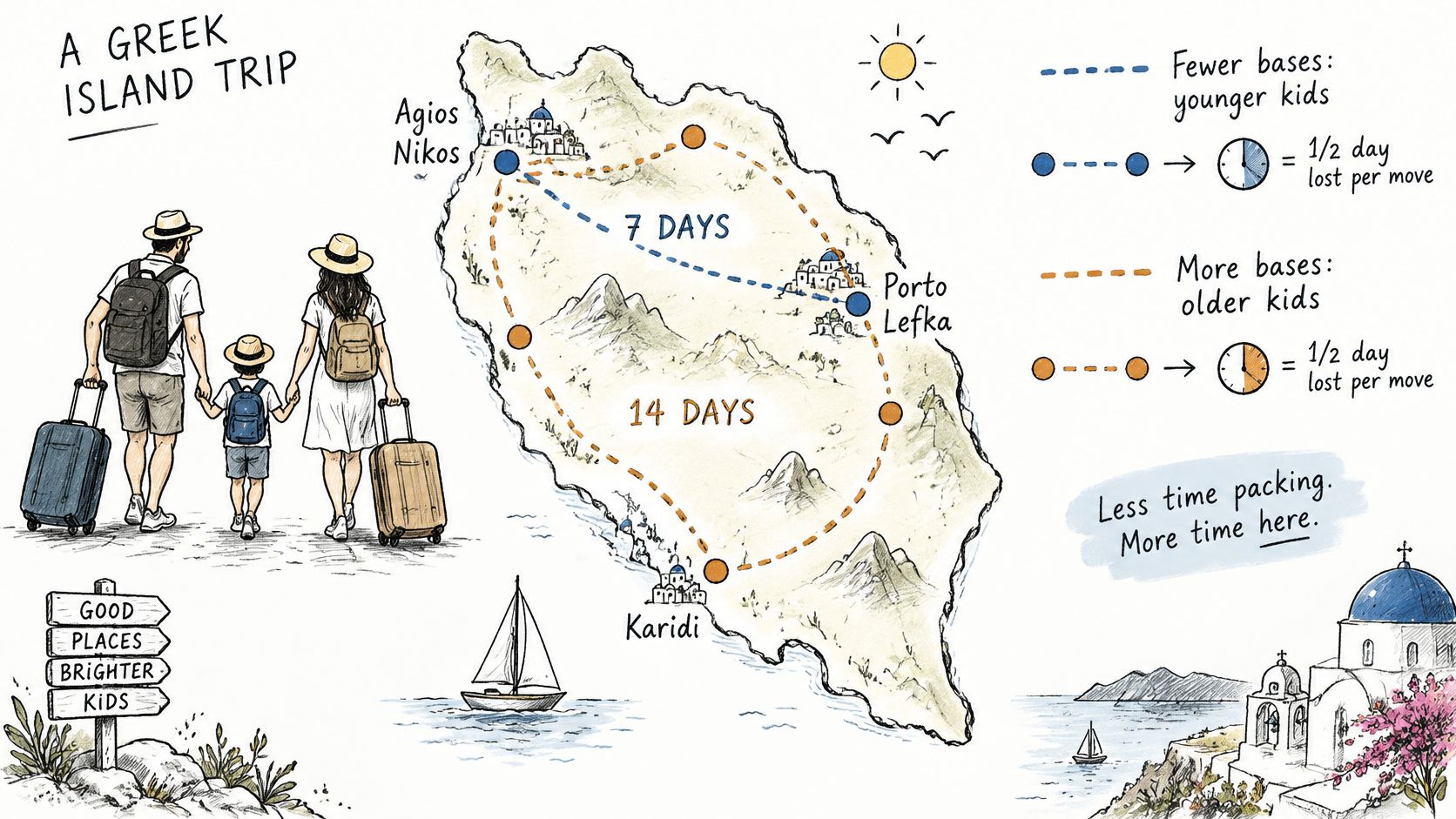
Practical rule: One base for every 4 to 5 nights. Extra moves look efficient on a map and feel expensive in naps, missed boats, and short tempers.
When to Travel Greece With Children
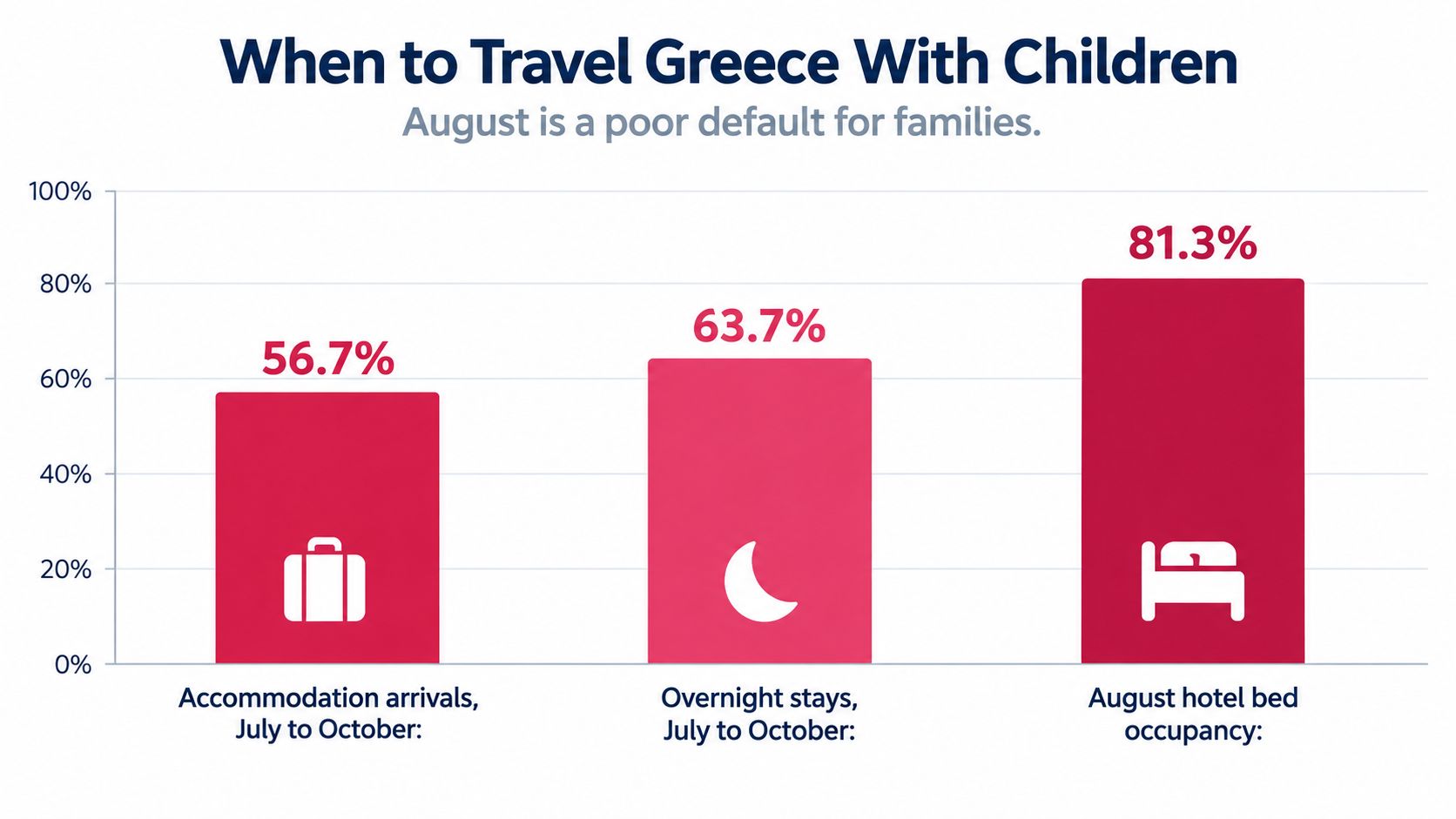
July to October accounted for 56.7% of annual accommodation arrivals and 63.7% of overnight stays in 2025. August alone made up 19% of arrivals and 21.7% of nights, while average hotel-bed occupancy reached 81.3%, according to GTP from ELSTAT figures. Those figures matter at ports as well as hotels: popular routes and island terminals can be congested in peak weeks, making a tight ferry connection harder with children, luggage, or grandparents.
| Month | Sea and Ferry Conditions | Heat Exposure | Crowd Level | Family Verdict |
|---|---|---|---|---|
| May | Cooler water; fewer sailings may serve smaller routes | Warm, rarely extreme | Low to moderate | Good for sightseeing and hiking |
| June | Warmer water; most routes running | Heat builds later in the month | Rising, especially near school breaks | Strong choice; book early |
| July to August | Warmest water; full ferry timetables | Peak heat and frequent heatwaves | Highest; August hotel-bed occupancy averaged 81.3% | Best only with a heat plan and early booking |
| September | Warm water; full or near-full ferry service | Hot early, milder later | Easing as school resumes | Strong overall choice |
| October | Cooler water; some routes run less often | Mild | Low | Good for quiet beaches and city stays; check ferries first |
Choose dates around your group's limits
Start with the actual ferry timetable for your route, not a broad label such as “shoulder season.” Late May and October may mean fewer sailings on smaller routes. June and September often offer warm swimming conditions while many ferry routes are operating. Check port departure times and connections before booking, particularly if a missed sailing would leave the group waiting in the heat.
Next, consider school dates and flexibility. If the children cannot miss class, compare your available weeks with the busiest summer period and book accommodation and ferries early. Late June can already feel busy on popular routes, though crowd levels vary by island and travel week.
Then decide how much heat the group can manage. July and August bring the warmest sea, but peak heat can make outdoor plans harder for young children and older relatives. Schedule sightseeing early, leave the hottest part of the day open, and avoid tight transfers. For strollers, grandparents who need frequent breaks, or children prone to motion sickness, repeated island hops during busy weeks are often a poor fit.
June and September are often a practical balance: swimming weather, operating ferries, and less peak-season pressure than August. Check local schedules before committing, and choose dates that suit the least heat-tolerant person in the group.
Sample Itineraries by Trip Length and Child Age
Every base change costs about half a day once you count packing, the transfer, and check-in. On a 7-night trip, two moves can erase a full beach day before anyone argues about sights.
| Trip Length | Child Ages | Base Structure | Number of Bases | Key Planning Rule |
|---|---|---|---|---|
| 4 nights | Toddlers aged 1 to 3 | One base with beach mornings and one half-day trip | 1 | Keep every transfer under 90 minutes |
| 7 nights | Children aged 4 to 8 | Athens for 2 nights, then Naxos for 5 | 2 | Treat the ferry day as a rest day |
| 10 nights | Mixed ages 6 to 16, plus grandparents | Athens, Nafplio, then Crete or Rhodes | 2 to 3 | One slow day for every 3 nights |
| 14 nights | Teenagers 13 to 17, plus adults | Crete west to east, or Corfu plus Athens | 3 | One free-choice day per family member |
What each length can actually hold
Toddlers do better with one bed, one beach, and one short outing. Children aged 4 to 8 can take Athens and then Naxos if the ferry day is empty of other plans. A mixed group with grandparents needs the flat walking in Nafplio before a bigger island, plus a slow day every three nights. Teenagers can handle three bases, including a west-to-east Crete drive or Corfu plus Athens, if each person gets one day they chose.
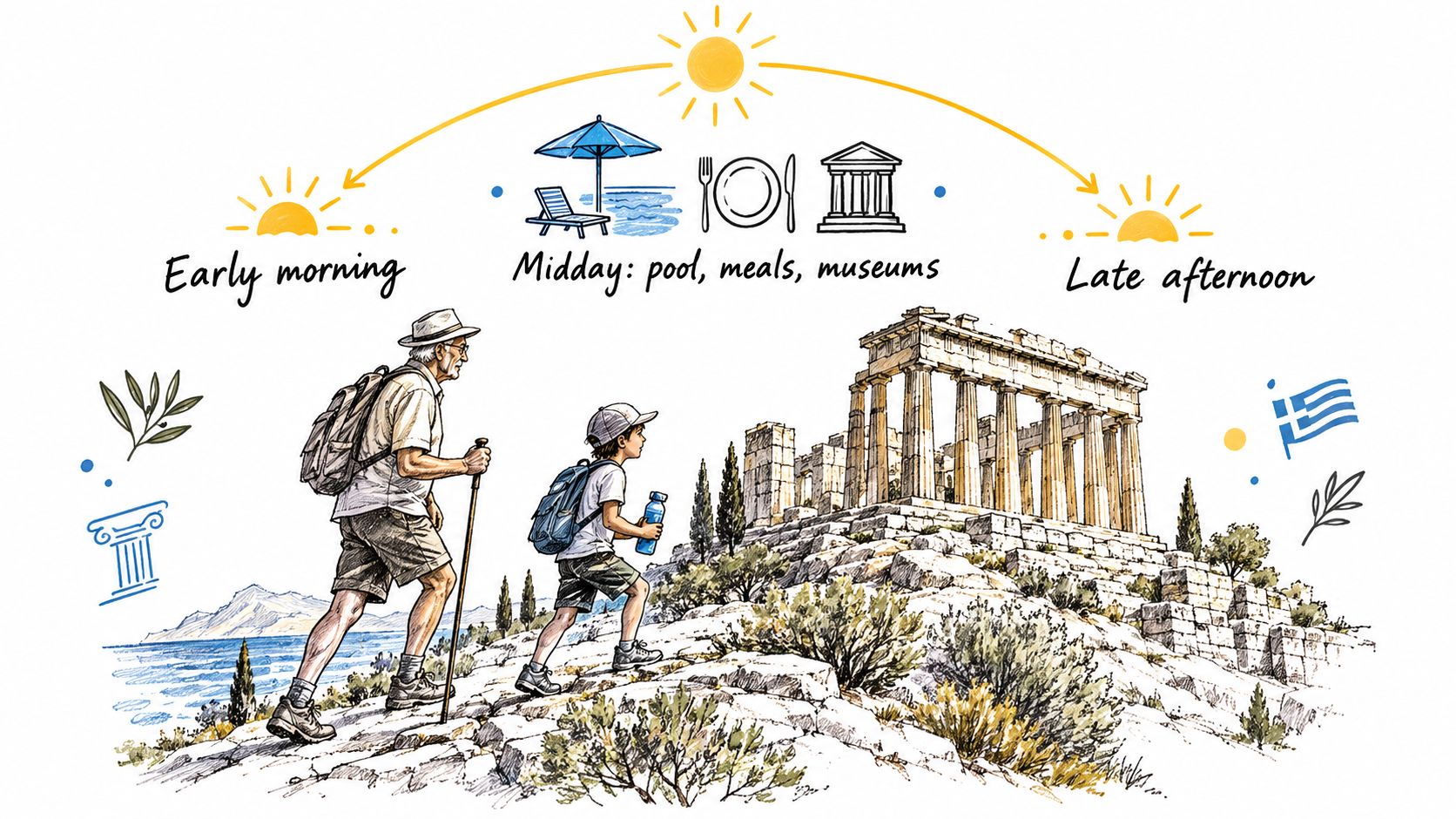
The day shape stays the same wherever you sleep. Use 8:00 to 12:00 for hikes, archaeological sites, and walking tours. Use 12:00 to 17:00 for the pool, lunch, a museum, or an air-conditioned room. From 17:30, keep it to a short walk, dinner, or sunset. Later sections test those slots against heat and access. Don't stack two exposed sites into the morning block.
Count the transfers on the printed plan. If any day has more than one move, cut a stop. A video walk-through of island pace helps the group see why that cut is not a loss.
Getting Around and Choosing Where to Stay
Ferry fare rules can change the cost of an island pair, so check the exact route, sailing and booking category before choosing where to go. Blue Star Ferries states that children up to 4 years and 364 days can travel free with an adult booking when issued a free ticket. If the child needs a seat or bed, Blue Star Ferries says a 50% child fare applies instead.
Triton Ferries lists a 50% discount for children aged 5 through 10. These are each operator's stated rules, not a guarantee for every route or fare. Confirm the child's age category, whether the discount applies to a seat or reserved accommodation, and the terms for your selected sailing and booking class. Check again if your plans or booking change.
Three ways to move, and when each fails
Rental car on Crete or Rhodes. A car helps when beaches and sites are far apart. It can add cost and driving stress, especially if grandparents are uncomfortable on unfamiliar roads. Price the car and its ferry transport before committing.
Ferry for a true island pair. For Naxos and nearby island hops, a ferry can work well when the crossing is the day's main activity. A late sailing followed by a site visit leaves little room for delays or rest.
Flight for the long leg. Flying can save a day when a ferry crossing would be too tiring for the children. Allow for transfers between your accommodation, the airport and your next stay. A direct flight still may not make the full journey door to door.
For an overnight ferry with young children, book a private cabin so the group can sleep. Seats can suit a daytime crossing if nobody needs to lie down.
Before paying for accommodation, get five details confirmed in writing: bed layout, a cot if needed, kitchen access for picky eaters, pool fencing for toddlers, and the walking route to a beach or taverna. Check the slope and stairs, not just the distance. A sea-view room reached by forty steps may be a poor fit for a grandparent, even if the listing photos look inviting.
Budgeting an All-In Family Trip
A useful family budget starts with the itinerary's biggest cost drivers: peak-week lodging, transfers, and how many times you change bases. Argophilia reports that summer accounts for about half of annual arrivals, putting pressure on prices during busy weeks. Its 2024 tourism figure of about 36 million arrivals uses a different measure from the 40.69 million inbound travellers cited earlier, so don't treat the two totals as directly comparable.
Model costs for two adults and two children, then add grandparents or other relatives as separate travellers. The table gives a framework, not quoted market prices: enter current prices for your dates, route and group before comparing plans.
| Cost line | How to estimate it | Main cost driver |
|---|---|---|
| Family apartment or hotel room | Compare total quotes for the same dates and room setup | Season, island, extra beds and access needs |
| Rental car | Price the full rental period, including insurance | Season, transmission and pickup location |
| Ferry with a car | Add the vehicle and passenger fares for each sailing | Route, operator, cabin or seat choice |
| Ferry for passengers only | Price every traveller and check each child's age band | Route, operator and discount rules |
| Family taverna dinner | Estimate from the menu and your group's likely order | Location, seafood and number of courses |
| Museum and archaeological site tickets | Check current admission rules for each visitor | Site, age and free-entry eligibility |
| Trip contingency | Set aside a chosen amount for changes to your confirmed costs | Delays, missed connections or a changed plan |
For an initial estimate, total the booked costs first, then choose a contingency based on the risks in your itinerary. A multi-island trip with tight connections may need more room for changes than a single-base stay. Treat this as a planning allowance, not a standard percentage or a guaranteed buffer.
One base versus hopping
A single base can concentrate spending on lodging while reducing ferry tickets and car transfers. Island hopping adds a fare for every crossing, and taking a car on a ferry adds a vehicle fare. A private cabin may justify its cost overnight with young children; for a short daytime crossing, seats may be enough.
The group's needs affect the total. Grandparents may need a ground-floor room or a private transfer, while teenagers may want a paid activity. If lodging is still flexible, use this guide to plan a family vacation on a budget, then compare the full cost of each itinerary, including transfers and extra nights caused by travel. Which option fits your group's budget and leaves the least exposure to a paid day disrupted by a delay?
Protecting Kids and Grandparents From Heat and Access Gaps
Greek summer heatwaves are frequent and can cause heat exhaustion, heatstroke, and death, according to Australian travel guidance. Schedule around the group's limits: children need water and shade, while grandparents may need shorter walks, fewer stairs, or an air-conditioned break. Light clothes, hats, and local advice help reduce heat exposure.
The heat schedule
Plan archaeological sites, hikes, and walking tours for early morning or late afternoon. Reserve the hottest part of the day for swimming, a meal, a museum, or a cool room. One exposed site is enough for a day with young children or older relatives.
If an official heat warning is issued, replace strenuous sightseeing with an indoor or shaded option, and check that your destination is open before leaving. Bring water, light clothing, and a hat for everyone, including the relative who says they feel fine. A popular hilltop attraction may be a poor fit that day if the heat or walking distance exceeds anyone's limits.
Access you verify, not assume
Before choosing an excursion, note each person's mobility, walking tolerance, stair limit, and sensory needs. The Archaeological Museum of Delphi has an elevator and a designed route. A special vehicle can reach the archaeological site up to the Temple of Apollo if the antiquities office receives at least seven days’ notice. In Athens, the National Archaeological Museum has a separate disability entrance and ramp access.
Confirm surfaces, gradients, toilets, and a backup with the operator before booking. Delphi's vehicle requires advance notice, so leave enough time to arrange it. A museum can serve as a dependable midday alternative when a hilltop site is closed or too hot for the group.
If a heat warning is in effect, use the backup plan. Don't leave home hoping the hill “won't be that bad.”
Kid-Friendly Activities and Experiences by Base
Match one activity to the base and write the person's name next to it before you pay.
Athens, Delphi, and Nafplio
In Athens, use the Acropolis tactile route, with its 12 stops plus Braille and large print, for ages 8 and up who can handle a timed visit. The National Archaeological Museum, with its separate disability entrance and ramp, is the hot-day or rainy-day swap. For a wider city list, see things to do in Athens. At Delphi, the museum elevator and designed route suit a mixed group, and the Temple of Apollo vehicle still needs that seven-day notice from the antiquities office. In Nafplio, flat old-town walks and a boat to the Bourtzi islet work for strollers and grandparents.
Islands and Halkidiki
On Crete, put Knossos on the calendar before 11:00, then use harbour lanes and a beach for ages 5 and up. Naxos and Corfu suit toddlers with a calm bay and one short boat or beach outing, not a full-day hike. Halkidiki is pools and sandy resort beaches for every age, which is the point of that base. Santorini stays a sunset walk for ages 10 and up, and only if the steps are acceptable that day.
Each day, book one hands-on slot for younger children, such as a boat trip or a cooking class, and one independent slot for teenagers, such as snorkelling or a hike. If you can't name who the activity is for, it isn't ready to book.
Coordinate the Group and Confirm the Plan
Set the trip around the people least able to absorb long transfers, midday heat, or crowded routes. The oldest and youngest travelers usually define the group's limits. Choose bases and ferry days to fit those limits before comparing everyone's wish lists.
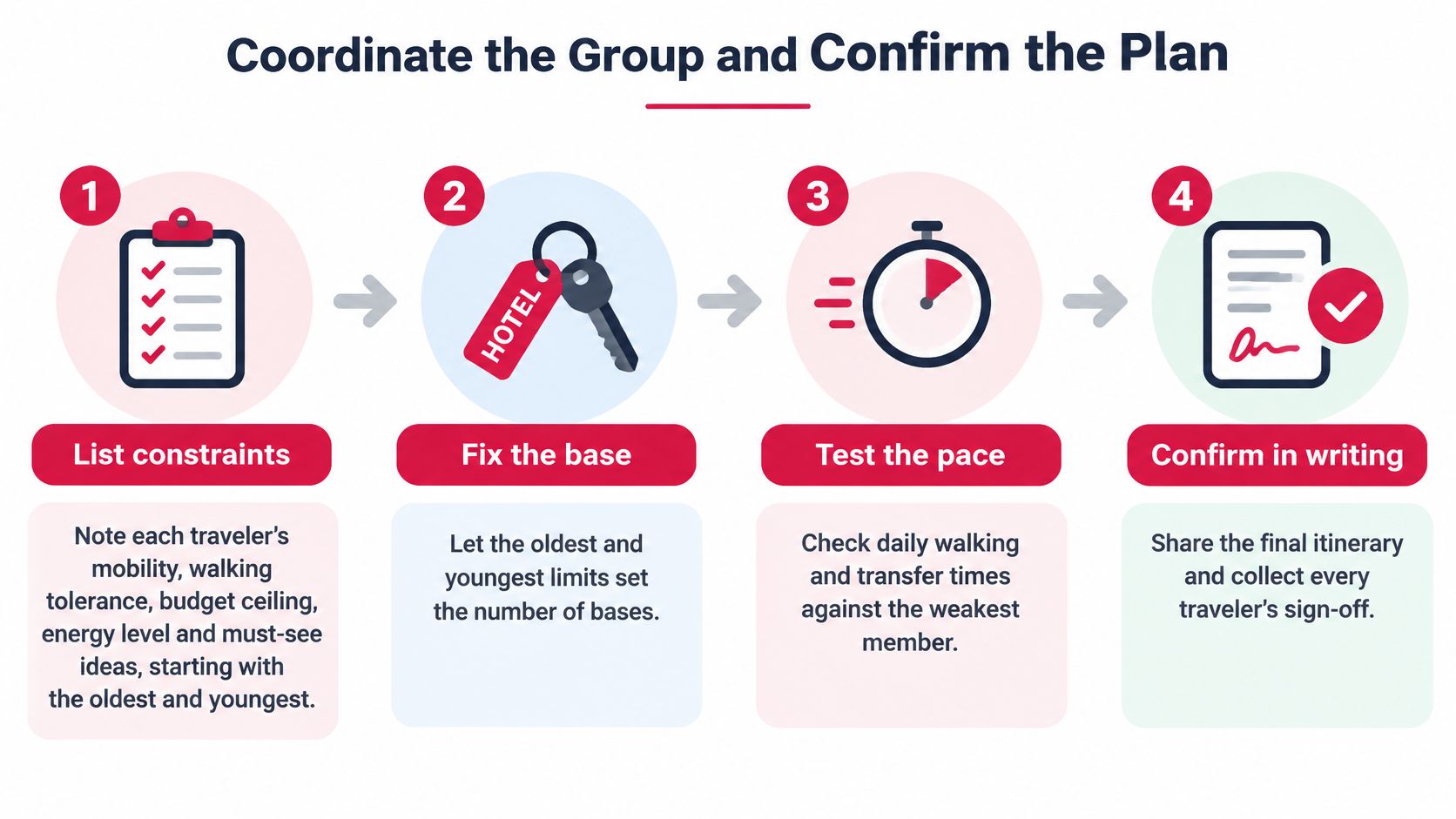
- List every constraint. Record mobility, walking tolerance, budget ceiling, energy, and must-see ideas. Start with the oldest and youngest travelers, whose needs can determine whether a transfer or excursion works for everyone.
- Agree on the ceiling and must-haves. Set these before comparing preferences so the group is weighing the same trip, including its transport and accommodation costs.
- Collect preferences privately. MyPerfectStay offers a way for each traveler to record interests and priorities. For practical guidance on reaching agreement, see family group decision making.
- Choose a decision deadline. Name who will make the final booking decisions and when the group must respond. A clear deadline keeps reservations from depending on one person's unanswered messages.
- Reserve heat-safe and accessible plans first. Put the most exposed outings in cooler parts of the day, and allow time for rest after ferry travel. Fill the remaining days with flexible activities.
- Split costs and confirm bookings. Use the shares everyone agreed to, collect deposits, and send each confirmation to all travelers.
- Share the daily plan. Keep ferry times, accommodation details, and changes in one place the whole group can check.
Before anyone pays
Check sailing dates for each island pair and the child-fare rules for every ferry. Confirm site hours, an alternative for heat-exposed excursions, and any advance notice required for accessible transport. Match each bed, cot, and step-free room to the traveler who needs it.
Agree on the base, transfer days, and backup plans before paying for rooms. Then confirm that each traveler has the itinerary and booking details. Start organizing your group with MyPerfectStay.