8 Number Matching Activities for Group Trips in 2026
October 28, 2026·MyPerfectStay

A rainy afternoon in a villa, phones out, and nobody agreeing on what to do next: it's a familiar group-trip stall. A family of five and two grandparents don't need a complicated plan to get playing. Put a few number cards, tiles, dice, or paper tickets on the table, explain one clear rule, and give everyone a turn.
These number matching activities suit different moods and spaces. Tombola and housie bring a whole table into one shared game; Barcelona and Lisbon bingo nights move the fun out into the city. Rummikub and dominoes reward planning, while Sudoku and Concentration let people play in teams at their own pace. Yahtzee-style dice keep the action lively when the group wants a little friendly competition.
The practical differences matter on a trip. Some games need only a deck or a set of dominoes, while others work best with printed cards, a caller, or a quiet table. Language can affect how quickly newcomers join, and a game that's fun in a roomy villa may be awkward in a busy café. Choose for the group you have, not the game you wish everyone already knew.
Table of Contents
- 1. Tombola (Italian Bingo)
- 2. Housie / Tambola (British Bingo)
- 3. Bingo Nights in Barcelona and Lisbon
- 4. Rummikub
- 5. Dominoes
- 6. Sudoku Group Challenges
- 7. Concentration (Memory Card Matching)
- 8. Yahtzee-Style Dice Matching
- How the Number Matching Activities Compare for Travel Groups
- Choose the Game That Fits Your Group Tonight
1. Tombola (Italian Bingo)
Tombola is a strong choice when the group wants to play together without learning a strategy-heavy game. Each player gets a paper card with numbers arranged in rows, and a caller draws numbered discs from a sack or drum. Players mark matching numbers as they're called, then announce the traditional names for completed combinations, from ambo and terno through quaterna, cinquina, and tombola.
The rhythm does most of the organizing. One person calls, everyone else scans their cards, and even a newcomer can understand the central job after watching a turn. At a Rome or Naples family gathering, or a hotel guest evening in Tuscany or Sicily, a bilingual caller can keep the pace clear for visitors who don't speak Italian.
Keep the prize structure simple: Decide in advance which winning stages count, then announce them before the first draw.
Small prizes, such as local sweets or limoncello, make the milestones feel festive without turning the session into a high-stakes contest. If players have different levels of Italian, say each number clearly and show it on a board or card as well. That small adjustment helps people follow along without interrupting the caller.
Tombola works best around a table with enough room for cards and markers. It's less suitable for a group that wants constant movement or quick turns, since everyone needs to watch and listen. For an early-numeracy adaptation with children, connect quantities and numerals rather than relying only on symbol recognition. A peer-reviewed study on young children's quantity matching found that children aged three and four could compare quantities rapidly and tended to attend to the number of objects, a useful reason to pair a spoken number with a visible quantity when younger players join.
2. Housie / Tambola (British Bingo)
For a group that wants the familiar thrill of a number being called, housie is easy to set up and easy to pause between rounds. Players mark numbers on tickets as a caller announces them; the first to complete a line or a full ticket claims the relevant prize. It shares the broad bingo rhythm of Tombola, but works well as a casual social game in a pub, community room, or hotel lounge.
The practical advantage is the low learning curve. A first-time player can follow the caller and mark a ticket without needing to know a language-heavy set of rules. For a London or Manchester pub night, or a team social in London, arrange the tickets and markers before the group sits down so the first round starts promptly.
Make the room easy to follow
A caller should speak at a steady pace and repeat a number if anyone asks. Display the called numbers where possible, particularly if the group is talking over drinks or the venue is noisy. Print tickets ahead for a modest group, and put the prize categories where everyone can see them. That prevents the host from having to explain the rules again each time someone asks what they're playing for.
Housie is a better fit for a relaxed evening than for a short stop between activities. Players need to stay attentive, and the caller sets the tempo, so a slow or unclear call can drag the whole table down. Keep snacks and drinks within reach, but don't put them where they'll cover tickets.
For an adult group, small rotating prizes keep the mood light and give more people a reason to stay engaged. For mixed ages, pair younger players with an adult who can help them scan the card without taking over. The game is social rather than strategic, which is exactly why it works when the group has varied experience and no one wants a long rules briefing.
3. Bingo Nights in Barcelona and Lisbon
A city bingo night turns number matching into an evening out. In Barcelona, themed bar events may combine a live caller with music and prize rounds; in Lisbon, social bingo in a cultural venue or neighborhood bar gives a group a low-pressure way to gather after sightseeing. Unlike a villa game, the venue supplies the atmosphere and usually the equipment.
Book a table so the group can sit together and compare cards, share the anticipation, and celebrate wins without splitting up across the room. Before you commit, ask whether the host calls in English or provides written instructions. A lively local event can be great fun, but if the group can't follow the caller, the main mechanic becomes frustrating rather than welcoming.
Choose the event for the group, not just the location. A themed night suits people who enjoy music and a crowd; a quieter neighborhood venue suits a group that wants conversation between rounds.
A simple plan is to make bingo the anchor of the evening, then order tapas in Barcelona or petiscos in Lisbon. Let everyone know the venue's format before setting off, especially if some travelers prefer a quieter evening or need a clear end time. If the group is still deciding what else to do in the city, browse these things to do in Lisbon and agree on an activity that suits the same mix of interests.
This option needs little preparation from the organizer, but it does require checking the event details and booking arrangements. It's also less adaptable than a game at home: the caller chooses the pace, the room sets the noise level, and the group follows the venue's rules. For travelers who want a ready-made social occasion, that's a plus. For anyone who needs flexible timing or a quiet space, bring a pack of cards back to the accommodation instead.
4. Rummikub
When the group wants more strategy than bingo offers, Rummikub gives everyone a reason to watch the table between turns. Players build runs of consecutive numbers in one color or groups of the same number in different colors. Once play is underway, they can rearrange sets already on the table to make a legal move, so each turn involves both matching and planning.
It suits a long lounge session in a Vienna apartment or a relaxed afternoon in an Istanbul hotel lounge. The rules are learnable, but the first turn can feel opaque to someone who hasn't played before. Start with a practice round and talk through why a tile belongs in a set. Don't turn the explanation into a lecture; let new players try a move and correct it before scoring begins.
A time limit per game helps when several people want a turn or the group has a dinner reservation. Check whether the rental property has a set before packing one, and bring a backup if the game is likely to be a highlight of the stay. Tiles are easy to handle around a table, though a crowded café may not leave enough room to spread them out.
Rummikub rewards patience more than speed, which makes it useful for a mixed-age group where some players like to think through options. It's less suitable for a noisy, stop-start setting: players need to keep track of the shared layout. For more ideas that don't rely on screens, explore these screen-free activities.
The tile set is ready to play when you have a flat surface and a group willing to take turns.
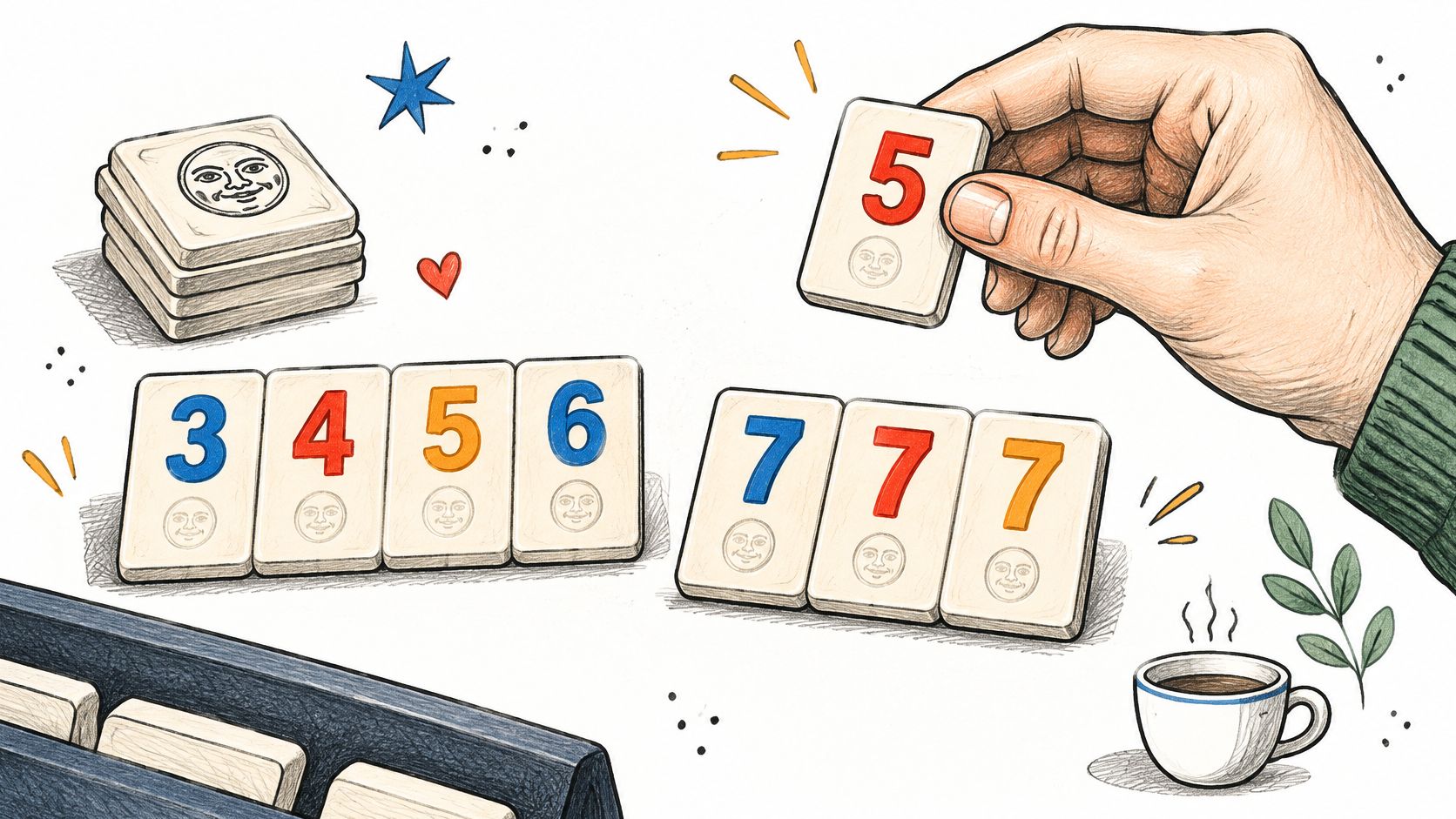
For a quick refresher on how a round works, watch this Rummikub gameplay video.
5. Dominoes
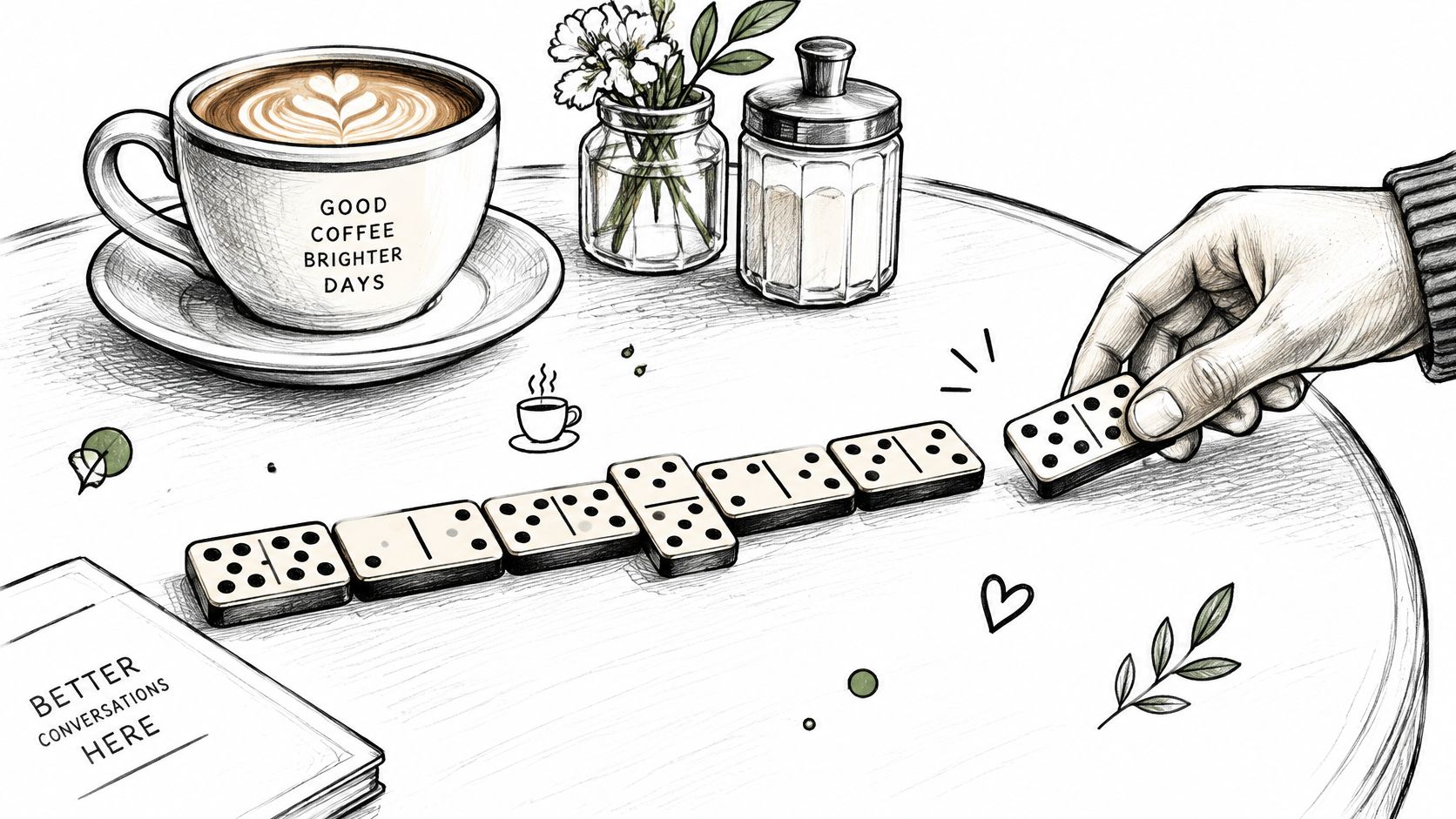
Dominoes is a dependable café-table game because the basic action is visible: connect a tile to an open end with the same number of pips. A standard double-six set has 28 tiles, and players aim either to play all their tiles or to finish with the lowest pip total when nobody can move. Agree on scoring before play starts, because regional and house rules can differ.
In Cairo, a café game can give visitors a relaxed way to share a table with locals; in Amman or Tunis, a courtyard session suits a group that wants conversation alongside the game. If some travelers already know dominoes and others don't, make mixed-experience pairs or teams. Experienced players can explain a move as it happens, without leaving first-timers to work out the whole game alone.
“Settle the scoring before you draw.”
That one decision avoids most end-of-game arguments. Reserve a table if you're heading to a busy café, and choose a surface where tiles won't slide or get knocked by passing servers. Dominoes travel well, but a quiet corner still makes a difference when players are trying to count pips and decide where to place a tile.
The game's compact setup is an advantage over paper tickets or a large tile layout, and turns are short enough for a casual evening. It's not completely language-free: players need to agree on the rules and communicate when they're blocked or ready to score. If the group wants a straightforward rule refresher before playing, consult this guide to how to play double-six dominoes.
6. Sudoku Group Challenges
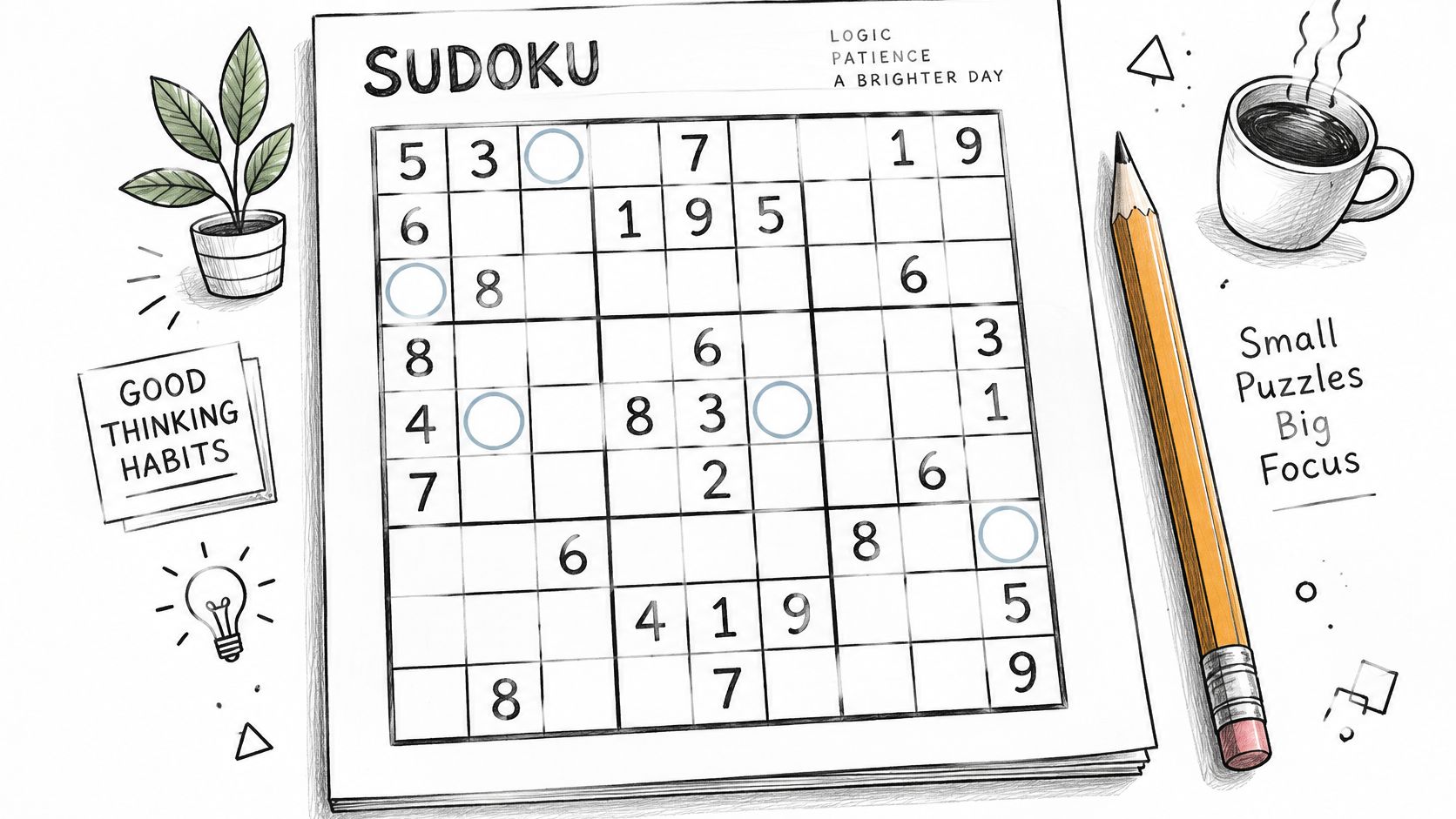
Sudoku suits a group that wants a quieter challenge and the freedom to pause for coffee or conversation. The puzzle uses a grid where each row, column, and smaller box must contain the digits one through nine without repeats. Instead of solving alone, split players into teams, give everyone the same puzzle, and compare the methods they use to reach a correct solution.
This format works in a Vienna or Prague corporate offsite, where teams can race without needing to move around the room. It also suits a café morning in Amsterdam or Paris, where solo travelers and pairs can work at their own pace. Print puzzles before leaving the accommodation if Wi-Fi may be unreliable, and include different difficulty levels so beginners can contribute rather than sit out.
Give each solver a role
One person can scan rows, another can check columns, and a third can note which digits are already ruled out in a box. Rotate those jobs in the next puzzle so the fastest solver doesn't do all the work. A timer adds energy, but award the win only for a correct grid; speed without checking encourages avoidable mistakes.
Sudoku is easy to pause and resume, which makes it more flexible than a live caller game. It's also less naturally social: players can get absorbed in their own paper, and a large group may need teams to keep the activity collaborative. Keep the rules focused on solving, not explaining every technique, unless the group actively wants a puzzle lesson.
For a group that prefers a digital option, compare a paper challenge with a group games app. Paper is more reliable when phones are low on battery or the table has patchy connectivity, while a shared digital format can simplify distributing the same puzzle to several teams.
7. Concentration (Memory Card Matching)
Concentration gets a group playing quickly: lay numbered cards face down, take turns flipping two, and keep a pair when the numbers match. It's technically a memory game, not a strict quantity-matching activity, but numbered cards make it a natural fit when the aim is to recognize and pair numerals. The turns are clear, the setup is light, and the table can get involved immediately.
For a Lisbon or Dubrovnik retreat, use it as an icebreaker before a meal or a team session. At an Amalfi Coast villa, pair children and adults so players can share the task rather than letting the strongest memory dominate. Large cards help everyone see what has been turned over, especially when the group is sitting around a wide table.
Change the challenge without changing the rules
Use fewer cards for younger players or anyone who finds a large grid tiring. To add a quantity element, pair a numeral card with a picture showing that many objects, rather than using identical numeral pairs. Keep the visuals clean: when bright colors or different shapes provide a stronger cue than the number, players may match by appearance instead of number. Guidance on representational instruction and quantity matching supports separating simple visual pairing from tasks that ask children to connect a set of objects with its numeral.
Run a short round, then stop while the group is still engaged. If play continues until someone has found every pair, the pace can flatten for players who have already lost. You can also play in teams, letting partners discuss which cards to turn over. That makes the game more social and gives younger or less confident players a role without changing the central matching mechanic.
8. Yahtzee-Style Dice Matching
Dice bring a burst of excitement to a lounge or pub table, and a Yahtzee-style scorecard gives each roll a decision. Players roll dice, choose which results to keep, and try to complete categories such as matching sets, straights, or full houses. The luck is visible to everyone, but the choice of what to hold makes each turn feel active.
A London or Edinburgh pub group can play in teams and compete for a small prize, while a corporate break in Amsterdam or Barcelona can use the scorecards for a light contest between colleagues. Print the sheets in advance and keep them with pencils, so the game can stop for food and resume without anyone having to remember the scores. If the group is large, team play means fewer turns and more discussion around each roll.
Keep the stakes friendly: A venue voucher or a choice of the next snack is enough to make the final score matter.
The format is easy to adapt for a mixed-age group, but the scorecard can slow down players who aren't comfortable with the categories. Explain the scoring with a sample turn, then let teams help one another choose a category. Avoid making the fastest player the default scorekeeper; assign that job clearly or rotate it so everyone stays involved.
Dice work well when the group wants short, energetic turns and doesn't mind chance affecting the result. They're less satisfying for players who prefer careful control or a quiet puzzle. If your group enjoys games that mix rules, teamwork, and a little improvisation, you might also like this guide to playing D&D.
How the Number Matching Activities Compare for Travel Groups
| Item | Group Size | Setup Needed | Best For |
|---|---|---|---|
| Tombola (Italian Bingo) | Small to large groups | Numbered cards, markers, caller, and number draw set | Mixed-age gatherings and festive group events |
| Housie / Tambola (British Bingo) | Small groups to large events | Tickets, number draw system, caller, and prizes | Pub nights, community events, and fundraisers |
| Bingo Nights in Barcelona and Lisbon | Groups booking together | Venue-provided cards and calling; check availability ahead | Relaxed group evenings and themed nights out |
| Rummikub | Up to 4 players | 106-tile set and a table | Strategic, relaxed game sessions |
| Dominoes | Pairs or teams of four | Double-six domino set and agreed rules | Casual café or courtyard gatherings |
| Sudoku Group Challenges | Individuals, pairs, or teams | Sudoku puzzles, pencils, and optional timer | Quiet team challenges and collaborative solving |
| Concentration (Memory Card Matching) | Individuals, pairs, or teams | Cards arranged face down in a grid | Quick icebreakers and family activities |
| Yahtzee-Style Dice Matching | Multiple players or teams | Five dice and scorecards | Lively short breaks and friendly competition |
Choose the Game That Fits Your Group Tonight
Start with the group's energy, not the box you brought. If people are arriving at different times or don't share a language, choose a game with a visible action and a simple turn, such as Concentration or dominoes. If everyone is seated and happy to listen to a caller, Tombola or housie can bring the whole table into one shared rhythm. For a more deliberate session, choose Rummikub or Sudoku and give the group enough time to settle into the rules.
Match the setup to the space. A small café table can handle dominoes or a compact card layout; Rummikub needs more room to keep its tile combinations visible. Bingo nights save the organizer from bringing equipment, but require checking the venue's language and booking details. Sudoku is easy to pause, while a live caller game works best when players can stay attentive.
Mixed ages call for roles that let everyone contribute. Pair younger players with an adult for a memory game, let a newcomer team with an experienced domino player, or split a large group into teams for a dice challenge. Don't make speed the only way to win. A short practice round, an example move, or a visible scorecard helps first-timers join without feeling that they've held up the group.
Before the first turn, name a host, set a time limit, and decide how the game ends. Choose the prize or scoring rule in advance, keep the pieces together, and give the group a clear stopping point that leaves time for dinner or the next plan. Those small decisions prevent the usual friction: unclear rules, a round that runs too long, and one person doing all the organizing.
If the group still can't agree on where to go or what to book, use the same fair-vote approach for the wider itinerary. MyPerfectStay lets each traveler privately share budget, interests, energy level, and must-see ideas, then surfaces options that match the group. A shared itinerary keeps the decision visible after the vote, so nobody has to reconstruct the plan from a long chat thread.
Planning the evening is easier when everyone gets a say before the group sets off. MyPerfectStay helps your travelers compare preferences, vote on activities, and keep the agreed plan in one shared itinerary. Use it to settle the next group outing as quickly as you settle on tonight's game.