10 Team Retreat Activities for Any Group Size and Budget
November 27, 2026·MyPerfectStay
You've found a promising hotel, someone has suggested a boat trip, and the group chat is already splitting into camps. Half the team wants downtime. The rest wants adventure, and you still don't know whether the proposed activity fits the budget or requires everyone to be comfortable in the water.
The right activity matters more than the venue. A retreat can disappoint in a beautiful destination when the schedule ignores people's energy, access needs, or working styles. MyPerfectStay's co-founders encountered the same planning problem when they spent five days on WhatsApp trying to arrange a friends' meetup across three time zones. Too many opinions without a decision process can stall a company offsite just as easily.
Choose team retreat activities that give people something useful to do together, not merely somewhere attractive to stand. A systematic review of controlled teamwork interventions found positive effects on teamwork and performance, with active practice offering a stronger foundation than presentations alone.
Start with fit: Match the activity to the group's size, energy, budget, and purpose before you fall in love with the setting.
The Taos Goji company retreat guide offers another planning reference, but your own team's preferences should determine the shortlist. These options range from cooking and creative workshops to desert camps and strategy sessions, with examples across Europe and the Middle East. Treat the destinations as starting points, then let participants choose among suitable options.
Table of Contents
- 1. Cooking Class and Shared Meal Workshop
- 2. Escape Room and Urban Mystery Challenge
- 3. Desert Expedition and Overnight Camp
- 4. Sailing or Sunset Cruise Team Challenge
- 5. Walking City Treasure Hunt
- 6. Hammam and Wellness Reflection Session
- 7. Guided Outdoor Adventure With Sea Kayaking or Hiking
- 8. Facilitated Strategy Workshop in a Historic Venue
- 9. Creative Workshop With Mosaic, Pottery, or Tile Painting
- 10. Group Retreat Planning and Voting Session
- How the 10 team retreat activities compare by group fit, energy level, and location
- Turn These Ideas Into a Retreat Your Whole Team Will Back
1. Cooking Class and Shared Meal Workshop
Best fit: A small or medium-sized team, low-to-moderate energy, a moderate budget, and a goal of improving everyday communication.
Cooking gives colleagues a shared task without making collaboration feel like another meeting. Consider pasta-making in Rome's Trastevere district, tagine and couscous in a Marrakech riad, or a Turkish meze workshop in Istanbul. These are formats to investigate, not confirmed venue recommendations.
A shared kitchen works best when everyone has a visible contribution.
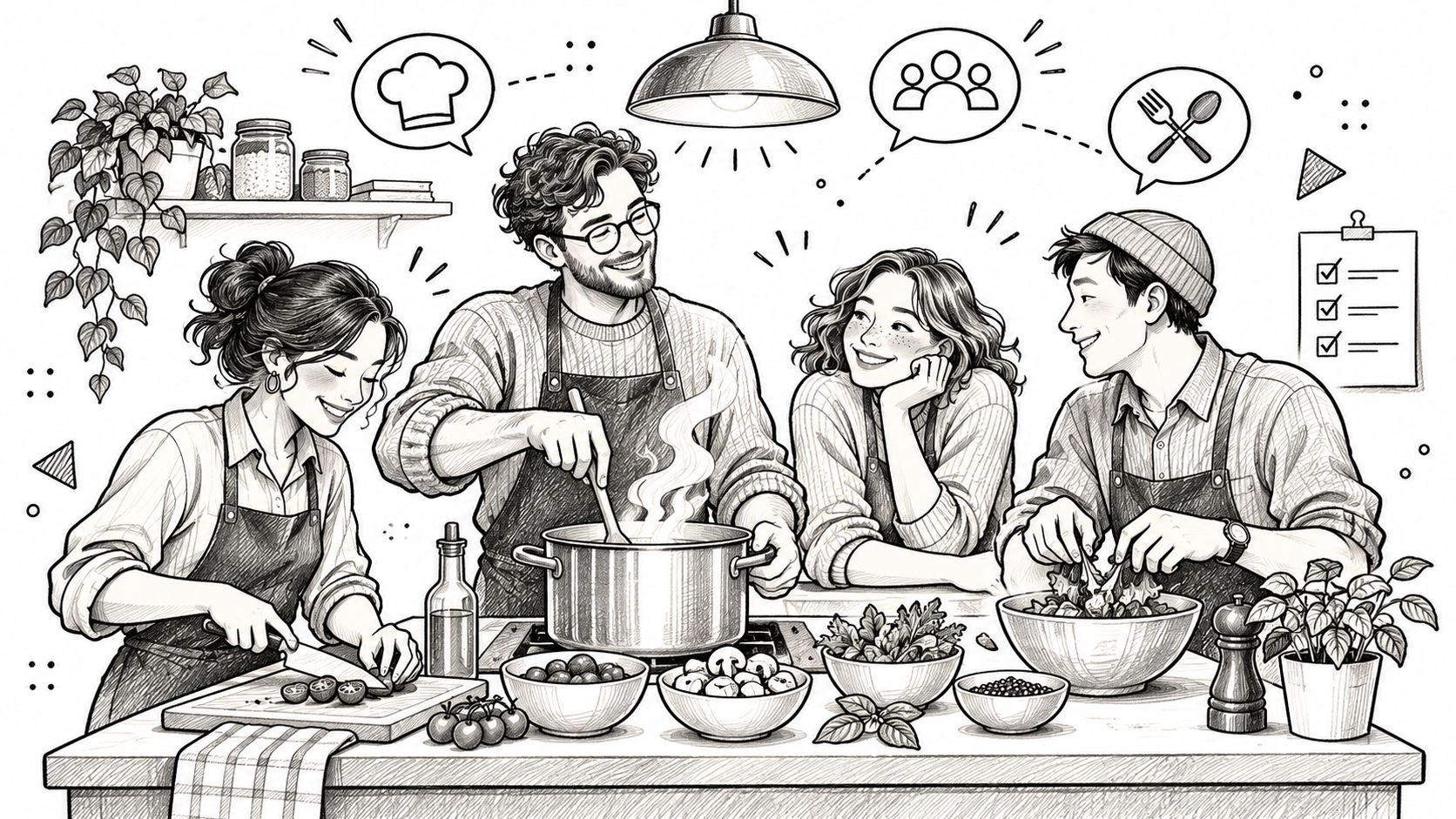
Book a private session and have the chef assign preparation, timing, presentation, and cleanup responsibilities. Otherwise, confident cooks can take over while everyone else watches. Our guide to cooking classes in Italy can help you explore the Italian version.
Make the shared meal useful
Collect dietary requirements privately before booking, including allergies and religious restrictions. Confirm seated preparation options, kitchen ventilation, and whether participants can avoid handling ingredients they're uncomfortable with.
- For a newly combined team: Mix departments at preparation stations rather than letting existing friendship groups cluster.
- For the debrief: Ask where instructions became unclear and how people decided who needed help.
- For budget control: Compare the complete package, including drinks, transport, and whether the meal replaces a separate dinner.
The format combines practical work with a natural conversation afterward. This video offers a visual introduction to the cooking-class experience.
2. Escape Room and Urban Mystery Challenge
A puzzle room makes communication habits visible quickly. Someone notices a clue, someone else has the missing information, and the group succeeds only if they share it.
Choose this for a small team or parallel small groups with moderate energy, a low-to-moderate budget, and a coordination goal. Prague's Old Town and Amsterdam offer settings to explore for themed rooms; Barcelona's Gothic Quarter and Lisbon's historic districts suit outdoor mystery trails.
The activity should reward shared reasoning, not just the loudest solver.
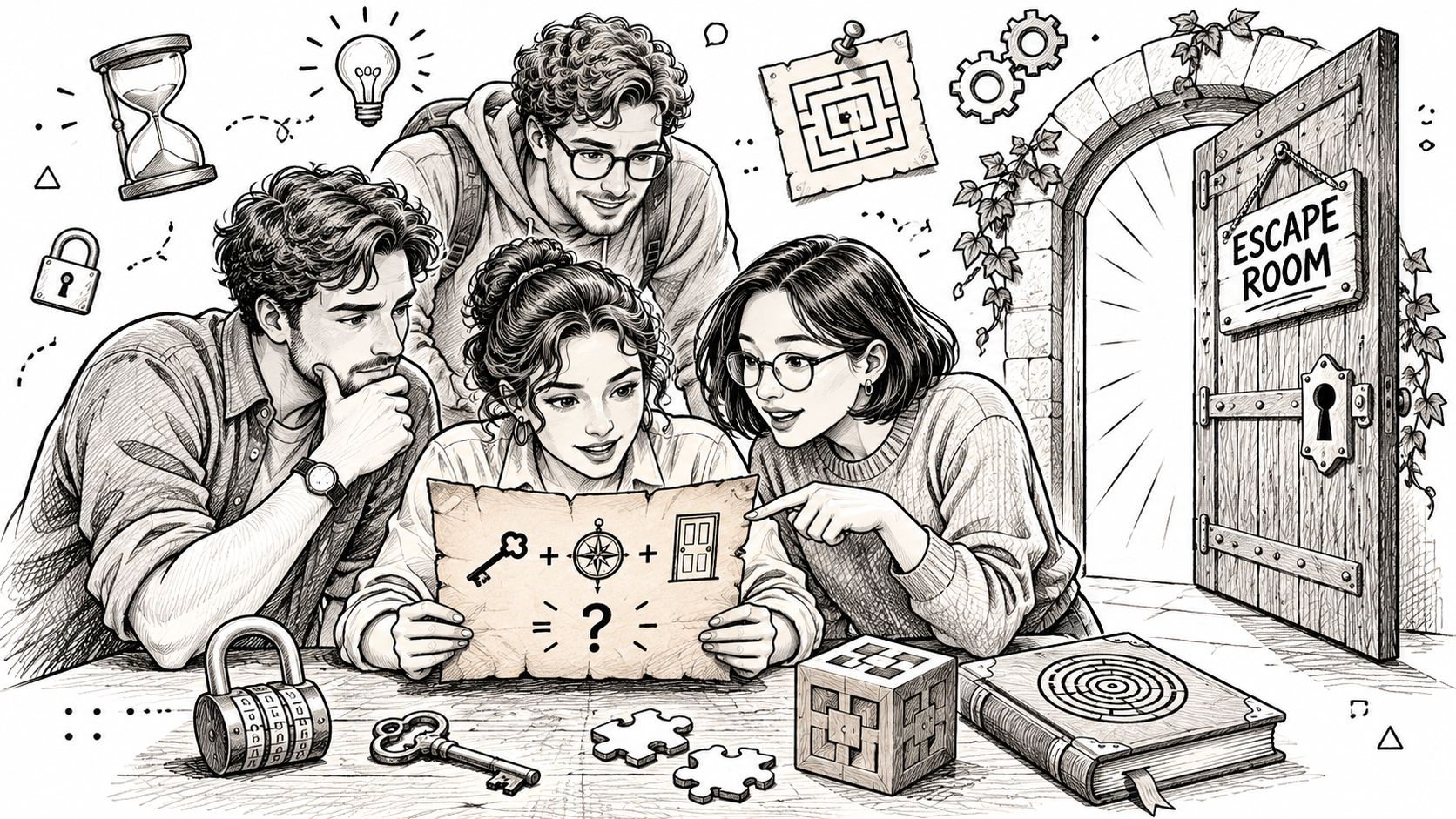
Before booking, let participants vote on themes after you've screened for accessibility, language requirements, flashing lights, darkness, and confinement. An urban trail may suit someone who dislikes enclosed rooms, but it introduces walking, weather, and navigation demands.
Prevent competitive overload
Rotate responsibility for reading clues and summarizing progress. Choose a beginner-friendly format when experience varies, and avoid treating completion speed as evidence of workplace ability.
For example, a cross-functional project team could split into mixed groups, complete comparable challenges, then discuss how they handled incomplete information. Ask who held useful information, whether anyone struggled to contribute, and what helped the group recover.
The trade-off: Time pressure creates focus, but it can also magnify hierarchy and frustration. Keep the debrief curious rather than evaluative, and don't turn an entertaining puzzle into an unofficial staff assessment.
3. Desert Expedition and Overnight Camp
Best fit: A small or medium-sized group with moderate-to-high energy, a higher budget, and a goal of spending uninterrupted time together.
Use this format when the trip itself should create shared focus. Wadi Rum in Jordan suits a guided camp with walking options; Dubai offers safari-and-dinner formats; a desert excursion from Muscat can combine dune walks with an Omani meal. Let the group vote on the final setting after screening distance, comfort, and activity level. That gives the organizer control over feasibility without relying on one person's guess about what the team will enjoy.
Keep the operator responsible for safety-critical logistics. Participants can coordinate refreshments or a shared meal, but navigation and emergency decisions belong with qualified guides. Build the experience around conversation, not a compulsory endurance test.
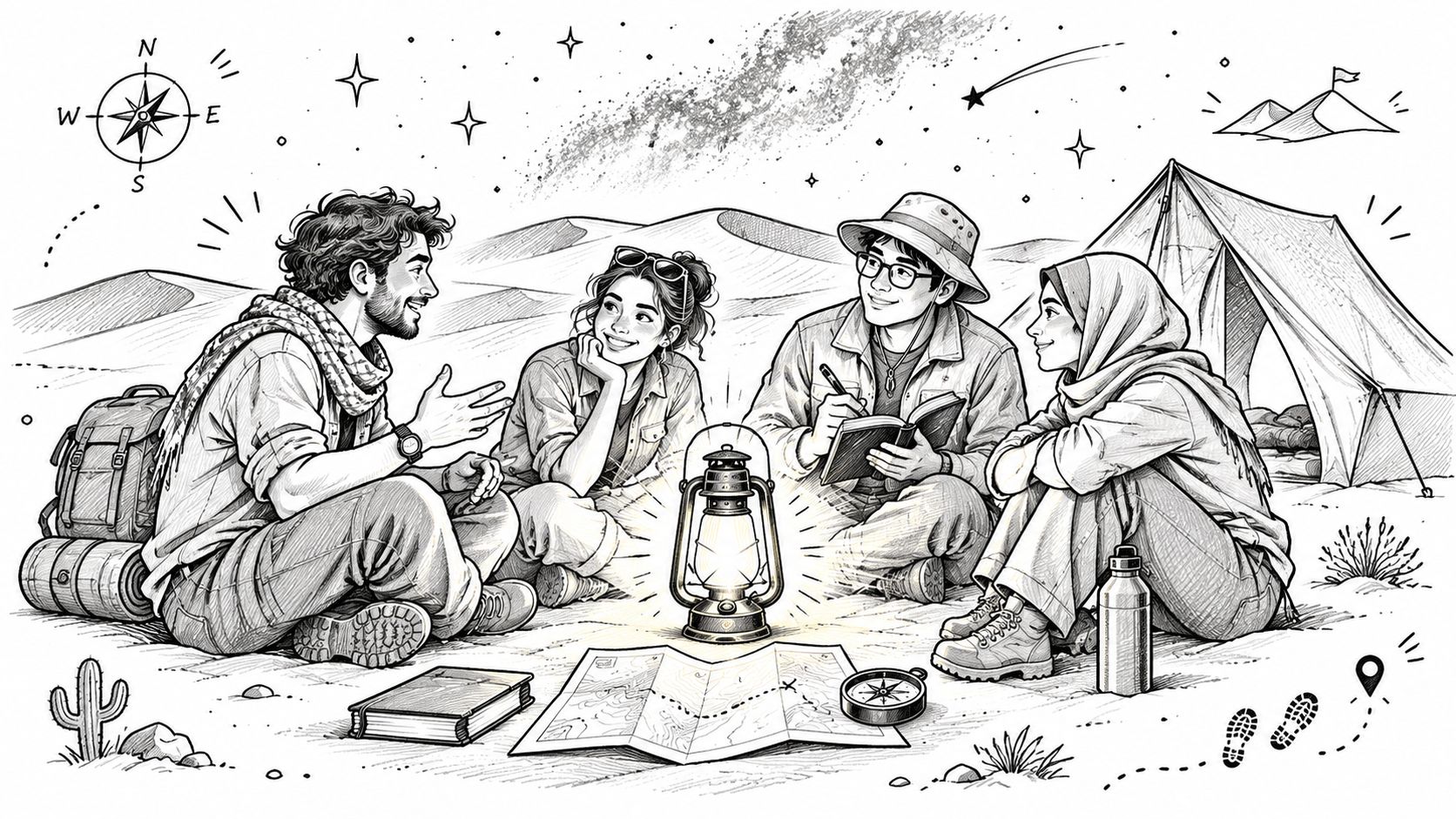
- Screen the journey: Describe vehicle motion, walking surfaces, sleeping arrangements, toilets, connectivity, and evacuation arrangements before people commit.
- Offer real alternatives: Dune bashing and camel rides should be optional, with a comfortable camp-based experience available.
- Verify the operator: Request evidence of relevant guide qualifications, insurance, vehicle maintenance, and emergency procedures.
- Set the group goal: Use the campfire, shared meal, or morning reflection for practical discussion, not forced performance.
Choose dates outside peak summer heat, then confirm local conditions rather than assuming a seasonal label guarantees comfort. Hold a short morning reflection before departure, when everyone can turn the experience into a practical takeaway.
Don't confuse remoteness with psychological safety. People still need privacy, reliable facilities, and permission to opt out.
Keep the destination shortlist focused on the European and MENA options that fit the group. A waterfront history format, such as Salem witch history and harbor walks, serves a different purpose and should not displace the desert plan.
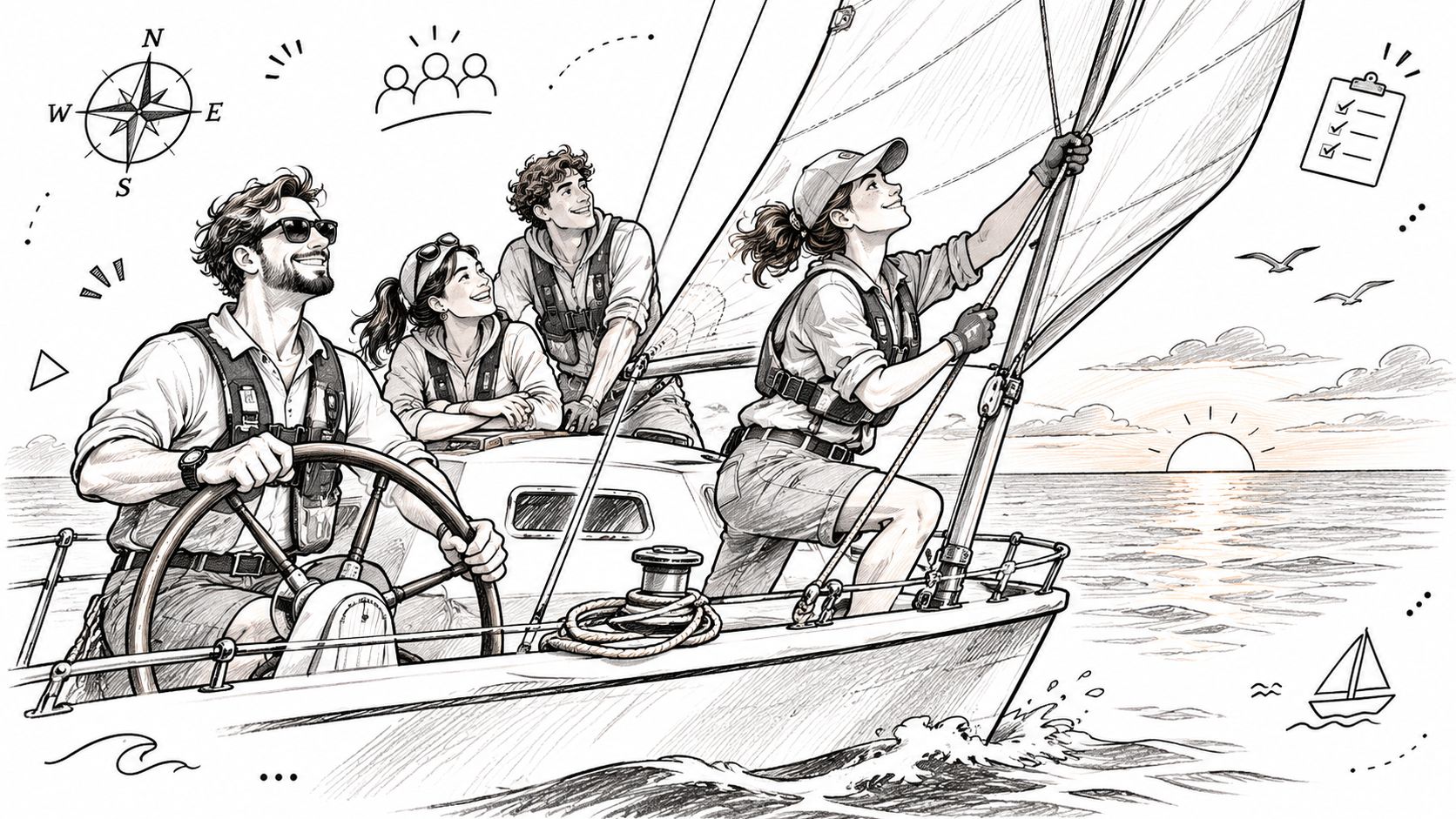
4. Sailing or Sunset Cruise Team Challenge
Active sailing and a sunset cruise serve different purposes. Choose the former to practice coordination and the latter for relaxed conversation. Don't sell a passive sightseeing cruise as a leadership exercise.
A small team can share a skippered sailing boat; a larger group needs a suitably licensed vessel or separate boats with a common gathering afterward. Energy ranges from low for seated cruising to moderate for supervised crew tasks, while the budget is generally higher than a self-guided city activity.
Possible settings include Santorini's caldera, Dubrovnik's coastline, and a traditional dhow cruise in Muscat.
Choose the operating model first
Book a professional skipper and let the crew determine which tasks guests may safely perform. Participants might rotate through supervised lookout, timing, or navigation exercises, but the skipper retains control.
For example, a project team could practice handing over information during a Dubrovnik sailing session, then discuss what made instructions clear. A tired leadership group might be better served by a quiet Muscat cruise without any competitive task.
- Check comfort: Ask privately about motion sickness, boarding access, shade, toilets, and swimming confidence.
- Check cancellation terms: Understand what happens if conditions prevent departure.
- Check alternatives: Offer a shore-based experience with comparable social value.
Compare shoulder-season availability, but don't assume it guarantees calmer seas or lower prices. The main trade-off is flexibility: once underway, someone who feels unwell can't leave.
5. Walking City Treasure Hunt
For a budget-conscious retreat, a city treasure hunt is one of the most adaptable team retreat activities. You control the route, pace, complexity, and finish point without hiring an elaborate venue.
Best fit: A medium or large group divided into small teams, low-to-moderate energy, a low budget, and a cross-team familiarity goal.
Try a Vienna route linking public squares and café stops, a Paris Left Bank photo challenge, or a Lisbon trail through Baixa. Treat Alfama's slopes and uneven surfaces as an access consideration rather than assuming every picturesque route is suitable.
Build a route, not a race
Pre-walk the route and check crossings, toilets, seating, opening hours, and construction. Keep it compact enough that participants spend their time solving tasks rather than rushing between distant landmarks.
- Mix the assignments: Combine observation, a local-history question, and a creative photo task that doesn't require anyone to perform publicly.
- Respect local people: Make conversations with residents optional, ask permission before photographs, and don't turn shop staff into unpaid game hosts.
- Finish clearly: Share the meeting location, return deadline, and organizer's contact details before departure.
A newly formed department could use mixed teams to explore Paris, then compare discoveries over lunch. For a London version, use off-the-beaten-path London ideas to build a less obvious route.
The trade-off: Self-guided means low supplier costs, not zero organizer effort. Prepare a seated puzzle alternative using the same clues so access needs don't exclude someone from the shared experience.
6. Hammam and Wellness Reflection Session
A hammam can be restorative, but it isn't automatically a comfortable team activity. Clothing expectations, shared bathing, heat, touch, and gender arrangements can make it unsuitable for participants who would happily join a conventional spa visit.
Match this to a small group, low energy, a moderate-to-higher budget, and a recovery or reflection goal. Explore an Istanbul hammam followed by tea, a Marrakech riad wellness session, or a Dubai spa experience with a separate meeting space.
Keep the reflective discussion outside the treatment area. People should never have to accept a personal treatment to participate in an important team conversation.
Inclusion test: Can someone decline the wellness treatment without losing access to colleagues, decisions, or the main social gathering?
Separate relaxation from disclosure
Publish the etiquette in advance and provide private treatment options where available. Offer an equally valued alternative, such as quiet tea, a garden visit, or time in a comfortable lounge.
The inclusive corporate retreat planning guide from Your Life's Path emphasizes practical access considerations such as step-free venues, accessible restrooms, and alternatives to outdoor activities. Apply the same scrutiny to wellness spaces rather than relying on a venue's general accessibility description.
For a team finishing an intense planning period, use gentle prompts about what helped people work well and what they need next. Don't invite public disclosures about health, burnout, or interpersonal conflict.
The trade-off: Wellness can support a calmer pace, but forced vulnerability defeats the purpose. Use a facilitator who understands consent and team boundaries.
7. Guided Outdoor Adventure With Sea Kayaking or Hiking
Some groups want to move after spending their working lives at desks. Others will experience the same itinerary as an obstacle course they never agreed to enter.
Best fit: Small guided groups, moderate-to-high energy, a moderate budget, and a goal of practicing support and coordination. Larger retreats should use parallel departures or different routes rather than stretching a guide's supervision capacity.
Possible formats include sea kayaking near Dubrovnik, a guided walk around Lake Bled, or a cycling route in Slovenia's Julian Alps. These require different skills, so don't place them in a single generic adventure category when collecting preferences.
Plan around the least experienced participant
For kayaking, confirm water conditions, rescue procedures, suitable buoyancy aids, and the guide's relevant qualifications. For hiking or cycling, check gradients, surface conditions, equipment, shade, and bailout points.
- Pair thoughtfully: Mix strengths without making someone responsible for another participant's safety.
- Offer a shorter route: Give it a worthwhile destination and an equal place in the agenda.
- Prepare an indoor replacement: Agree on the weather decision process before the retreat.
For example, a Dubrovnik group could choose between guided kayaking and a coastal cultural walk, then meet for the same lunch. Both groups have something to share without anyone having to justify their choice.
The trade-off is recovery time. Don't follow a demanding excursion immediately with a high-stakes strategy discussion, and don't interpret physical confidence as leadership potential. Finish with a practical conversation about pacing, asking for help, and noticing when someone needs support.
8. Facilitated Strategy Workshop in a Historic Venue
A distinctive room can help mark a break from routine, but the facilitator and decision process matter more than the architecture. A palace-style conference room won't rescue an agenda full of presentations.
Choose this for a small or medium-sized team with low physical energy, moderate mental energy, a flexible budget, and a clear alignment goal. Consider a historic library setting in London, a palace-style meeting room in Vienna, or a converted historic building in Prague.
A meta-analysis of team-training interventions published in Human Factors found positive relationships across cognitive, affective, teamwork-process, and performance outcomes. That supports structured working practice, not a promise that any attractive offsite will improve results.
Leave with decisions people can use
Send a concise pre-read and explain what participants must decide. Build the session around an actual coordination problem, such as unclear handovers or competing priorities, using an offsite agenda template to organize the working blocks.
- Start with individual reflection: Let people write their views before senior colleagues frame the discussion.
- Make roles explicit: Identify decision owners, contributors, and escalation routes.
- Close in writing: Record actions, owners, unresolved questions, and the follow-up process.
For example, a leadership group could map a delayed product launch, agree on approval responsibilities, then take a guided city walk. Use a neutral external facilitator when internal conflict makes open participation difficult.
The trade-off: Historic venues can introduce awkward layouts, poor acoustics, or access barriers. Inspect the working room, not just the promotional photographs, and preserve time away from the agenda.
9. Creative Workshop With Mosaic, Pottery, or Tile Painting
Creative workshops suit teams that want to do something together without racing, performing, or discussing business throughout the session. The shared object gives conversation a focus while leaving room for quieter participation.
Best fit: Small or medium-sized groups, low energy, a low-to-moderate budget, and an inclusion or shared-identity goal. Larger groups need separate workstations and enough instructors to prevent long waits.
Explore azulejo tile painting in Lisbon, pottery in Istanbul, or a zellige-inspired mosaic workshop in Marrakech. Ask the artisan to explain the local craft rather than treating the setting as interchangeable decoration.
Design for contribution, not artistic confidence
A collaborative panel works well when the instructor supplies a template and participants choose their own section. Avoid judging whose contribution looks best, and let people make an individual piece if a shared composition feels restrictive.
- Check the materials: Ask about dust, glazes, sharp edges, ventilation, and tactile alternatives.
- Clarify completion: Establish whether firing or finishing happens after departure.
- Plan transport: Confirm collection, packaging, shipping, and responsibility for damage.
For example, a distributed team meeting in Lisbon could create tiles around a shared theme, then display photographs digitally so absent colleagues can contribute too. Nobody needs to be good at art for that to work.
The trade-off: A beautiful souvenir can become an administrative nuisance if nobody knows who will collect it. Decide where the finished work will live before booking, and don't assume a communal object is more meaningful than individual keepsakes.
10. Group Retreat Planning and Voting Session
The planning session itself can be a useful team exercise. It asks people to express preferences, recognize constraints, and accept a transparent decision rather than negotiating indefinitely in a chat.
Best fit: Any group size, low physical energy, a minimal activity budget, and a goal of fair decisions and shared ownership. As the group grows, collect input asynchronously before holding a focused discussion.
Start with private preferences covering budget comfort, energy, access requirements, interests, and firm exclusions. Keep sensitive details private and share only what the organizer needs to build a compatible shortlist.
Vote after checking suitability
Don't put an inaccessible or unaffordable option on the ballot and expect voting to make it fair. Screen first, then let participants rank the viable choices.
- Publish the criteria: Explain how fit, cost, availability, and preferences affect the outcome.
- Set a deadline: State when voting closes and who resolves a tie.
- Keep a fallback: Retain a suitable alternative in case the preferred activity becomes unavailable.
For example, a Lisbon team could compare a food workshop, boat trip, and city trail, then choose among options that already meet its practical constraints.
The Party Houses corporate retreat statistics overview highlights the relevance of remote and hybrid teams, but a livestream alone isn't meaningful participation. Give absent colleagues access to the same planning decisions and offer equivalent remote or local experiences where appropriate.
A majority preference is a useful signal, not permission to disregard a minority's essential needs.
Record the decision and its rationale so the organizer doesn't have to reopen the debate whenever someone sends another attractive link.
How the 10 team retreat activities compare by group fit, energy level, and location
A strategy team of twelve in Lisbon has very different options from a forty-person sales offsite in Dubrovnik, so read this table as a shortlisting tool rather than a ranking. Start with your group size and goal, then check the energy column against the rest of your itinerary. A high-energy activity lands well on day one, while the same activity after a heavy workshop day tends to fall flat.
| Item | Best For | Group Size | Energy Level | Example Locations |
|---|---|---|---|---|
| Cooking Class and Shared Meal Workshop | Relaxed collaboration and socializing | About 8–20 people | Low | Rome, Istanbul, Marrakech |
| Escape Room and Urban Mystery Challenge | Problem-solving under time pressure | About 4–6 per room, with parallel rooms for larger teams | Moderate | Prague, Amsterdam, Barcelona, Lisbon |
| Desert Expedition and Overnight Camp | Adventure and team bonding | About 10–30 on a guided excursion | High | Wadi Rum, Dubai, Muscat |
| Sailing or Sunset Cruise Team Challenge | Coordination or relaxed socializing | About 6–12 per boat, with multiple boats for larger groups | Low to moderate | Santorini, Dubrovnik, Muscat |
| Walking City Treasure Hunt | Sightseeing and collaborative challenges | Flexible, with teams of about 4–6 scaling to large groups | Moderate | Vienna, Paris, Lisbon |
| Hammam and Wellness Reflection Session | Relaxation and team reflection | About 6–15 in private or semi-private sessions | Low | Istanbul, Marrakech, Dubai |
| Guided Outdoor Adventure: Sea Kayaking or Hiking | Trust-building through shared physical effort | About 8–16, arranged in pairs or small teams | High | Dubrovnik, Julian Alps, Lake Bled |
| Facilitated Strategy Workshop in a Historic Venue | Goal-setting and practical planning | About 10–40 with breakout groups | Low to moderate | London, Vienna, Prague |
| Creative Workshop: Mosaic, Pottery, or Tile Painting | Inclusive creativity and making a shared keepsake | About 8–15, limited by hands-on workshop capacity | Low | Lisbon, Istanbul, Marrakech |
| Group Retreat Planning and Voting Session | Fair, structured group decisions | Any group size | Low | Online planning; Lisbon activity options |
Two trade-offs matter most when you narrow this list. Capacity constraints are real: escape rooms, boats, and hammams split big groups into smaller units, which either builds intimacy or fragments the retreat depending on your goal. Energy mismatches are the other common failure. Pairing a high-effort activity like kayaking with an already physical itinerary exhausts people, while three low-energy rows in a row can make the retreat feel flat.
Once you have two or three rows that fit your size, budget, and goal, let the group make the final call. Tools built for this, such as MyPerfectStay, let the team vote on activities and book the winning option together with a single payment, so the organizer stops guessing and the group owns the outcome.
Turn These Ideas Into a Retreat Your Whole Team Will Back
The best retreat is the one the team helped choose. Start by matching group size, energy level, and budget to the purpose of the gathering. A strategy workshop, shared meal, and kayaking excursion may all be worthwhile, but they solve different problems and ask different things of participants.
Build a short, workable selection rather than circulating every interesting experience you find. Give each option a clear description of the physical demands, social format, total booking cost, transport requirements, and weather exposure. People can't give useful preferences when the only information they receive is a flattering photograph.
Make the decision fair before making it final
Collect private preferences before anyone commits. Separate essential requirements from nice-to-have requests, and don't make employees explain health conditions or religious observance to win an accommodation. A parallel activity should feel like a legitimate part of the retreat, not a consolation prize.
- Balance the pace: Combine a low-energy experience with something more active when the group wants it, and protect unscheduled time.
- Protect the budget: Include transfers, equipment, meals, facilitation, and cancellation exposure when comparing options.
- Close the loop: Set a firm decision deadline, confirm the selected activity, and keep a realistic fallback.
- Debrief briefly: Ask what helped people contribute and what they'd carry into their next shared task.
MyPerfectStay can support that decision process through private preference collection, activity match scores, and group voting. Friends or colleagues can vote on activities and book the winning option together with a single payment for everyone, while links, photos, and ideas stay attached to the trip rather than disappearing into chat.
Measure more than enjoyment
For a corporate retreat, decide what success would look like before departure. If the purpose is clearer responsibilities, check whether people understand who owns the next decision; if it's cross-team connection, ask whether participants now know whom to approach outside their usual circle. An anonymous baseline and a later follow-up are more informative than a cheerful departure survey alone.
Hotels and hospitality partners can make selection easier by describing experiences accurately, including quieter alternatives and clear logistics. Creators organizing audience trips can use the same approach without turning every shared meal into a formal exercise. For additional inspiration, browse team bonding event formats and assess each against your group's actual needs.
Choose a manageable agenda, give people a meaningful say, and leave enough breathing room for the conversations nobody could have scheduled. A retreat doesn't need relentless novelty. It needs activities people can join willingly, a decision process they understand, and a clear reason to spend that time together.
MyPerfectStay brings private preferences, activity voting, and shared trip planning into the same place, so your retreat shortlist can become a decision the group supports. Visit MyPerfectStay to invite your team, compare suitable activities, and book the winning choice together in a single checkout.