10 Travel Bucket List Experiences for Group Trips
October 6, 2026·MyPerfectStay
A travel bucket list works best when it isn't just a collection of spectacular places. A 2019 survey of 2,000 Americans found that 95% had a bucket list, and 77% included at least one travel goal. Respondents listed an average of eight destinations, which suggests that most travelers aren't choosing one dream holiday. They're managing a portfolio of future experiences and revisiting their priorities over time. (Provision Living survey)
The strongest group trips turn those ambitions into experiences that people with different budgets, energy levels, dietary needs, mobility requirements, and comfort zones can share. Europe is the practical starting point, with approximately 747 million international tourist arrivals in 2024, making it the world's largest destination region and a strong base for city breaks and multi-stop itineraries. (UN Tourism data)
These 10 travel bucket list experiences focus on Europe and MENA, from Lisbon food tours and Moroccan desert camps to Alpine adventures and opera evenings. Each recommendation includes a practical way to balance competing preferences and shape a workable shared itinerary. MyPerfectStay can help you survey preferences privately, identify overlap, vote on activities, and keep the final plan organized. For the memories afterward, groups can also collect event photos easily without relying on one person to gather every image.
Table of Contents
- 1. Culinary Walking Tours in Lisbon's Historic Neighborhoods
- 2. Desert Safari and Bedouin Camp Experiences in Marrakech and Morocco
- 3. Art Museum Deep Dives and Behind-the-Scenes Tours in Paris and Vienna
- 4. Medieval Old Town Exploration and History Workshops in Prague and Dubrovnik
- 5. Yacht and Sailing Experiences in the Greek Islands and Croatian Adriatic
- 6. Olive Oil Farm and Wine Tasting Tours in Tuscany and the Spanish Basque Country
- 7. Private Hammam and Wellness Retreats in Marrakech and Istanbul
- 8. Street Food Tours and Night Market Experiences in Barcelona, Rome, and Dubai
- 9. Active Adventure Days in the Alps and UAE Mountains
- 10. Private Theater and Opera Experiences in Vienna, Milan, and London's West End
- 10 Travel Bucket-List Experiences Comparison
- Turn Inspiration Into a Shared Itinerary
1. Culinary Walking Tours in Lisbon's Historic Neighborhoods
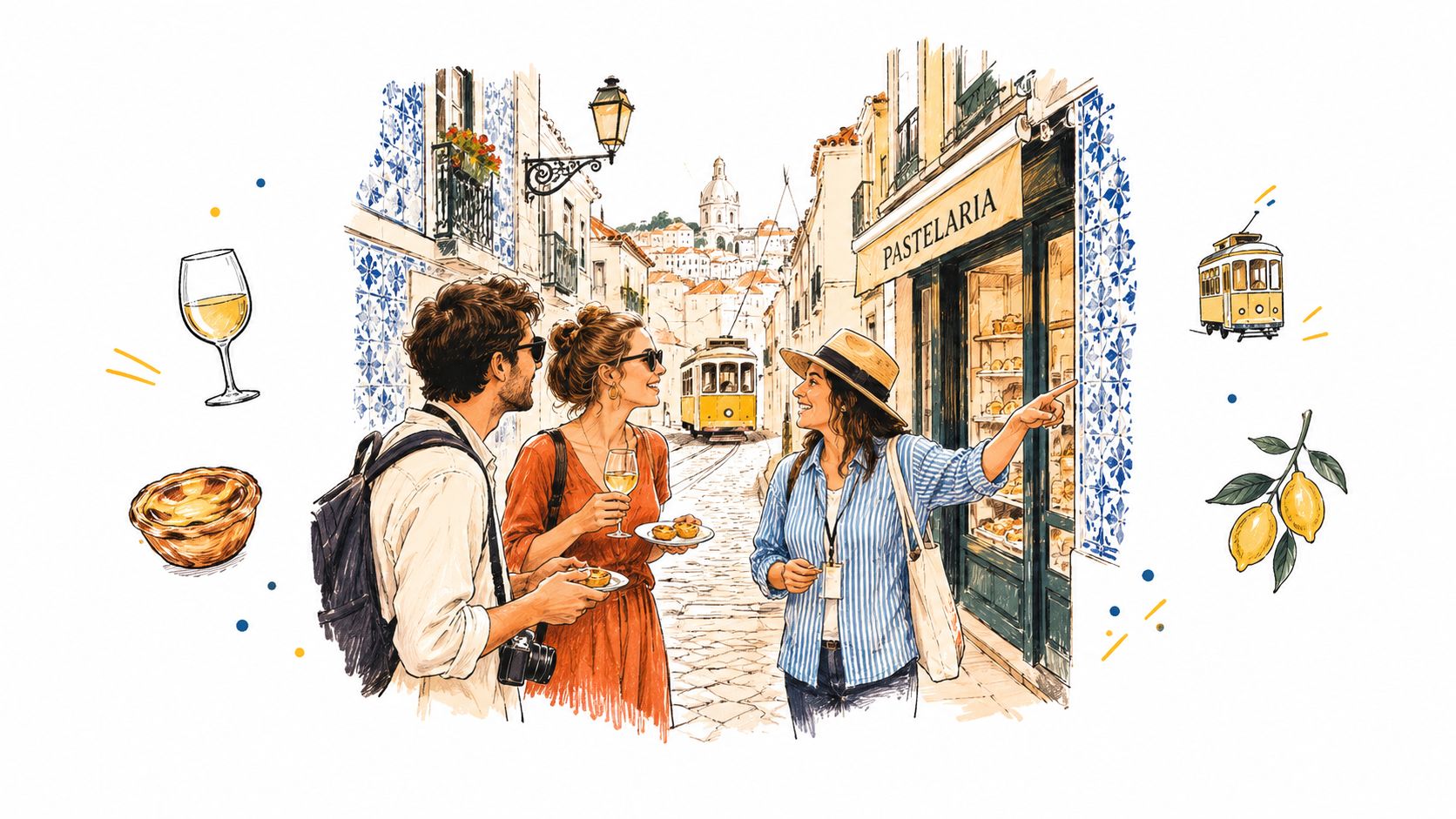
Lisbon turns a simple meal into a group activity. A guided route through Alfama, Belém, or Príncipe Real can combine pastries, seafood, Portuguese specialties, wine pairings, and stories about the neighborhood, giving food lovers plenty to discuss while keeping the day relaxed for travelers who don't want a demanding excursion.
Start by asking the group to vote on cuisine preferences, dietary needs, and walking tolerance. A morning departure helps the group avoid an overly late start and leaves the afternoon open for a museum, viewpoint, or rest at the hotel. Vegetarian, vegan, and gluten-free requirements should reach the guide before booking, not when everyone arrives at the first tasting stop. MyPerfectStay's survey can gather those preferences privately, which is useful when a traveler doesn't want to explain a restriction in a busy group chat.
Make the route work for different appetites
Choose a route that alternates between seated tastings and short walks. Family-run tascas, traditional markets, and contemporary restaurants create variety, while a wine-focused option can suit adults who aren't interested in every food stop. Travelers who want a lighter day can join for selected tastings and meet the group later for dinner.
For a larger group, keep the itinerary compact and stay near one accommodation area. Add a photo stop at a tiled façade or a Lisbon viewpoint, then schedule free time before the evening meal. A useful starting point is this guide to food tasting tours, which can help the organizer compare the experience with the group's interests.
2. Desert Safari and Bedouin Camp Experiences in Marrakech and Morocco
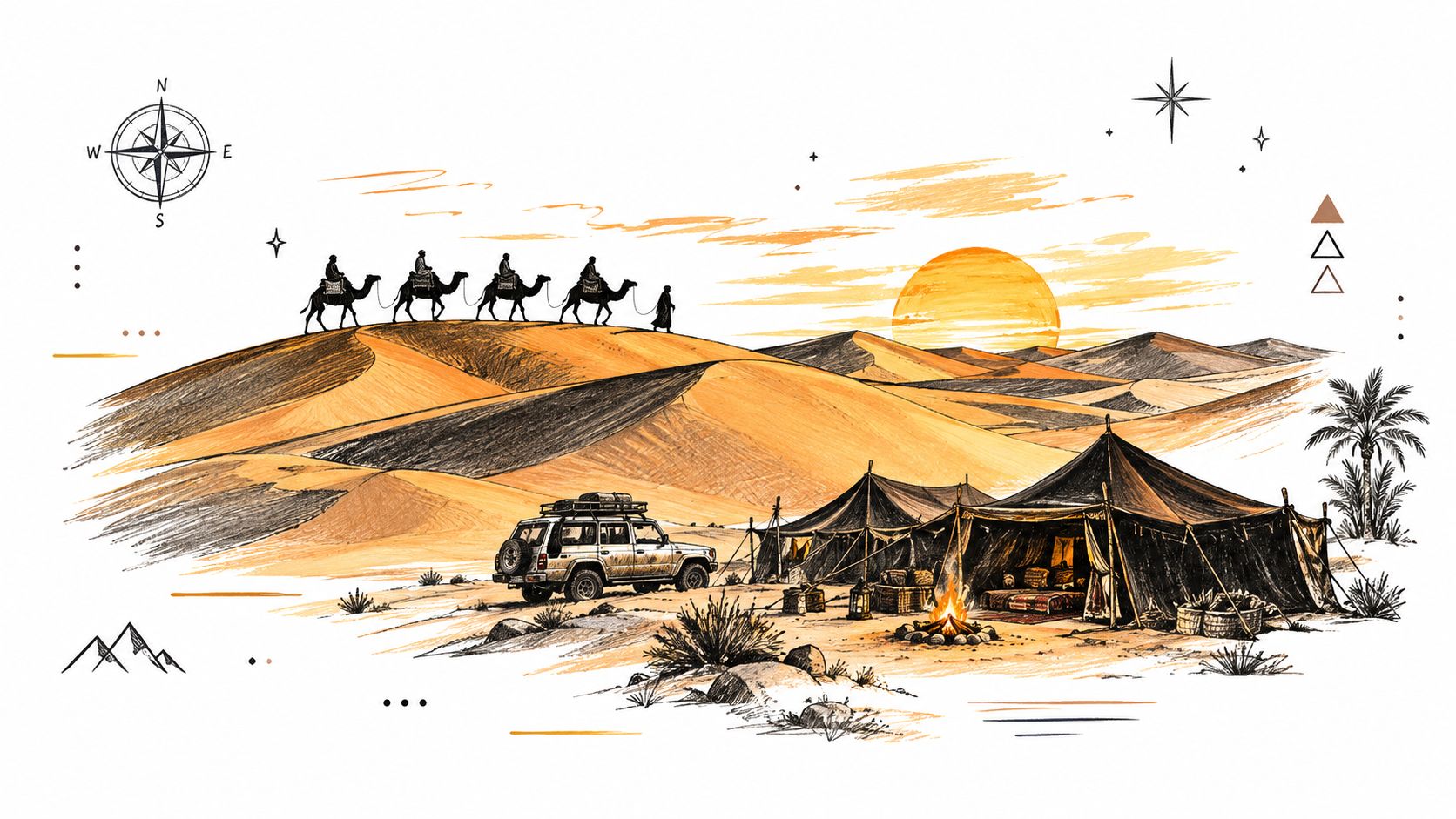
A Moroccan desert experience gives a group a shared story, but it also exposes differences in comfort and stamina quickly. Some travelers want camel rides, sandboarding, and long drives through the Atlas region. Others care more about a comfortable camp, good meals, private sleeping arrangements, and stargazing without an exhausting schedule.
Begin with a private vote on adventure level, sleeping preferences, heat tolerance, and room arrangements. Then build a plan that gives everyone a shared highlight and optional activities. A traveler who skips dune activities can enjoy the camp, photography, tea, or a shorter walk while the more adventurous members take on a longer excursion. Don't assume that every traveler is comfortable with shared accommodation. Ask whether the group needs single or double rooms and check exactly what the camp provides.
Balance the desert with Marrakech
A desert itinerary works better when it includes time in Marrakech rather than filling every day with transfers. Pair the camp with a medina visit, a cooking session, or a slower evening in a riad. Discuss local schedules and meal timing with the operator, especially when the trip overlaps with Ramadan, because opening hours and dining arrangements can differ.
Plan photography around sunrise and sunset, but don't make every participant perform for content. Give the group a clear meeting point, water guidance, luggage instructions, and a backup plan for anyone who becomes uncomfortable. Use things to do in Marrakech to add a city-based activity that suits travelers who prefer culture to high-intensity adventure.
3. Art Museum Deep Dives and Behind-the-Scenes Tours in Paris and Vienna
An art-focused trip becomes far more engaging when the group chooses a theme before entering the museum. One traveler may want Impressionism at the Musée d'Orsay, another may prefer the Louvre's ancient collections, while someone else may be more interested in the Kunsthistorisches Museum in Vienna. A shared route should accommodate those differences instead of forcing everyone through the same galleries.
Ask participants to rank art periods, tour pace, language comfort, and interest in technical access. The organizer can then choose a docent-led experience, a focused gallery route, or a museum combination that reflects the majority view. A shorter guided visit followed by café time often works better than an ambitious schedule that leaves half the group mentally exhausted.
Turn museum time into social time
Schedule the first cultural visit in the morning, then protect a long break for coffee or lunch. Offer two routes when interests split. One group can continue with a specialist guide while others explore independently and reunite at a clearly named café. This structure preserves togetherness without treating different interests as a problem.
Behind-the-scenes or restoration experiences need especially careful coordination. Confirm the access rules, walking requirements, language, and cancellation terms before collecting payment. Send a short pre-tour reading list through the shared itinerary so interested travelers can prepare without making preparation mandatory for everyone. A small group can also pair a Paris museum day with a second collection, or combine a Vienna museum visit with an evening concert.
4. Medieval Old Town Exploration and History Workshops in Prague and Dubrovnik
Prague and Dubrovnik reward travelers who enjoy architecture, stories, and atmosphere, but a long walking tour can divide a group by midday. The solution is to combine a shorter old-town route with an activity that gives people something to do, such as stone carving, manuscript illumination, period costume, or a theatrical heritage performance.
Before booking, ask the group to choose between light historical storytelling, a detailed history route, and hands-on craft work. Travelers who aren't enthusiastic about dates and dynasties can still enjoy an artisan demonstration or an architectural scavenger hunt. In Prague, connect the old town with a castle visit. In Dubrovnik, combine the Stradun area with a coastal viewpoint or a filming-location walk.
Build in pauses and alternatives
A full-day plan should include seated breaks, a proper meal, and a clear point where less energetic travelers can return to the hotel. A guide can adjust the narrative depth without changing the route, which makes the same experience suitable for history enthusiasts and casual visitors.
Visit during a period with more manageable crowds and avoid placing the most demanding walk immediately after arrival. Book workshops directly with the artisan or through a reputable local tourism channel, then confirm accessibility, seating, toilet access, and weather alternatives. The day trip from Prague can help the organizer add a nearby experience without turning the entire trip into a rushed series of transfers.
End the day with a group dinner in a historic setting, but keep the menu flexible. A shared table creates cohesion, while a choice of dishes prevents the evening from becoming another negotiation.
5. Yacht and Sailing Experiences in the Greek Islands and Croatian Adriatic
A sailing trip makes the group decision visible from the first conversation. Travelers must agree on cabin arrangements, comfort, food, privacy, swimming, shore excursions, and the role of the skipper. Some will want a relaxed cruise around the Greek Islands or the Dubrovnik archipelago. Others will want to swim, snorkel, fish, or spend every available hour ashore.
Start with a private survey covering budget range, cabin expectations, motion sensitivity, sailing experience, and activity preferences. Then decide between a skipper-crewed yacht and a more independent arrangement. The group shouldn't choose a boat until everyone understands the sleeping layout, bathroom access, storage, safety procedures, and what the price includes.
Keep land time in the itinerary
A multi-day sailing plan shouldn't force every participant to stay active on the water. Include land-based time in Santorini, a Croatian island village, or Dubrovnik so travelers can enjoy cafés, viewpoints, markets, or a quiet afternoon. The daily schedule can offer one shared swim stop, one optional excursion, and a flexible dinner choice.
Agree in advance on whether the group will cook onboard or eat at restaurants. Rotate small roles such as meal planning, music, photography, or route research, but don't turn participation into unpaid work. Travelers who don't want an active role can enjoy the deck and the scenery. Early or late season dates may offer a calmer group atmosphere, but confirm sailing conditions and local operating schedules before committing.
6. Olive Oil Farm and Wine Tasting Tours in Tuscany and the Spanish Basque Country
A farm and vineyard day works for groups that want food, scenery, and conversation without a packed sightseeing schedule. In Tuscany, an estate visit can combine olive oil production, vineyard walks, cooking, and a long lunch. In the Spanish Basque Country, the experience can lean toward local cuisine, market culture, and a tasting route around the San Sebastián area.
The planning decision is simple: choose whether the group wants education, relaxation, cooking, or a stronger food focus. Ask about allergies, vegetarian and vegan meals, alcohol preferences, and walking capacity before confirming the estate. A non-drinker should still receive a complete experience, with olive oil, local produce, cooking, scenery, and cultural context given equal weight.
Give the day a satisfying rhythm
Begin with a farm or vineyard visit while the group is fresh. Follow it with a seated tasting or cooking session, then leave the afternoon open for conversation and photographs. A sommelier-led explanation can make the tasting more engaging, but it shouldn't become a lecture that excludes people who prefer the social side.
A two-base plan can work well. Stay at an agriturismo or countryside accommodation, then spend an evening in Siena, Montalcino, Bilbao, or San Sebastián for a change of setting. Provide transport between stops so no one has to act as the designated driver. The group should also agree on whether a formal dinner is part of the shared highlight or whether some travelers would rather have an earlier, simpler meal.
7. Private Hammam and Wellness Retreats in Marrakech and Istanbul
Wellness travel becomes more inclusive when the group treats recovery as a shared priority rather than a fixed program. A private hammam experience in Marrakech or Istanbul can sit alongside massage, meditation, yoga, cultural visits, and unstructured time. The group gets a memorable ritual without requiring everyone to follow the same wellness philosophy.
Use a private survey to identify whether travelers want rest, stress relief, movement, cultural immersion, or social time. Ask about heat tolerance, mobility, medical restrictions, and treatment preferences before booking. Hammam rituals can involve heat, water, exfoliation, and close physical contact, so every participant should understand the format and choose alternatives where needed.
Practical rule: A wellness itinerary should include planned solitude. Group meals and one shared session create connection, while quiet time prevents the retreat from feeling like another busy tour.
Add culture without overloading the schedule
Pair the hammam with a medina market visit, a cooking class, or a gentle neighborhood walk. This gives travelers who don't want a full spa day a meaningful cultural option. Keep the daily program light and provide a comfortable place to rest between activities. A private yoga instructor can adapt movement for different abilities, but the organizer should confirm qualifications and modifications in advance.
Room choices matter. Offer single and double arrangements where possible, then use communal breakfasts or dinners to maintain the group atmosphere. Don't promise that a retreat will solve health concerns or deliver a specific therapeutic outcome. Present it as a structured opportunity to slow down, share time, and experience local traditions respectfully.
8. Street Food Tours and Night Market Experiences in Barcelona, Rome, and Dubai
An evening food route gives a group an easy social anchor. Barcelona can lead with tapas and market bites, Rome with casual street food and regional specialties, and Dubai with Middle Eastern mezze, sweets, and night-market flavors. The group moves together, tastes small portions, and gets enough variety to satisfy different interests without committing to one expensive restaurant.
Before booking, collect preferences for spice tolerance, allergies, dietary restrictions, language, and budget comfort. Ask the guide to treat the stops as tastings rather than full meals. That keeps the pace manageable and leaves room for a separate dinner, dessert, or late-night café for travelers who want more.
Prevent food preferences from splitting the group
Choose a route with clear ingredient information and several substantial alternatives. A traveler who avoids meat, dairy, gluten, or strong spices shouldn't have to watch everyone else eat. If the group includes children or people with sensitive appetites, offer a light snack before departure and avoid making every stop a surprise.
Start early enough to enjoy the market before it becomes crowded, then arrange a scenic photo stop that doesn't interrupt the meal. A sit-down dinner afterward can suit travelers who want more comfort, but it should remain optional. Confirm that the guide can communicate clearly with the group, especially when several languages or complex dietary requirements are involved.
The best route feels spontaneous while remaining carefully screened. An organizer should verify the meeting point, walking distance, weather backup, payment process, and whether each tasting is included before sharing the final plan.
9. Active Adventure Days in the Alps and UAE Mountains
Adventure belongs on a group travel bucket list only when the organizer separates the shared experience from the highest physical challenge. Rock climbing, canyoning, and hiking in the Swiss Alps, Austrian Tyrol, French Alps, Wadi Rum, the UAE's Hajar Mountains, or Morocco's Atlas Mountains can create powerful memories, but people shouldn't have to choose between risking discomfort and staying behind.
Survey the group on fitness, fear tolerance, previous experience, medical considerations, and preferred intensity. Use those answers to create a main activity and a parallel option. One part of the group might take a climbing route while others join a scenic hike, guided viewpoint walk, or cultural excursion. Everyone can reunite for lunch and the final viewpoint.
Put safety and dignity first
Book a qualified mountain guide and confirm insurance, equipment, weather rules, emergency procedures, and cancellation terms. Beginners should receive an honest briefing about the activity, not a promotional description that hides heights, cold, water exposure, or technical sections. A short confidence-building session before the main day can help new participants decide whether they want to continue.
Keep the schedule varied. A half-day climbing experience followed by an easier walk gives mixed-ability groups more flexibility than a full day of one demanding activity. Provide transport, dry clothing guidance, recovery time, and a comfortable dinner afterward. Action photography can be enjoyable, but don't make photos the reason someone takes a risk.
The group highlight should be the shared story, not the number of people who completed the most difficult route.
10. Private Theater and Opera Experiences in Vienna, Milan, and London's West End
A private theater or opera evening gives a group a polished shared memory without requiring a physically demanding day. Vienna offers classical concert and opera traditions, Milan adds La Scala and Italian cultural context, and London's West End provides theater with a wide range of genres and language accessibility.
Start by asking the group to rank opera, ballet, musical theater, contemporary drama, language comfort, and seating preferences. Then build the evening around the performance rather than adding too many activities. A pre-show cultural briefing can help first-time attendees understand the work, while a post-show dinner gives the group time to compare reactions.
Make a formal evening comfortable
Confirm dress expectations, theater access, seating locations, travel time, and the availability of translated summaries or subtitles. People with hearing, vision, or mobility needs should be involved in the seating decision before tickets are purchased. A backstage or cultural tour can suit the group, but it shouldn't replace the performance unless that's what most travelers prefer.
Choose a restaurant with a menu that accommodates different diets and reserve transport for the return journey. The group can vote on whether dinner comes before or after the show, then keep the less popular option available for anyone who wants a quieter evening. A performance works particularly well as the centerpiece of a city break because the surrounding day can remain flexible, with museums, cafés, shopping, or rest available before the curtain rises.
10 Travel Bucket-List Experiences Comparison
| Experience | Implementation Complexity 🔄 | Resource Requirements ⚡ | Expected Outcomes ⭐📊 | Ideal Use Cases 💡 | Key Advantages ⭐ |
|---|---|---|---|---|---|
| Culinary Walking Tours (Lisbon) | Low–Moderate 🔄, route & guide coordination | Low ⚡, local guides, eateries, minimal gear | High ⭐⭐⭐⭐, group cohesion, UGC, repeatable revenue | Friend groups, families, hotel add-ons | Authentic local food, scalable small groups |
| Desert Safari & Bedouin Camps (Marrakech) | High 🔄, multi-day logistics, remote transit | High ⚡, 4x4s, camps, guides, catering | Very High ⭐⭐⭐⭐⭐, bucket-list appeal, premium spend | Adventure seekers, multi‑gen families, premium retreats | Epic immersion, strong social content, high margins |
| Art Museum Deep Dives (Paris, Vienna) | Moderate–High 🔄, permissions, timed slots | Moderate ⚡, expert docents, museum fees | High ⭐⭐⭐⭐, perceived premium value, predictable demand | Culture-focused groups, corporate/edu trips | Skip-the-line access, specialist guides, premium pricing |
| Medieval Old Town Workshops (Prague, Dubrovnik) | Moderate 🔄, artisan scheduling, site access | Moderate ⚡, workshop materials, guides, venues | High ⭐⭐⭐⭐, educational + entertaining, social shareability | Families, film/TV fans, creative team-building | Hands-on workshops, UNESCO backdrops, repeatable themes |
| Yacht & Sailing Experiences (Greek, Adriatic) | Very High 🔄, charters, regs, provisioning | Very High ⚡, yachts, crew, safety, insurance | Very High ⭐⭐⭐⭐⭐, luxury appeal, high ancillary spend | Luxury groups, corporate retreats, influencers | Exclusive bonding, iconic visuals, strong premium margins |
| Olive Oil & Wine Tours (Tuscany, Basque) | Moderate 🔄, seasonality & farm coordination | Moderate ⚡, transport, estates, sommeliers | High ⭐⭐⭐⭐, authentic immersion, educational value | Foodies, agritourism seekers, wellness travelers | Farm-to-table authenticity, strong hospitality partnerships |
| Private Hammam & Wellness Retreats (Marrakech, Istanbul) | High 🔄, health screening, cultural protocol | High ⚡, spa facilities, instructors, riads | Very High ⭐⭐⭐⭐⭐, repeat clientele, premium margins | Wellness groups, corporate wellness, women's retreats | Luxury self-care, indoor/weather-independent, high retention |
| Street Food & Night Market Tours (Barcelona, Rome, Dubai) | Low–Moderate 🔄, evening logistics, vendor relations | Low ⚡, guides, vendor coordination | High ⭐⭐⭐⭐, frequent bookings, shareable content | Casual groups, evening activities, food-lovers | Affordable, flexible pacing, high variety of tastings |
| Active Adventure Days (Alps, UAE mountains) | High 🔄, safety management, certified guides | High ⚡, equipment, guides, insurance | High ⭐⭐⭐⭐, team bonding, action content | Adventure groups, corporate team-building, fit travelers | Adrenaline-driven bonding, scalable difficulty levels |
| Private Theater & Opera (Vienna, Milan, West End) | Moderate–High 🔄, premium ticketing, backstage access | Moderate ⚡, seating, expert speakers, dining partners | High ⭐⭐⭐⭐, memorable, prestige experiences | Special occasions, sophisticated travelers, corporate gifts | Exclusive access, cultural prestige, performer interactions |
Turn Inspiration Into a Shared Itinerary
Don't ask a group to choose from all 10 experiences at once. Narrow the list to two or three finalists based on the factors that shape the trip: budget, energy, interests, season, accessibility, dietary needs, and planning complexity. A desert camp may be the strongest shared memory for an adventurous group, while a Lisbon food route or Vienna performance may suit travelers who need a lower-pressure schedule.
The most important preference questions should stay private at first. People often soften their answers in a group chat because they don't want to appear difficult or expensive. MyPerfectStay can collect each traveler's budget, interests, energy level, and must-see ideas, then surface the overlap for a group vote. That process helps the organizer see whether the group agrees on the experience itself, the comfort level, and the amount of free time.
Decide what the group can actually support
Use the finalists to compare the practical trade-offs:
- Budget: Separate the core shared cost from optional upgrades, private rooms, premium seating, or extra excursions.
- Energy: Identify walking, heat, water, altitude, late nights, and recovery demands before anyone pays.
- Accessibility: Ask about rest opportunities, toilets, transport, seating, queues, surfaces, and backup activities. A venue with a ramp isn't automatically practical if the surrounding route is steep or exhausting.
- Interests: Choose an experience with several participation levels, such as a sailing day with optional shore activities or an adventure day with a scenic alternative.
- Timing: Match the season to weather, crowd levels, local events, and the group's tolerance for early starts.
- Complexity: Decide whether the group wants one organized highlight or a multi-day itinerary involving transport, guides, accommodation changes, and meal reservations.
Inclusive planning matters especially for multigenerational trips. The 2025 Family Travel Association survey found that 73% of parents cite affordability as their top planning obstacle, while 57% of grandparents say they plan multigenerational travel, up from 55% in 2023. (Family Travel Association survey) Those figures reinforce a practical rule: the best bucket-list experience is often the one that allows everyone to participate with dignity, not the one with the biggest headline.
Sustainability needs the same practical treatment. 84% of global travelers say sustainability is important, but only 20% in EY's five-country European study described it as a top priority. The study also found that 42% intend to travel off-season, 36% will choose lesser-known destinations, and 30% will pursue slow tourism, while overtourism concerns affect roughly four in five travelers. (BBC Travel's sustainability coverage) Give the group real choices, such as shoulder-season timing, rail alternatives, smaller operators, less crowded neighborhoods, and local businesses, then let travelers weigh price, convenience, uniqueness, and local impact thoughtfully.
Once the group votes, confirm every reservation and send one shared day-by-day itinerary. Include meeting points, transfer times, meal arrangements, accessibility notes, cancellation rules, optional activities, and the name of the person responsible for each booking. If the group is staying together, compare large family rentals before confirming accommodation, especially when privacy, shared meals, and rest space affect the experience.
A travel bucket list should inspire action, not create another round of debates. Choose the experience with the strongest overlap, protect the people with the greatest constraints, and leave enough unplanned time for the trip to feel like a holiday. The result will be more memorable when everyone can participate in the main highlight and still have room to enjoy the destination in their own way.
MyPerfectStay lets every traveler privately share budget, interests, energy level, and must-see ideas, then helps the group vote on bookable experiences and organize the winning plan into a shared itinerary. Visit MyPerfectStay to turn your group's travel bucket list into a trip everyone can support.