Things to Do in Pamplona: 10 Top Experiences for 2026
November 19, 2026·MyPerfectStay
Six people, one long weekend in Pamplona, and five different ideas about what the trip is for. One wants the bull run. One wants to eat their way down Calle Estafeta. One wants a museum if it rains. One has knees that won't take six hours of cobblestones. One would happily sit in a square with a coffee and watch the city go past.
That disagreement is easier to settle before you book than after you land. Pamplona's two seasons behave like two different cities. Festival week runs on a schedule set by rockets, brass bands and an 8:00 a.m. starting gun. The rest of the year runs on church opening hours, museum closing days and a lunch service that shuts in the early afternoon whether your group is hungry or not.
The advantage you have is geography. The centre is compact, with fortress walls, Gothic churches, museums, markets and the pilgrim route sitting close enough to combine several in a single day, which is why a walking plan beats a taxi plan here. What follows is ordered the way a group would schedule it: what needs booking, what suits a wet afternoon, what belongs on the same loop, and how the best things to do in Pamplona change between July and October.
Table of Contents
- 1. San Fermín Festival and the Running of the Bulls (Encierro)
- 2. Pamplona Cathedral (Catedral de Santa María la Real)
- 3. Pamplona Citadel (Ciudadela de Pamplona)
- 4. Plaza del Castillo and the Café Iruña
- 5. Museo de Navarra
- 6. Puente de la Magdalena and the Camino de Santiago
- 7. Pamplona Old Town and City Walls (Murallas)
- 8. Pamplona Bullring (Plaza de Toros Monumental)
- 9. Pintxos Bar-Hopping in the Old Town
- 10. Day Trip to the Bardenas Reales Natural Park
- How the Top Pamplona Experiences Compare for Groups
- Turning Pamplona Ideas Into One Shared Plan
1. San Fermín Festival and the Running of the Bulls (Encierro)
San Fermín runs from 6 to 14 July and opens at noon on the 6th, when a rocket goes up from the Town Hall balcony and the square below erupts. Each morning from 7 to 14 July at 8:00 a.m., six bulls and several steers cover roughly 850 metres from the corrals near Santo Domingo, through Mercaderes and down Calle Estafeta, into the bullring. The run itself lasts a few minutes. Parades, giant-puppet processions, bull shows and street parties fill the other twenty-three hours.
Here is what the morning looks like from street level.
For a group, the decision is where to stand, not whether to go. Balcony and rooftop spots above Calle Estafeta are booked months ahead, and the street barriers fill well before the start, so a plan that begins at 7:40 a.m. usually ends with a view of someone's shoulder. The scale is not in question: the 2025 festival drew an estimated 424,369 distinct participants, and 40% of them experienced it in a friend group, according to the city's festival visitor figures.
- Book in a fixed order: accommodation first, then any balcony or rooftop spot, then the flights.
- Anchor the fixed moments: the chupinazo, the 7 July procession and the closing ceremony are what everyone can plan around.
- Plan the exit before the run: decide who watches from the street, who watches from a balcony and who sleeps in.
- No improvisation on the route: nobody in your group runs without experience and preparation.
Ernest Hemingway's The Sun Also Rises (1926) put the festival on the map a century ago, and it's still why half your group has heard of it. If the trip extends beyond Navarre, the experiences in Spain collection is a sensible place to check what else fits the same week.
2. Pamplona Cathedral (Catedral de Santa María la Real)
The cloister is where a group goes quiet without being asked. Carved capitals, tracery and cool stone do more for the mood than any guided explanation.
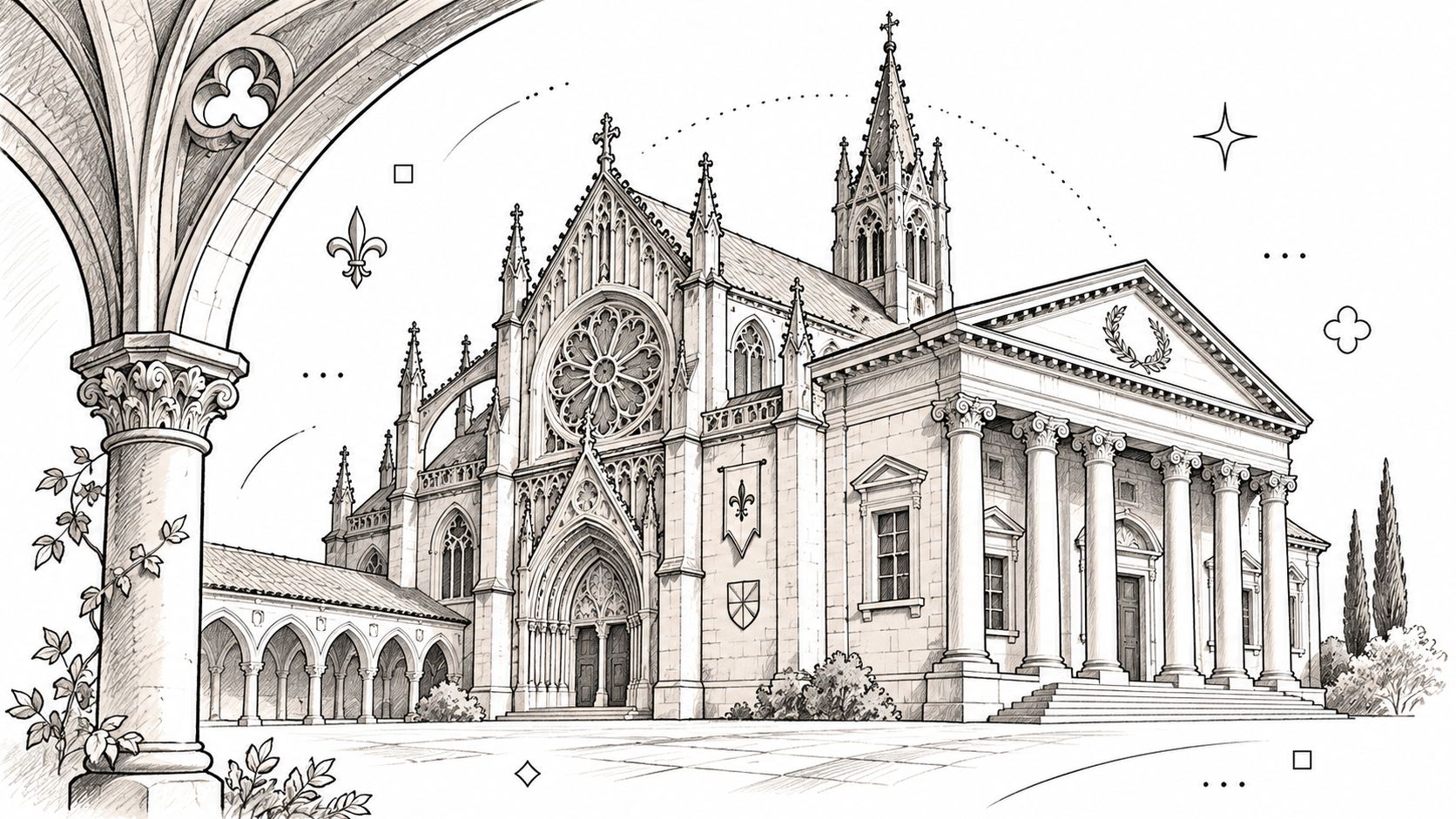
The Cathedral of Santa María la Real is the seat of the diocese, built mainly in the Gothic style across the 14th and 15th centuries, with a Neoclassical facade added in the 18th and 19th. Inside, the religious art and the tomb of Carlos III and Queen Leonor of Navarre carry most of the historical weight. It's the single best building in the city for understanding how royal Navarre saw itself, and guided old-town walks almost always include it.
Rain changes the order of a Pamplona day, not its content. The cathedral is the first thing to move up the list when the sky turns.
Fitting it into a group day. Opening hours shift with the season and with services, so check the day before rather than trusting a listing. Decide whether you're buying on arrival or online before you reach the door, because a group that stops to debate tickets loses fifteen minutes of a short visit. Pair it with the Plaza de la Catedral and the lanes around it, and split if you need to: two people can take the quiet cloister while the rest keep walking.
3. Pamplona Citadel (Ciudadela de Pamplona)
Give the Ciudadela the late afternoon. It's a star-shaped fortress built in the 16th century under Philip II, with bastions, moats and grassed ramparts that read best in low sun.
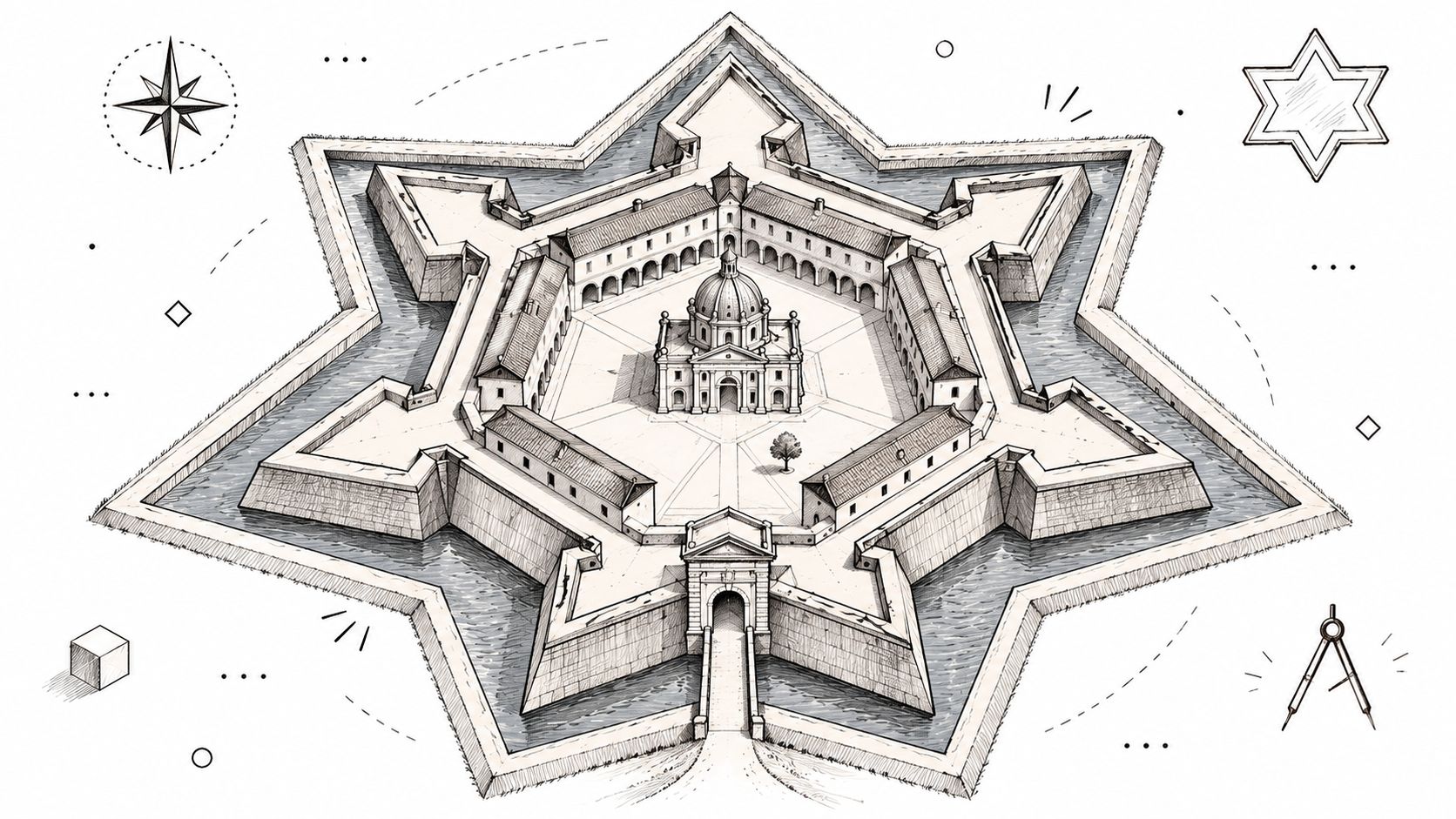
The shape only makes sense once you're walking it. Today the fortress works as a cultural and exhibition venue with rotating art shows, events and public green space, so the visit is part architecture lesson, part park. Because it's open ground rather than a sequence of rooms, a group can spread out and regroup without losing anyone, and the walls give you the best free view over the city's green belt.
Schedule it late: a fortress on open ground is a poor midday stop in July and a good one at 6 p.m., when the light hits the bastions and the heat has gone.
- Check the events calendar first: a show or festival in the grounds changes the visit completely.
- Pair it with the Taconera park: ten minutes away, and the natural place for children or tired walkers to reset.
- Use it as a photography stop: the moats and angles reward anyone carrying a proper camera.
For a mixed-energy group, this is the item to put between two sitting-down activities rather than after a long lunch.
4. Plaza del Castillo and the Café Iruña
Every group needs one fixed point to regroup, and this square does the job better than anywhere in Pamplona. It sits at the edge of the old town, ringed by cafés, restaurants and balconied buildings, and it's where locals and visitors both end up.
Café Iruña, on the square, keeps its historic interior and its Hemingway association. He drank here, and the connection is why the place appears on every list, including this one. Sit outside for the square and the passing crowd, inside for the tiles and the sense of a room that hasn't changed its habits in a century.
Meeting-point rule: name the corner before you scatter. "By the Iruña door at eight" works. "See you in the old town" doesn't.
When to use it. Evening, when the terraces stay busy and the square does the work of entertaining everyone. Order a coffee or a vermouth rather than a full meal, treat it as the hinge between an afternoon walk and a pintxos route, and give the group a thirty-minute window instead of an exact minute, because someone will always be slower on the cobbles than they promised.
If your group leans towards this slower, local-first style of travel, authentic travel experiences covers how to build a trip around it rather than around a checklist.
5. Museo de Navarra
Rain decides this one for you. The Museo de Navarra is the region's main museum, housed in a former hospital building with Renaissance architecture, and its collections run from prehistory to the modern era, with Roman mosaics, medieval sculpture and religious painting doing most of the work.
Two hours is the ceiling before attention drifts. Ninety minutes is the sweet spot for a group with mixed appetites, and that's enough to come out understanding what Navarre is and why it isn't quite Basque and isn't quite Spanish in the way outsiders expect.
- Check opening days and free-entry periods before you build the day around it, since both change.
- Give everyone one object to find: a specific mosaic or carving turns a wander into a conversation.
- Set an exit time out loud: a 75-minute window with a meeting point at the door stops the slow drift.
- Follow it with a café stop on the same street rather than a second museum.
Say you're six with two teenagers and two people who would rather be outdoors. Agree the window, let the teenagers race each other to a named piece, and let anyone who finishes early wait outside. Nobody has to pretend to enjoy a third room of religious painting, and the group stays together for the part that matters.
6. Puente de la Magdalena and the Camino de Santiago
Late afternoon, walking out of the old town towards the Arga, is when this stretch makes sense. The Puente de la Magdalena is the medieval pilgrim bridge, its arches showing 12th-century Romanesque work with later Gothic additions, and it's still the line pilgrims follow into the city.
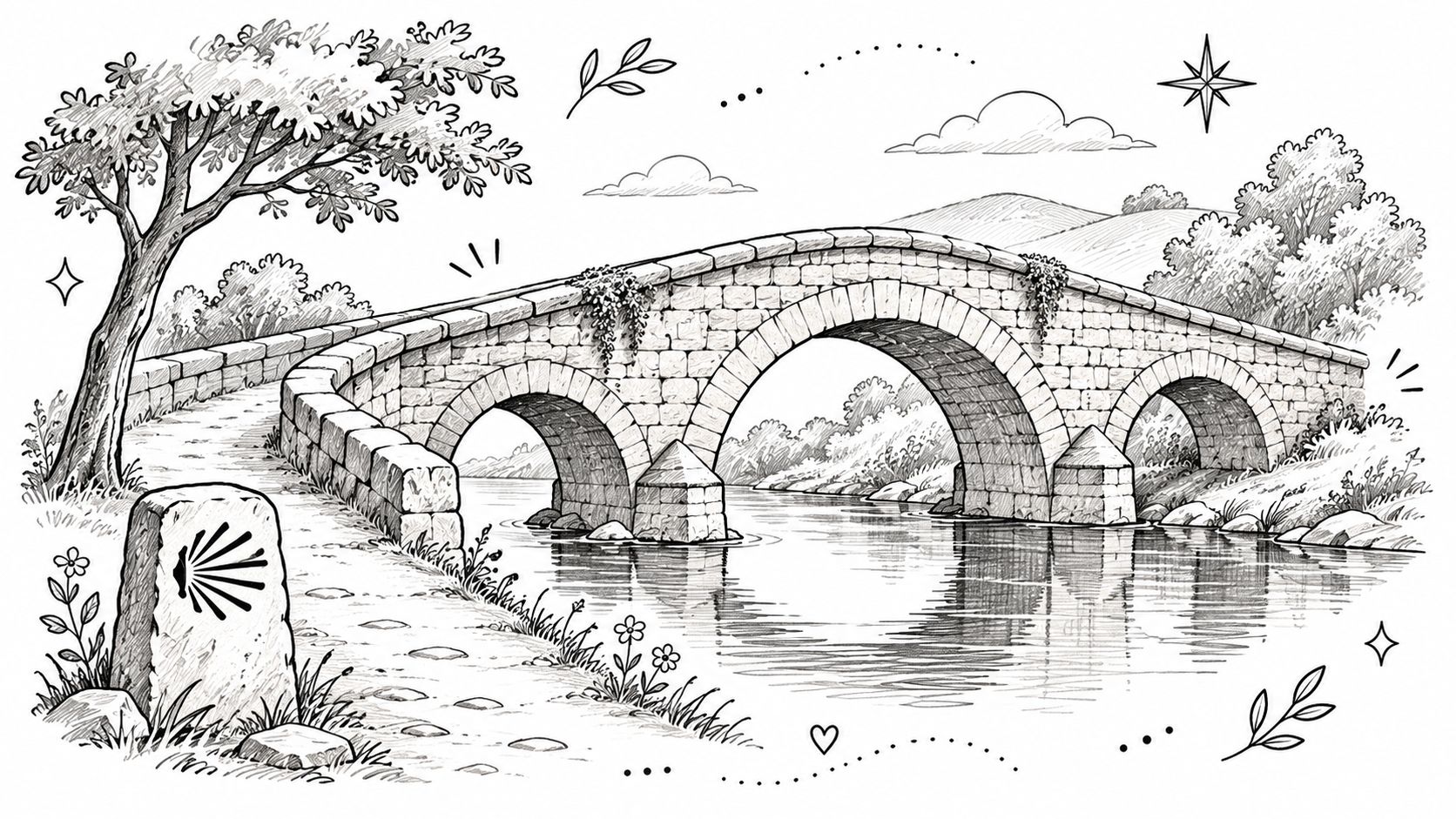
Pamplona sits on the Camino Francés, the busiest of the Santiago routes, and the way is marked through the streets, so a group can pick it up without hiring a guide or committing to a stage. Walk out over the bridge, follow the river for twenty minutes and come back through a different gate.
A one-hour loop that never feels like a filler. Cross the bridge, follow the pilgrim markers back into the old town, and finish at the cathedral. It's the best option in Pamplona for the afternoon when nobody wants to buy a ticket to anything, and the light on the arches is the reason to time it for after 6 p.m.
Do warn the group that they'll be sharing the path with people carrying full packs who have walked for weeks. Keep to one side, don't block the markers for photographs, and treat the route as someone's working day rather than a set.
7. Pamplona Old Town and City Walls (Murallas)
The old town works best as a flexible walking base. Start with the Renaissance walls, then choose the next stop according to the weather and the group's pace. Pamplona preserves more than five kilometres of Renaissance walls, described by the city's tourism authority as one of Europe's best-preserved Renaissance military complexes in the municipal tourism guide. The guide also notes the Citadel's National Monument designation.
The street plan has much older roots, and the medieval core still reflects the three historic boroughs of La Navarrería, San Cernin and San Nicolás. The municipal guide traces the city's origins to a Roman settlement on the site of an earlier Vascon settlement and describes the later union of the boroughs under Charles III. Follow the lanes between the old town's main sights to see how those quarters fit together.
City-wall walks are one of several off-season activities in Visit Navarra's Pamplona listings, alongside pelota, gastronomy, the Way of St James, museums, music and seasonal festivals. Check opening hours before setting out, since access and schedules can change.
Build a loop, not a route: Walk the walls, continue to the cathedral, pause at Plaza del Castillo, then return through the lanes. The stops fit together on foot, with natural places to pause along the way.
Wear shoes with a sturdy sole; cobbles make thin-soled footwear uncomfortable on a longer walk. In festival week, allow extra time for crowds. Outside the festival, use the old town as your meeting point and adjust the loop around weather or delays. A rainy afternoon suits the indoor cathedral stop; save the wall walk for clearer conditions.
8. Pamplona Bullring (Plaza de Toros Monumental)
No entry on this list splits a group faster. The Plaza de Toros Monumental is one of Spain's largest bullrings, sitting at the end of the encierro route, and it hosts the bullfights during San Fermín.
Guided tours take you through the arena, the museum and the stands, and they explain the building's place in the city's identity rather than only the spectacle. For a group, that framing matters. The morning run and the afternoon bullfight are two parts of the same tradition, and people who feel strongly about animal welfare deserve to know that before they buy a ticket rather than after.
Decide the question before anyone is standing at the gate: is your group visiting as spectators of the event, as students of the building, or not at all? All three answers are reasonable. Discovering the disagreement at the ticket desk is not.
- Check tour schedules in advance, since times move around event days and the festival.
- Take the guided version if anyone in the group wants context rather than photographs.
- Split without drama: the tour is short enough that half the group can do a wall walk instead and meet after.
9. Pintxos Bar-Hopping in the Old Town
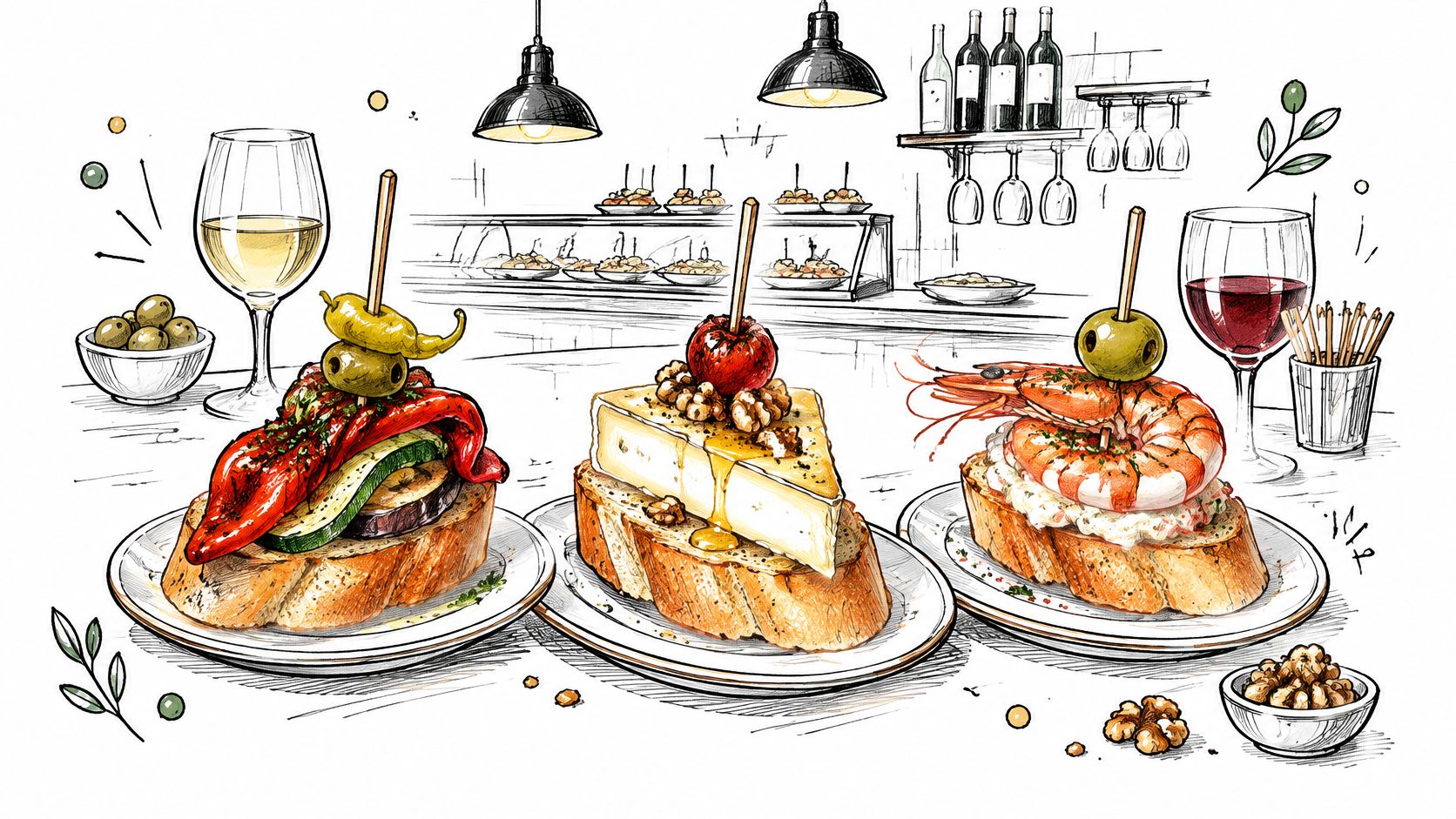
Pintxos are small, bite-sized snacks served on bread or skewers, and the old town is one of the best places in Spain to work through them. Calle Estafeta, Calle San Nicolás and Calle Jarauta carry the densest run of bars, and most counters display what they've made, so you can point rather than translate.
The mistake groups make is treating this as dinner. It's a route: one or two pintxos and a drink per stop, three or four stops, then decide whether anyone still wants a table. Start at 8:30 or 9 p.m. rather than 10, because the good bars hit capacity before the kitchens do.
Budget rule: agree a per-person number before the first bar. Splitting rounds across six people, some drinking and some not, is where a good evening turns into an argument about eleven euros.
- Pay per bar, not per round, so nobody is chasing anyone across three streets at the end.
- Ask about vegetarian options at the counter, since a lot of the display is fish or ham and the staff will usually make something.
- Give each person one pick: one bar each, chosen by a different member of the group, settles the "where next" question for good.
If the group would rather hand the ordering to someone who knows the counters, food tasting tours covers guided versions where the route and the portions are already sorted.
10. Day Trip to the Bardenas Reales Natural Park
Southeast of Pamplona, the Bardenas Reales is semi-desert: eroded clay and sandstone formations, arid ground and viewpoints that look nothing like Navarre's green north. It's a protected natural park with hiking, cycling and photography, and it's the only entry here that costs you a whole day.
Guided jeep and bike tours leave from Pamplona, which takes the transport problem off the table for a group of six who don't want to argue about two hire cars. Book in spring or autumn to avoid extreme heat, and carry water, sun protection and shoes with grip, because the ground is loose in places and shade is scarce.
Making the day work for a group. Leave early, agree a turnaround time at the furthest viewpoint, and don't schedule anything demanding for the evening. Half the group will want to photograph every ridge and the other half will be ready in twenty minutes, so a fixed pickup point matters more here than anywhere else on this list.
A last note on the return. You'll be back in the old town by evening, dusty and hungry, and the reward is a counter of pintxos within walking distance of wherever the taxi drops you.
How the Top Pamplona Experiences Compare for Groups
Use this comparison to match each stop to your group's pace and the day's conditions. Festival week brings crowds and tighter planning; outside that period, the walking sights are easier to fit around opening hours. For a rainy afternoon, prioritize the cathedral or museum. The Citadel, walls, and Magdalena bridge suit a clear-weather walking loop.
| Item | Best For | Typical Cost | Time Needed | Best Time to Visit |
|---|---|---|---|---|
| San Fermín Festival and the Running of the Bulls (Encierro) | Festival atmosphere and cultural immersion | Free to watch; accommodation and viewing spots can be expensive | A morning for the encierro or several festival days | July 6–14; encierro mornings July 7–14 |
| Pamplona Cathedral (Catedral de Santa María la Real) | Gothic architecture and Navarrese history | Free or low-cost entry to some areas | A short visit or a longer guided visit | During opening hours; check ahead |
| Pamplona Citadel (Ciudadela de Pamplona) | Fortifications, relaxed walks, and photography | Free or low-cost for outdoor areas | A relaxed walk; longer if viewing exhibitions | Late afternoon |
| Plaza del Castillo and the Café Iruña | People-watching, cafés, and a group meeting point | Varied; square-side tables may cost more | A short café stop or a leisurely visit | Evening |
| Museo de Navarra | Regional history, art, and a rainy-day activity | Usually modest admission | About 1–2 hours | Check opening days and free-entry periods |
| Puente de la Magdalena and the Camino de Santiago | Pilgrimage history and riverside walks | Free | A short bridge visit or relaxed riverside walk | Late afternoon |
| Pamplona Old Town and City Walls (Murallas) | Walking, photography, and historic atmosphere | Free | A walking loop or longer exploration | Weekdays or outside festival periods |
| Pamplona Bullring (Plaza de Toros Monumental) | Bullring history and festival context | Paid guided tour, separate from festival-day tickets | A guided visit | Outside festival week for easier planning |
| Pintxos Bar-Hopping in the Old Town | Local food and sociable group outings | Pay per pintxo and drink | An evening of bar-hopping | Early evening |
| Day Trip to the Bardenas Reales Natural Park | Dramatic scenery, hiking, and photography | Paid jeep or bike tour from Pamplona; transport is usually included in the tour fee | A day trip | Spring or autumn |
For a compact day, pair the Old Town walls with Plaza del Castillo, then leave the evening for pintxos nearby. The cathedral and museum make stronger alternatives when rain disrupts outdoor plans. The Citadel and Magdalena bridge are better in fair weather, while the Bardenas trip needs a full day and sits apart from the city loop. During San Fermín, the encierro is an early-morning commitment; build the rest of the day around its crowds rather than treating it as a quick stop.
Turning Pamplona Ideas Into One Shared Plan
Pamplona rewards groups who decide early. The order of operations is not complicated: lock accommodation first if you're travelling in festival week, then pick two or three anchor experiences, then let everything else fill in around them.
The two-anchor rule
- Anchor one: the old town and walls loop, which costs nothing and absorbs latecomers.
- Anchor two: a pintxos evening, booked nowhere but scheduled firmly for a specific night.
- The weather card: the cathedral and the Museo de Navarra, held back for the day the sky breaks.
- The whole-day card: the Bardenas Reales, which needs an early start and nobody hungover.
That structure leaves room for the thing that makes Pamplona work, which is the unplanned hour in a square. Groups that schedule every slot end up resenting the schedule by day two.
Booking lead times are where most groups get caught. Festival-week accommodation and any encierro-facing balcony go many months out, not weeks, and the good ones are gone before dates are settled. Off-season, the pressure disappears almost entirely, but the trade-off is real: cathedral hours shorten, some bars close a day midweek, and a Monday in February is a different city from a Saturday in September. Check the specific week you're travelling rather than assuming the summer pattern holds.
Fairness is the other thing that ruins group trips. Six people with six sets of priorities will default to whoever talks loudest, and the quietest member of the group spends three days doing other people's holiday. Collect preferences before you arrive, in writing, and treat the result as the agenda.
That's the point at which a shared voting tool earns its place. MyPerfectStay runs a short private survey per traveler on budget, interests and energy level, then surfaces activities ranked by how well they match the whole group, so the two people who want a museum and the two who want a fortress walk can see where the overlap is before anyone books. Use it to settle the shortlist, then keep the itinerary somewhere everyone can see it, because "where are we meeting" is the question that eats a group's evening.
One last piece of advice from the planning side. Leave the final afternoon blank. Pamplona's best moments tend to happen in the gaps between the things you booked, usually involving a brass band coming down a street you didn't plan to walk.
MyPerfectStay turns this exact Pamplona shortlist into a decision the whole group can live with: everyone fills in a two-minute private survey, the voting algorithm surfaces the activities with the strongest match across budget, interests and energy, and you book for the group in one click from more than 300,000 experiences across 190+ countries. The auto-organised daily itinerary then keeps the cathedral, the walls walk and the pintxos night in an order everyone can see. Start your Pamplona plan at MyPerfectStay.