What Is Group Booking Explained
October 14, 2026·MyPerfectStay

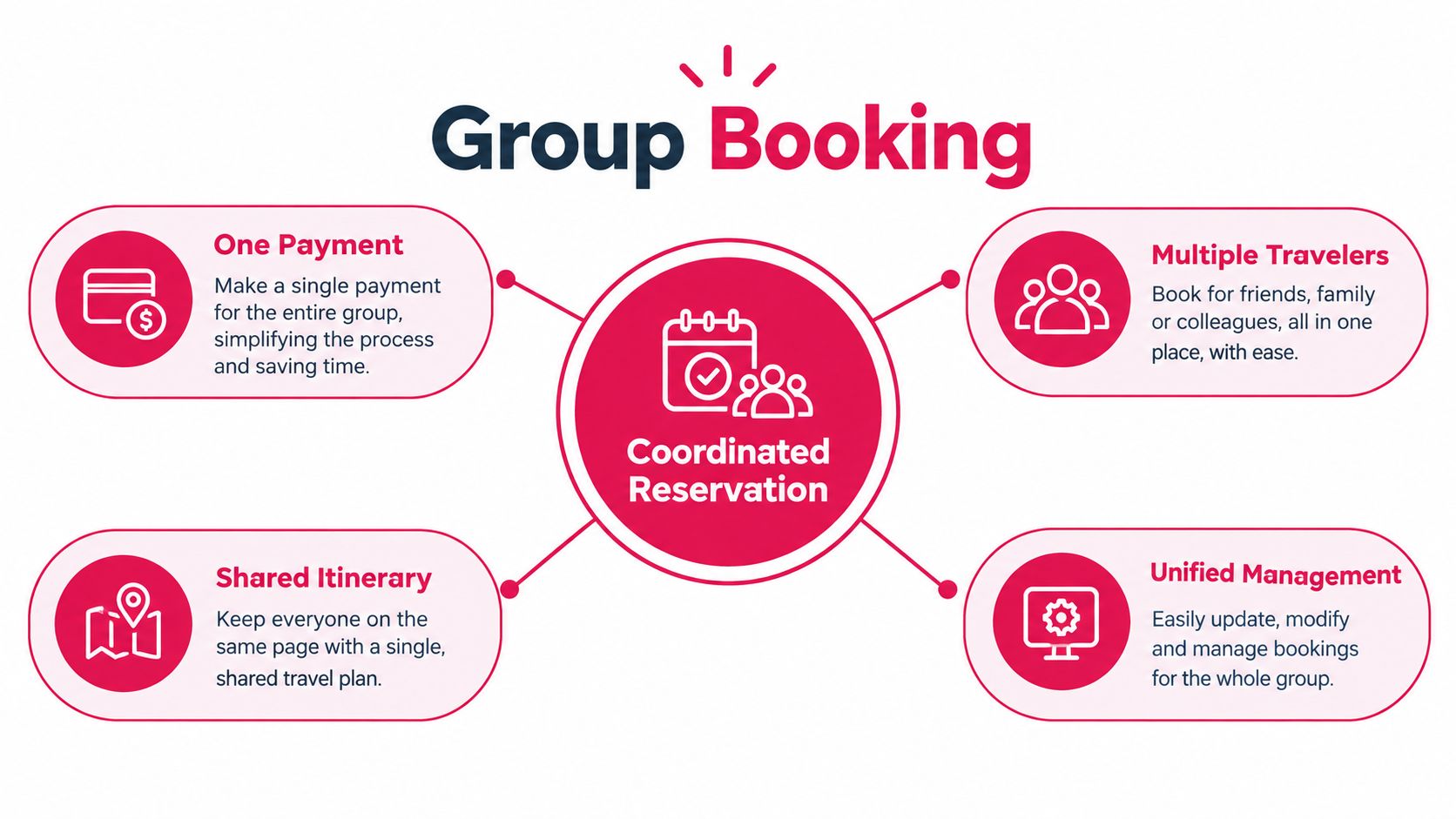
A group booking is a coordinated reservation covering multiple travelers under one contract or record, typically involving 10 or more people or rooms. It links the travelers through shared dates, an itinerary, payment arrangements, and commercial terms rather than treating every reservation as unrelated.
You may be organizing a wedding in Dubrovnik, a company retreat in Lisbon, or a family trip to Dubai. Everyone says they want to travel together, but then the practical questions arrive: Who pays the deposit? What happens if someone cancels? Can the hotel guarantee an accessible room? Which activities suit children, older relatives, and travelers with different budgets?
That's why group booking means more than securing a volume discount. It's a coordination system for decisions, money, deadlines, and participation. The organizer must turn individual preferences into a binding plan without leaving one person responsible for every financial risk.
Table of Contents
- Defining the Group Booking Concept
- Standard Policies and Contract Terms
- Airline Thresholds and Cabin Rules
- Solving the Governance and Payment Problem
- Planning for Accessibility and Inclusion
- Streamlining Coordination with Smart Platforms
Defining the Group Booking Concept
A group booking is a coordinated reservation covering multiple travelers under one booking arrangement, contract, or record. The travelers usually share a materially common itinerary, such as the same flight, hotel dates, cruise, event, or activity schedule. Airlines commonly use 10 or more passengers as an operational group threshold, while hotels often apply a comparable rule based on rooms rather than individuals. Navan's group-booking glossary explains that hotel groups generally reserve a room block, meaning multiple rooms held for the same dates at a negotiated rate.
The threshold isn't a universal legal definition. Some hotel guidance uses 9 or 10 rooms per night as a common minimum, while smaller properties may set the minimum at five rooms. The commercial pattern matters as much as the headcount: shared dates, coordinated purchasing, a negotiated price, and rules for names, payment, cancellation, and unused inventory.
Group booking versus separate reservations
Suppose 12 friends each reserve a hotel room independently for the same weekend. The hotel may recognize that the reservations are related, but the booking still might not qualify as a formal group. Each guest could have a different rate, cancellation deadline, payment method, and room assignment. The property may also release rooms before the friends finish booking.
A true group reservation creates a shared commercial structure. The organizer and supplier can agree on a room block, hold rooms until a cutoff date, coordinate guest names, and manage billing through one arrangement. In airline distribution, the IATA passenger-group model describes travelers associated under one commercial name and homogeneous itinerary segments.
Use this quick test:
- Shared itinerary: Are participants traveling on materially common routes or dates?
- Common reservation object: Are they linked under one contract, record, or room block?
- Special terms: Does the supplier provide group rules for payment, names, deposits, or cancellations?
- Organizer responsibility: Does one person or organization coordinate fulfillment?
If the answer is no to most of these questions, you may have several individual bookings, not a group booking. For a broader explanation of coordinated trips, see this guide to what group travel involves.
Standard Policies and Contract Terms
The contract is where a group booking becomes financially real. A supplier may offer a negotiated rate, but that rate usually comes with conditions that don't apply to a standard transient reservation. Read the agreement as a set of shared obligations, not just as a price sheet.
The terms that shape your exposure
Negotiated rates can simplify budgeting, particularly for a conference in Amsterdam or a wedding in Marrakech. Ask whether the rate applies to every room, whether taxes and resort charges are included, and whether the price changes after the initial hold.
Consolidated billing means the organizer, company, or designated payer may receive one invoice rather than asking each traveler to settle separately. That arrangement is convenient, but it also creates a responsibility gap. Decide whether the organizer is only collecting money or is legally responsible for the full balance.
Name-submission deadlines determine when the supplier needs the final guest list. Before that deadline, the organizer may hold unnamed rooms or seats. After it, changes can trigger fees, re-pricing, or loss of inventory.
Deposits reserve capacity and demonstrate commitment. A deposit may be partially or fully non-refundable, so the group should approve the payment before anyone assumes that every member has committed.
Attrition, cutoff dates, and unused inventory
Hotels often include an attrition clause, which requires the organizer to fill a stated proportion of the room block. One hospitality source describes common attrition requirements ranging from 80% to 90% of reserved rooms. Navan's explanation of group-booking terms provides the relevant context for room blocks and attrition.
A cutoff date is the point at which unreserved rooms may return to the hotel's general inventory. If guests wait until after that date, the property may no longer guarantee the original rate or room type. No-shows create a separate risk because a room can remain unused even though the supplier had held it for the group.
Practical rule: Never promise a room or seat to a traveler until you know whether the reservation is held, paid, or merely requested.
Create a simple responsibility record before signing:
- Record the room or seat block and the release date.
- Identify who pays the deposit and who covers an unpaid balance.
- Write down the name deadline, cancellation dates, and attrition percentage.
- State how refunds and unused rooms will be allocated.
- Match every supplier deadline to an earlier internal deadline for your group.
For cruise groups, the same logic applies to cabins, deposits, and final passenger details. A practical overview of group booking for cruises can help you compare those arrangements. If your itinerary includes diving, it's also sensible to review ways to save with dive package deals while keeping activity costs separate from the core accommodation commitment.
Airline Thresholds and Cabin Rules
Airline group policies show why “we have enough people” isn't always a sufficient answer. Eligibility can depend on the carrier, route, cabin, and number of passengers who remain committed when the booking is finalized.
| Airline | Minimum Passengers | Key Condition |
|---|---|---|
| Lufthansa | 10 | Passengers over age two must travel together on the same flight. Up to 20% may cancel without charge before travel documents are issued, provided at least 10 remain. |
| British Airways | 10 in World Traveller and Euro Traveller, 7 in specified premium cabins | The minimum depends on the lowest cabin used. A mixed booking can fail to qualify if too few travelers are in the lower cabin. |
| Delta | 10 | Travelers must share at least one flight segment. Europe and North Africa group bookings may be made up to 331 days before departure. |
Lufthansa's definition and reduction rule are set out in its group travel terms. British Airways explains its cabin-specific minimums in its group booking conditions. Delta describes its threshold, regional scope, and consequences of falling below the minimum in its group travel guidance.
Why cabin mix matters
Imagine a British Airways booking with five travelers in World Traveller and five in Club World. The total is 10, but the booking doesn't qualify under the lower cabin's minimum because World Traveller requires 10 passengers. The total headcount alone doesn't decide eligibility.
Delta presents a different risk. If the group drops below 10, the airline states that the reservation may be canceled and the deposit forfeited, leaving travelers to seek individual fares available at that time. For a European or MENA itinerary, confirm the minimum before collecting non-refundable payments.
Accessibility also belongs in the airline conversation. Ask about boarding assistance, seating, transfers, and mobility equipment at the start, not after tickets are issued. Travelers comparing equipment options may find practical background on travel freedom with a mobility scooter, but the airline and airport must still confirm the specific arrangements for the itinerary.
Solving the Governance and Payment Problem
A group trip can have confirmed rooms and seats yet still fail at the payment stage. One traveler may want a private room and museum pass, while another can afford only shared accommodation and free activities. Treating every expense as equal makes the itinerary look tidy while creating disputes over who pays for what.
Sabre reported a 14% year-on-year increase in bookings for seven people and an almost 23% increase for groups of eight or more, based on bookings made from January through September 2024 for 2025 travel. The figures appear in Sabre's travel-trends report. More group demand makes clear payment rules and decision rights more important.
A fair decision framework
Assign three roles before collecting money:
- Organizer: Coordinates information, deadlines, and supplier communication.
- Payer: Accepts responsibility for a deposit, invoice, or unpaid share.
- Participant: Approves personal costs and accepts the applicable cancellation terms.
One person may hold all three roles, but the group should record that arrangement. Otherwise, the organizer can become the accidental guarantor when someone withdraws or misses a payment.
Classify each expense before booking:
Shared essentials cover the agreed room block, group transport, or common meal. Divide them using a method everyone accepts, such as an equal split or a room-based allocation.
Personal upgrades include a larger room, premium cabin, private transfer, or optional excursion. The traveler choosing the upgrade should generally pay the added amount.
Optional activities require separate approval. Someone who skips a yacht cruise in Dubai should not automatically pay the same activity share as someone who joins.
SiteMinder found that 54% of group or chain guests were somewhat or much more likely to purchase a package bundling flights, accommodation, and experiences in 2025, while 48% expected to spend more than the previous year. These findings appear in SiteMinder's hospitality research summary. Packages can simplify coordination, but only if each traveler knows which services and costs are included.
Set an approval deadline for every major decision. Record the outcome, collect the required deposit, and state what happens if someone withdraws. Guidance on implementing a reservation deposit policy offers practical principles for making financial commitment clear before capacity is reserved.
Planning for Accessibility and Inclusion
A group itinerary can be fully booked and still exclude someone. A traveler may be unable to board the transfer, reach the bathroom, manage a packed schedule, or tolerate an activity's sensory demands. Families may also need to coordinate children, older adults, dietary restrictions, medication routines, and different energy levels. Accessibility therefore affects the whole booking system, not just one room or excursion.
European research illustrates the practical risk. 84% of travelers with accessibility needs reported transportation challenges on their last holiday, and 52% said they were likely to join a multiday organized group tour or package holiday within the next two years, according to the European Network for Accessible Tourism's accessibility research preview. These findings point to a coordination problem: demand for group travel exists, but transport and service details must match real needs.
Verify the complete journey
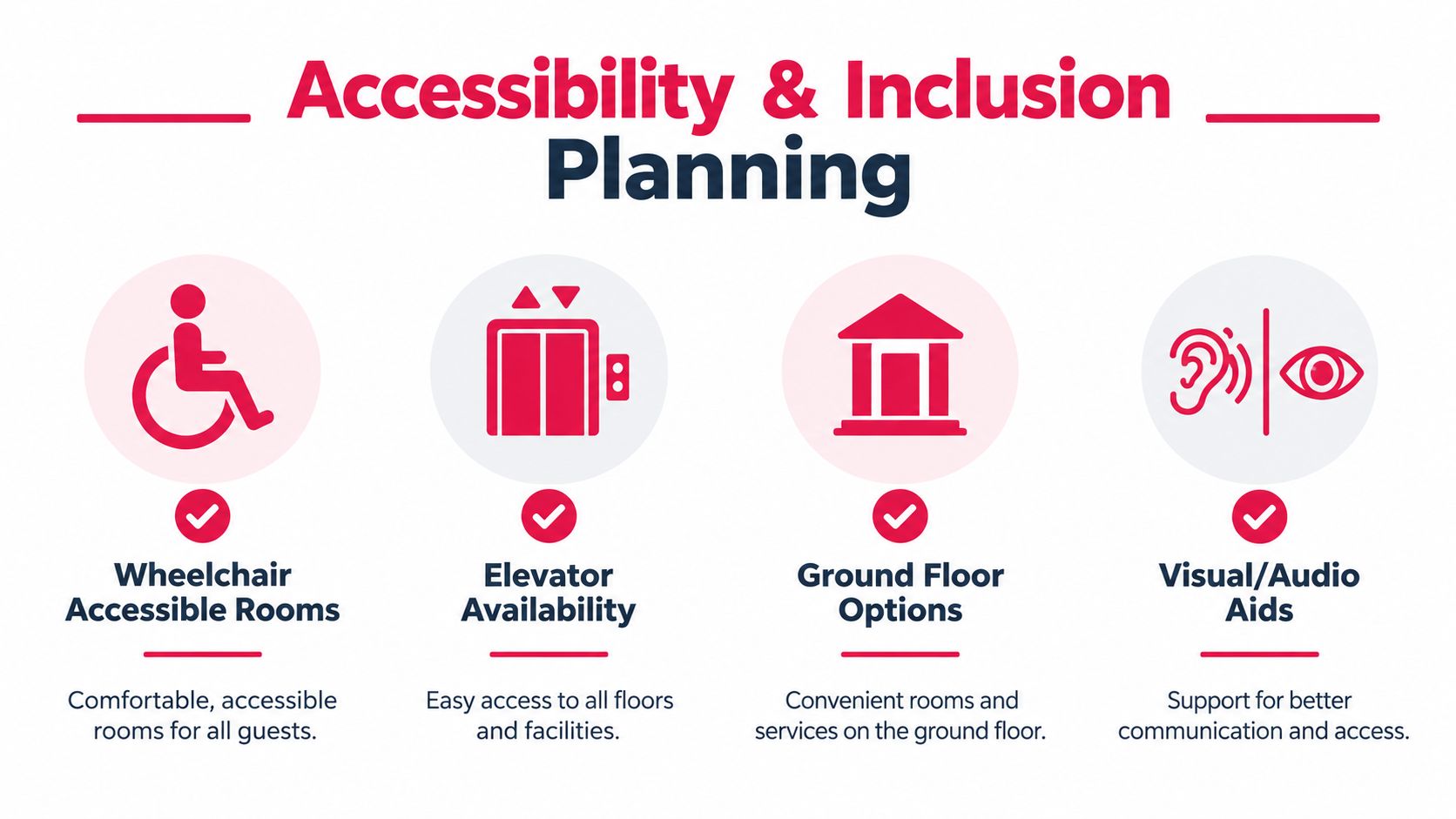
Treat an “accessible” label as a starting point, not proof that the entire itinerary works. Confirm the route from pickup to room, venue, restaurant, and return transfer in writing.
Use a checklist that follows the traveler's journey:
- Rooms: Confirm step-free access, bathroom features, bed configuration, and the exact dates.
- Transport: Ask about ramps, vehicle dimensions, boarding assistance, and storage for mobility equipment.
- Activities: Check surfaces, stairs, rest opportunities, seating, duration, and emergency procedures.
- Food: Record allergies, religious requirements, medical diets, and cross-contamination concerns.
- Communication: Provide information in accessible formats and name a contact for urgent changes.
A multigenerational group can share key moments without following one rigid schedule. Keep the main meeting points, then offer optional activities, quiet periods, and shorter alternatives. In Barcelona, some travelers might choose a long walking route while others visit a seated museum or return to the hotel. Both options support inclusion when transport, timing, and meeting points are clear.
Booking.com reported that 48% of surveyed US travelers planned trips to reconnect with loved ones in 2025, with Millennial travelers particularly likely to prioritize immediate-family getaways. The broader lesson is practical: inclusion is part of group governance. Clear choices prevent one traveler's access needs from becoming a late change, a private burden, or a reason to miss the shared experience.
Streamlining Coordination with Smart Platforms
A group trip can stall when twelve travelers answer one chat thread with different budgets, priorities, and availability. A spreadsheet may record names and payments, yet it cannot settle competing preferences or show which decision is current. The result is often a vote shaped by the most active voices rather than the needs of the whole group.
A coordination platform gives each traveler a private place to record a budget, interests, preferred pace, must-see ideas, and activities they will not join. It then compares those responses using the same criteria and shows the points of agreement. The organizer can work from shared evidence while keeping personal limits visible only where appropriate.
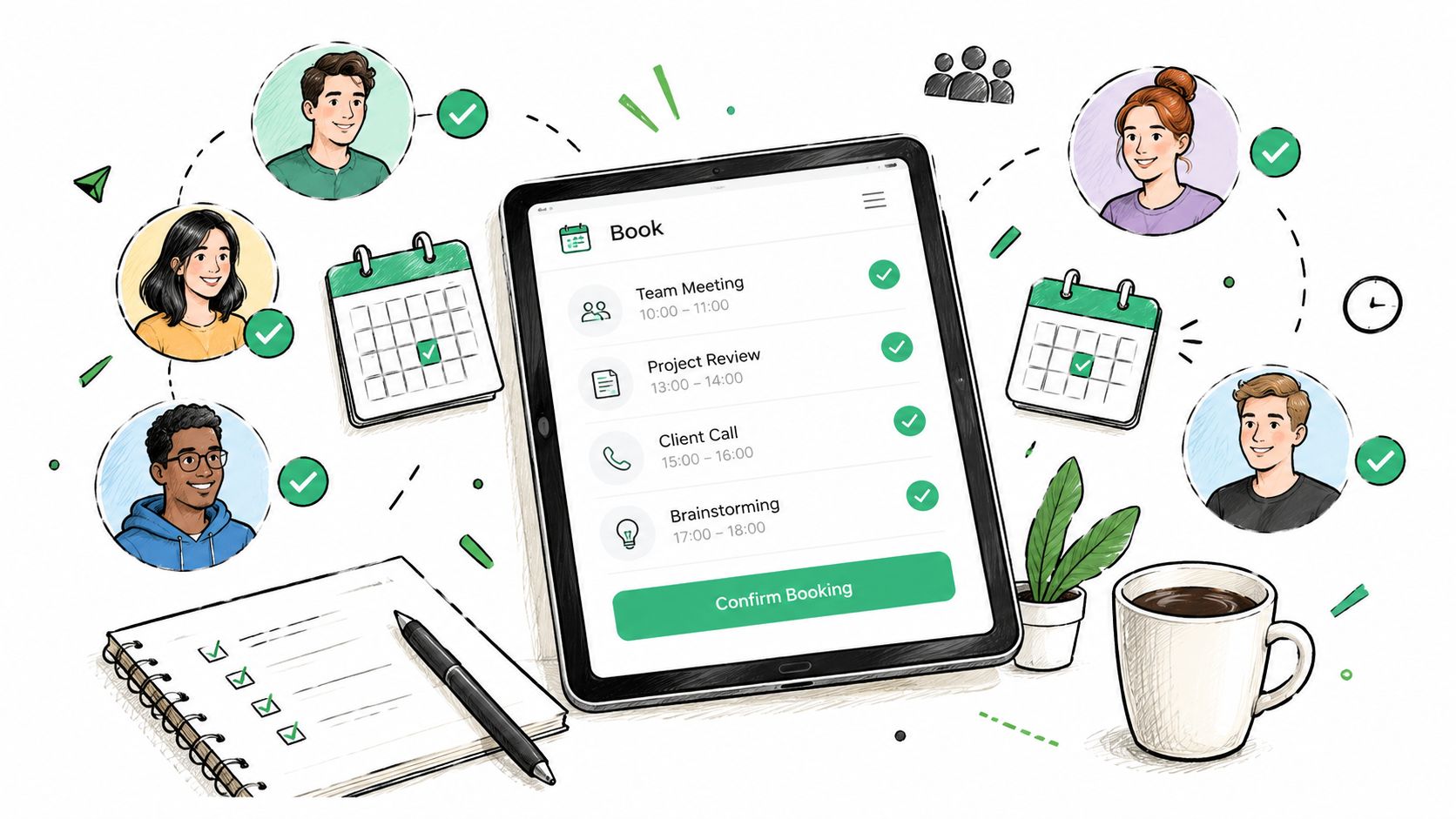
For a destination such as Dubai, the same process lets travelers compare desert safaris, museums, food experiences, and boat trips without requiring everyone to attend every activity. Dubai recorded 19.59 million international overnight visitors in 2025, up 5% from 18.72 million in 2024, according to the Dubai Department of Economy and Tourism annual visitor report. A platform helps an organizer manage that variety by separating shared commitments from optional choices.
One practical option is MyPerfectStay's group-planning app. Travelers can complete private preference surveys, compare activities through match scores, vote, and book selected experiences together. Shared itineraries, deadlines, reminders, and invitations keep the decision record available after the vote.
A reliable workflow has six stages:
- Collect private preferences.
- Remove options that exceed agreed budgets or accessibility requirements.
- Present the strongest areas of overlap.
- Set an approval deadline.
- Record approvals and payments.
- Publish the confirmed itinerary and cancellation terms.
The schedule also needs an owner. Suppliers may change times, so the responsible organizer should update the shared itinerary and notify everyone through the agreed channel. That prevents one traveler from following an old chat message while others use the confirmed version.
This video provides another visual introduction to schedule-based coordination:
The core idea is simple. A group booking works when commitments, costs, preferences, and exceptions are visible before money becomes difficult to recover. Discounts may help, but fair decisions and clear responsibility keep the reservation intact.
MyPerfectStay helps groups gather private preferences, vote on shared activities, book selected experiences together, split costs, and maintain an organized itinerary. Visit MyPerfectStay to manage deadlines and reduce unresolved decisions.